
Rising power bills, rising energy demand. SC bets big on new generation.
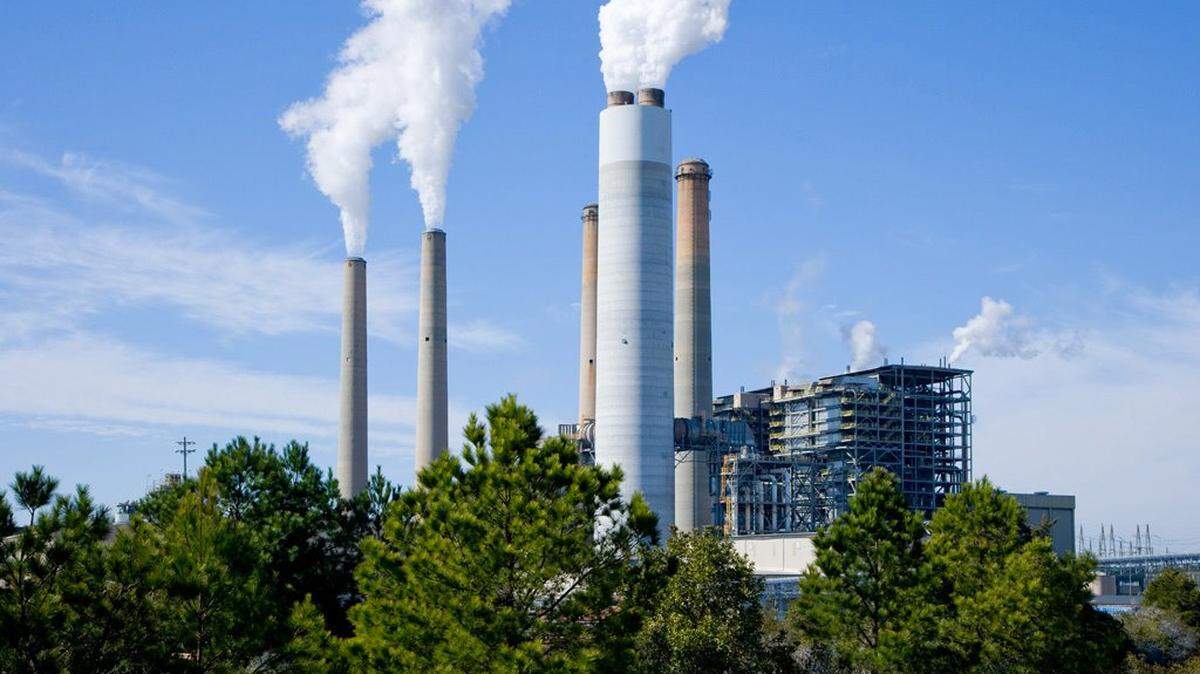
South Carolinians’ power bills will go up over the next couple of years, but how much will likely depend on whether utilities accurately predict demand, a task that has grown more challenging with the rise of data centers.
Before approving nearly $700 million for new South Carolina power plants earlier this month, state lawmakers expressed concerns over how those investments could impact residential power bills. The new power plants from state-owned utility Santee Cooper will help meet exploding demand for energy in South Carolina, CEO Jimmy Staton told lawmakers.
But if the demand doesn’t increase how state-regulated utilities Santee Cooper, Dominion Energy or Duke Energy expects, there could be a surplus of power generated from new infrastructure, leaving customers all over the state with the costs, said Conor Harrison, a professor studying energy at the University of South Carolina’s department of geography. Projecting demand is complicated by incoming data centers, said Tim Johnson, the chair of energy and environment at Duke University.
“I think there’s a lot of uncertainty, and I think because of that, utilities are in a tough position,” Harrison said. “If they underdo it, then we’re in trouble. But if they overdo it, we’re also in trouble.”
Much of the projected demand comes from data centers, which researchers say suck up large amounts of energy. By 2028, data centers could use up to 12% of the country’s energy, compared to 4.4% in 2023, according to a 2024 study from the U.S. Department of Energy. South Carolina also may grow by 1.5 million residents over the next two decades.
Staton told lawmakers he was confident demand from data centers and a growing population would continue to increase in South Carolina. However, some energy researchers, including Harrison, are not so sure. If some of the projected data centers don’t end up settling in South Carolina, or they become more energy efficient, regular consumers could end up paying for more of the energy projects, since the cost won’t be as spread out, he said.
“We’re particularly, potentially looking at a really massive capital investment for demand that may or may not materialize,” Harrison said.
A study by Greenlink, a “clean energy” data analytics research nonprofit, and Science for Georgia, an educational nonprofit, predicted there is a 1 in 500 chance that projected data center demand actually materializes in the Southeast. The Southern Alliance for Clean Energy asked the Federal Energy Regulatory Commission to use the study, which published in December, when considering approving a planned gas pipeline that will sweep across the southeast.
“I’m not questioning that there will be demand,” said Eddy Moore, the decarbonization director at the Southern Alliance for Clean Energy. “But I’m trying to emphasize that the financial plans today are being made upon projections. And over and over in the past, the projections have turned out to be wrong, always on the high side.” The report says, for example, that Duke Energy Carolinas, which serves the customers in the Upstate, overestimated load growth in its ten-year reports between 2006 and 2013.
Santee Cooper forecasted demand with large customers, like data centers, in mind, but projections accounted for scenarios where some of those consumers don’t come to South Carolina, said Santee Cooper spokesperson Mollie Gore.
Even if the demand doesn’t surface, Santee Cooper and Dominion Energy plan to retire coal plants and need to replace the generation, according to the Canadys natural gas plant project’s joint application to the state Public Service Commission.
Energy costs climb in SC
On a cold evening in Columbia, about 20 South Carolinians sat in purple chairs at the Adams Northeast AME Church to learn how to lower their power bills. Residents worried there were not enough programs available to help offset growing energy bill costs. Utility bills are not always top of mind, but it is important for people to learn more about state-level energy policy and how they can save energy, said state Sen. Tameika Isaac-Devine, D-Columbia. Devine hosted the recent townhall.
“If you have a salary and your salary is fixed, and your water bill is going up or your light bill is going up, those are things that you can’t control,” Devine said. “Well, sometimes you control a little bit of it, but you can’t control it because other people are driving those things.”
Devine, and other energy conservation advocates, told attendees about the “South Carolina Energy Security Act,” which passed in South Carolina earlier this year. The law was intended to bolster energy production in the state, but some, including Devine, worried some of its provisions could raise rates for consumers. Utilities will now evaluate rates annually, and permitting for large energy projects has a new, six-month deadline.
South Carolinians saw their energy bills increase about 9.7% between August 2024 and August 2025, similar to the national average of 9.6%, according to a recent report from the National Energy Assistance Directors Association. Nationally, increasing energy bills have exceeded inflation, according to the report.
For Dominion Energy customers, average 1000 kilowatt residential bills increased by about 15% between May 2024 and May 2025, according to a report from the state Office of Regulatory Staff. Power bill increases didn’t consistently increase; bills actually decreased by 10% between May 2023 and May 2024. However, 2025 Dominion Energy bills were the highest they have been since 2018, according to the report.
The report from the national energy help group, which tries to funnel federal money towards state governments, highlights frustration from consumers, particularly low- and middle-income people that have seen rising electricity bills, a concern voiced by some South Carolina lawmakers before they approved new energy infrastructure. All three South Carolina regulated utilities had rate hikes approved last year.
“My constituents, I’m [going to be] honest with you, can’t afford any more rate increases,” said state Rep. Leon Stavrinakis, R-Charleston, during the Joint Bond Review Committee meeting Dec. 2.
Lawmakers approve nearly $700 million, express concern
State lawmakers questioned how expensive capital projects would impact consumers’ bills before the Joint Bond Review Committee approved $685 million in bonds to the state-owned utility. Staton told lawmakers he expected Santee Cooper to spend $10 billion over the next decade on new generation.
The Joint Bond Review Committee approved $293 million for combustion turbines at Winyah and $272 million for upgrades to Rainey power plant during its Dec. 2 meeting. The committee of House members and Senators also OK’d $120 million for construction of the Canadys natural gas plant, the first chunk of funding necessary for the $5 billion, 2200 megawatt project.
Santee Cooper will pay for half of the natural gas plant in Colleton County, and Dominion Energy will pay for the other half. The two utilities will also split the generated energy. While Santee Cooper told lawmakers over a year ago that the massive natural gas plant would cost $2.5 billion total, the price tag has ballooned to $5 billion since. Staton told lawmakers utilities around the country are “fighting” for the turbines, a necessary component of the plant, causing the cost of the project to go up.
“There’s a finite number of resources to actually be able to construct something of this magnitude,” Staton told lawmakers. “And so over the last two years, the cost of putting a combined cycle plant in place in the United States has essentially doubled.”
When pressed by lawmakers, Staton could not say whether any rate increases would be tied to construction of the Canadys natural gas plant, or the other pricey infrastructure projects lawmakers approved.
“I’m always concerned about rates and the rate payers,” said state Rep. Heather Ammons Crawford, R-Horry. She asked Staton if rate hikes would only be at the rate of inflation, which Staton said was the utility’s goal.
“I did say that as we spend the $10 billion that we have planned over the next 10 years, there will be rate increases,” Staton said. “We believe we can keep those rate increases at or around, at or below the rate of inflation.”
Crawford asked any rate increases would be tied to a specific project, like the Canadys plant. Staton said he could not attribute a request for a rate increase to a specific project. However, he said the Santee Cooper board will be asked whether the utility should see a rate increase in 2027.
“Whether I can attribute any or all of that to these specific expenditures, I can’t, but we are seeing increased pricing, period, across the country,” Staton said.
“We don’t file for rate increases specific to individual projects,” Staton continued, after Crawford asked for additional clarification.
Generally, building new energy infrastructure “100%” can raise rates for consumers, USC’s Harrison said.
Santee Cooper may also take some debt associated with the failed V.C. Summer nuclear reactor off customer bills if a deal with Brookfield Assets Management goes through. If Brookfield agrees to finish the two nuclear reactors, Santee Cooper will receive $2.7 billion for the assets, which they may use to reduce debt on power bills, Staton told lawmakers.
Gore, a spokesperson for Santee Cooper, said Dec. 5 that it was too early to know whether the utility would seek a rate change in 2027. Dominion spokesperson Rhonda O’Banion wrote in an email Dec. 8 that Dominion would seek a rate increase in 2026, but it was not tied to Canadys. Duke requested an over 7% increase earlier this year.
After the funding was approved, House Ways and Means chairman Rep. Bruce Bannister, R-Greenville, clarified the Joint Bond Review Committee did not vote on any rate increases, just the funding source for the power plants.
Another natural gas plant is in the works in the Upstate. Duke Energy applied to build a 1,400 megawatt natural gas plant in Anderson County this summer.
Utilities plan for data centers
Pricey new power plants are necessary because of growing energy demand, Staton told lawmakers. Without new generation, customers could experience blackouts or brownouts, he said.
A bulk of the demand will come from data centers, which have been growing in size and number over the past couple of years, Duke University energy chair Johnson said. Data centers power a variety of digital services, but their growth has been associated with artificial intelligence. Last week, Colleton County residents protested a planned nine data center campus near Walterboro during a scheduled public hearing. If approved by the local zoning board, the campus would require 1,000 megawatts of energy, the South Carolina Daily Gazette reported.
That’s almost half of the power the Canadys natural gas plant will generate when completed in the early 2030s.
“What’s really challenging with that right now is just trying to figure out what is happening with data centers,” Johnson said. “You really can’t underestimate how big of a deal this can be, just because these data centers can draw a tremendous amount of power.”
Meta, Google and Blox have already announced plans to build, or expand existing, data centers in South Carolina. But utilities suspect more are on the way. Now, utilities are saying building new generation is vital for data centers and population growth in the state. It can be challenging to accurately forecast demand since the utilities need to begin building for it years in advance, Johnson said. In 2024, Staton told a panel of South Carolina lawmakers 70-80%, or a “lion’s share” of its projected demand would come from data centers.
Variable costs, like fuel, are passed along to consumers, Johnson said. But construction of new infrastructure is more complicated. In South Carolina, state regulators approve new energy projects, like power plants or solar farms, if the utility shows it is necessary to meet demand. Then, the state-regulated utilities can raise rates to make up the cost of the project, but they are also assured to generate revenue for the project.
“Utilities don’t make money on buying fuel and generating power,” Johnson said. “They make their money on building stuff.” Dominion Energy and Duke Energy are investor-owned, regulated utilities, and Santee Cooper is state-owned, so it is a not-for-profit company.
Harrison, the researcher from the University of South Carolina, said if new generation is built, but the demand never materializes, consumers could see the impact. It is even harder to project demand now with data centers, according to Johnson. Data centers will also have to end up paying their fair share, which could be challenging if they all come to the state quickly and utility’s capital expenditures increase rapidly, he said.
“The data centers coming online, to the extent that happens, if that’s gradual, then the capital expenditures aren’t going to increase rates that much,” Johnson said. “But if they are, utilities are suddenly scrambling to build new capacity, and developers of the data center aren’t picking up their share of the cost, then those would be bigger jumps on the utility bill for customers.”