SC gave 10K school vouchers. Why does the education department want to add it?
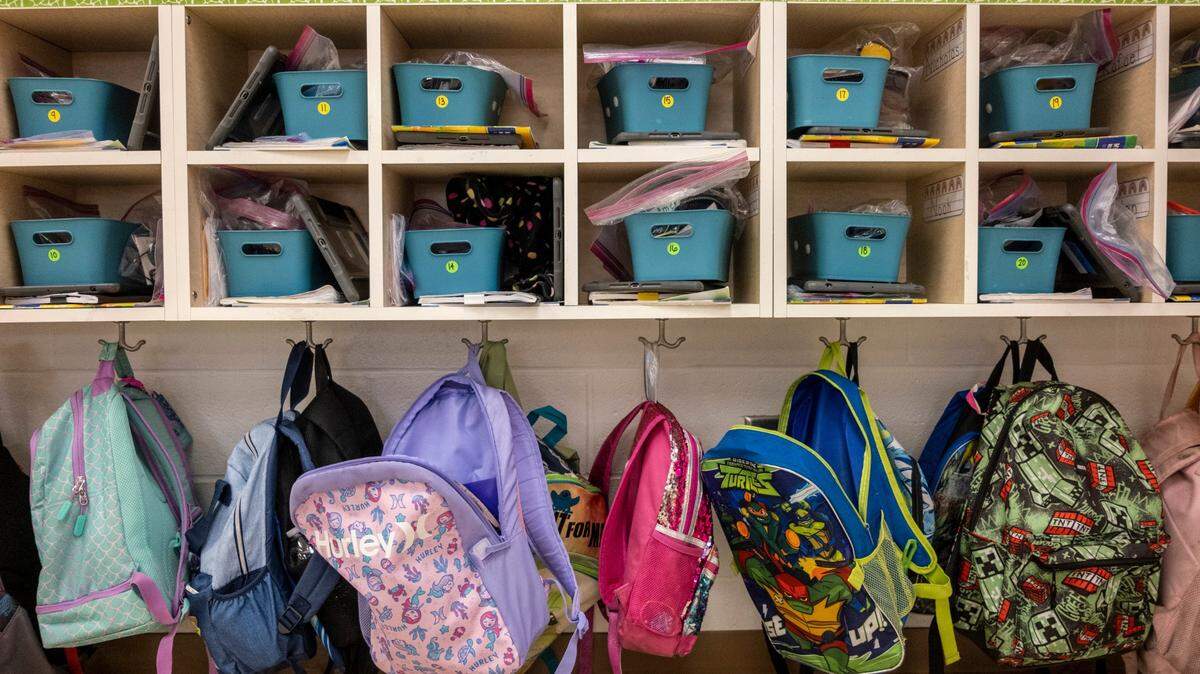
Even though state law calls for increasing the state’s educational scholarship program to 15,000 students from 10,000 next school year, the Department of Education wants to go further and double size of the state’s educational scholarship trust fund program.
State Superintendent of Education Ellen Weaver asked budget writers for $61.1 million more for the state’s education scholarship account program that allows families to use public dollars to send their student to another school including private schools or another public school.
During the 2025-26 school year, the program was opened up to 10,000 students in households with income no higher than 300% of the federal poverty level. After filling those spots, the department had 6,000 students on a waiting list. Most of the applicants for this year’s allotment of scholarships were students who came from non-public schools.
State law requires during the 2026-27 school year, the program increase to 15,000 students with the income cap increased to 500% of the federal poverty level, which is nearly 87% of the state’s student population. Priority still must be given to families with incomes less than 300% of the poverty level.
However because of the demand, the Department of Education wants to have enough money for 20,000 students, which would require $61.4 million more a year on top of the $60 million in annual money already spent on the program.
The proposal to increase the program to 20,000 scholarships is based on how many families applied for scholarships this school year but were denied because they exceeded the income limit, Department of Education spokesman Jason Raven said in an email to The State.
When lawmakers passed a compromise earlier this year on how to pay for the program, they also said they would be able to increase participation if the General Assembly allocates additional money for the scholarships.
The SC Education Association was among the groups that filed a lawsuit against the Department of Education to get the previous iteration of the program tossed out by the state Supreme Court. The group is still researching whether it will go forward with another lawsuit and has yet to set a timeline, said SCEA President Dena Renee Crews.
“I think we should be encouraging parents and guardians to keep their children in public education, because our public schools are doing great things as we’re preparing our students to be college and career ready,” Crews said.
Program doesn’t take away cash from traditional public schools, Weaver says
Weaver also defended the request anticipating criticism from public school advocates who will say expanding the program sometimes characterized as vouchers, keeps money away from traditional public schools.
“This removes no money from the traditional public education system,” Weaver wrote. “Rather, it represents a new educational investment that expands access to South Carolina’s growing education ecosystem through this student centered funding mechanism.”
Lawmakers are scheduled to return to Columbia to start the 2026 session on Jan. 13.
Budget writers have $734 million of new annual dollars to allocate in the upcoming budget year. However, a chunk of that amount is expected be used for an additional income tax cut, shrinking the money available to spend on recurring costs such as salaries, services and programs.
However, increasing the size of the program beyond 15,000 students is the tenth priority listed on the Department of Education’s budget request, Patrick Kelly, the director of governmental affairs for the Palmetto State Teachers Association points out. Other priorities listed ahead of it include increasing teacher pay, creating an education infrastructure bank, a teacher career ladder program and expanding summer programs to increase literacy.
“If the General Assembly is faced with an either or proposition, the PSTA strongly believes that the priorities Superintendent Weaver has identified as being as more significant than growing ESAs to 20,000 are the places where the General Assembly should invest resources,” Kelly said.