
How did politically-connected SC charity spend $800K grant? Here’s what we know
A South Carolina nonprofit behind a federally-funded anti-crime initiative in the Lower Richland area spent more than half its money on salaries and conferences, 2024 tax filings show.
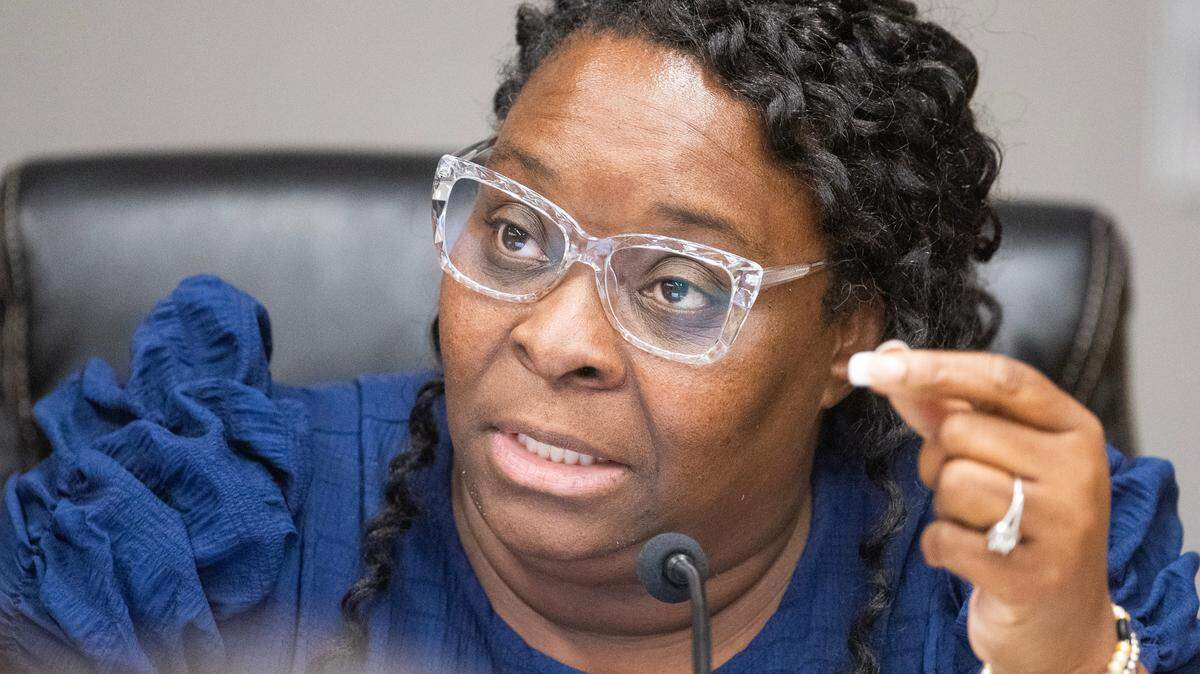
The Lower Richland Alumni Foundation, a small, politically-connected organization led by former Richland County School District 1 board chair Cheryl Harris and Eastover grant writer Cleveland Wilson, paid out more than $100,000 in salaries and dropped nearly $200,000 on “conferences, conventions, and meetings,” according to a tax return the group filed with the IRS last month.
Neither Harris nor Wilson responded to requests for comment about the filing, which contained no additional information about the conferences. The accounting firm that prepared the organization’s financial documents said it could not discuss the filing without the group’s authorization.
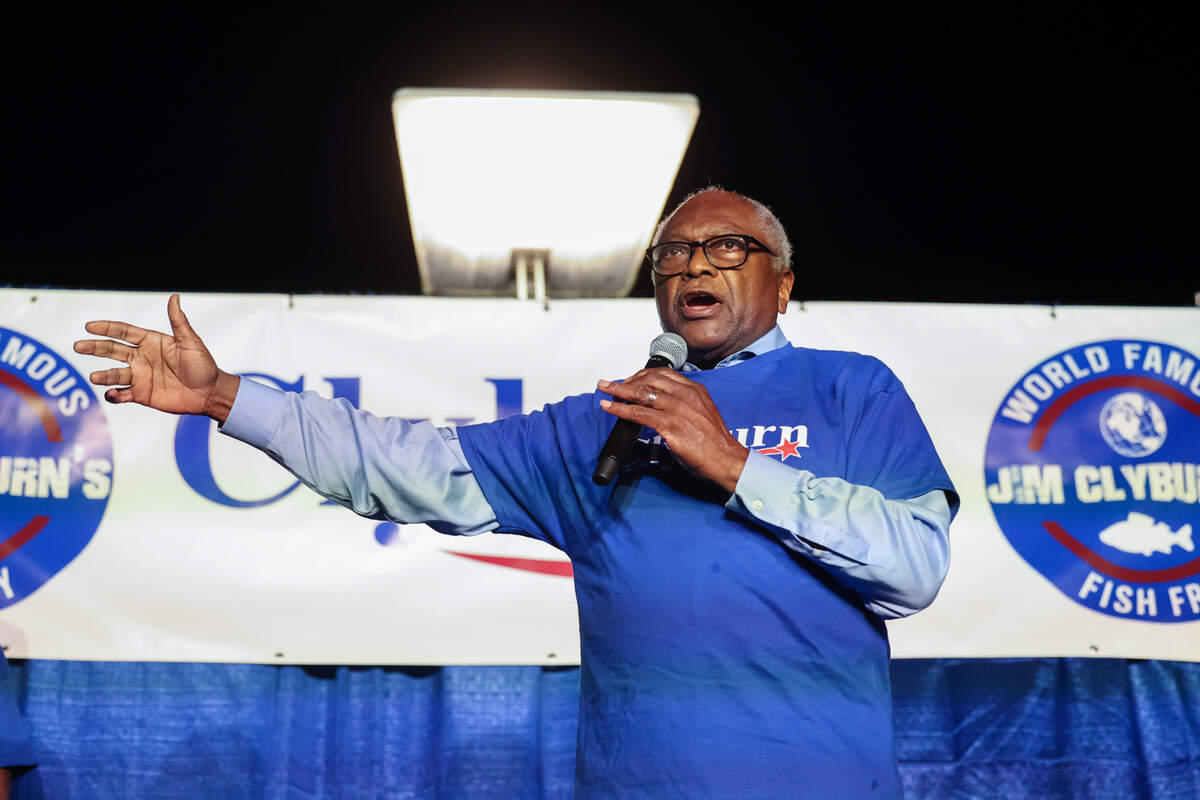
The Lower Richland Alumni Foundation, which in 2023 was awarded an $800,000 Byrne Discretionary Grant by U.S. Rep. Jim Clyburn, D-South Carolina, has not publicized hosting or attending any conferences, conventions or meetings as part of its anti-crime work.
The unexplained expenditures add to questions about the group’s financial stewardship of its federal grant and the breadth and efficacy of its Community Cares Project.
Launched in April 2023, the project was billed as a collaborative, data-driven plan to study and alleviate the conditions contributing to crime in the tiny rural communities of Eastover, Gadsden and Hopkins.
A “consortium” of agencies, organizations and community stakeholders, headlined by the Richland County Sheriff’s Department, was supposed to work together to carry out the project’s goal of creating “culture change” in the Lower Richland community, according to a grant proposal the nonprofit submitted to the U.S. Department of Justice.
In reality, most of the public entities the nonprofit identified as “partners” in its proposal denied any involvement with the project, and the few that acknowledged participating said they had limited roles, an investigation by The State Media Co. found.
Harris and Wilson have not responded to multiple requests for comment about the Community Cares Project. Their nonprofit was required to document its grant spending in quarterly financial reports filed with the federal government, but to date, those reports have not been made public.
A spokeswoman for the DOJ’s Office of Justice Programs said the organization had filed the reports, but refused to answer questions about them or explain why they were being withheld.
As a result, The State has been unable to determine how the vast majority of the nonprofit’s grant money was spent.
The newspaper contacted individuals associated with each of the five community-led programs publicized on the alumni group’s website and all eight of the public bodies and agencies identified as partners in the organization’s grant proposal.
Of the 11 that responded, only two small businesses and three government entities confirmed receiving anything from the LR Alumni Foundation. The estimated amount of support those groups received — between subgrants, payments for services and donations of supplies — totaled roughly $65,000.
Employee pay topped charity’s expenses
A pair of tax returns the LR Alumni Foundation filed last year, about six months apart, offer a small window into the organization’s spending on its Community Cares Project.
The documents, called Form 990s, are filed annually by nonprofits and contain information about an organization’s activities, governance and finances.
The alumni group’s filings are difficult to parse and conflict with other spending reports the nonprofit previously filed, The State’s review determined.
While the documents don’t separate out Community Cares Project spending, or even mention the project, they indicate the LR Alumni Foundation spent a total of $978,065 in 2023 and 2024.
Since the organization had no money prior to receiving the $800,000 federal grant — it finished 2022 with negative net assets, according to tax filings — and has no other significant revenue streams, the grant necessarily paid for the bulk of the alumni group’s expenses in 2023 and 2024.
So how was the money used?
Salaries and employee benefits, which accounted for nearly $250,000 across both years, or about a quarter of the organization’s total spending, constituted the greatest expense.
Harris and Wilson received a combined $160,000, documents show, and an unknown number of unidentified “current officers, directors, trustees and key employees” took in a combined $59,000.
Another $15,000 in compensation was distributed to “disqualified persons,” which the IRS defines as “any person who was in a position to exercise substantial influence over the affairs of the applicable tax-exempt organization at any time” during the past five years.
Harris and Wilson are the LR Alumni Foundation’s only employees, according to the group’s Form 990s. The nonprofit’s other three board members — Richland County Treasurer Kendra Dove, state Sen. Overture Walker, D-Richland, and Yolande Roach — are all uncompensated, filings show.
As elected officials, Dove and Walker are required to publicly disclose the sources of their personal income.
While neither has disclosed any income from the LR Alumni Foundation, state Rep. Robert Reese, D-Richland, has identified the group as an income source on his past two statements of economic interest.
Reese, the alumni group’s one-time communication chair, told The State he was paid $1,000 a month to coordinate one of the nonprofit’s grant-funded programs.
The freshman state representative, who performed the work prior to holding elected office, said he helped promote and schedule the LR Alumni Foundation’s Project L.E.A.D. initiative, a youth leadership program for students with behavioral challenges.
As part of the program, Richland County sheriff’s deputies gave presentations to middle and high school students about making good decisions and goal-setting.
“It was an opportunity for those students, who may have had some challenges in the classroom, to get some leadership training,” said Reese, who defended the Community Cares Project as “very much above board.”
The sheriff’s department acknowledged assisting with Project L.E.A.D, but said it didn’t design or manage the program.
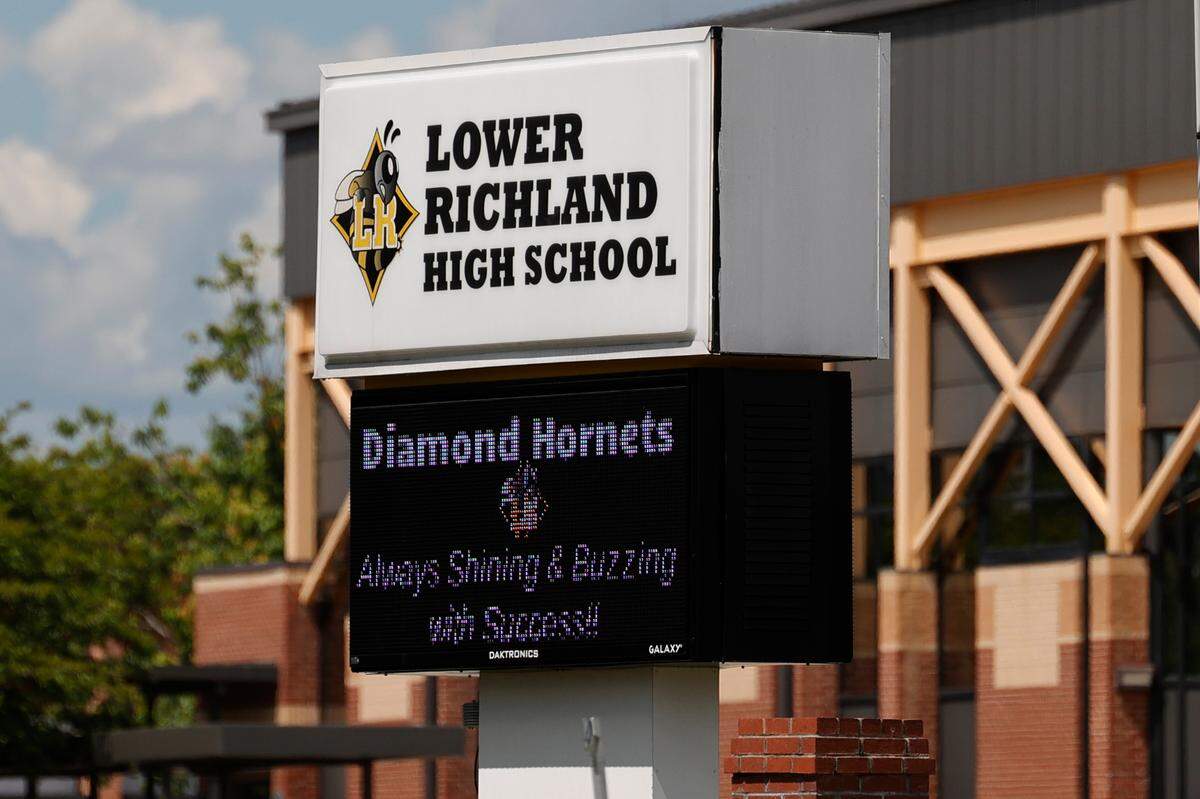
Invoices show the LR Alumni Foundation paid the department $4,455 over 13 months to supply deputies for the program, which was held primarily at the agency’s Lower Richland substation on the campus of Lower Richland High School.
Other expenses also raise questions
After salaries, the LR Alumni Foundation’s top expenses were 1) conferences, conventions and meetings; 2) community grants; and 3) equipment and supplies.
Despite spending nothing on conferences, conventions and meetings in 2023, such events accounted for 35% of the alumni group’s expenditures in 2024, according to IRS filings.
The organization is not known to have held or attended any conferences, conventions or meetings in either year, although it’s possible the $184,433 reportedly spent on them corresponds to fundraisers the group hosted that are not accounted for elsewhere in its filing.
The organization’s annual fundraisers, which have historically cost between $30,000 and $60,000, are unrelated to the Community Cares Project and would not have constituted an authorized use of federal grant dollars.
Community grants were the nonprofit’s next largest expense, IRS filings show.
The LR Alumni Foundation reported distributing $13,700 in grants to individuals in 2023, and $133,000 to organizations and government entities in 2024.
Only two of the grant recipients got more than $5,000, documents show.
The Town of Eastover, where Wilson now works as a grant writer and serves on the Planning Commission, got $6,000 for “summer youth mentorship,” and Lower Richland Promise, a politically-connected nonprofit with ties to Harris, got $8,120 for “neighbor cleanup,” documents show.
The remaining grantees aren’t listed on the group’s Form 990, as the IRS document only asks for the names of recipients that received more than $5,000.
Eastover, a community of barely 600 people, used the alumni group’s grant to create a summer jobs program for about a dozen middle school students, its mayor said.
The grant to Lower Richland Promise, a small nonprofit with a mission similar to the alumni group, appears to have gone toward the upkeep of five abandoned or senior-occupied properties in the Lower Richland area.
An April 2024 Facebook post by LR Promise said the cleanup project was “proudly funded” by the Lower Richland Alumni Foundation.
Education supplies accounted for the only other six-figure expense the alumni group reported during the two years it spearheaded the Community Cares Project.
IRS filings show the LR Alumni Foundation spent $127,000 on “Education and development supplies and equipment” in 2023, but don’t detail what the organization purchased.
The alumni group reported spending nothing on education supplies and equipment in 2024.
Life after the Community Cares Project
The Lower Richland Alumni Foundation remained active in 2025, but appears to have scaled back its operations significantly following the conclusion of the Community Cares Project.
Known for hosting an annual gospel music festival and a community awards gala, the organization held neither event last year.
The group canceled its signature awards gala in late October, at the height of the federal government shutdown, after twice postponing the event.
“It is with thoughtful consideration and a deep commitment to our community that we announce the cancellation of this year’s Annual Black & Gold Gala,” the LR Alumni Foundation posted Oct. 31 on its Facebook page. “In light of the ongoing food crisis and the social challenges currently impacting our neighborhoods, we believe it is essential to direct our attention, efforts, and resources toward supporting those in need.”
The organization, which had been charging $75 a head for the gala, assured all guests who had purchased tickets that they would receive a full refund.