Bill that shields NIL payments from public scrutiny advanced by SC Senate panel
A Senate panel on Wednesday advanced a House bill that exempts from public disclosure the amount college athletes and individual athletics programs are paid from a pool of athletic revenue-sharing money.
The fast-tracked bill, which the House passed 111-2 on the third day of session without any committee hearings, now heads to the full Senate.
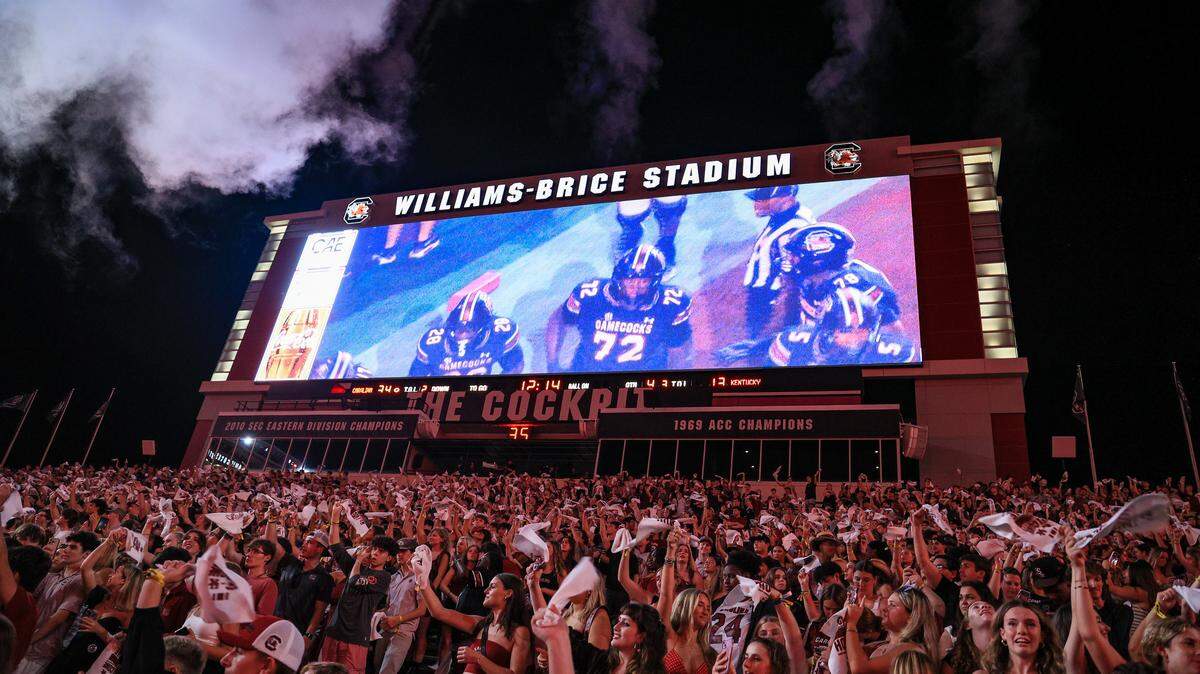
Lawmakers are rushing to amend the state’s existing Name, Image or Likeness law to head off pending litigation against the University of South Carolina that seeks the release of how the school spent athletics revenue-sharing money it is now permitted to offer student-athletes in the wake of a $2.8-billion NCAA settlement.
Colleges that opted into the settlement, which resolved three separate federal antitrust lawsuits alleging the association limited the earning power of college athletes, are permitted to pay their student-athletes up to a certain cap each year, with the amount escalating annually for the decade-long deal. This school year, colleges are permitted to pay athletes up to $20.5 million combined.
Under South Carolina’s NIL law, contracts with student-athletes are exempt from disclosure, as long as the university is not party to the contract. However, since the university is party to contracts paid out of revenue-sharing funds, those contracts would become public record unless state law is amended.
Supporters of amending the NIL law argue that if student-athlete payment information becomes public it would put universities in the state at a competitive disadvantage since no other state currently discloses revenue-sharing payments.
“If we think that the alleged texting of recruits after a deadline that (Clemson football) Coach Swinney complained about is a problem, you wait if we don’t pass this bill and these contracts become public, and we’re the only state in the country that allows that,” state Sen. Tom Young, R-Aiken, said. “Our constituents are going to be howling at us to do something.”
Opponents of the bill decried its endorsement of government secrecy.
State Sen. Everett Stubbs, R-York, said that while he understood the arguments in favor of exempting the disclosure of revenue-sharing payments at USC, Clemson and other public schools, he still took issue with the bill.
“These are compensation packages, essentially,” Stubbs said. “And even if they’re coming through a different revenue stream, I still think that when (public colleges) receive those funds, it’s classified as state funds.”
Gov. Henry McMaster, a proponent of transparency in NIL deals, has taken a similar stance.
Speaking to members of the media Tuesday, the governor expressed concerns about the bill, but was noncommittal about vetoing the legislation if it passes the Senate.
“I think there has to be public disclosure of money coming into a public institution,” he said. “Now how they do it in order to protect the competitive part of this equation is important, but that’s what I’m looking for.”
Senate Education Committee Chairman Greg Hembree struck a middle ground at Wednesday’s hearing.
The Horry County Republican acknowledged that the NIL law didn’t sit well with him, but presented it as a necessary evil that lawmakers should begrudgingly support.
“You may not like it,” he told his colleagues on the committee. “But we have to accept the reality of it and protect those athletes and protect their privacy and kind of evolve with the rest of the country on this, even though we may not like it.”
Due to the expedited track of the NIL legislation, public comment on the bill was not taken at Wednesday’s hearing.
Senators did, however, accept written statements from interested parties.
One such statement, penned by Coastal Carolina University athletic director Chance Miller, expressed Coastal’s strong support for the bill and asserted the legislation struck the right balance between transparency and protection.
Veteran media lawyer Jay Bender, formerly of the S.C. Press Association, came down forcefully on the other side of the issue.
Bender, who called the NIL bill a “betrayal” of the General Assembly’s professed commitment to transparency, wrote that there was no rational justification to hide the revenue-sharing money from public scrutiny.
“This legislation invites and endorses secret government activity on a grand scale,” he wrote in his statement to the committee.
Reporter Joseph Bustos contributed to this report.
This story was originally published February 12, 2026 at 5:00 AM.