Free breakfast or gun safety? What provisions did SC House include in its budget?
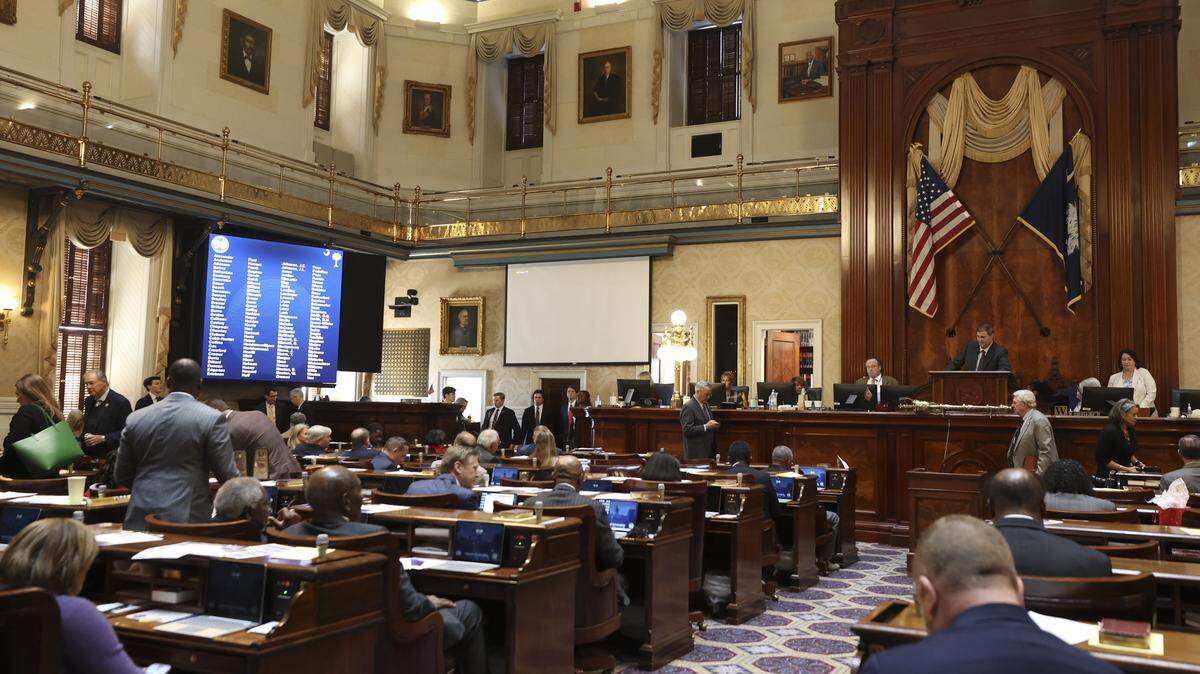
Students getting a free breakfast and lawmakers ensuring they’ll continue to receive a monthly in-district stipend were among the provisions included the spending plan adopted by South Carolina state House members this week.
Provisos, or one-year laws, are attached to the annual spending plan, that direct how agencies can and cannot spend money. They are regularly renewed from year to year. The budget now heads to the state Senate for its consideration.
Here are five provisions that were debated during by House members during budget deliberations.
Identifying fraud program OK’d
One of the provisos added will have the Department of Social Service assess its efforts to identify, report and combat childcare provider fraud among those who receive federal and state money in the South Carolina Child Care Scholarship Program, or receive any grants from the department.
This follows the national attention on Minnesota in recent months after a 2019 investigation found several million dollars in child care fraud was taking place.
“As we look at SNAP and we’re figuring out our error rates been pretty high, and we just haven’t paid attention to it, because it was all federal money, I think any of those pass-through programs, we’re going to be taking a lot closer look at and trying to make sure the money is being used for what it’s supposed to be used for,” Ways and Means Chairman Bruce Bannister said.
DSS will have to provide a report to the two budget writing committees and the governor’s office “detailing fraud mitigation measures implemented, any incidents of fraud detected, corrective actions taken, money recovered,” and information on the prosecutions of the cases.
Proposed gun safety program removed
An attempt to give schools the option to teach gun safety to their students, under a budget provision was thwarted. Lawmakers had the provision removed because the program was ruled not germane to the budget.
The proviso would have directed the Department of Education to work with the Department of Natural Resources to determine the earliest appropriate grade level to teach students about firearm safety and to develop a gun safety curriculum.
By the 2027-28 school year, the Department of Education also would need to start a voluntary pilot program for school districts to participate in that teaches safe storage of guns, school safety relating to firearms, what to do when finding a gun and how to avoid injury, and to tell an adult when a child finds a gun.
“It’s not to teach the use of guns, but awareness, avoidance and to tell adults if they see one. The intent is to reduce gun deaths among children,” said state Rep. Neal Collins, R-Pickens.
State Rep. Patrick Haddon, R-Greenville, who pushed for the program said he wanted to eliminate children’s curiosity of weapons that could lead to an accidental shooting. Haddon also said there would be efforts to include education and gun locks for adults. They would be taught to leave guns alone if they find them. Haddon has since put the proviso language into formal legislation.
“This isn’t about anything other than protecting the child and giving some education to some adults,” Patrick Haddon said.
According to the former Department Health and Environmental Control, South Carolina had 540 pediatric firearm deaths between 2003 and 2020, and had a rate 40% higher than the U.S. Half of the deaths were deemed a homicide, according to the former DHEC.
The program also has to be politically neutral, such as on gun rights, gun violence and the 2nd Amendment. The curriculum would not use live firearms or live ammunition.
The proviso also allowed instruction to take place in a classroom, through viewing of a video, or through online resources and would have continued through 12th grade, under the proviso.
Free breakfast for school children
All students, regardless of income, would have access to a free breakfast at school, under the House’s budget proposal.
Budget writers included $8.7 million in annual state money to pay for the expanded free breakfast program.
The money would pay for an additional 4.1 million meals during the school year.
Gov. Henry McMaster recommended the appropriation in his executive budget.
“Research studies have documented that children who eat breakfast daily are better prepared to learn in the classroom. Eating breakfast improves their cognitive performance, attention, memory and behavior – thereby improving their academic performance,” McMaster wrote in his executive budget proposal.
Students from low-income families traditionally receive free or reduced priced lunches and breakfast, which are paid for with federal money.
In-district compensation for lawmakers
The House approved continuing the $1,000-a-month in-district compensation after the end of this fiscal year.
In-district compensation, to help for costs such as holding town halls and sending mailers to constituents, was struck down last year by the state Supreme Court after lawmakers tried to increase the taxable income to $2,500 a month.
Lawmakers earlier this year passed and the governor signed legislation to restore the $1,000 a month in-district pay, but they need to restore the budget provision to ensure it continues beyond July 1.
No lottery vending machines for SC
Lottery players looking for a more convenient way to buy tickets to play games won’t have vending machines, at least not for now.
The House threw out a proviso that would have allowed lottery ticket vending machines to be placed by the lottery commission in stores that sell tickets.
The lottery commission estimated the vending machines would have brought in at least $1 million in the first year for lottery scholarships.
State Rep. Sarita Edgerton, R-Spartanburg, argued the proviso was not germane to the budget because the main effect of the proposal was to allow lottery vending machines as opposed to raising revenue for the state.
However, the efforts to allow lottery vending machines isn’t done. State Reps. Nathan Ballentine, Gilda Cobb-Hunter and Bill Taylor have sponsored legislation to allow the vending machines.