
Amid push for federal voter database, SC election leader says leave it up to state
The incoming leader of South Carolina’s election agency said he believes states should be responsible for running elections as the Trump administration aims to expand federal control ahead of the 2026 midterms.
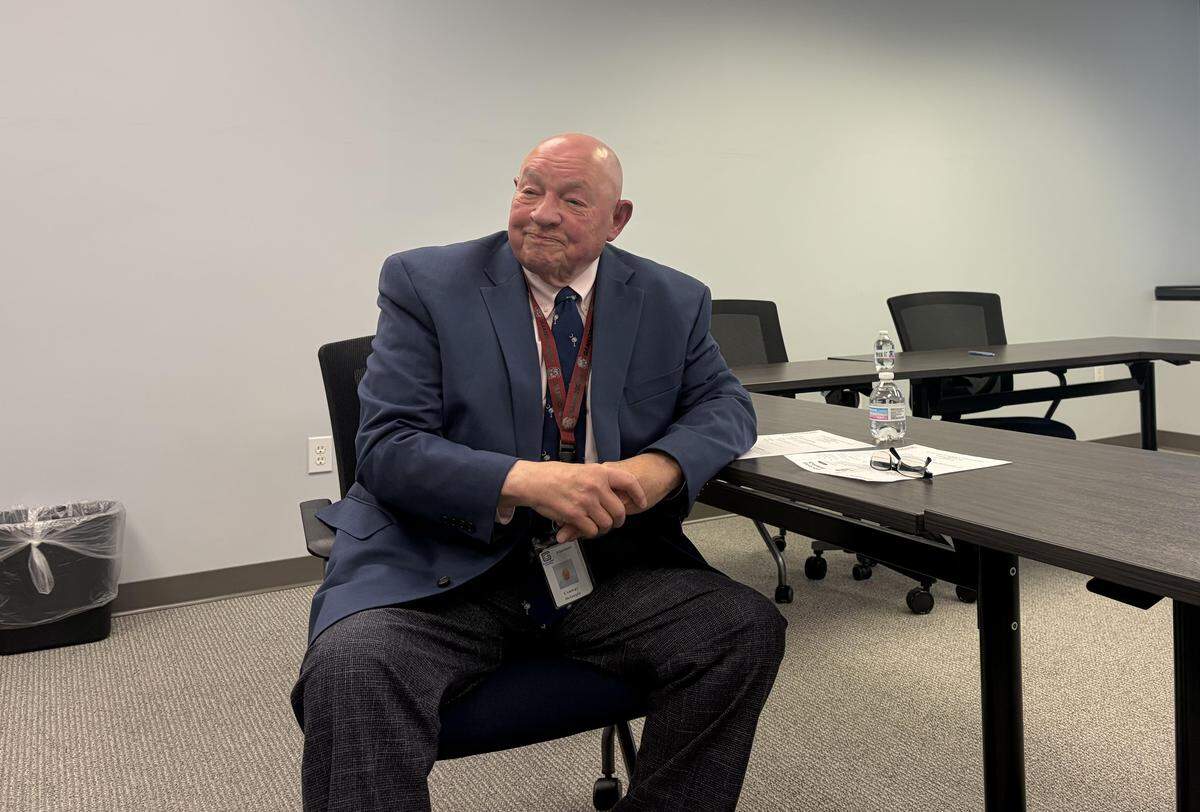
Conway Belangia, the interim director of the State Election Commission, told reporters South Carolina should run its elections because he believes the state does a good job on its own.
“I don’t like the idea of federal involvement in states’ elections process because most states do it well,” he told reporters Wednesday afternoon. “The ones that don’t are giving us the black eye.”
“I believe in state run elections,” Belangia continued. “We do it good in South Carolina, but we do it good because we have good state law. Don’t mess things up with federal legislation that they try to pass to affect every state, because we’re not every state.”
In his second administration, President Donald Trump has tried to take more control over administering elections, including suggesting a national eligible voter database and asking for sensitive voter information from states. But trust in elections should be built at a local level, Belangia said.
“Let’s not get into somebody from higher up trying to influence,” he told reporters. “Because lots of time, when the federal government gets involved, there are other agendas involved. All we want to do is conduct good, clean elections and have people elected in fair elections.”
Belangia was tapped by the Election Commission to run the agency permanently last month. His appointment received initial approval from a large panel of state senators Wednesday, but the full Senate needs to vote on the new leader. If approved, Belangia will lead the election agency for four years.
Belangia led the Greenville County election office for 34 years before his appointment to the South Carolina Election Commission. Belangia inherits an agency that went underwent a tumultuous few months, including the firing and arrest of former executive director Howard Knapp, other leadership turnover, a potential “waste” of taxpayer dollars on new ballot counters and the controversial request from the Trump administration for voter data.
He’ll also lead the direction of the 2026 elections, including the primaries in June.
Trump asks for SC voter rolls
The U.S. Department of Justice requested the complete voter rolls of most U.S. states, including South Carolina. How the administration plans to use voter data, which may include partial Social Security numbers, has not been clear. The Justice Department said it wanted to enforce federal voting laws using election data obtained from South Carolina, according to emails between officials at the agencies over the summer.
Publicly released memorandums of understanding from Colorado and Wisconsin, who both denied the DOJ’s request, would require states to purge voters the federal government alleges are ineligible, Stateline reported. The Democratic National Committee also wrote former Election Commission interim director Jenny Wooten earlier this year, saying it was concerned South Carolina would give the federal government more power over voter registration, including the ability to remove voters from the list, if it turned over its rolls.
The DOJ plans to share voter data with the Department of Homeland Security to check citizenship, a U.S. Department of Justice attorney said in federal court in Rhode Island last month.
The agreement between the Justice Department and South Carolina is still being negotiated, Belangia told reporters.
“Between the legal staff and the commission itself, they’ve been dealing with that, and I’ll be brought up to speed on it a little bit later,” Belangia said.
More than 40 states received requests from the Justice Department for voters’ private information. Some states have already sent their voter rolls, and more than 20 primarily Democrat-led states have been sued by the federal government for resisting the request.
Some worry the private information of South Carolina’s 3.3 million registered voters could be exposed if it were sent to the Justice Department. The initial federal request prompted a lawsuit in state court from Orangeburg resident Anne Crook, who argued the data transfer would violate her constitutional right to privacy in South Carolina. Judge Daniel Coble of Richland County denied a temporary injunction in October. The lawsuit is still pending.
In January, Gov. Henry McMaster stressed the importance of privacy in negotiations.
“I want to be sure that our people’s business is not available to the world,” McMaster told reporters in January. “There’s some things that the federal government does not need to have. Some things that need to be very safely secure. I want to be sure that anything that we turn over is safely secure, and that’s what that memorandum of understanding is for.”
A federal voter database
Trump also proposed the creation of a national voter database in an executive order in late March.
The plan directs the Department of Homeland Security and the Social Security Administration to “compile and transmit to the chief election official of each State a list of individuals confirmed to be United States citizens who will be above the age of 18 at the time of an upcoming Federal election.”
The “state citizenship list” will be compiled using federal citizenship and naturalization records, Social Security Administration records, SAVE data and “other relevant Federal databases.”
The executive order said the federal government had the responsibility to ensure non-citizens weren’t voting. Since his loss in 2020, Trump has repeatedly questioned the integrity of U.S. elections without evidence.
Distrust of elections is something Belangia told lawmakers he wants to address. As a longtime election official, he believes South Carolina’s contests are run fairly.
“I can tell you personally that if I did not have confidence in the voting system that we are using, and if we did not have the extensive checks and balances that I’ve been part of and involved in, I probably wouldn’t be pursuing this,” Belangia told a small panel of lawmakers Wednesday. “But I have confidence in the system and checks and balances, in the people who are conducting elections.”