
Will SC ban intoxicating hemp drinks for everyone? State weighs prohibition
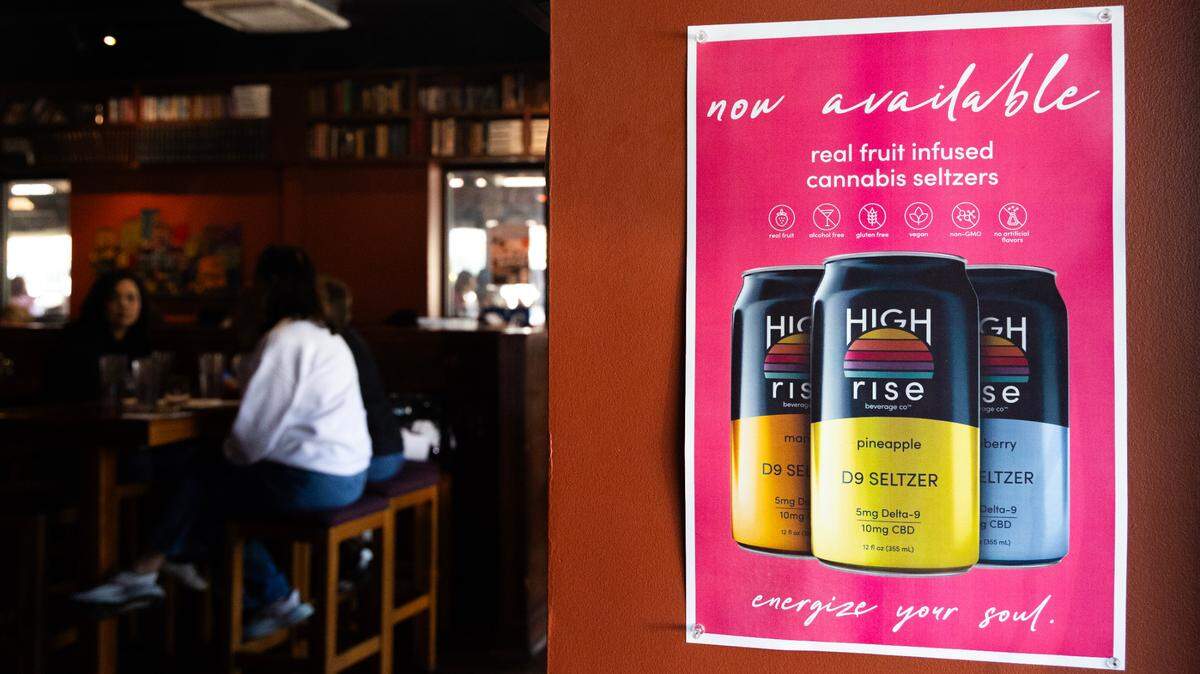
The fate of South Carolina’s growing THC industry will likely lie with a small handful of lawmakers who could opt to ban high-inducing drinks and gummies.
Lawmakers essentially have four options: regulate the burgeoning legal hemp industry, ban the products, put an age limit on THC edibles or do nothing.
Just limiting the products to adults 21 and over is unlikely, lawmakers say. And state Sen. Michael Johnson, R-York, who steered the hemp bill through the Senate, expects the legislature to still try and do something to regulate the products this year.
“If we choose not to regulate this, then when a 14-year-old is found passed out with THC gummies or flower, or whatever it’s gonna be, we’ll only have ourselves to blame for that,” Johnson told reporters Wednesday.
Instead of approving the Senate’s regulations for the products, the state House sent a conflicting version of the bill back to the upper chamber on Wednesday. The legislation both bans THC edibles and includes language to only allow adults 21 and older to purchase them. The House originally passed the age-restricted version.
The contradictory House proposal likely sends the debate over South Carolina’s hemp industry to a conference committee, a legislative process where representatives from both chambers hash out the bill and come up with a finished product for lawmakers to approve or oppose. Johnson told reporters the Senate would not agree with the House’s proposal.
“There are conflicting provisions of what we did, but we weren’t making law today,” said state Rep. Weston Newton, R-Beaufort. “We were posturing for going to conference.” Newton chairs the House Judiciary Committee, which handled hemp legislation this year.
The conference will likely need to reconcile over language already approved in either of the chambers. Republican leaders in the House and Senate have struggled to get a regulation passed in their chambers with tense disagreements within the caucuses. After days of debate, the Senate approved a deal to regulate hemp products in March, which allowed the sale of low-dose drinks and gummies but limited where they could be sold.
“I don’t think anything’s off the table at this point,” Johnson said. “I think that is reflective of what they sent back. Nothing is off the table. We will negotiate in good faith to try to get something done, whether it’s regulation or ban.”
Marijuana is still illegal in South Carolina. The federal government legalized hemp, which contains small amounts of THC, in the 2018 Farm Bill. In the last several years, businesses in South Carolina began selling edibles like drinks and gummies with enough hemp-derived THC to give consumers a high.
Here are the options lawmakers will likely weigh:
Complete ban
While both chambers tried and failed to ban THC products, the House approved an amendment essentially prohibiting the edibles Wednesday. Newton and Johnson both said a complete ban is still on the table.
The amendment prohibits consumables with more than 0.4 milligrams of THC, which practically bans the industry, said state Rep. Greg Ford, R-Dorchester, a former hemp farmer who said THC tinctures helped his son with seizures. The limit is lifted from a federal plan to end the government shutdown, which included language banning hemp-derived THC products. If Congress does not change direction, psychoactive THC products will be banned across the country in November.
Ford pushed to loosen regulations passed by the Senate on Wednesday.
“I wanted a bill to come out of here that’s going to allow the hemp industry to survive and thrive once we get through the federal side of things,” Ford said. “What we did today is we set it up on a path for failure.”
After hours of failed hemp-regulation amendments, state Rep. John McCravy, R-Greenwood, put up his ban amendment right before lunch break Wednesday. The change, which now allows the conference committee to ban the products, passed easily 56-36.
“All this does is effectively stop the psychoactive, recreational use of THC in South Carolina,” McCravy said.
After lunch, Ford failed with several attempts to unwind the ban, along with state Rep. Gil Gatch, R-Berkeley.
“While you were sleeping, we passed an amendment that bans all hemp products because nobody was in here. It got through. It was a well done, executed play on those who wanted to ban all hemp products, congratulations,” Gatch said on the floor.
Only add age limits for THC edibles
The other change adopted by the House on Wednesday restricts THC products to adults 21 and older. It leaves out other proposed regulations, like potency caps or limits on where edibles can be sold.
Johnson said he doesn’t see his chamber agreeing to solely regulate age requirements. However, it gives the House more flexibility to negotiate during conference committee, state Rep. Jay Jordan, R-Florence, told lawmakers on the floor.
For Ford, the best scenario would be to kill the bill all together, but he said just age limits, though unlikely, would be okay.
Regulate hemp
The conference committee could also craft a regulation using language already adopted by the state Senate last month.
The Senate allowed gummies and drinks with low-doses of high-inducing THC to be legally sold in the state. Gummies and some higher-dose drinks could only be purchased in liquor stores, while canned beverages with 0 to 5 milligrams of THC could be sold behind a counter at retail stores with proper licenses. Restaurants and bars would be barred from selling THC drinks.
The bill also creates packaging and testing requirements, prohibits synthetic cannabis products and restricts THC products to adults 21 and over.
Do nothing
Representatives from the state Senate and state House would need to agree on a ban or regulation. They could always opt not to meet in conference committee or not reach an agreement there.
Hemp advocates pushed to kill or delay the bill during the debate this week.
“The best scenario is to kill the bill all together because every scenario that’s out there right now cripples our hemp industry,” Ford said. Hemp drinks alone were a $1.1 billion industry in the U.S. in 2024, according to a report from cannabis industry group Whitney Economics.
But House and Senate leaders said they were determined to try and regulate hemp-derived THC this year.
“I’m confident that we’re going to work in good faith to try to reach a compromise,” Johnson said.
“The young people in South Carolina, the teenagers, absolutely cannot have the ability to get their hands on this,” Newton said. “And it needs to be structured and regulated.”
This story was originally published April 23, 2026 at 10:43 AM.