Next set of SC House members in line to get pay raise under proposed state budget
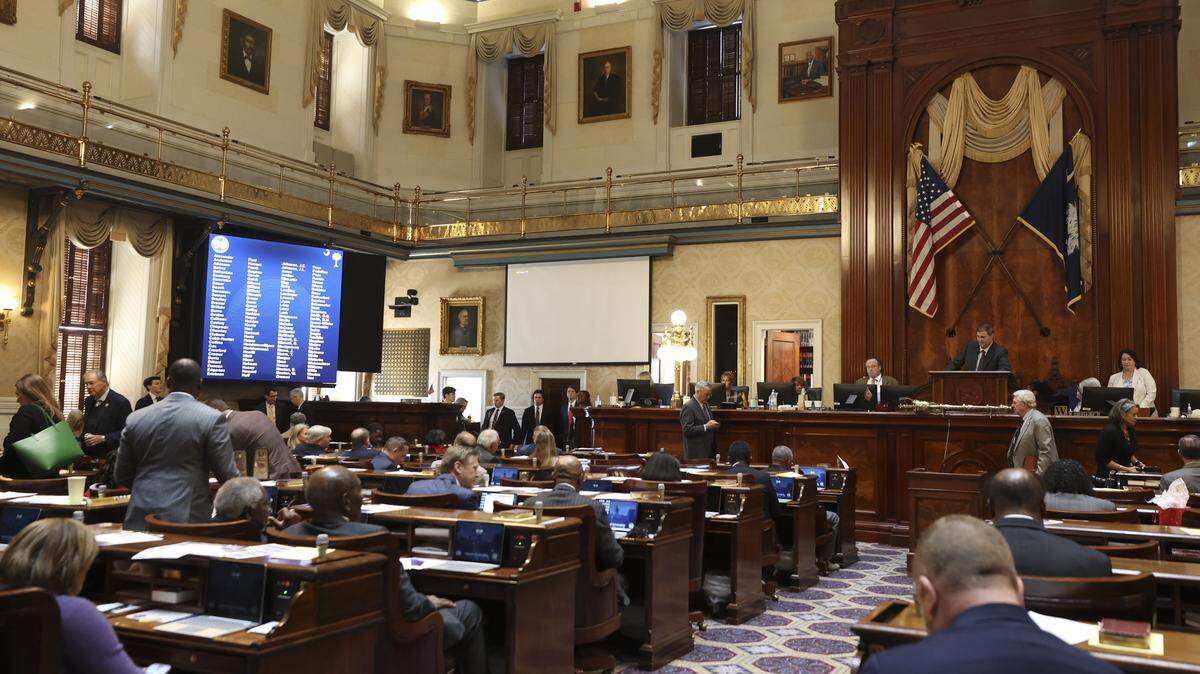
Whoever is elected to the South Carolina House in November is set to see higher pay to help cover costs for in-district expenses.
House members Wednesday agreed with a Senate plan to increase in-district compensation to $2,500 a month from $1,000 to help cover expenses while back in their districts. The money pays for holding town halls, purchase letterhead, buy a computer for legislative duties, or pay for fuel to travel the district, among other items.
The House voted on changes to the budget ahead of an expected conference committee with the Senate to finalize the spending plan for the 2026-27 fiscal year, which begins July 1.
The pay increase would go into effect after the House elections in November.
“I believe that the pay has been too low around here for a long time on my way out, I hope I can help a few folks that will be here for years to come receive a little bit more funding,” said House Majority Leader Davey Hiott, who is not running for reelection this year.
Last year the state Supreme Court struck down a similar proposal because a General Assembly cannot raise its own pay in the middle of a term.
The pay raise passed 62-42. Members of the hard-line conservative Freedom Caucus criticized the raise after the state Senate decided not adopt tax cuts included in the One Big Beautiful Bill and the General Assembly passed a tax reform package that cut the tax rate for most filers, but increased the rates on about 624,000 income tax filers.
“Incredibly tone-deaf,” the Freedom Caucus posted.
The second version of the House budget sets up a planned conference committee with the state Senate to hammer out a final spending plan for the 2026-27 fiscal year which begins July 1.
“In my opinion, is this is a conservative, well-thought-out, responsible budget. We are not spending money we don’t have. It contains all the tax cuts, the things that we did in this House, anything the Senate did that we’re not doing is subject to being negotiated in conference,” said Ways and Means Chairman Bruce Bannister, a Greenville County Republican.
Lawmakers direct earmarks to home districts
The more than $15 billion spending plan now proposes $300 million worth of lawmaker directed spending on community investment projects commonly referred to as earmarks.
“That is our best effort to address those things in each member’s district,” Bannister said.
Those projects would have to survive conference committee to be included in the final state spending plan.
Last year lawmakers did not include earmarks in the budget, opting for a one-year pause. But with every House member up for reelection, bringing money back to the district can help create goodwill among voters.
The House also set aside up to $132 million to help pay for the cost overruns to prepare the Scout Motors site for construction, which the Department of Commerce says reached $150 million.
The money to help pay for the overruns would come from $153 million usually set aside to pay off debt. But the state only has about $21.3 million in debt payments due during the 2026-27 fiscal year. The money would be available for the Department of Revenue and the Department of Transportation to address the overruns and not go through the Commerce Department.
“If there’s some mitigation costs that they believe are appropriate under the circumstance, after they have reviewed those charges, they can assist and access those debt service funds to resolve that,” Bannister said.
The House also approved the Senate’s plan for the Legislative Audit Council to review how the $150 million in cost overruns occurred.
“We are also putting in what I would argue is a like a child, like proviso, telling state agencies that they cannot obligate the state of South Carolina to owe money to someone that they’re not authorized to authorize. If you don’t have it in your budget, you cannot bind the state at this point on, and hopefully we’ll make that clear,” Bannister said.