‘Too much southern blood in me to surrender,’ SC Senate opts against redistricting
The South Carolina Senate stopped an effort to redraw the state’s congressional maps, bucking pressure from the White House and the expedited process to redistrict in the House.
State senators could not muster the necessary votes to amend a sine die agreement to allow for a discussion on middecade congressional redistricting after session formally ends Thursday.
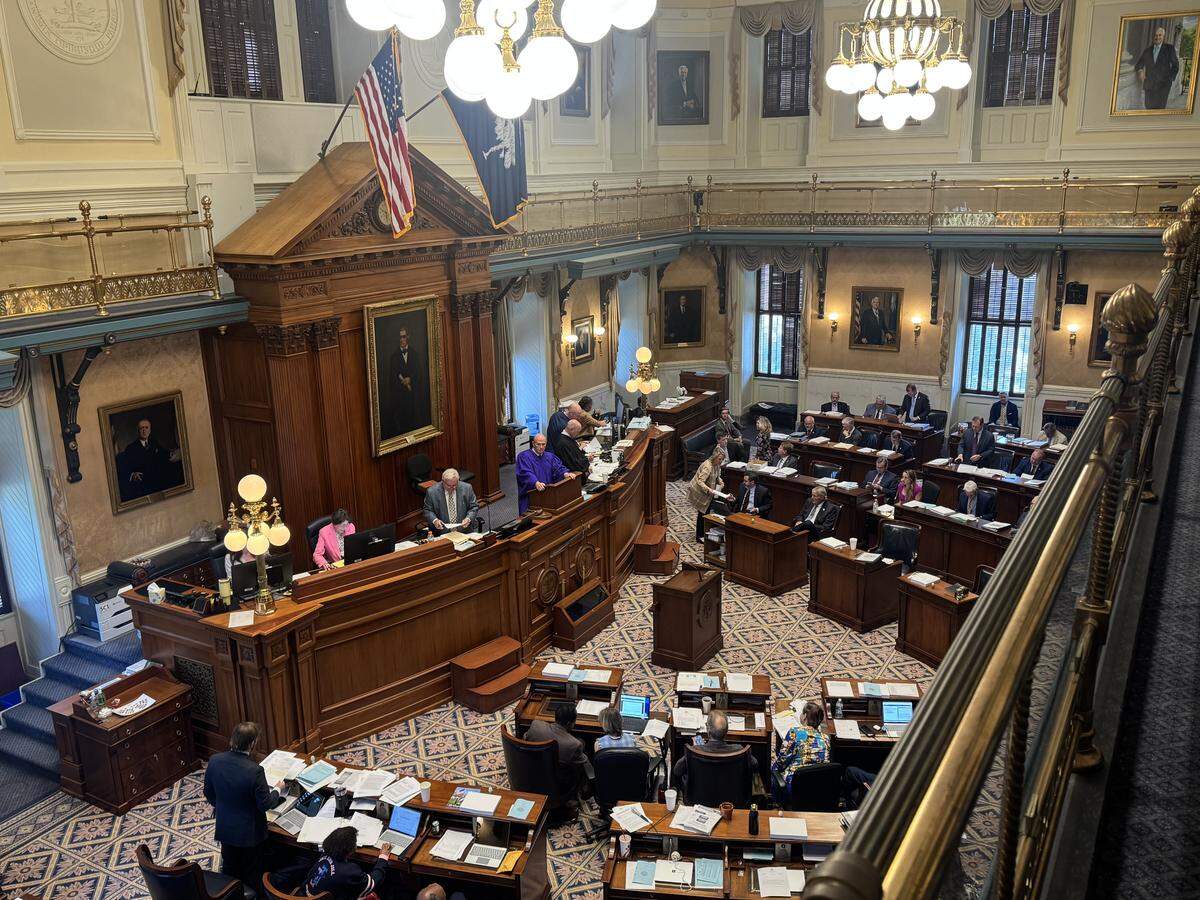
Two-thirds of the upper chamber, which has a Republican supermajority, needed to agree to a special session for congressional redistricting, but the effort failed 29-17 Tuesday afternoon. Several Republican senators, including Majority Leader Shane Massey, R-Edgefield, voted against the amendment passed by the House last week.
Massey was joined by the chamber’s 12 Democrats and Republicans state Sens. Sean Bennett, Chip Campsen, Tom Davis and Greg Hembree. Pressure on Republican members of the upper chamber mounted over the weekend.
On Monday evening, President Donald Trump publicly pushed the state Senate to vote in favor of redistricting on Truth Social. Trump and the White House previously encouraged South Carolina legislative leaders to look at redrawing the state’s congressional districts after leaders said they weren’t interested in the process.
“I’m watching closely, along with all Republicans across the country who are counting on their elected leaders to use every legal and constitutional authority they have to stop the radical left Democrats from destroying our country, including leveling the playing field against their decades of egregious gerrymandering and census rigging,” Trump posted on Truth Social.
Massey spoke extensively against redistricting on the floor Tuesday before the vote, speaking about his conversations with Trump and opposing bowing to pressure from the federal government.
“If we don’t consider the concerns of South Carolina, there is no one left,” Massey said. “We are the last lines. I have too much southern blood in me to surrender.”
State Sen. Brad Hutto, D-Orangeburg, also argued redistricting shouldn’t be done at the whims of the federal leaders, but through a process that allows South Carolinians to weigh in.
“We just don’t take documents from Washington and say ‘thank you, sir. Thank you, ma’am.’ We are the deliberative body,” Hutto said.
Republican senior members of the upper chamber spoke out against the rushed process.
Redistricting, which happens once every 10 years after the census, is usually a multiyear process that includes testimony from around the state.
“There is no time to do what we’re being asked to do,” said state Sen. Luke Rankin, R-Horry, who chairs the Senate Judiciary Committee, who voted to amend the sine die agreement.
Campsen, R-Charleston, also said the map was proposed by those in Washington, D.C. and not by people in South Carolina.
“No input from anyone from South Carolina, no input from the House of Representatives. No input from the Senate. It was just handed on down from above,” Campsen said.
State Sen. Larry Grooms, R-Berkeley, supported the map and defended it as keeping some communities of interest together. Previously the old 1st Congressional District, before South Carolina had seven congressional districts, had Myrtle Beach and Charleston together.
“It’s a good map for those along the coast,” Grooms said. “It was a good district then, it would be a good district if they were put together again.”
Grooms pointed out that the procedural vote not to allow a debate on redistricting means there will be no sine die agreement. That would require Gov. Henry McMaster to call back lawmakers to finish work, but he can’t require them to work on any specific issue. However, any issue could come up.
Lawmakers still have to finalize a spending plan for the upcoming fiscal year.
Massey, who for over a week has argued against redistricting, said the U.S. Supreme Court decision on Louisiana’s congressional maps, which sparked the redistricting push, did not apply to South Carolina. The map was drawn on partisan lines, rather than race, which the U.S. Supreme Court held up in 2024.
Whether the state should redraw its map is a political, rather than constitutional question, Massey said before the vote. He didn’t think the potential for Republicans to lose seats, breaking up ‘communities of interest,’ the disruption and cost of primary elections and the impact to the state’s influence in the White House made redistricting a worthy risk.
“I will say, however, that if the Democrats do win control of United States House of Representatives, it will not be because of South Carolina,” Massey said.
Republican lawmakers pushed to redraw the congressional maps to favor Republican candidates in every district, an attempt to oust U.S. Rep. Jim Clyburn.
But Massey said it’s good for South Carolina to have strong parties and the point of the supermajority isn’t to punish opposition.
“Crushing the minority opposition is not a demonstration of strength,” Massey said. “It’s an admission of fear and a show of weakness, and I don’t think it’s successful in the long term.”
Despite the Senate vote, House lawmakers plowed ahead with a proposed redrawn congressional map.
A panel of House lawmakers passed the map and new election date 15-9 Tuesday evening. State Rep. Jay Jordan, R-Florence, chaired the initial committee handling the map. He said the Senate could change their mind, and the House had done its job in the redistricting process.
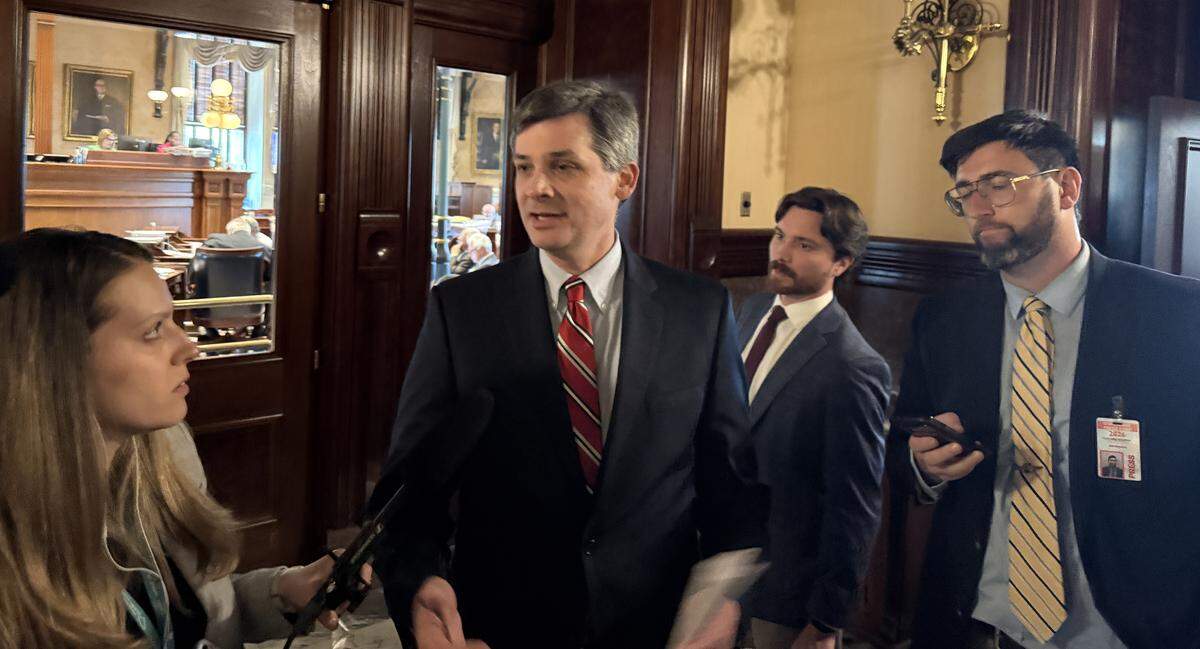
“All I can tell you is I believe the House has done what we can do to further the process,” Jordan told reporters Tuesday.
New election date
As South Carolina lawmakers debate drawing a new congressional map, the primary elections for the current districts are now less than a month away.
A House panel passed a bill with a new proposed map and later primary election date Tuesday. The vote followed another morning of tense, sometimes rowdy, hearings, where nearly every speaker again opposed redrawing the state’s congressional districts.
Many members of the public spoke against redrawing and were met with claps and cheers from the audience. The meeting concluded with chanting and yells, including “we having nothing to lose but our chains” and “shame” at members who voted to advance a new congressional map.
A woman was escorted out of the committee room by multiple security members, yelling expletives at lawmakers on the way out.
House representatives advanced a bill pushing congressional elections back more than two months. Statewide, local and state House elections would still occur June 9, under the House proposal.
The new primary date for congressional seats would be Aug. 18, with necessary runoffs Sept. 1 under an amendment passed Tuesday. The new date would be effective if the legislature passes a new congressional map.
Running two statewide primaries this summer and meeting federal requirements ahead of the general election in November will create tight deadlines for election officials. State and party officials will have to certify winning primary candidates quickly, and the election agency will only have ten days to prepare and test ballots, said Election Commission executive director Conway Belangia on Tuesday.
Other factors, including challenges to election results in the proposed August primaries, would be a “monkey wrench into just about everything,” Belangia said.
“These timelines are incredibly tight,” Belangia said Tuesday. “State and county resources will be stretched, and we will work to meet these extraordinary demands, especially in the election community.”
It will cost the state an additional roughly $2.2 million for the August primary and another $1 million for the runoffs, Belangia said. The Election Commission did not receive extra funding in their budget for the additional elections. Counties will also have to pay to run additional elections, which some lawmakers worried would hurt local budgets.
“Trump’s tweeting about that. He needs to tweet that he sent us some money here to help pay for this, in my opinion,” said state Rep. Justin Bamberg, D-Bamberg, referencing Trump’s Truth Social post from the previous evening.
A panel of House lawmakers passed the map and new election date 15-9 to the floor Tuesday evening.
‘Be careful what you wish for’
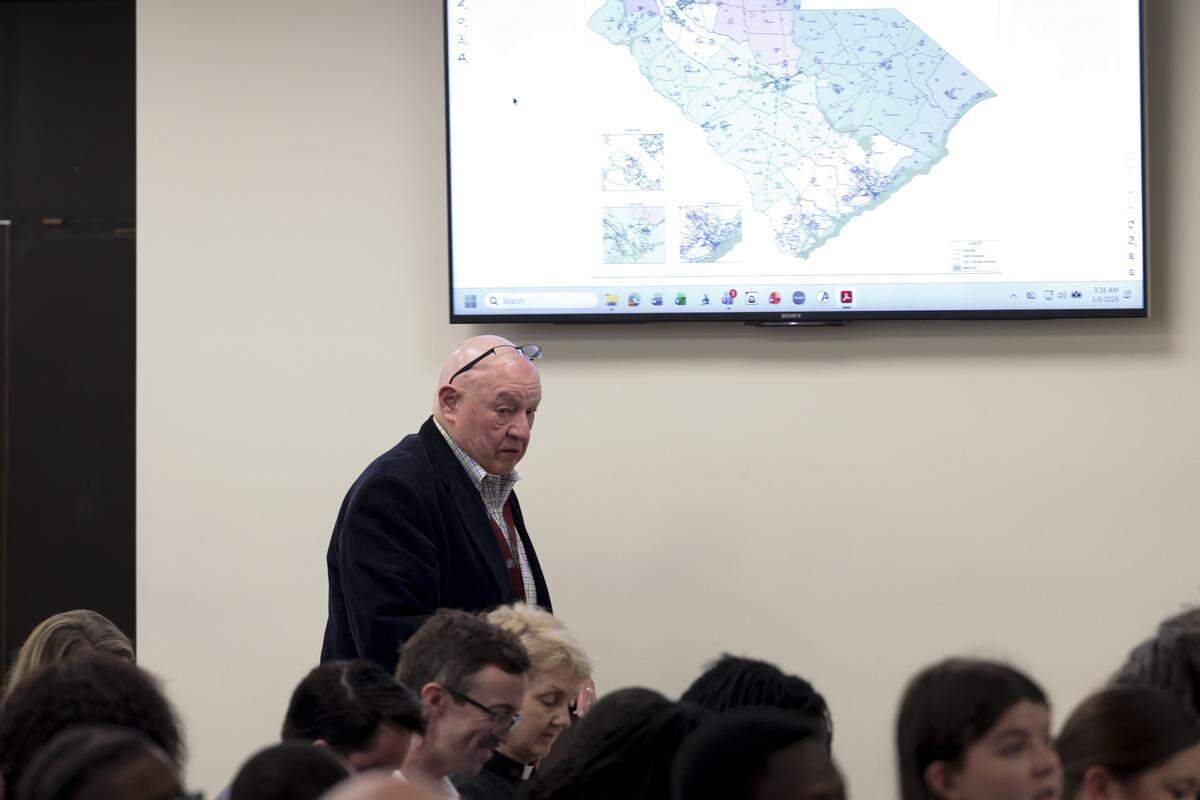
Adam Kincaid, executive director of National Republican Redistricting Trust, tuned into the meeting virtually Tuesday morning to explain the maps. Kincaid drew the proposed congressional map for South Carolina. The mapmaker also drew new GOP-dominated districts for Texas in 2025.
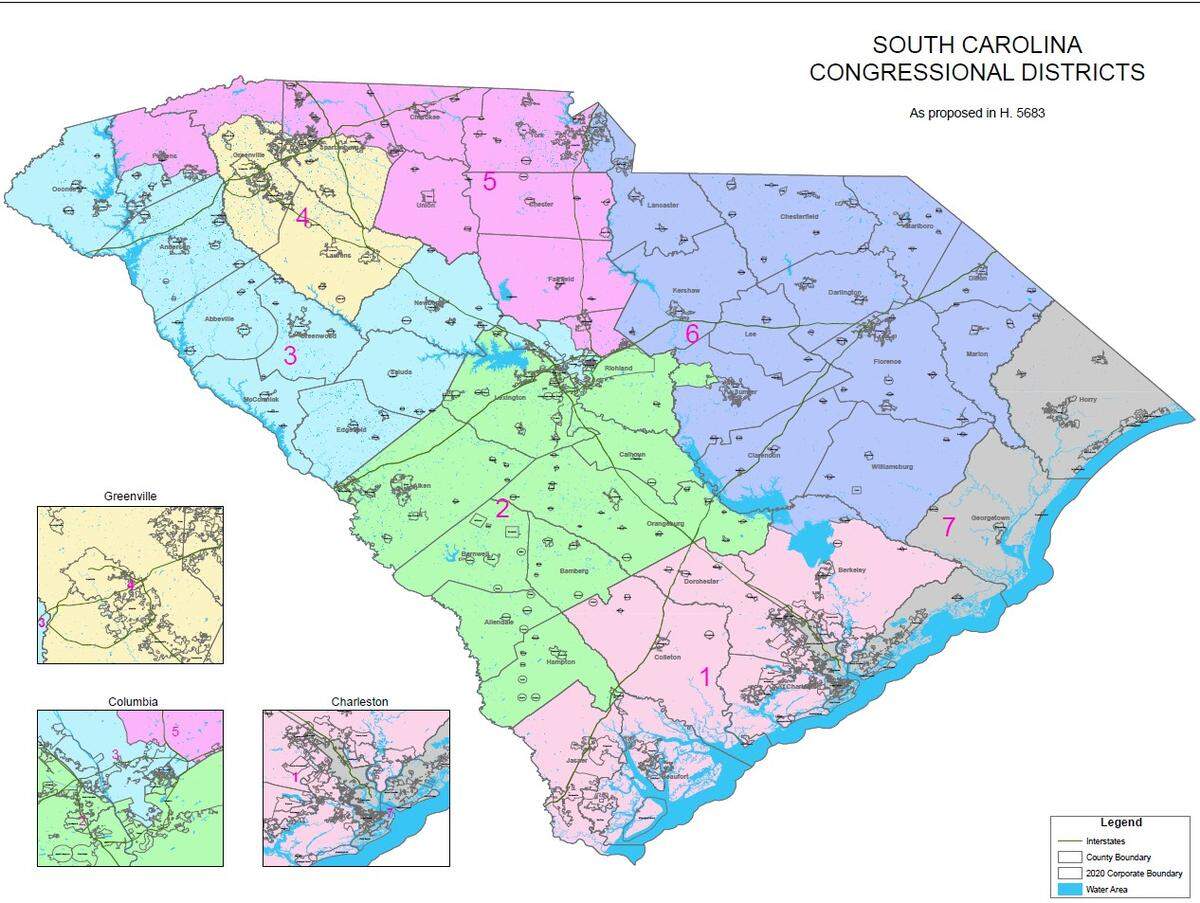
Kincaid told lawmakers the map would create seven districts favoring Republican candidates in 2026. Other Republicans, including Massey, said they were concerned the proposal could end up creating more Democratic congressional winners.
“I hope people looking at the map: Be careful what you wish for,” U.S. Sen. Lindsey Graham told reporters Friday. “Make sure that not only you can pick up a seat, you’re not putting other seats at risk, but we’ll know in a few days how this works.”
State Rep. Jay Jordan, R-Florence, asked if the districts created the most Republican version of a congressional map possible. Kincaid said taking into consideration other factors, like not splitting counties and compactness, the map had potential to create a seven Republican-represented districts.
“What I went through and tried to accomplish is a district, a map for South Carolina, that would elect seven Republicans,” Kincaid said.
Massey said on the floor Tuesday redrawing the map isn’t a risk worth taking for Republicans trying to gain seats in the U.S. House. South Carolina Republicans could end up losing seats in the U.S. House with a new map, and the effort could impact down-ballot races, including state House elections.
“I also think that one of the side effects of this is, very candidly, you’re going to motivate Black turnout, and there will be repercussions for that,” Massey said on the floor Tuesday. “There will be down-ballot repercussions for that.”
Massey also said the map “blows up” the preservation of communities of interest, including representation of York County and connecting Myrtle Beach and Charleston.

Kincaid didn’t take questions from every lawmaker weighing the new maps, saying he had a hard-stop at 10 a.m. The announcement brought an outburst from the audience and visible frustration from Democratic lawmakers on the panel.
“I would move that we adjourn this meeting until he is available and can give the people of this state the time that they deserve to get, instead of coming on here and logging off at 10 o’clock,” Bamberg said. “He should be at this podium, not on the computer.”
Jordan said Kincaid had been available since 9. Lawmakers did not vote to adjourn the meeting.
This story was originally published May 12, 2026 at 5:33 PM.