SC House plans return Friday to take up redistricting, GOP leader says
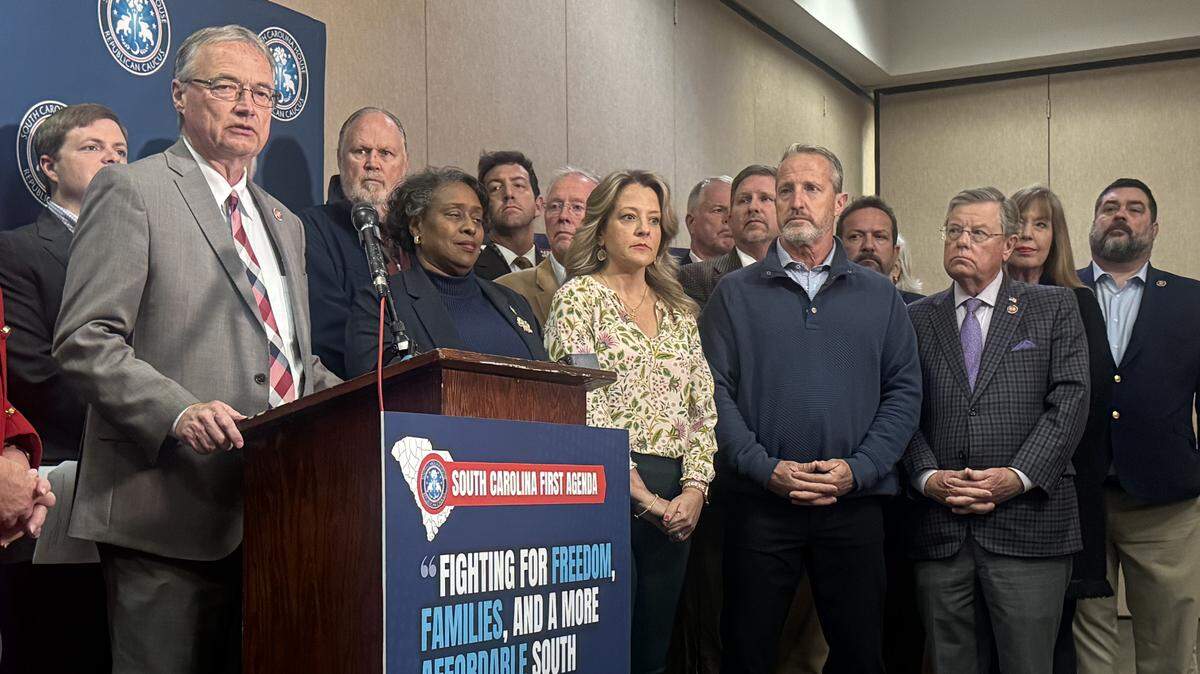
South Carolina House lawmakers will come back after the legislative deadline to attempt to redraw the state’s congressional maps, said Majority Leader Rep. Davey Hiott, R-Pickens, Wednesday evening.
After the state Senate declined to take up redistricting, Gov. Henry McMaster will call both chambers back after the legislative deadline 5 p.m. Thursday, GOP leaders from both chambers said. The House, which has plowed ahead with its own map, will come back Friday morning, Hiott told reporters.
“It’ll be long, it’ll be tedious at times,” Hiott said of the expected dayslong debate. “Hopefully it’ll be respectful, and it will be something like probably I’ve never seen before.”
Both chambers have less than two weeks to pass new congressional districts before in-person early voting starts May 26.
“We believe that’s the deadline,” Hiott said.
“We’ve got to move fairly quick,” Hiott added. “We don’t want to move too quick. We just want to simply move as fast as we can, quick as we can, but we will certainly want to give it all the time it needs. But we also understand that two weeks is basically the timeline that we’ve got to finish this bill.”
The governor can call lawmakers back after the legislative deadline absent a deal between the two chambers, but he can’t mandate what the General Assembly works on. Hiott said they’ll only work on redistricting. Other pending bills, including the budget, will wait after redistricting is resolved.
Senate Majority Leader Shane Massey, R-Edgefield, who opposes redrawing congressional districts this year, said the governor told him lawmakers would be called back.
Typically, the Senate would hold committee meetings before the congressional maps are debated before the full chamber. But Massey said he wasn’t sure how the process would go this time.
“I can’t imagine we’re going to be asked to vote on a map without having any opportunity, really, to look at it or study the numbers or have any conversation about it, but maybe we will be,” Massey told reporters Wednesday.
Besides redistricting, a spending plan for the 2026-27 fiscal year, which begins July 1 has yet to be finalized. Lawmakers are required to have a balanced spending plan for the next fiscal year.
The House Judiciary Committee already has approved maps to allow the 124-member House chamber to debate and vote on the new maps. Lawmakers now have access to a “map room” to review the proposed districts intended to lead to Republicans holding all seven of the state’s U.S. House seats.
Presuming the proposed congressional districts pass, the maps would move to the state Senate for its consideration.
But the Senate likes to consider itself the deliberative body and if a redistricting bill comes to the upper chamber, it could take its time and run out the clock as in-person early voting begins May 26 for the June 9 primary elections
“The fact that we have allowed for filing to open and close, we have allowed for ballots to be sent, ballots to be received, ballots have now been effectively cast by overseas voters, military voters....I think we’re already too late in the game,” Massey said.
Massey said if the redistricting bill comes over from the House, it’s a bill a senator can’t stop by objecting to it like with other pieces of legislation.
“If something comes over, nobody can block it,” Massey told reporters Tuesday.
However, it’s a bill that the state Senate could move slowly.
“It typically would go to committee,” Massey said Tuesday. “It’s a redistricting bill. I can’t imagine that we wouldn’t have committee conversation on it, but granted, there’s a timeline that you’re dealing with.”
During Tuesday’s debate, Senate Judiciary Chairman Luke Rankin, who oversaw the redistricting process for the state Senate after the 2020 census, lamented on how quickly the House wanted to move on redrawing the lines after receiving a proposed map from the National Republican Redistricting Trust.
Usually the process includes traveling around the state to hear from voters and residents about how the lines should be drawn.
“There is something about (this) that is lacking right now, and that is the process of actually doing it and taking the time to do it, because it is required by law to do,” Rankin said Tuesday on the Senate floor.
Rankin added on the floor lawmakers just don’t have enough time to carry out redistricting.
“It is a laborious thing, with oodles and oodles and oodles and pages of testimony transcribed all to either sincerely listen to people or to check the box. The box that we don’t have here, folks, whether we decide that we insist upon it or not, is what is the process,” Rankin said.
Still, those against redistricting expect efforts to redraw maps to continue. Social media chatter continued after Tuesday’s vote, including from candidates for governor, calling for McMaster to call a special session.
“I don’t think they’re going to stop. I don’t think the advocates are going to stop,” Massey said Tuesday. “I understand that. I mean there’s something that they want, and so I understand them trying to pursue it as much as they can.”
After a groundbreaking ceremony for the Robert Smalls monument on the State House grounds Wednesday, McMaster met in his office with House Speaker Murrell Smith, House Judiciary Chairman Weston Newton, Senate President Thomas Alexander and Massey. As legislative leaders left the governor’s office, they did not take questions from news media members.
After Tuesday’s failed sine die vote in the Senate, McMaster didn’t initially signal whether he would call lawmakers back, but said the General Assembly had time to finish its work.
“I urge the General Assembly to finish its work according to the U.S. and South Carolina constitutions and the best interests of the people,” McMaster said in a statement Tuesday.
This story was originally published May 13, 2026 at 4:08 PM.