SC redistricting bill ‘a long way’ from passing, GOP senator says ahead of holiday

An attempt to cap debate early on redrawing the state’s congressional maps for 2026 failed in the S.C. Senate, making it more challenging for the General Assembly to pass the redistricting bill before in-person early voting begins.
State Sen. Larry Grooms, R-Berkeley, asked to suspend typical Senate rules in order to limit lawmakers’ time to debate a new congressional map aimed at electing seven Republicans in the 2026 election. But Grooms’ motion Friday needed support from 31 senators in a chamber with 34 Republicans. Only 26 voted ‘yes.’
“We’re a long way from being able to pass this bill. The only mechanism we had failed today,” said Grooms, who is acting as the de facto floor Republican floor leader on the bill.
This sets up a long holiday weekend of debate for the upper chamber as several hundred amendments have been prepared, Grooms said. Any amendment on the clerk’s desk would have to be addressed and include potential roll call votes. GOP senators who want to see redistricting go through also will want to try to avoid the bill being changed because that would force the bill back to the House.
Senators will come back Saturday morning and continue debating redistricting, when Grooms will again try to invoke cloture. On Saturday, the threshold to invoke cloture drops to the lesser of a three-fifths vote or 26 members.
Grooms added he will still also try to suspend the rules, which will require 31 votes, in order to help move the bill.
“That would allow us to expeditiously move through the bill and the amendments, and we would be able to use the same procedure for a third reading, but absent of 31 members of the Senate voting to suspend the rule, this debate can continue to drive on well past Tuesday, well into early voting, and I think that’s wrong,” Grooms said.
“Tomorrow is really a make-or-break day for the bill, I believe that the time has expired,” Grooms said.
If and when cloture is invoked, each senator will have up to one hour of speaking before a vote.
Grooms doesn’t expect all 46 members to use their one hour to speak, but roughly half could avail themselves.
“So that puts us well over into Sunday, and should a majority of the membership choose to work on a Sunday, which that’s kind of iffy,” Grooms said. “So we could still be here on Monday, listening, letting senators take up their one hour of debate, and then once that expires, then we’ll move into consideration of the amendments.”
Ultimately, the Senate will need two roll call votes on the bill for it to move out of the chamber. Under Senate rules the two cloture roll call votes need to be separated by three legislative days.
Grooms said members of the GOP caucus are not at the point of dropping the redistricting effort because of the time it will require.
“There are a number of members of my caucus that would like to do that, but there’s also an awareness that people back home that aren’t familiar with the rules of the Senate wouldn’t understand why we’re not there plowing through the amendments to be able to bring it to a vote,” Grooms said.
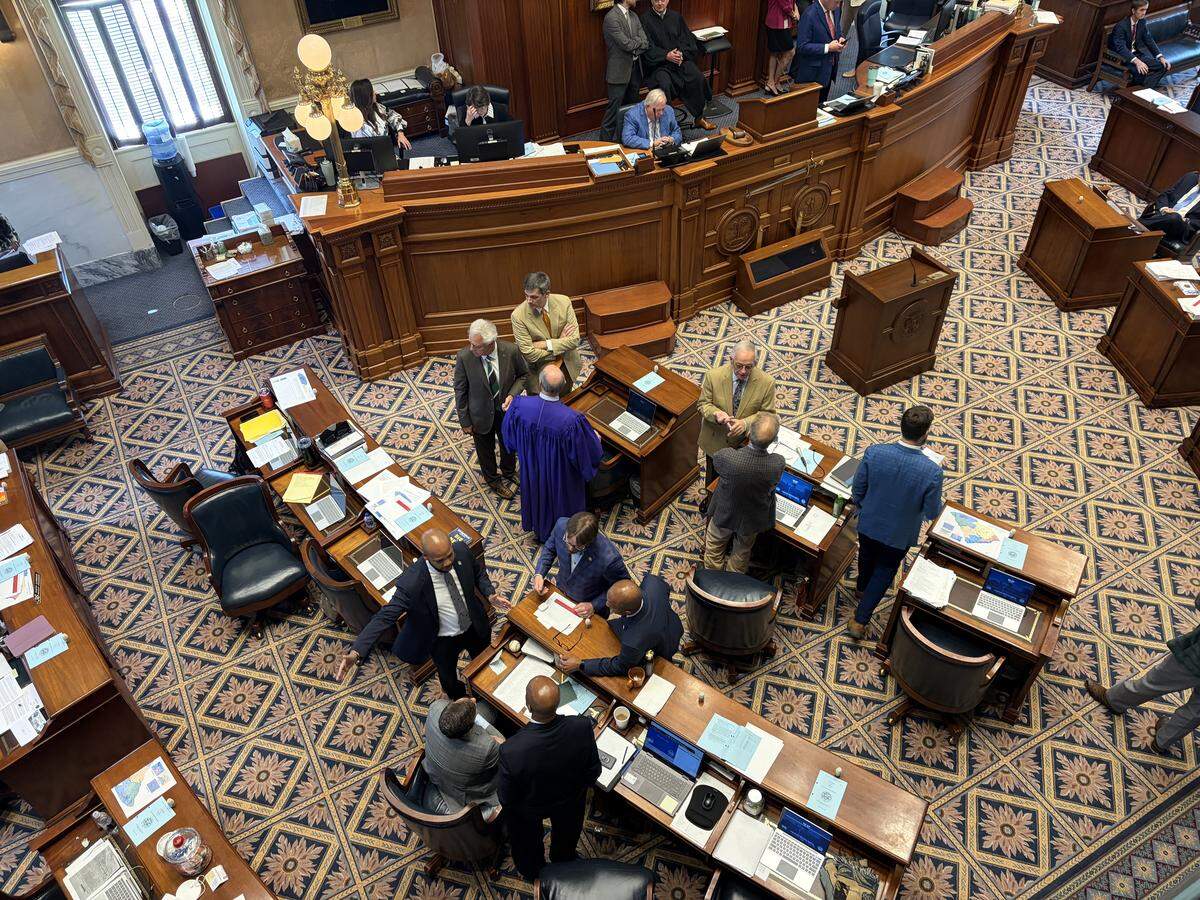
In Friday’s failed 26-15 vote, six Republicans opposed restricting debate early: state Sens. Sean Bennett, Chip Campsen, Tom Davis, Majority Leader Shane Massey and Luke Rankin.
With the prospect of not finishing the debate sooner rather later, the window to change the congressional map inches closer to shutting.
“I believe it’s over when voters start going to the polls, early voting and casting ballots,” Grooms said. Those who have sent back their mail-in absentee ballot would have to be sent a new ballot in August. But with in-person early voting starting Tuesday, people will see the congressional races when they vote even though there’s the prospect of those votes not counting.
“I do not believe the bill would have enough support to pass when we start disenfranchising voters,” Grooms said.
Grooms said the earliest he believes for the bill to pass on a third reading would be late next week, after early voting has begun.
Proponents wanted to move quickly as hundreds of voters return more absentee ballots every day and early, in person voting begins Tuesday, May 26. More than 3,400 absentee ballots with candidates from the current congressional districts have been returned, including from military voters.
Grooms conceded some members think they have more time to get redistricting done by June 5, the last day it would be possible for congressional candidates to file to run in potential new districts.
“It’s hard for me to reconcile if this bill became law on June the 5th. How a candidate would then be able to file since the filing period had already been closed?” Grooms said.
If a new congressional map passes, it will more-than-likely face legal challenges, which could further delay implementation in the middle of an election.
Massey, R-Edgefield, said changing the maps while voting is ongoing may see pushback from the state Supreme Court.
“There are lots of different factors if you’re looking for pitfalls, there are plenty of arguments to make at the state Supreme Court on this one already,” Massey said Thursday.
Early in-person voting for the primary elections begins Tuesday, and statewide, congressional and state House races will be on the ballot. That means the voters will see candidates for the U.S. House elections in their current districts even if the General Assembly votes to change the maps.