
SC Senate pushes redistricting debate to after start of in-person early voting
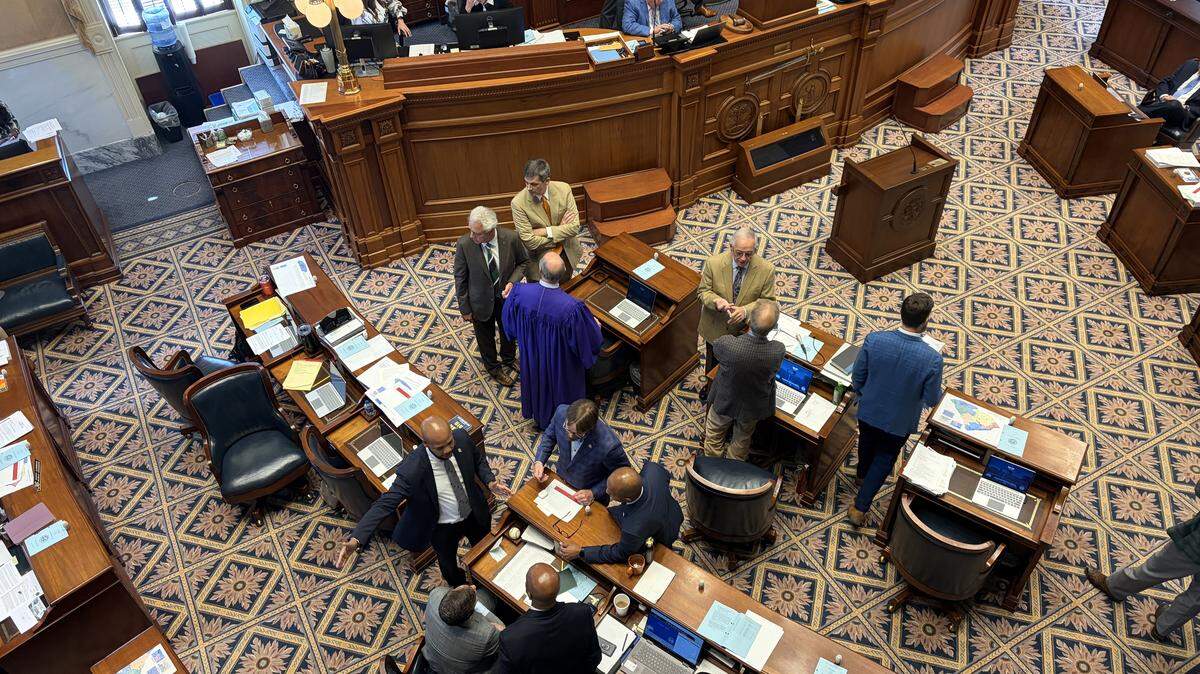
South Carolina senators won’t be able to vote on a new congressional map until after early in-person voting begins, a factor that could weaken support in the upper chamber and kill the effort to make every U.S. House district reliably Republican.
Lawmakers are set to come back Tuesday at 11 a.m. to allow senators to clear procedural hurdles needed to vote again to limit debate without actually being at the State House all holiday weekend. Voting locations across the state open hours before senators gavel in, at 8:30 a.m.
State Sen. Larry Grooms, R-Berkeley, who has steered the bill through floor debate, said passing a new congressional map Tuesday or early Wednesday morning is the “drop-dead” deadline.
“The governor has it on his desk on Wednesday, to me, that’s like the drop-dead date,” Grooms said. No changes could be made to the bill in the Senate to meet Grooms’ timeline.
Grooms said he would have liked to pass the map before early in-person voting begins, but it wouldn’t have been possible after the Senate declined to suspend the chamber’s rules Friday. He said his support for the measure wouldn’t change after Tuesday, but buy-in from others in his caucus could deteriorate without forcing a vote early.
“My support doesn’t wane, but I believe that support of other Republicans begins to fade as the day progresses on Tuesday,” Grooms said in an interview.
Whether Republican proponents are able to limit debate is up in the air. Three-fifths of senators need to agree to force a vote early, a threshold narrowly passed Saturday. Without limiting debate, the bill could wait for a vote indefinitely as the June primary date inches closer and early voting continues.
“We believe the issue is far from decided,” said state Sen. Russell Ott, D-Calhoun. “It’s not over yet. We’re going to keep pushing. We’re going to try to continue to convince people to understand the perspective that we and some other very courageous members of the Republican Party, Republican caucus, have been fighting for.” Ott said he thought it was possible for some Republicans favoring redistricting to flip sides.
With voters heading to the polls Tuesday to vote on the current congressional districts, some proponents of the bill may not be as enthusiastic, Grooms said. He said he didn’t know whether he has the votes to invoke cloture Tuesday. Senate Minority Leader Brad Hutto, D-Orangeburg, said holding debate until Tuesday forces lawmakers into a “tough decision.”
“By getting it into Tuesday, [it] forces another cloture vote, where people are going to have to make a tough decision,” Hutto said. “Because people that vote for cloture on Tuesday are actually voting to disenfranchise voters who are actually standing in line at polls at the very time that that vote will be taken.”
Seven Republicans voted against limiting debate Saturday: state Sens. Sean Bennett, Chip Campsen, Tom Davis, Greg Hembree, Shane Massey, Luke Rankin and Jeff Zell.
Zell on Friday voted in favor of suspending Senate rules and invoking cloture early. But Saturday, Zell said he didn’t think the chamber had time to pass an error-free map. Massey said Saturday he believed the proposed map included precincts that no longer exist.
Massey, the Senate majority leader, has relentlessly opposed the current redistricting effort. He also said current proponents may flip their support for invoking cloture while early voting is ongoing.
“I think there’s been concern expressed both publicly and privately about when you, when you have tens of thousands of people showing up at the polls, that it’s a different decision for a lot of people,” Massey said. “Now, frankly, I think the fact that you’ve had people who’ve already cast thousands of ballots by mail matter just as much as the people who show up on Tuesday or Wednesday, or whenever else, but there are some people who are really concerned about the large number of people who will show up on that Tuesday.”
Even if enough senators agree to limit debate, it could take many hours or days before they could get a final vote on the bill.
Lawmakers will take up filed amendments, at least over 40, and be able to speak on the proposed congressional map and election date for an hour each. That means debate could stretch late into early Wednesday morning or go later in the week.
And, if the map passes and ends up on the governor’s desk by Wednesday, it will almost certainly face litigation where state and federal courts will look at the process for creating the new districts. Part of the legal review will be how many people have already voted, Massey said.
“Let’s say they get the cloture votes on Tuesday, and the bill passes on Tuesday,” Massey said. “That’s the earliest scenario. It’s probably not going to be that early, but let’s say that’s the case, you’re, you’re almost certainly going to get a lawsuit filed, probably multiple lawsuits.”
Senators were initially expected to meet for full days of debate Sunday and Memorial Day, so the vote Saturday saved some “pain and misery,” Massey said.
Senators voted Saturday 27-17 to give the proposed congressional map intended to oust U.S. Rep. Jim Clyburn — the state’s only Democratic U.S. House member — a second reading. But they also agreed to carry all amendments over to the final reading of the bill.
Gov. Henry McMaster called the General Assembly back to allow lawmakers finish the state’s budget and take up redistricting less than an hour after both chambers adjourned for the year May 14. McMaster previously said he did not anticipate a special session as he waited to see if legislature would take up redistricting on its own.
House Republicans first announced they would take up redistricting more than two weeks ago, after the U.S. Supreme Court struck down Louisiana’s congressional map. President Donald Trump and White House staff asked South Carolina to look at redrawing maps with the intention to create seven districts favoring Republican candidates and oust Clyburn, said House and Senate Republican leaders. Clyburn represents the state’s congressional district with the highest Black voting age population.
4,000 early ballots already cast and received
While lawmakers push a new congressional map for the 2026 midterm elections, voters are already casting their ballots with candidates for the current districts. The redistricting bill would push only congressional elections back to Aug. 18.
More than 4,000 absentee ballots have already been received by the Election Commission, and 13,159 have been mailed out. 322 military ballots have been received, according to the state Election Commission.
Nearly 139,000 residents voted early and absentee in the 2024 state primaries, according to Election Commission data. That’s 27.5% of total votes cast in the election. In that year’s November general election, more than 1 million early and absentee votes were cast.
On Saturday, state Sen. Ed Sutton, D-Charleston, also recognized about a dozen veterans in the chamber watching the proceedings, pointing out hundreds of military ballots have already been cast.
Sutton, an Air Force veteran himself who was deployed to Afghanistan, named and thanked the attendees.
Christopher Himsl, a retired U.S. Army colonel and leader for South Carolina’s Veterans For All Voters, said conducting another election in August would disenfranchise military voters because many may not want to cast their vote again. He testified to the House and Senate about redistricting.
“We’re here for the veterans who can’t be here,” Himsl said Saturday. “We’re here for the folks who are overseas right now, family members, for the guys out in the Persian Gulf, they need someone here to give their voice through this process, that’s why we’re here today.”
Thousands more will also likely cast their ballots when early in person voting begins Tuesday. Democrats repeatedly encouraged people to early vote Tuesday.
“We would encourage as many people as can to go out early Tuesday morning and vote,” Hutto said. “We would like the courts to know that people cherish their right to vote. They were given the right to vote early, and if they go out and vote early, their votes should count.”
This story was originally published May 23, 2026 at 7:30 PM.