
‘Hatfields and McCoys’: LR5 election candidates spar over direction of school board
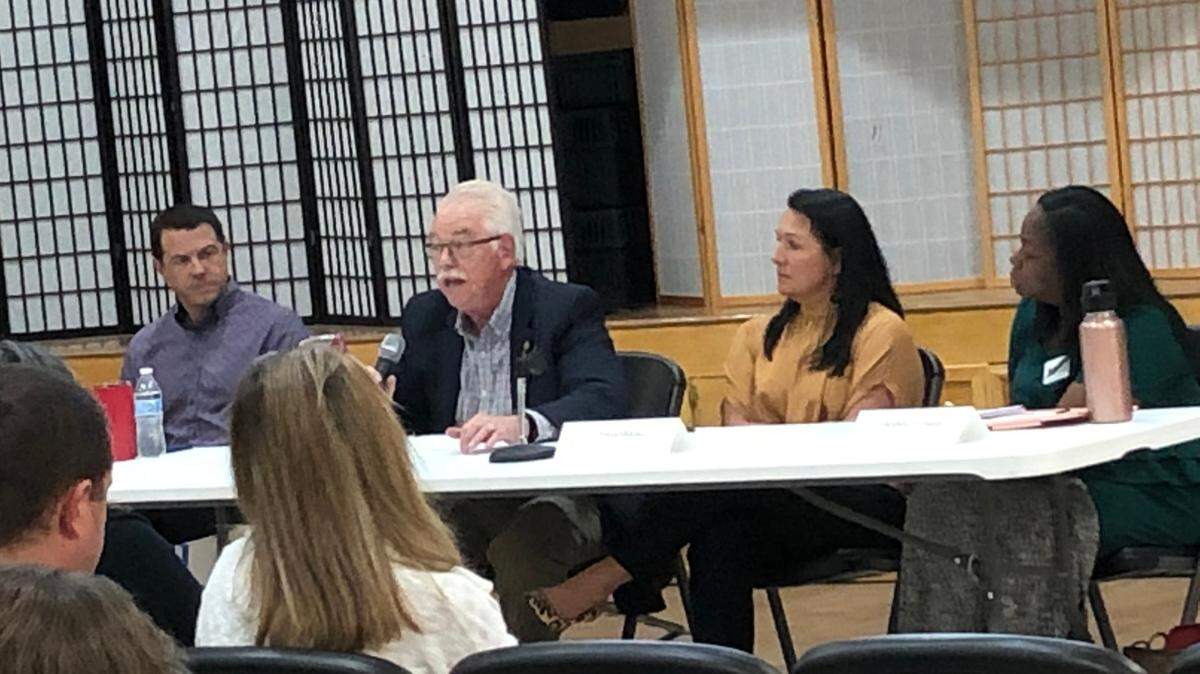
Two years after control of a polarized Midlands school board changed, voters can decide next month whether to continue the current Lexington-Richland 5 board’s sometimes-controversial practices or shake up the lineup again.
In the 2020 election, control of the Chapin-Irmo area school board flipped when two incumbents, Michael Cates and Robert Gantt, were voted off the board. That led to the former minority block of Jan Hammond, Ken Loveless and Nikki Gardner becoming the board officers.
In some ways, this year’s election is a referendum on the performance of the current board majority.
In the last two years, the board pushed to quickly return to in-person learning without restrictions during the COVID-19 pandemic, thrilling many parents but upsetting some faculty and administrators.
The board also initiated a procurement audit of school district spending that identified several areas of concern. Board members say they improved security and addressed discipline problems by setting up the “Nest” alternate learning program at Irmo High School.
But critics say the way the way the board has gone about making those changes has been heavy-handed, creating discord within the school district, with a popular superintendent being forced out and teachers who were critical of some of those decisions feeling intimidated. Two board members have been accused of ethics violations, including Chairwoman Hammond, who admitted to her violations, and Vice Chairman Loveless, who is challenging the accusations against him.
The board voted to sue former Superintendent Stephen Hefner, who filed a complaint with the district’s accrediting agency. And Loveless sued two constituents who he said made libelous comments on Facebook about him.
Audit and litigate
At an Oct. 3 forum held at the district’s Center for Advanced Technical Studies, candidate Kevin Scully criticized the district for a decline in test scores and an increase in class sizes, along with policies he credited with driving teachers out of the classroom to seek other jobs.
“The current board is focused on the past and settling old scores,” said Scully, one of the two people sued by Loveless. “They think we can audit and litigate our way back to excellence.”
That was a reference to the recent audit report that criticized previous spending decisions made by past school boards after a 2008 bond referendum — including one decision the auditing firm said raised a “fraud red flag” — and the lawsuit filed against Hefner.
In Lexington County, Loveless is running against small business owner Elizabeth Barnhardt; Renard Green, a retiree who used to work in sales; Scott Herring, a professor at the University of South Carolina; Mike Satterfiled, a former principal at Chapin High School.
In Richland County, board secretary Gardner faces Scully, a U.S. Department of Agriculture employee; Tifani Moore, who won a special election for the seat vacated by former board member Ed White last year; Kimberly Snipes, the diversity manager for the South Carolina Bar.
The top two candidates in each county will win seats on the school board for the next four years. Depending on the alignment of the winners, that could lock in a board majority until 2026.
Four candidates — Herring, Satterfield, Scully and Snipes — have been endorsed by the S.C. Education Association’s Fund for Children and Public Education.
Those candidates have said they want to ensure teachers feel appreciated and that divisions within the community can be smoothed over.
Hammond, the board chair who represents Lexington County, is not seeking another term.
‘We’ve accomplished so much’
At candidate forums held around the district this year, candidates for the seats have criticized how the incumbents have handled district staff and responded to outside criticism.
But board members say the last two years have been productive ones for the district, including on the procurement issues raised in the audit.
“For the first two years (I was on the board), we had to fight against the procurement policy,” Gardner said. “Sometimes, board members were told after the fact (about procurement decisions).”
Loveless touts his background in the construction industry as a major asset in overhauling the school district’s procurement process and saving money for the district’s taxpayers.
“Vendors don’t want somebody like me who can actually read and understand contracts,” Loveless said at a candidate forum Wednesday at Our Lady of the Lake Catholic Church in Chapin.
Gardner said she had considered not seeking another term on the board but decided that “our work is not done.”
“We’ve accomplished so much as a board over the last four years, and I would hate to see things I’m so passionate about come to an end because I wasn’t there to continue it,” Gardner said.
All candidates acknowledged that divisions in the district have been a problem in recent years.
“This is something that has weighed heavy on me,” Gardner said. “It’s been very divisive. It got very political.”
Gardner credited Superintendent Akil Ross, a former principal of the year at Chapin High School who was hired by the board last year, with helping to reunite the district and ease concerns among faculty and parents.
Snipes said she believes raised passions on the board were caused by the COVID-19 pandemic, the subsequent shutdown of in-person classes and slow reopening of schools. “If I’m on the board, we’ll work well together” in order to increase respect for teachers and the district office, she said.
Moore said too many people have been acting on an attitude of “what’s best for me and my kid.”
“We’re all in this together,” Moore said. “Our kids play sports together, we shop together, we go to church together. It’s about what’s best for the community and the neighborhood.”
Some said that the atmosphere with the school board had become so bad that it is affecting the district’s ability to retain teachers in the classroom.
Satterfield said he hears of “teachers being pulled in to cover other people’s classes because there’s not enough subs,” he said at an Oct. 11 forum at Irmo Middle School. “Seventy percent of teachers are thinking of leaving the profession, and a part of that is feeling a lack of respect within the district office.”
Herring, the husband of an LR5 teacher, said teachers shouldn’t fear “punitive punishment” for speaking out about conditions in the school district. “Teachers are leaving because they feel intimidated,” Herring said.
Loveless said the board had taken action to reward teachers, including an appreciation bonus and a “$50 Friday” promotion to reward teacher attendance, as well as extending COVID-19 benefits and conducting the first district-wide salary study in 20 years.
“In the last six months to a year, I feel like we’ve hit our groove,” Gardner said of her school board colleagues. “We’re able to address a lot of things we’ve talked about.”
She also wanted to combat the image of a “negative board.”
“We’re not intimidating people,” Gardner said. “We want you to be able to talk to us.”
Other candidates in the race hope to bypass the divisions in the district in hopes of getting something done.
Barnhardt is a mother of three who said she was inspired to run by the chaos surrounding the 2020 shutdown in education.
“There’s a lot of suffering in this district and across the country,” she said. “We need to put our students and teachers first.”
She compared the district to a bus full of people who all want to go to different places. “What we need is a mechanic who knows the ins and outs of how things operate.”
Green, a retiree and district parent, said he hopes to transcend the factionalism within the district.
“I’m not running to replace a voice on the board or on a team to offer a new voice,” said Green. “We don’t need another clique on the board so it becomes the Hatfields and McCoys.”
This story was originally published October 21, 2022 at 10:50 AM.
.jpg)