Parts of SC facing triple-digit heat sooner than usual, NWS says. Here’s when, how hot
Anyone living in the Midlands may want to avoid any significant outdoor activities next week.
According to the National Weather Service, thermometers could push past 100 degrees in much of central South Carolina next week.
Matt Gropp, meteorologist with the NWS in Columbia, said on Friday that Monday and Tuesday were most likely to have temperatures 100 degrees or higher.
“Plus or minus one degree,” Gropp said.
But even if thermostats don’t break the 100-degree barrier, the heat index will make it feel like temperatures are as high as 110 degrees from Monday through Thursday, Gropp said.
“We usually start to issue heat advisory criteria when the index gets above 108, but even below that it’s dangerous if you have no air conditioning or you’re doing work outside,” he said.
A strong ridge of high pressure for the entire East Coast is to blame for the jump in temperatures. The impact on air flow is what’s allowing heat to build up over the next few days, Gropp said.
Gropp added that the temperatures next week will be 8 to 10 degrees above average for the Midlands for this time of year, but not exactly historic.
“We get upper 90s and triple digits from time to time,” he said.
And don’t think you’ll escape extremely hot weather by not being in the Midlands. Much of the rest of the state will likely still endure temperatures in the 90s and a heat index above 100 degrees, forecasts show.
NWS summer forecast
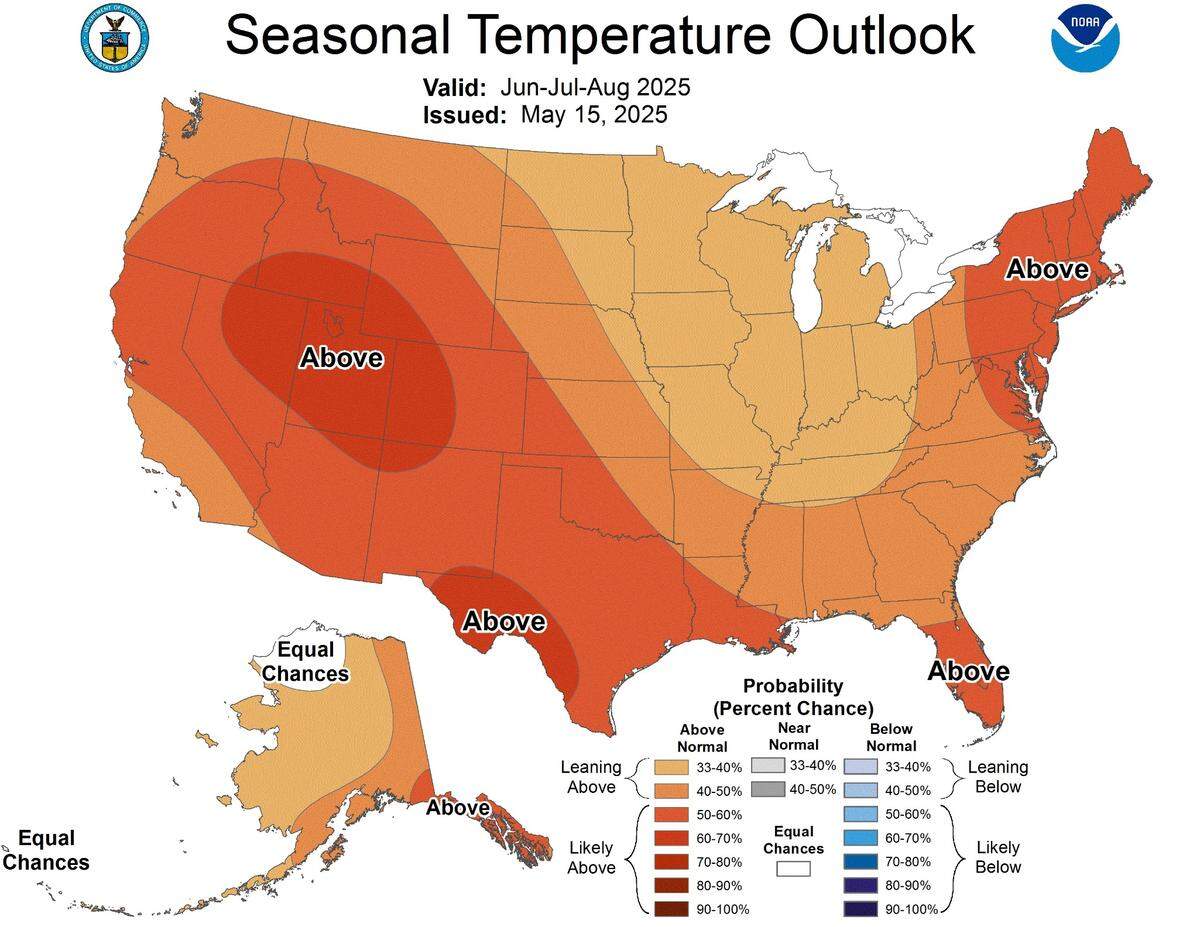
The NWS Climate Prediction Center had already predicted a 40% to 50% chance of South Carolina having above-normal temperatures in June, July and August.
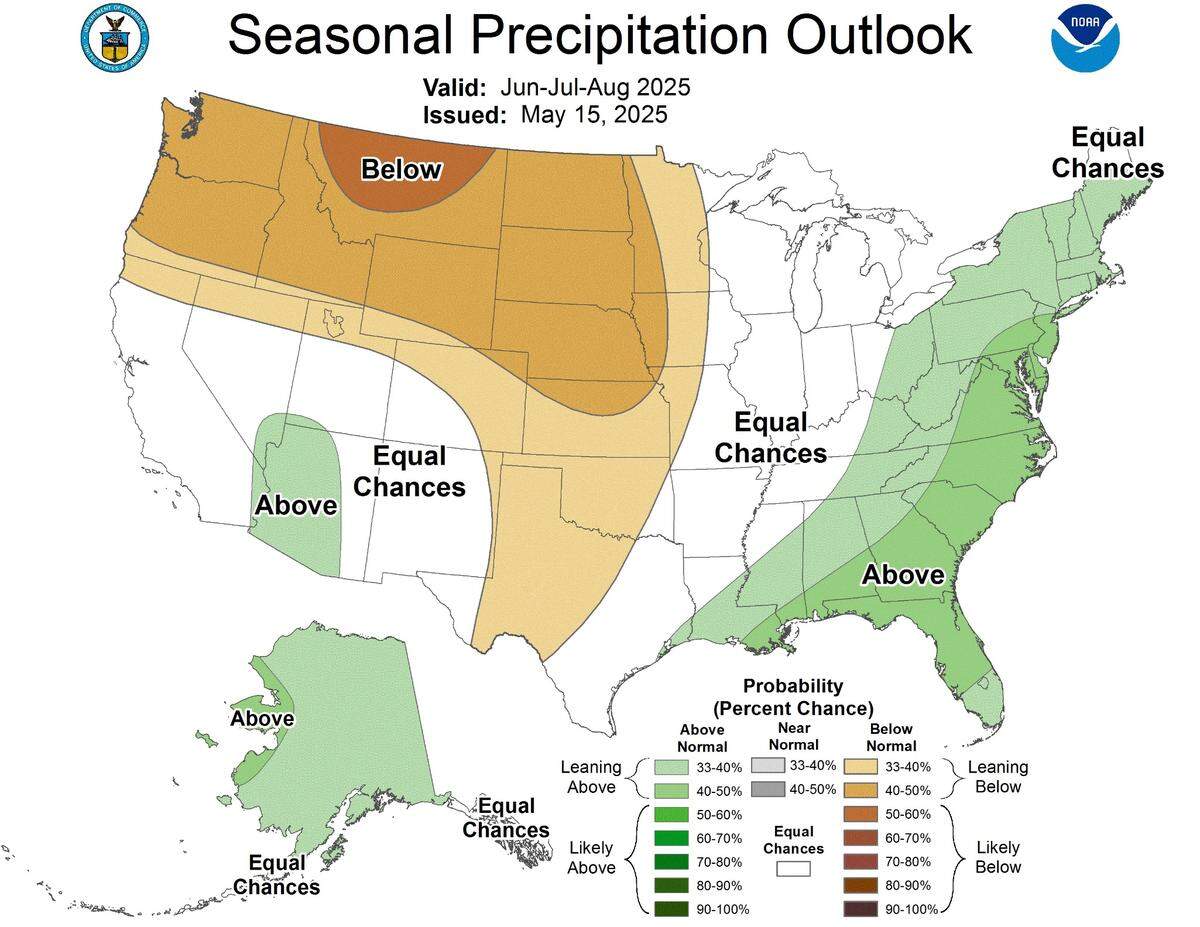
Most of the state is also predicted to have a 40% to 50% chance of above-normal rainfall for June through August. However, the most northern parts of the Upstate may see a smaller 33% to 40% chance of rainfall this summer, the NWS predicts.
Heat stroke symptoms
Here are heat stroke symptoms to look for and what to do, according to the Centers for Disease Control and Prevention.
Symptoms
- High body temperature (103°F or higher)
- Hot, red, dry, or damp skin
- Fast, strong pulse
- Headache
- Dizziness
- Nausea
- Confusion
- Losing consciousness (passing out)
What to do
- Call 911 right away — heat stroke is a medical emergency
- Move the person to a cooler place
- Help lower the person’s temperature with cool cloths or a cool bath
- Do not give the person anything to drink
Hot car safety
- Children: In just 10 minutes, a car can heat up by 20 degrees and become deadly. Place your purse or briefcase in the back seat as a reminder that you have your child in the car.
- Pets: Never leave pets in the car. Cracking the windows does not help. The inside still gets dangerously hot.
- Elderly: Be sure that all occupants leave the vehicle when unloading, especially those who are most vulnerable.
Recommended thermostat setting
When temperatures soar, what’s the best setting for your home thermostat to stay relatively cool and not raise your power bill too much?
The U.S. Department of Energy recommends setting your air conditioner to 78 degrees during the summer. The idea is that you’ll save 10% on your power bill for every degree you go above 78 degrees. Otherwise, you’ll spend 10% for every degree you go below 78 degrees.
Staying comfortable
Carolina Comfort Inc., a Columbia-based HVAC company, notes that 78 degrees can still feel muggy, particularly in places like the Midlands because of the high humidity.
“This is because the heating and cooling system simply will not run long enough to pull the humidity in the house down below 50% relative humidity, which is ideal for most people,” the company’s website states.
To counteract that feeling, the company suggests also running ceiling fans.
“By running the ceiling fans in your home, you will move the cool air around; also, the air movement will help eliminate hot and cold spots that can be present in the home,” the website states.
The company also recommends homeowners set their thermostats to between 70 and 78 degrees in the summer.
“If you don’t mind digging in your pockets a little deeper, you can keep your AC at 70 degrees every day. If you want to save money, then you’ll start setting your thermostat a little higher,” Carolina Comfort states.
Every degree you increase in that range will save you an extra 3% on your electric bill, the company adds.
This story was originally published June 21, 2025 at 5:30 AM.