
Dominion rate hike would raise customers’ bills while allowing higher profits
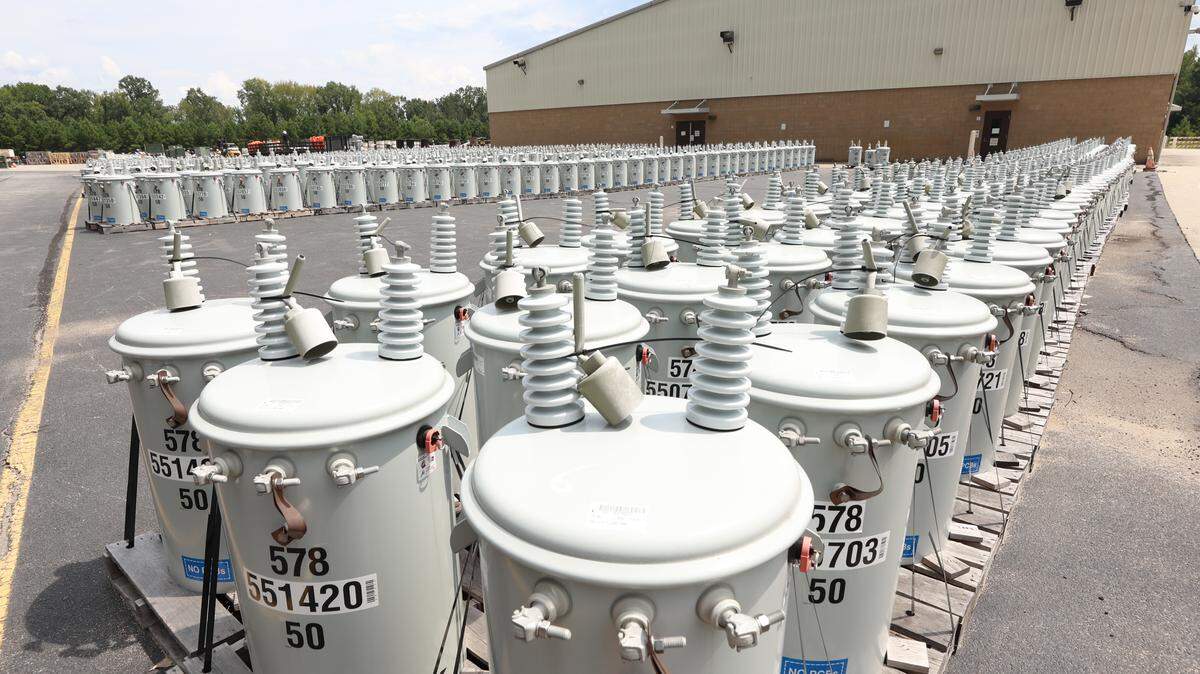
A proposed rate increase by one of the Midlands’ biggest power utilities would raise customer bills by about $20 a month – and increase what the company is allowed to earn.
The proposal from Dominion Energy could generate about $322 million more in annual revenue for the company, according to a filing with the S.C. Public Service Commission. Members of the commission will decide later this spring whether to approve the rate increase, including the higher earnings Dominion is seeking.
Dominion representatives say the ability to earn more is needed to increase returns for shareholders, recoup costs and continue improving its system.
“We must rely on investors to provide the capital necessary to build, maintain and operate our service infrastructure for our customers,” wrote Rhonda O’Banion, a Dominion spokesperson, in an email. “Our ability to provide a fair and reasonable return to investors is essential to the financial health of our company and, in turn, our ability to make the investments necessary to support reliable electricity service to our customers and future economic development in our state.”
While regulators allow Dominion shareholders to earn a nearly 10% return, the company says it is earning just under 5% because of its rising costs and investments it has made in its electric system not reflected in customer rates. It is now seeking to raise that level by about half a percentage point.
The higher return is built into Dominion’s request to raise customers’ bills by nearly 13 percent. If approved by the PSC, the average household using 1,000 kilowatts would see their monthly bill go up $19.98 starting in July.
Many Dominion customers, reeling from pricey winter bills, say they cannot afford a rate increase and question whether the utility is doing enough to keep costs under control. State regulators approved an 11% rate increase for Dominion a year and a half ago.
Tiyana Greer said that in the past two months, she’s seen her monthly power bill jump $200 one month and then an additional $100 the next month — even though she was out of town for a stretch and presumably using less energy than normal at her Columbia home.
“I’m going around unplugging things and just being more mindful of the lights being on if I’m not using them,” Greer said.
She said she plans to speak out when the rate increase comes before the Public Service Commission.
“Nobody can really afford this,” she said. Even if Dominion offers to restructure payments for those struggling to pay their bills, “that’s just prolonging our bills because it’s so much at one time. It shouldn’t be so much that I have to choose between rent or electricity.”
Attorney Scott Elliott with the S.C. Energy Users Committee that lobbies against rate hikes said Dominion’s request for a higher rate of return exceeds what regulators have approved in other states in recent years. Other utility companies have not been able to get a rate above 10%, he said.
“It’s not uncommon for them to ask for the sun and the moon and the stars, and then somewhere in there is a number they would be content with,” Elliott said. “But it’s too high and I think they know they’re not going to get it.”
Elliott thinks Dominion is looking to take advantage of a new energy bill that passed the S.C. Legislature last year. Among other changes meant to boost energy production, the act gives utilities more flexibility in setting rates.
“It would allow them to raise (customer) rates every year to allow them to earn that 10.5%,” he said. “Every year they could file a schedule of capital improvements, [state regulatory staff] would audit it, and if accurate the rates would automatically go into effect. Only then could an interested party challenge the rates.”
The utility company has invested $1.4 billion in the system since 2023, said O’Banion, the Dominion spokeswoman. Those upgrades were made to meet security and environmental requirements and to serve a growing number of customers, according to Dominion’s filing with the PSC. The company also cited rising costs from inflation and tariffs, as well as storm repairs, including about $120 million spent recovering from Hurricane Helene, as reasons its earnings for the past year were only about half of Dominion’s allowable rate of return.
New development and growth in the Palmetto State are expected to add to demand for more electric capacity. Dominion points to the new Scout Motor plant outside Columbia as the kind of development that will add to the utility’s load.
“(T)he electrification of transportation, the future retirement of coal generation stations, and investment in replacement generation and generation to support additional solar and renewable capacity, all will require the Company to invest large amounts of new capital in its system,” Dominion wrote in its application.
John Brooker, vice president of policy and government relations with the Conservation Voters of South Carolina, said the rise in new energy demands, like the power-hungry data centers needed to run artificial intelligence applications, are likely to be a bigger concern for power companies going forward.
“Both Dominion and Santee Cooper have said in sworn testimony before the Senate last year that the vast majority of new demand is coming from data centers,” he said. “(Dominion) has a Google data center in their service area, and I think there are others in process.”
Of the planned infrastructure upgrades, Brooker said, “Are these for people who have been here or are moving here, or are they not for people at all, but for more commercial and industrial uses, including data centers?”
But Elliott, whose organization includes many industrial customers concerned about potential rate hikes, said existing customers can be insulated from any data center expansion if the rates are structured correctly.
“There are ways to manage these that they (data centers) have to pay their own costs,” he said. “With a good rate design that should not be an issue.”
This story was reported in collaboration with SC Investigates, a nonprofit newsroom that partners with local journalists to produce accountability reporting in South Carolina.
This story was originally published April 3, 2026 at 5:00 AM.
.jpg)