
Don’t overlook this Midlands family of judges when discussing the death penalty in South Carolina | Opinion
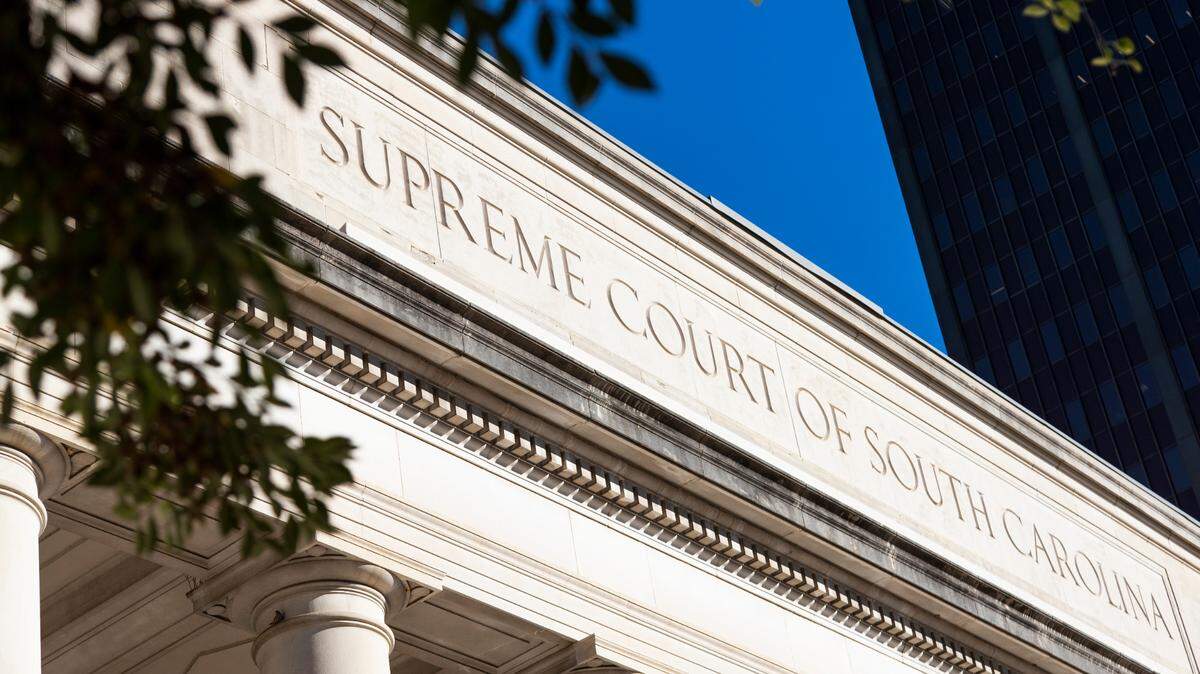
The South Carolina Supreme Court ruled that the state’s death penalty is legal on Wednesday, the latest twist in the long history of state-sanctioned killing that can’t be told without mentioning a Midlands family at the heart of the complex, emotional issue.
The father-daughter duo of Clifton and Jocelyn Newman are well-respected Circuit Court judges whose public service has put them front and center at this debate over the years. Regardless of how you feel about the death penalty, and most Americans still support it but the margin is shrinking, we should all appreciate the way the Newmans have approached it here.
Clifton is one of only seven South Carolina judges to have presided over multiple trials that sent people now on death row to it. Jocelyn wrote the 2022 ruling that firing squads and electrocution are unconstitutional, which the state Supreme Court just overturned.
It’s worth revisiting their involvement as the state is in the throes of a new wave of news coverage, congratulations and criticism following the Supreme Court’s 94-page ruling.
First the news: Supreme Court justices paved the way for South Carolina executions by lethal injection, firing squad or electrocution to resume, even though one called firing squads and electrocution cruel and unusual punishment, and another said the firing squad was unusual, and thus illegal.
In the majority opinion, Justice John Few wote that letting inmates choose how to die is “far from … an effort to inflict pain.”
“Choice cannot be considered cruel because the condemned inmate may elect to have the State employ the method he and his lawyers believe will cause him the least pain,” Few’s majority opinion says. It concludes that, “a condemned inmate in South Carolina will never be subjected to execution by a method he contends is more inhumane than another method that is available.”
Whether there will be additional legal challenges or when executions will resume is unclear. South Carolina has executed 284 people since 1912, none since 2011. It became the eighth state to use electric chairs in 1912 and added lethal injection in 1995. It added firing squads in 2021 after the state, like others, had trouble getting drugs due to supply issues and company privacy concerns.
Meanwhile, over the past 30 years, Americans have become increasingly troubled by capital punishment. In 1994, a Gallup survey conducted routinely since the 1930s found a record 80% of Americans supported the death penalty for a person convicted of murder while 16% opposed it. Last year, those figures were 53% and 44%, respectively.
That shift in public perception shows the issue’s complexity. It also shows Jocelyn Newman’s ruling may be ahead of its time.
In 2022, she detailed how people electrocuted or shot by the state could live for 10 to 15 seconds or more in pain. She wrote, “In 2021, South Carolina turned back the clock and became the only state in the country in which a person may be forced into the electric chair if he refuses to elect how he will die. In doing so, the General Assembly ignored advances in scientific research and evolving standards of humanity and decency.”
Earlier this year, she was one of three finalists considered for a pending vacancy on the state Supreme Court. Another judge was selected, but it should surprise no one to see her on that bench one day.
Today, there are currently 32 inmates on death row in South Carolina. Clifton Newman presided over two of their trials, and the details of those two cases are horrific. Ron O. Finklea was sentenced to death for shooting a security guard at a plant in Lexington County and setting him on fire in 2003. Mikal Deen Mahdi was sentenced to death for shooting a police officer nine times with a rifle then setting fire to the body in Calhoun County in 2004.
According to reporting from The State and Associated Press, before sentencing Mahdi to death, Clifton Newman explained how he sought to strike a balance between justice and mercy by looking for the humanity in the people who stood before him charged with crimes. “That sense of humanity seems (to) not exist in Mikal Deen Mahdi,” he said.
In Finklea’s trial, Clifton Newman faced another balancing act when he chose to allow a solicitor to hold a lit metal fire-starter before the jury while graphically describing Finklea lighting his victim on fire — despite a defense lawyer’s objections.
Under the judge’s watchful eye, the solicitor described the shooting then told that jury, “Gasoline pouring on another human being and the fire, the fire, the burning. When you’re cooking sometimes and you touch the stove or the frying pan or you reach in the oven and you touch that hot thing or you’re grilling, whoo, oh, it hurts, it’s painful. It grabs your attention, you probably run to the sink, want to put some water on it. Probably the most painful thing that a person can do …”
“Objection, your honor,” came the defense counsel’s interjection.
“... is to be lit on fire,” the solicitor finished.
After a brief exchange, Newman issued his decision from the bench: “The objection is overruled. The use of these things for demonstrative purposes is allowed.”
Only the jury knows how much that demonstration affected its ruling. But an appeals court ruled that Newman had appropriately allowed the prop to be used that day.
“It is clear the Solicitor was zealous in his closing argument,” the appellate court’s ruling reads. “However, given the other evidence before the jury regarding the physical torture of [Walter] Sykes, we find the Solicitor’s use of the incendiary device was not unduly prejudicial. The jury was presented with the surveillance footage showing Sykes running from the building while engulfed in flames, Sykes’s charred uniform, and autopsy photographs.”
The manner in which murderers kill people can’t be glossed over when considering the death penalty for them. Hearing the details, some people will always demand an eye for an eye while others reply that a life behind bars without parole is punishment enough or yet others make the economic argument for ending capital punishment.
This column isn’t to tell you what to think, but instead to remind you that judges have hard jobs — and that two from one local family have balanced those pressures and demands skillfully in a bright South Carolina spotlight.