
Why Trump can’t just erase Jan. 6 crimes of 34 South Carolinians and 1,600 in all | Opinion
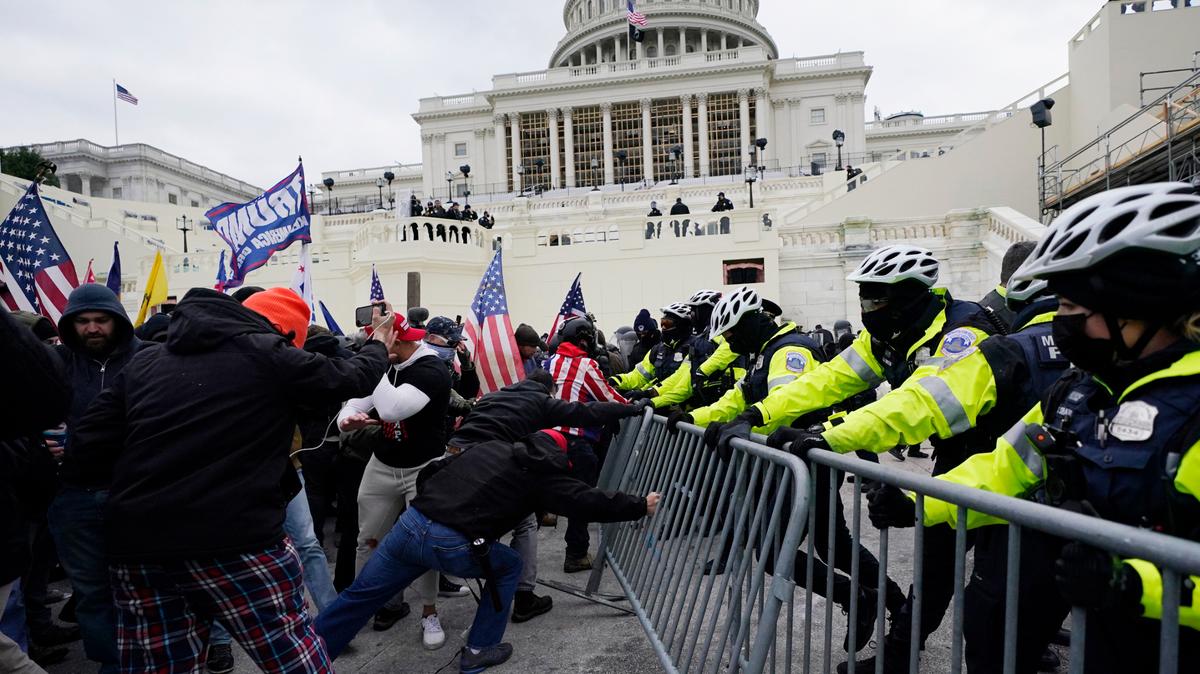
Is once and future president Donald Trump about to pardon nearly 1,600 Americans accused or convicted of federal crimes during the Jan. 6, 2021, attack on the Capitol Building?
It’s a big number and a bigger question.
Trump has said he’ll start to answer it in “the first hour that I get into office.”
Trump has said “a vast majority” of the people behind bars “should not be.”
Trump has said, “They’ve suffered greatly, and in many cases, they should not have suffered.”
But you know who has suffered greatly? The police officers who were at the Capitol that fateful, frightful day and their brothers and sisters who have donned similar uniforms nationwide and who watched from afar, shocked, as 140 officers were injured by those misguidedly there to “stop the steal.” Monday, outgoing Attorney General Merrick Garland said that he was “thinking of the officers who still bear the scars of that day as well as the loved ones of the five officers who lost their lives in the line of duty as a result of what happened to them on January 6, 2021.”
Trump, whose words whipped up a crowd of people that day who believed like he did — in the absence of all evidence and despite dozens of court rulings against him — that the 2020 election was stolen, once tweeted, simply, “LAW & ORDER!!!” He will spit on the idea and the dead and injured officers’ legacies, lives and families if he forgives their attackers without justification or explanation. More than 1,000 already admitted guilt. Nearly 670 were sentenced to prison. Another 145 served home detention.
It may be that Trump knows some things we don’t. Here’s what we do know: The Department of Justice probe into the Jan. 6 attack is the largest criminal investigation in U.S. history.
And it’s justified, despite calls from some Trump backers for blanket pardons in a probe they say went too far. Matthew Graves, the U.S. attorney for Washington, has called Jan. 6, 2021, “likely the largest single day mass assault of law enforcement” in U.S. history. More than 600 people were charged with assaulting, resisting or impeding officers during a civil disorder, and 174 were charged with using a dangerous or deadly weapon or causing serious bodily injury to an officer.
All the individual imposed sentences were detailed last month in a spreadsheet. It is 137 pages.
Given this, it would be a crime and a cover-up not to call what people did that day a crime. Yes, some were charged with lesser offenses and misdemeanors. But all knew what they were doing.
Nearly three dozen of the 1,583 people charged federally are from South Carolina, three of whom are behind bars still. The South Carolinians sentenced so far have been ordered to pay some $45,000 in fines and restitution; one was ordered to pay $22,400 in fines just on his own. Nationally, Capitol riot defendants have collectively been ordered to pay more than $1.2 million.
Trump has called people imprisoned for their actions “peaceful Jan. 6 protesters,” “patriots” and “hostages.” Yet some have said they have no one to blame but themselves for their crimes in the capital. Some have called their actions the worst mistake of their lives. Some apologized.
Others aren’t so introspective.
George Tenney III, 38, pleaded guilty to rioting and obstructing Congress’ certification of the election result and served three years in prison after opening a door in the East Rotunda to a mob, arguing with a government employee who sought to stop him and pushing a police officer.
“All I did was walk into a building,” the South Carolina man told The Washington Post recently.
Monday, U.S. Capitol Police Chief J. Thomas Manger swore in the officers who would secure congressional certification of the 2024 election and spoke of the risks of widespread forgiveness.
He rhetorically asked, “What message does that send to police officers across this nation, if someone doesn’t think that a conviction for an assault or worse against a police officer is something that should be upheld, given what we ask police officers to do every day?”
It’s a question we should all contemplate. Ultimately, it’s Trump’s answer that matters most, but our collective response will say a lot about where this country is headed or rather where it is now. History may ultimately record us harshly, but police officers need safeguarding now.
These days, I see presidential pardons as Halloween candy: There are too many, and they make me sick. President Joe Biden was rightly criticized for pardoning his son. Biden should have shared more information about the nearly 1,500 people to whom he gave clemency on his historic day of commutation. Acts of presidential forgiveness should be rare and righteous.
Trump’s would be neither. Clemency for so many aggressors would send the wrong message.
Let’s give U.S. District Judge Royce Lamberth, a Ronald Reagan appointee, the last word. In a recent ruling in one of these cases, Lamberth shared what should be the conventional wisdom.
“There can be no room in our country for this sort of political violence,” he wrote. “The Framers designed our constitutional system so that the people govern through their representatives, according to law. Decisions are the result of elections, debates, and compromise. The people, through their representatives, decide. By contrast, those who think political ends justify violent means seek to replace persuasion with intimidation, the rule of law with “might makes right.”
“Violence risks begetting a vicious cycle that could threaten cherished conventions and imperil our very institutions of government. In that sense, political violence rots republics. Therefore, January 6 must not become a precedent for further violence against political opponents or governmental institutions. This is not normal. This cannot become normal. We as a community, we as a society, we as a country cannot condone the normalization of the January 6 Capitol riot.”