
Why does South Carolina hate hate crime laws so much? | Opinion
Why does South Carolina hate hate crime laws so much?
Over nearly 30 years, opponents have defeated every state legislative effort to enact a law that would criminalize violence rooted in hatred of qualities we all possess — race, ethnicity, national origin, gender, sexual orientation, religion – or of other protected characteristics like disabilities.
Opponents have thwarted every hate crime bill since the first one filed in the state Senate in 1997 to boost penalties for crimes intentionally based on a belief or perception about such traits. They’ve done so even though such crimes extend well beyond the victim to society as a whole.
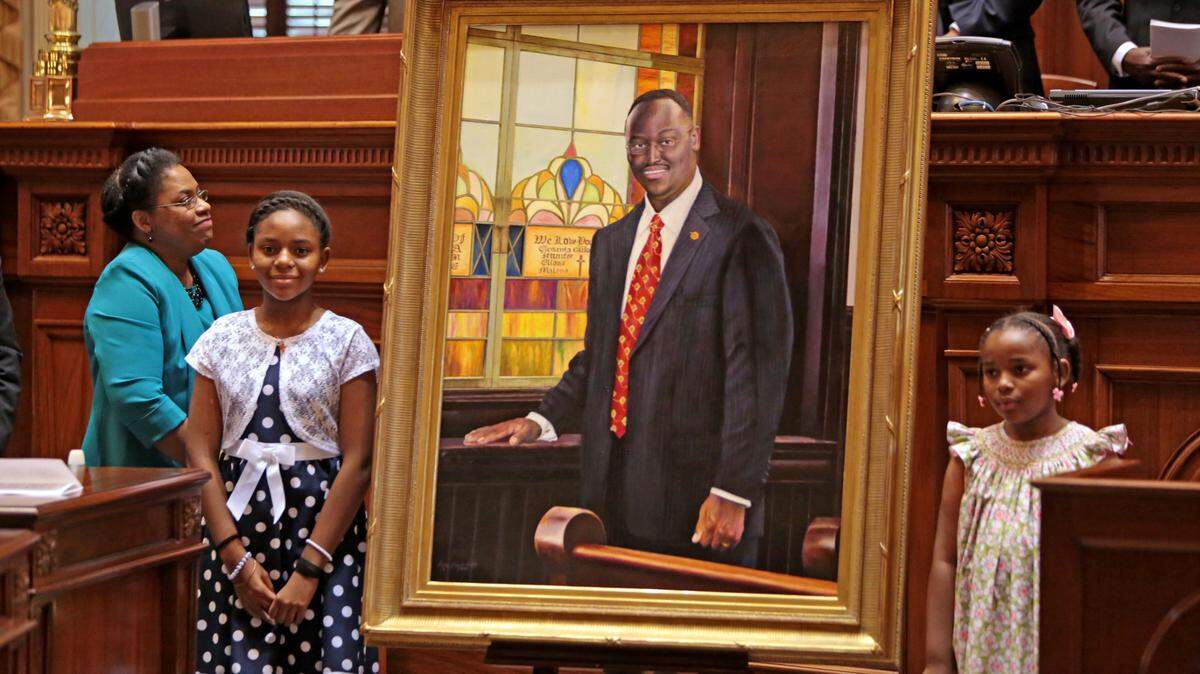
The South Carolina House of Representatives has approved such a bill only twice, in 2021 and 2023. But the state Senate never has, not even after state Sen. Clementa C. Pinckney was one of nine Black people killed at a Bible study inside Charleston’s historic Emanuel AME Church in 2015 by a white man who “took action for my race” and the bills began to bear Pinckney’s name.
On Tuesday, June 3, the Richland County Council became the first county to pass a hate crime law in South Carolina, joining 19 cities and towns such as Columbia, Cayce and Arcadia Lakes.
“Full justice should not be decided upon where you live,” Richland County Councilwoman Tyra Little said of this patchwork of protections. “Full justice should be afforded to everyone.”
Yet again this year in a session that drew to a close last month, lawmakers chose to do nothing.
South Carolina is commonly considered one of two states in the nation without a hate crime law.
Some people see Wyoming, where Matthew Shepard was tortured and left to die in 1998 for being gay, as the second, but other people argue Wyoming was actually the first state to pass a hate crime law. The disagreement over Wyoming suggests that hate crime laws aren’t all equal.
It also suggests South Carolina lawmakers should be embarrassed by what they haven’t done.
In a 29-page 2018 article in South Carolina Law Review called “A Time to Kill Hate: A Case for a Hate Crime Law in South Carolina,” Erica G. Safran identifies the first federal hate crime law as the Ku Klux Klan Act of 1871, which authorized prosecution of Klansmen and other people such as law enforcement and government officials who denied newly freed slaves their civil rights.
Today, despite complaints hate crime laws run afoul of the First and Fourteenth amendments and impinge on bedrock principles of free speech, due process and equal protection, carefully crafted laws at all levels of government dealing with specific acts, sentence enhancements, statistics collections and civil remedies have survived legal challenges, as Safran lays out.
Yet, here, resistant lawmakers still complain about the erosion of religious liberties and speech. They say penalties for a particular crime should be the same for all and judges have discretion now. They suggest biases against political views, hair color or Teslas should also be punished more, expanding the scope of a bill in ways that can become unwieldy and won’t win support.
The most recent legislative debate unfolded in April at a Senate Judiciary Committee hearing that ended in a close vote of 12-9 to move the measure to the full Senate, where it languished.
The measure didn’t even refer to “hate,” as supporters noted in trying to persuade their critics.
“Not one person is safer because of this bill,” Sen. Shane Massey, R-Edgefield, opined in opposition. “Not one. Nobody is helped by this. A lot of people are harmed by it, however. Because you have people who think that they’re being helped by this and they may become somewhat more comfortable in their surroundings and not have their guard up as much.
“Does anybody know what the penalties for violent crimes are?” he asked. “If there’s a problem with our penalties, our criminal penalties, we should stiffen the penalties. But we should not treat people differently, and that is my biggest problem with this legislation. It treats people differently.”
Massey said the bill “codifies that some people are less important than others” and that none of the other states’ hate crime bills “have eradicated hate” or “done anything to address hate.”
Sen. Deon Tedder, D-Charleston, said the bill’s intent was not to treat anyone as less important than anyone else and added that a variety of state laws allow for penalty enhancements now.
Sen. Mike Reichenbach, R-Florence, echoed, “He doesn’t see it as valuing a victim any more or less. He sees it as attributing a different value to the motivation of the perpetrator. … Doesn’t the motivation have any different weight if the motivation is to instill fear in a group of people?”
It does. It should. And the state’s refusal to do something about it is a crime of its own.
When legislators reconvene in January, this month’s 10-year anniversary of the Emanuel AME Church shooting will have come and gone and South Carolina will still have no hate crime bill.
“The failure of the South Carolina legislature to enact a hate crime law sends the message to all South Carolinians that bias-motivated crime does not warrant enhanced punishment for the additional pain and community suffering that it inflicts,” Safran wrote seven years ago.
A hate crime is a special kind of crime, the way a bank robbery is a special kind of robbery, and it should be punished as such. If a person convicted of a hate crime hadn’t had hatred in their heart, there never would’ve been a crime in the first place. There never would’ve been a victim.
And Sen. Pinckney would be among the most eloquent voices calling for a hate crime law today.
This story was originally published June 5, 2025 at 5:00 AM.