Is Dabo Swinney changing his philosophy on internal hires? Clemson coach explains
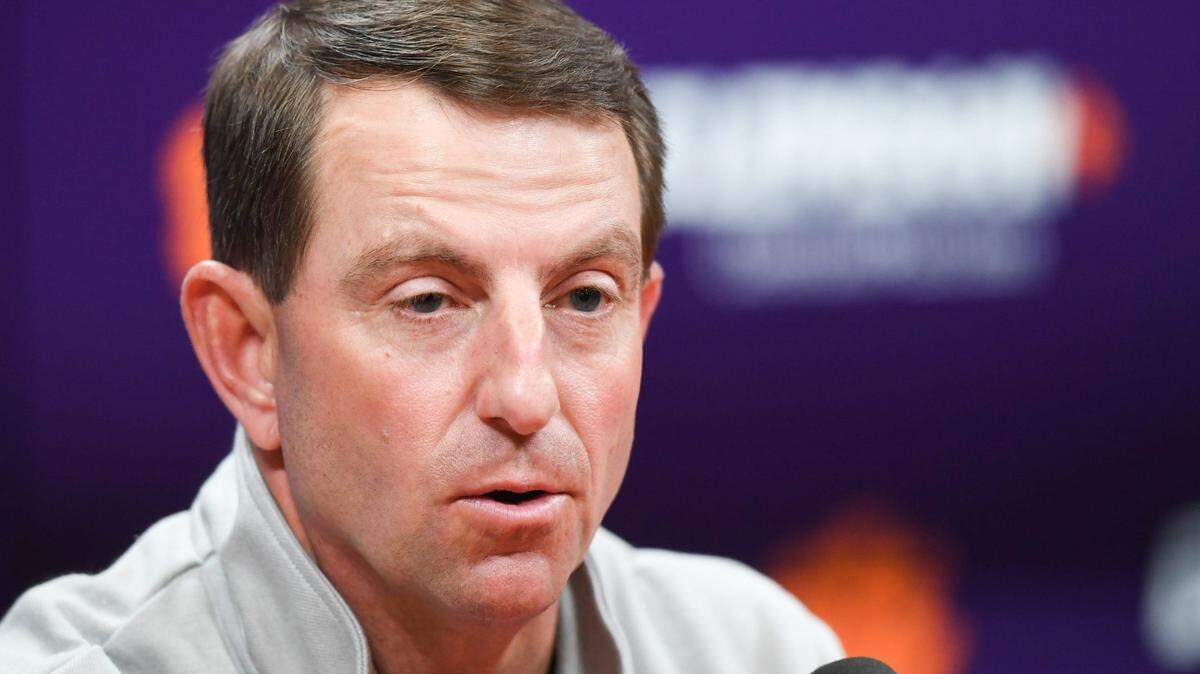
When he needs to hire an assistant, Clemson football coach Dabo Swinney says he’s not actively thinking about candidates in terms of “internal hire vs. external hire.”
“I do what I think’s best for Clemson,” he said.
Five times in a row, though, Swinney has decided what’s best for Clemson football is looking outside its own walls — and that alone says plenty about the internal promotions he’s made in the past and the value of adding outside voices to a program trying to get back to an elite level.
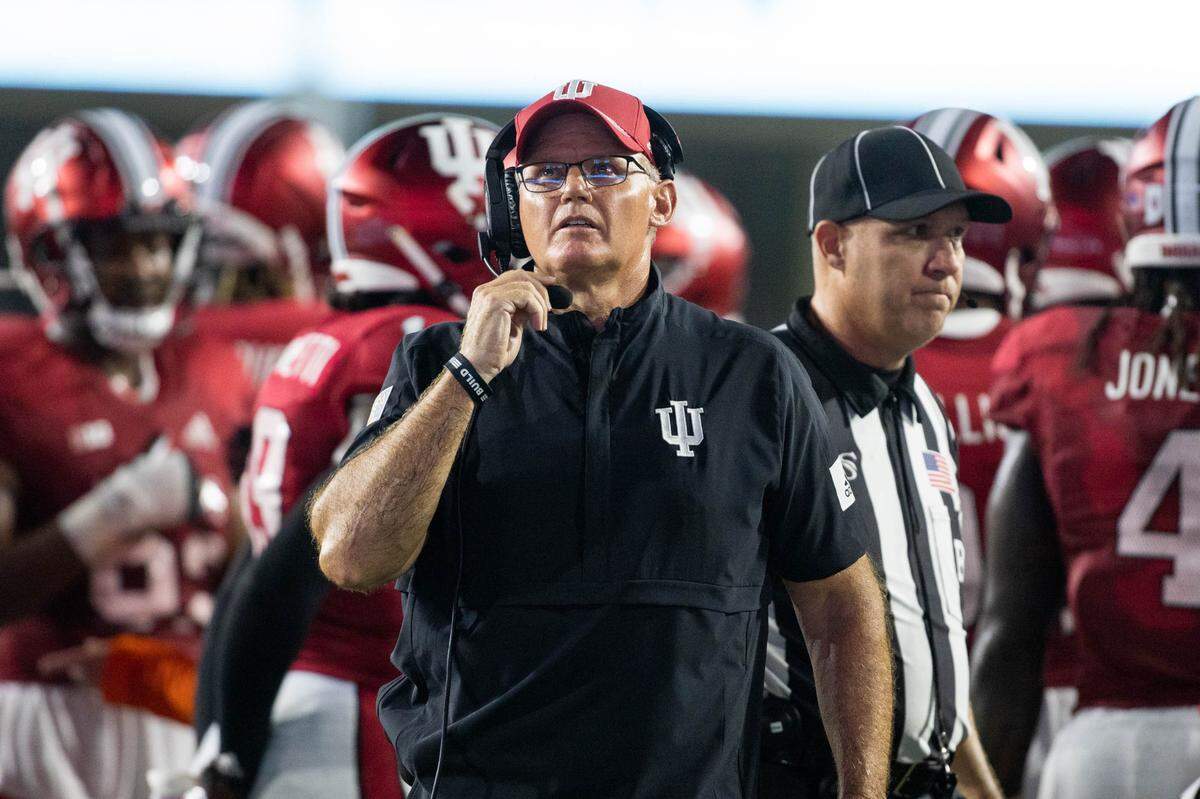
With the hiring of former Indiana head coach and Penn State defensive coordinator Tom Allen as the Tigers’ new DC, Swinney has now filled five straight open assistant coaching positions — including both of his coordinator spots — with external hires.
Allen’s hiring also marked the fourth time in row Swinney’s moved on from an internal hire, either through a firing or a mutual parting of ways, and directly replaced him with someone from another college or the NFL.
And all of this comes as Clemson, which won the ACC and returned to the College Football Playoff this season, tries to figure out how to take the step from nine- and 10-win seasons to legitimately competing for national championships — just like the Tigers did from 2015-20, when they appeared in four and won two.
You get the idea.
So, have five straight external hires been an intentional effort by Swinney to get more voices and experiences in the room?
“Sometimes things work out exactly the way you want and sometimes they don’t,” he said during Allen’s introductory news conference. “But it doesn’t have anything to do with internal, external, all that stuff that people like to make a big deal about. It’s about doing what I think’s best. And ultimately, I’ve gotta make decisions.”
Missing the mark
A recap of those decisions by Swinney:
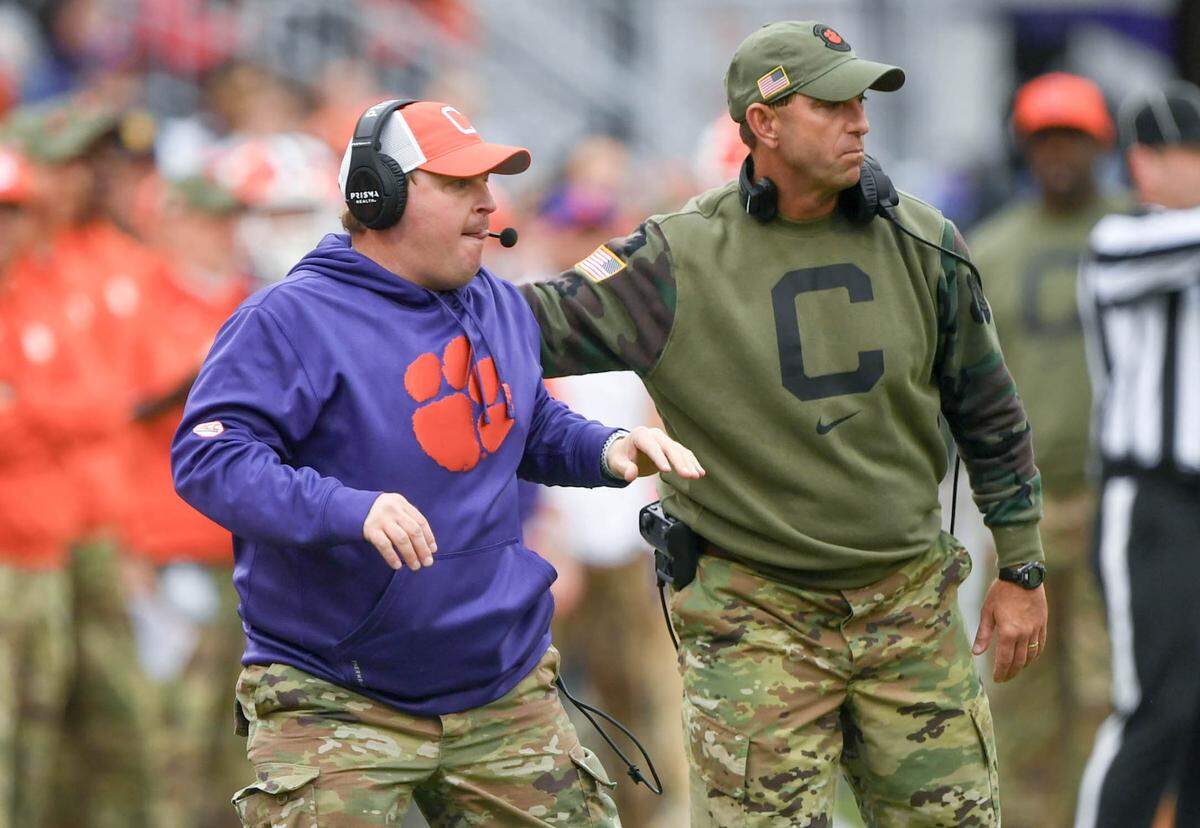
After the 2021 regular season, Clemson lost longtime offensive coordinator Tony Elliott and defensive coordinator Brent Venables to head coaching jobs. Elliott left for Virginia, and Venables went to Oklahoma. Although external candidates reached out about both openings, Swinney did not interview any of them. Instead, he promoted quarterbacks coach Brandon Streeter to OC and senior defensive analyst Goodwin to DC, a succession plan that had been in the works for a while. The decision to promote them took about “30 seconds,” Swinney said at the time.
A year later, Swinney fired Streeter after one season as Clemson’s offensive coordinator and replaced him with TCU’s Garrett Riley in a 2022 firing-to-hiring process that lasted about 48 hours. Riley had won the 2023 Broyles Award as the nation’s top assistant coach and coordinated TCU’s offense to the CFP national title game and was considered one of the sport’s top young offensive minds.
After Clemson snapped a 12-year streak of 10-plus win seasons, Swinney moved on from two more assistants in 2023. He fired offensive line coach Thomas Austin after two seasons, and defensive ends coach Lemanski Hall also left in what Clemson framed as a “mutual parting of ways.” Clemson hired former Ole Miss head coach and Georgia assistant Matt Luke as its new O-line coach and former Minnesota Vikings assistant and SEC veteran Chris Rumph to coach DEs.
Lastly, Swinney fired Goodwin after three years as defensive coordinator earlier this month after Clemson returned to the CFP but fielded one of the nation’s worst run defenses in 2024. After an extensive search that started with 12 names — all external candidates that were either sitting college DCs or working in the NFL, per Swinney — he settled on Allen, now the team’s highest-paid assistant.
At one point in Swinney’s Clemson tenure, he did not fire a single assistant for a decade (2013-23). Now the Tigers have moved on from four coaches in the last three years alone. The program made zero in-house promotions in replacing them.
Add in the hiring of Auburn’s Nick Eason as defensive tackles coach in 2022 (after Todd Bates left to join Venables at Oklahoma), and that’s five straight external hires.
That’s a lot of fresh ideas and non-Clemson experience for a program that took its fair share of criticism for having too many program guys and internal hires on staff, especially during the Tigers’ recent College Football Playoff drought they ultimately snapped this season (but just barely, as the ACC automatic bid and CFP No. 12 seed).
‘Always’ look internally first
Swinney’s take? It’s just the ways things shake out.
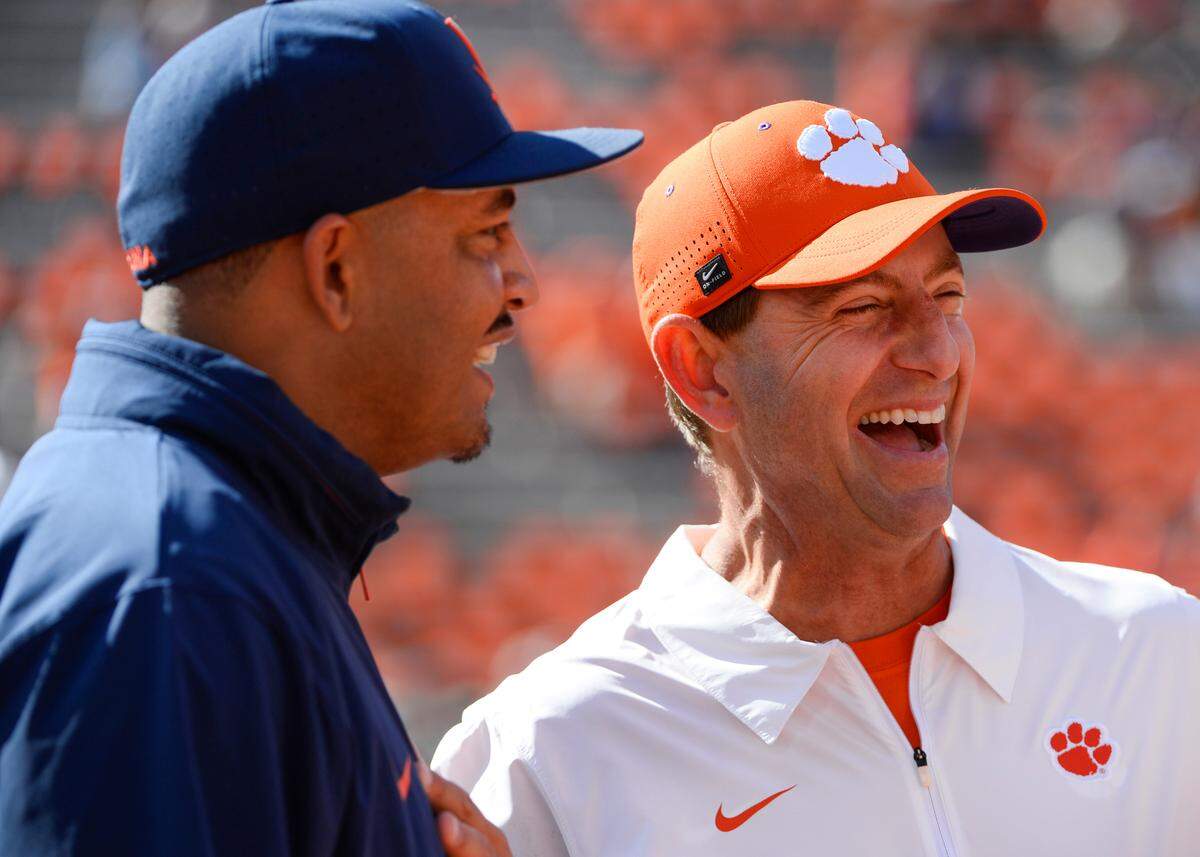
And he’ll “always” start a hiring process with internal candidates.
“That will never change,” Swinney said.
The results, for a while, were excellent. Swinney most famously identified Elliott and Jeff Scott as legitimate coaching talents, brought them in as assistants and eventually promoted them to co-offensive coordinators after Chad Morris left for SMU.
All Elliott and Scott did was direct two of the best scoring offenses in modern college football history and help deliver Clemson two national championships.
Staff continuity, promotions and a willingness to hire former players has also contributed to Clemson’s family atmosphere, an annual selling point in the school’s recruiting process and something important to Swinney, an internal hire himself.
“I always start inside, and I think that’s a part of having a great culture,” he said. “I think when you can promote from within, that’s what’s best.”
So Clemson did that with Streeter, a former Tigers quarterback and longtime staffer. Goodwin, a senior defensive analyst with no formal playcalling experience. Austin, a former player under Swinney. Hall, one of Swinney’s former Alabama teammates.
Some tenures lasted longer than others: Hall had coached defensive ends at Clemson since 2018 and sent plenty of players to the NFL. But all four of those generally homegrown assistants were on Clemson’s coaching staff entering the 2022 season.
Three years later, all of them are gone.
Is it a message?
“I make thousands of decisions,” Swinney said. “And again, as (my wife) Kath will tell you, I’m far from perfect. I’m a long way from that. And I doubt any of y’all make every decision right. But when I don’t make the right decision, I try to grow from it, learn from it and correct it. So that’s really it.”
Changes for 2025
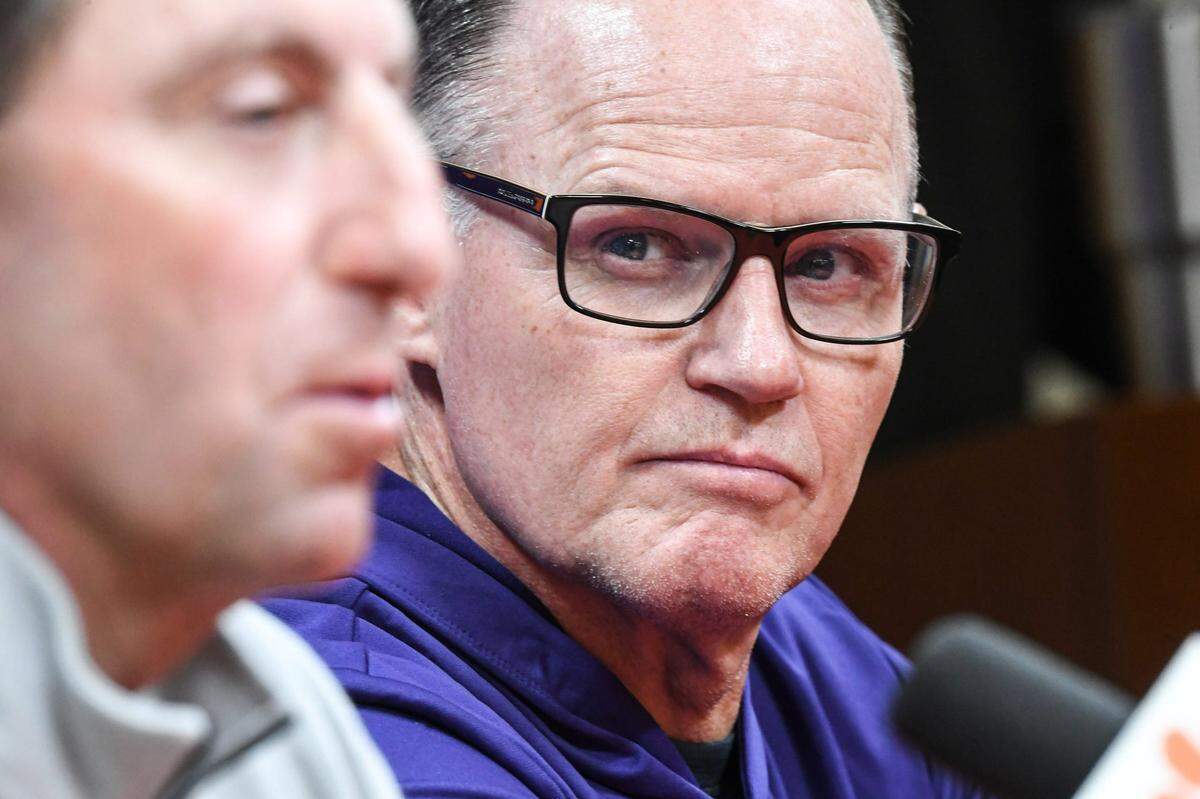
To be clear, it’s not like Swinney has done a 180 or totally cleaned house.
Clemson’s 2025 coaching staff includes two of Swinney’s former players (Tyler Grisham, C.J. Spiller) and two assistants he plucked from the high school ranks and eventually moved into on-field coaching roles (Mickey Conn, Kyle Richardson). Plus, Eason and Rumph had natural ties: Eason played defensive tackle at Clemson from 1999-2002, and Rumph coached there in a previous stint with Swinney from 2006-10.
But between Eason, Riley, Luke, Rumph, Allen and longtime cornerbacks coach Mike Reed, there’s a lot of relative experience in the room that wasn’t there before.
Consider this: In 2022, only two of the Tigers’ 10 assistants had experience working as at least a position coach at another power school or in the NFL (Reed and Eason). On offense, there were zero. Three years later, that number’s jumped up to six, with four on defense (Allen, Reed, Eason, Rumph) and two on offense (Riley, Luke).
And among his current staff, Swinney can now pick the brains of two former power conference head coaches (Allen and Luke), two NFL coaching alums (Eason and Rumph) and four former SEC position coaches (Eason, Luke, Rumph and Allen).
That’s quite the change, and it coincides with the Tigers’ best chance to make some noise nationally in years. Clemson returns the majority of its starters, including senior quarterback Cade Klubnik, and will likely be the odds-on ACC favorite and a preseason top 10 team. Eason, Riley, Luke and Rumph have all been strong hires.
Fans and media members, including Clemson alum and ACC Network analyst Eric Mac Lain, have overwhelmingly praised Swinney’s external hiring pattern.
The general consensus: It’s a needed adjustment, in line with the Tigers dipping into the transfer portal for a record three players this offseason (a WR, a DE and an LB) and positioning themselves to compete in the revenue-sharing era.
Though he’s happy to own up to his hiring mistakes, Swinney has another take.
“Nothing’s different,” he said. “Nothing’s intentional. I just try to do what I think is best for Clemson in the moment that we’re in and what’s best, mostly, for the long-term. And then if it turns out to not be the right decision, you’ve gotta change it. And then, ultimately, you’ve gotta own those things.”
This story was originally published January 28, 2025 at 7:00 AM.