What the heckle? Clemson baseball turns visitors’ bullpen area into crazy town
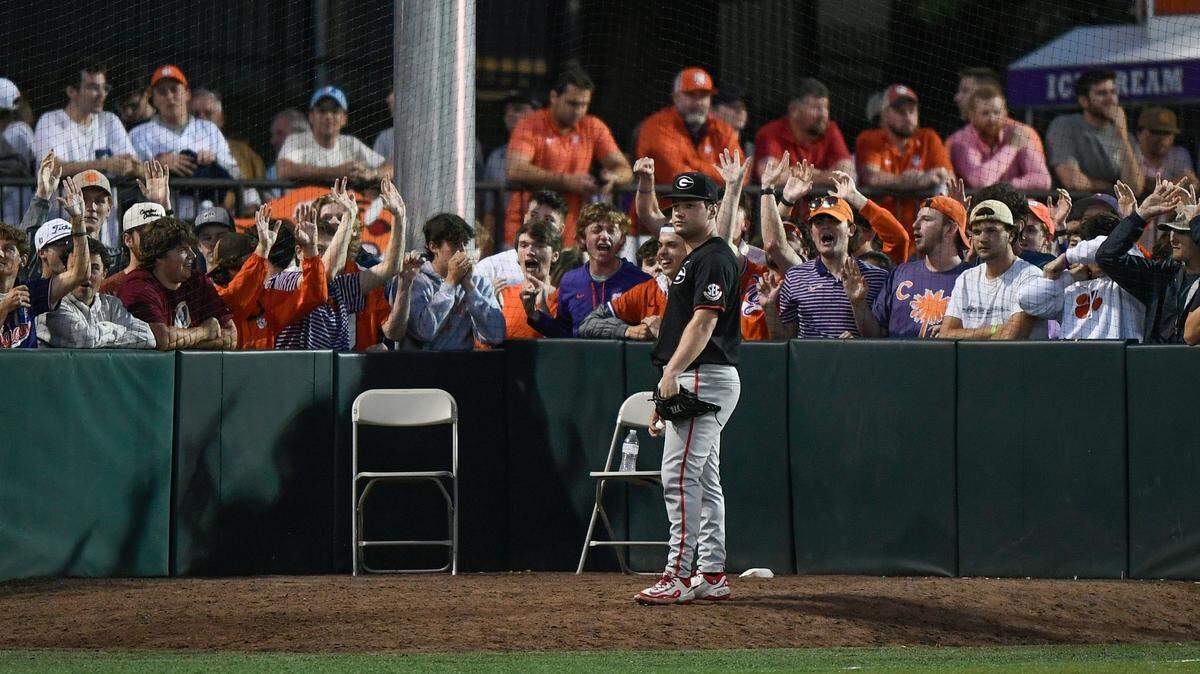
The opposing bullpen at Doug Kingsmore Stadium used to be cozy.
A little too cozy, according to Clemson baseball coach Erik Bakich.
“Forever and ever, it seemed like opposing teams had massage tables over there,” Bakich said in January. “They got fed grapes and olive branches. I mean, it was the most comfortable, gigantic bullpen – the easiest place to be an opposing pitcher.”
Nobody’s calling it that now.
During the offseason, Clemson moved the visitor’s bullpen at Doug Kingsmore Stadium from a large area adjacent to the visitor’s dugout — and outside the field of the play — to inside the field of play. The bullpen area, where substitute pitchers warm up before coming into a game, is now directly against the left outfield wall, behind the foul line and down the third-base line.
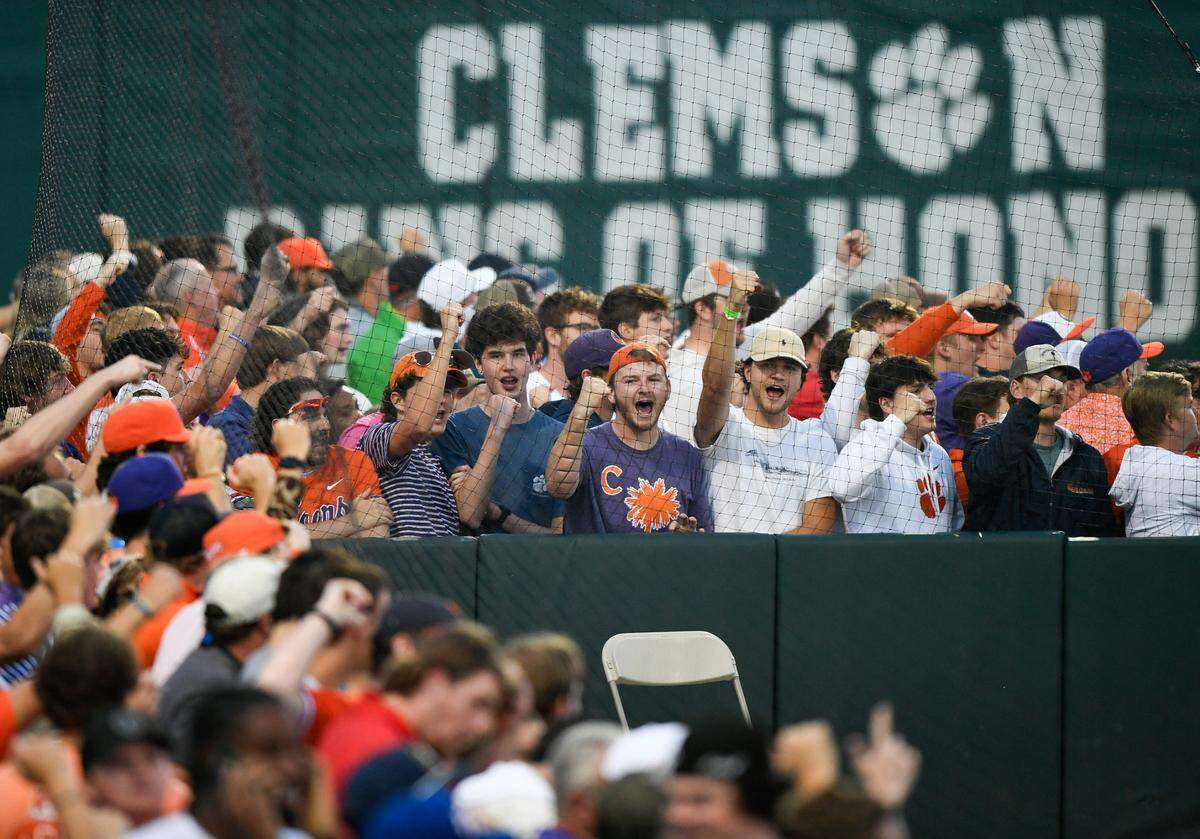
And the large area in left field that used to be reserved for visiting teams’ pitchers? It’s now a standing room-only area … with a beer garden. And a heavy student presence. And almost direct access to the visitor’s bullpen.
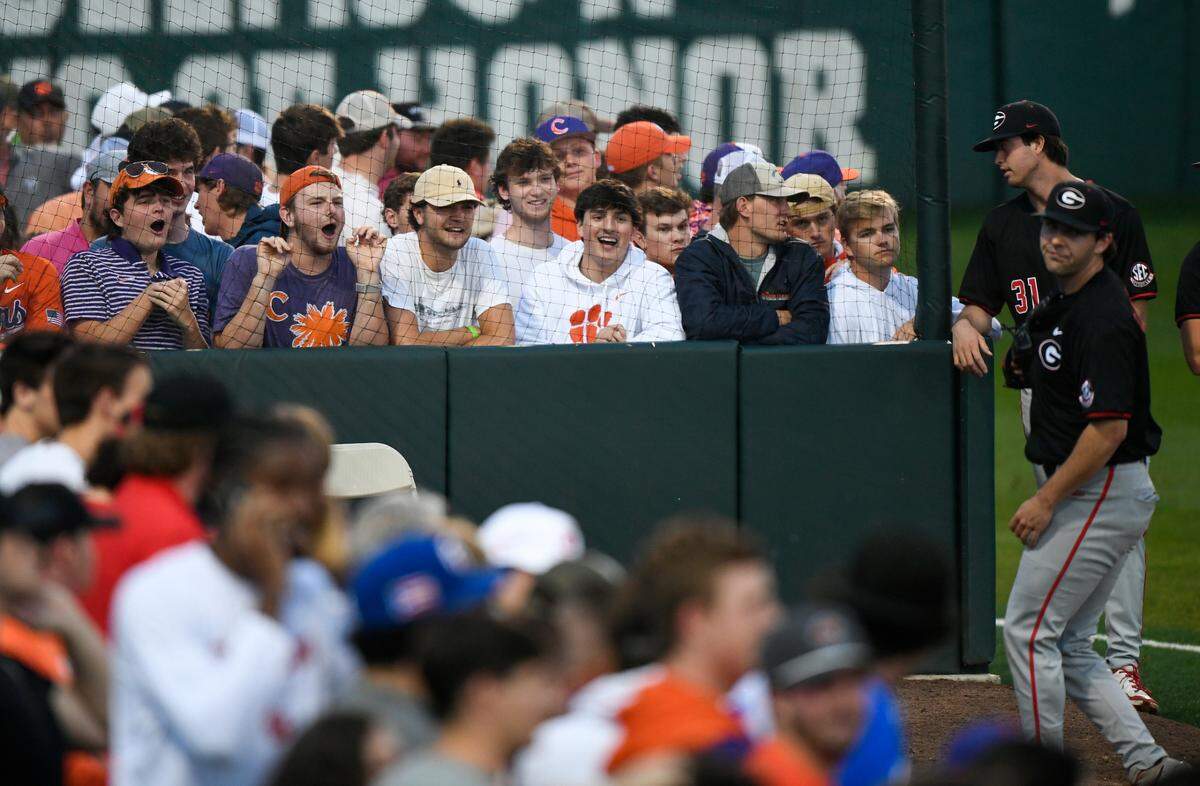
The only things separating Clemson fans from opposing pitchers are a waist-high wall, an outfield net and 5-7 feet of distance (if that).
Talk about a recipe for rowdiness.
The visuals of an opposing pitcher boxed into a small space, trying to get loose and throw strikes while fans trash talk their every move, made Clemson’s opposing bullpen area a viral sensation exactly four games into the home schedule.
And that was … six weeks before the university started selling alcohol there.
Now, the standing room-only area has developed a sort of cult following among students and is a staple on television broadcasts of Clemson games. Bakich said it’s been an “awesome” addition to the ballpark and a tangible part of the No. 3 Tigers’ success at home. Clemson has won 25 of 30 home games this season.
“It’s prime real estate for our students and our fans,” Bakich said last week. “That’s really at the center of it: How can we make this a better experience for the fans, and how can we, at the same time, get that 10th man atmosphere we’re chasing?”
How Clemson made its new bullpen
The idea of making your opponent’s bullpen a little uncomfortable or inconvenient isn’t unique to Clemson. Neither is the location — there are dozens of college baseball teams, including plenty within the ACC, that have the visitor’s bullpen in a similar spot within their ballparks.
NCAA rules dictate that each bullpen at a college ballpark must be large enough for two pitchers to warm up at the same time and have regulation-size home plates and pitcher’s plates. The distance from the mound to the plate is 60 feet, 6 inches.
The NCAA’s baseball rulebook does say schools building new fields should place their bullpens outside the field of play, not on the field. But that’s a recommendation, not a formal rule. Plus, some college ballparks such as Duke and Louisville have to put one or both of their bullpens on the field because of spacial limitations.
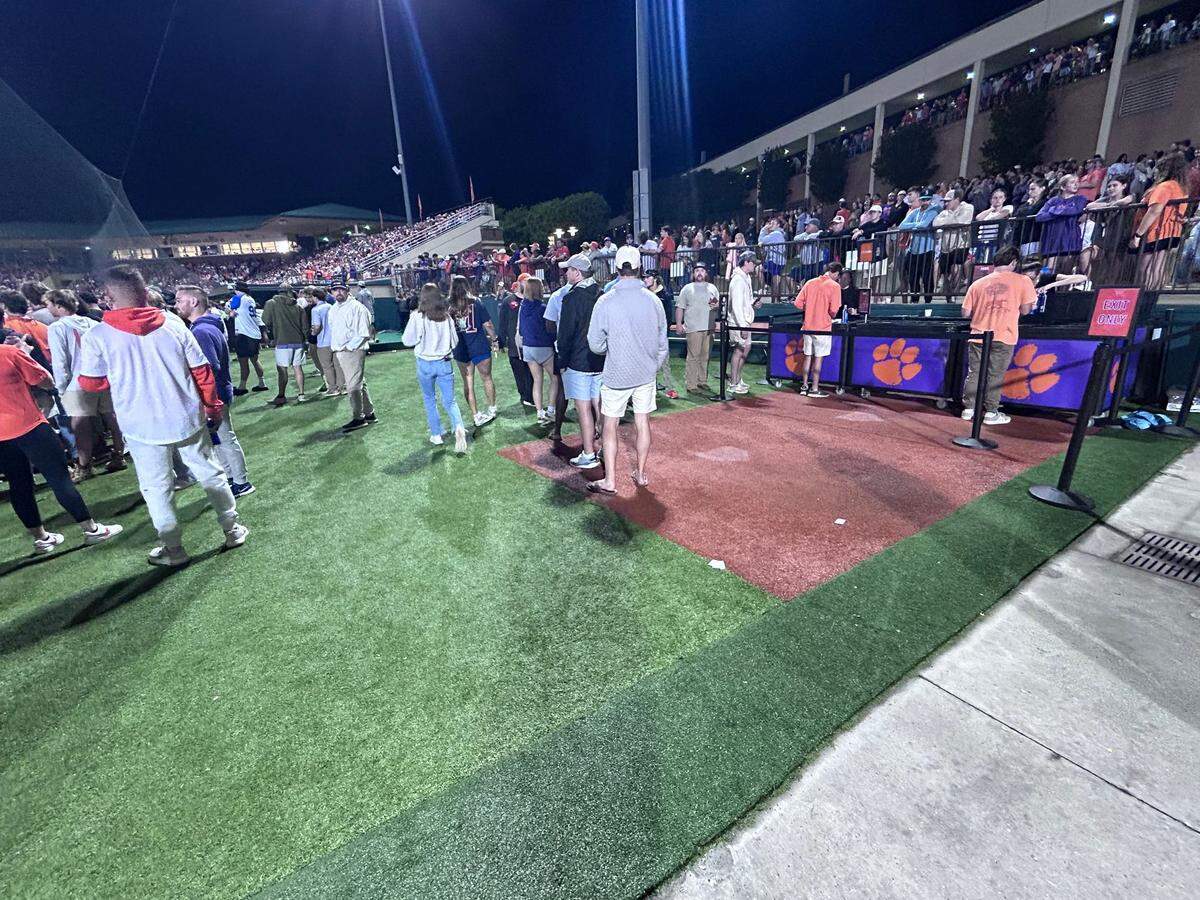
At Clemson, a lack of space wasn’t the issue. Too much space was the issue. For years, visiting teams at DKS had an area comparable to Clemson’s home bullpen, which is a roomy, walled-off area down the first base line behind the home dugout.
Now opposing pitchers are on the field and, in a stroke of irony, Clemson fans can actually stand directly on top of the old turf diamonds that visiting catchers once used... while they’re waiting in line to buy $11 White Claws and Pernicious IPAs.
Then it’s off to the wall, where the heckling ensues.
Tigers students toe the line with trash talk
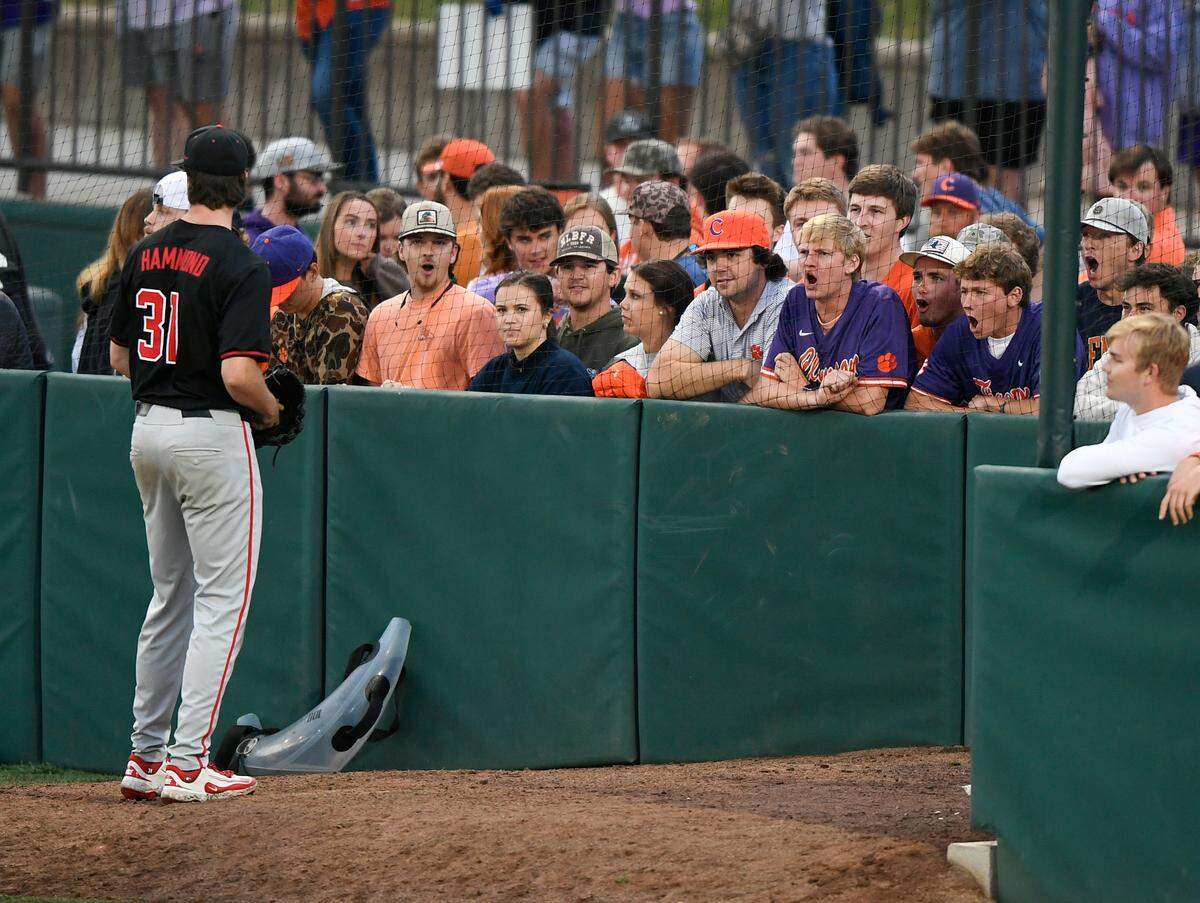
Roughly two-thirds of the way through Clemson baseball’s home schedule, the visiting bullpen area is a well-oiled machine. There are a handful of regulars — primarily students — who are right up against the net for what seems like every game. Others cycle in and out by the inning.
Their goal: To annoy, distract and intimidate.
If someone throws a ball instead of a strike during their bullpen session, let alone a wild pitch, fans start hooting and hollering, to the point where Bakich can hear the commotion from Clemson’s dugout on the opposite side of the field.
There’s chirping. Lots of chirping. A steady stream of insults, most of them unprintable, about how a pitcher is throwing or how the game’s going. Occasionally, someone will Google an opposing pitcher’s roster page and make a dig at, say, their high school alma mater.
It’s sort of like the college baseball equivalent of a walk-through haunted house, where the actors can scare and yell but cannot touch. Bakich has described the goal of the area to be “loud and energetic and rowdy,” without being cruel or offensive.
At some of the road ballparks Clemson’s played at during his tenure, the opposing fans “know our players’ girlfriends names, they know their family names, and they’re just crushing them,” Bakich said in the preseason. “And they don’t cross the line, of course. Not condoning that. But that’s what we want.”
As such, there’s relative decorum in the visiting bullpen, even with the university phasing in alcohol sales at sporting events earlier this month (Clemson has been serving at baseball games since April 9). Some visiting pitchers and pitching coaches are amused by the antics. Others will get in on the bit and talk some trash back, which the students love.
After Clemson hosted South Carolina on Feb. 28 and fans spent the better part of three hours barking at Gamecocks pitchers, USC coach Paul Mainieri said he couldn’t tell if there was any security around but tipped his hat to the “unique setup.”
“If the fans are here and they’re not being unruly, where they’re throwing things or stuff like that, then it’s part of the game,” Mainieri said postgame. “We expected that our players would get razzed on some and they didn’t let us down with that.”
A viral homefield advantage
Indeed, there’s security. Clemson staffs the visiting bullpen area with a handful of workers, including one at the corner gate that separates the fan area from the opposing dugout and a others that walk through and keep an eye on the section.
Mainieri said there were no incidents during South Carolina’s visit to Clemson. A team spokesman told The State the program wasn’t aware of any formal complaints or major incidents (such as an ejection) stemming from the area this season.
Junior marketing major Derek Ringnalda was one of dozens of Clemson students who filled up the area for last Tuesday’s home game vs. No. 10 Georgia. It was an active night for the visiting bullpen: The Bulldogs used eight pitchers in a 3-0 loss.
All of them took their fair share of heat from a group of Clemson fans that have taken their baseball coach’s guidance to heart, according to Ringnalda.
“We obviously want to help Bakich out and help the team out, but we also try to be polite at the same time,” he said. “We’re not mean people. … We like to give our home team the best advantage we can without crossing the line.”
Expect that advantage to tick up a notch soon. Clemson is currently 36-10 and ranked No. 3 in the D1Baseball Top 25. The Tigers are in strong position to host an NCAA Tournament regional as a top 16 seed and could secure a top 8 national seed (ensuring they’d also host a super regional if they advance) in coming weeks.
If that happens, it won’t just be the Tigers in postseason form.
It’ll be their standing room-only bullpen section, too.
“It’s gonna be spectacular,” Ringnalda said.
This story was originally published April 30, 2025 at 7:00 AM.