What Clemson-ACC settlement documents reveal about Tigers’ future in league

What goes into a settlement? In the case of Clemson and the ACC, a lot.
On Thursday, The State obtained the settlement agreement between Clemson and the ACC, which resulted in the university and the conference dropping their dueling lawsuits related to the ACC’s grant of rights and conference realignment.
The settlement, obtained via public records request, is 68 pages long and provides some interesting details into what concessions each side made in the deal.
The settlement was generally regarded as a win for Clemson, which will wind up spending a couple million dollars on legal fees but got better clarity on the ACC’s “exit fee” and a chance to earn additional revenue through a “brand initiative.”
David McKenzie agrees. A North Carolina-based intellectual property and First Amendment lawyer who followed the Clemson-ACC lawsuit closely, McKenzie reviewed the settlement at The State’s request and had one immediate takeaway:
The settlement is remarkably “one-sided” in favor of Clemson, he said.
Parts of the settlement essentially give Clemson veto power over some ACC decisions, McKenzie said, which creates a “two-tier membership structure where Clemson has greater rights than others” on some fundamental matters.
“That’s extraordinary by any measure,” he said.
The settlement also essentially nullifies the ACC’s old grant of rights (a key part of Clemson’s lawsuit) and allows any ACC school to pay a flat exit fee and leave with “exclusive” access to their media rights, according to McKenzie’s reading.
Previously, schools were on the hook to forfeit their remaining media rights revenue to the ACC through 2036 regardless of whether or not they were an league member.
McKenzie said he was surprised the ACC made that concession in the settlement.
“Clemson has secured unprecedented flexibility while maintaining current benefits,” McKenzie told The State, adding that the settlement “effectively converts ACC membership from a binding obligation to an annual economic decision.”
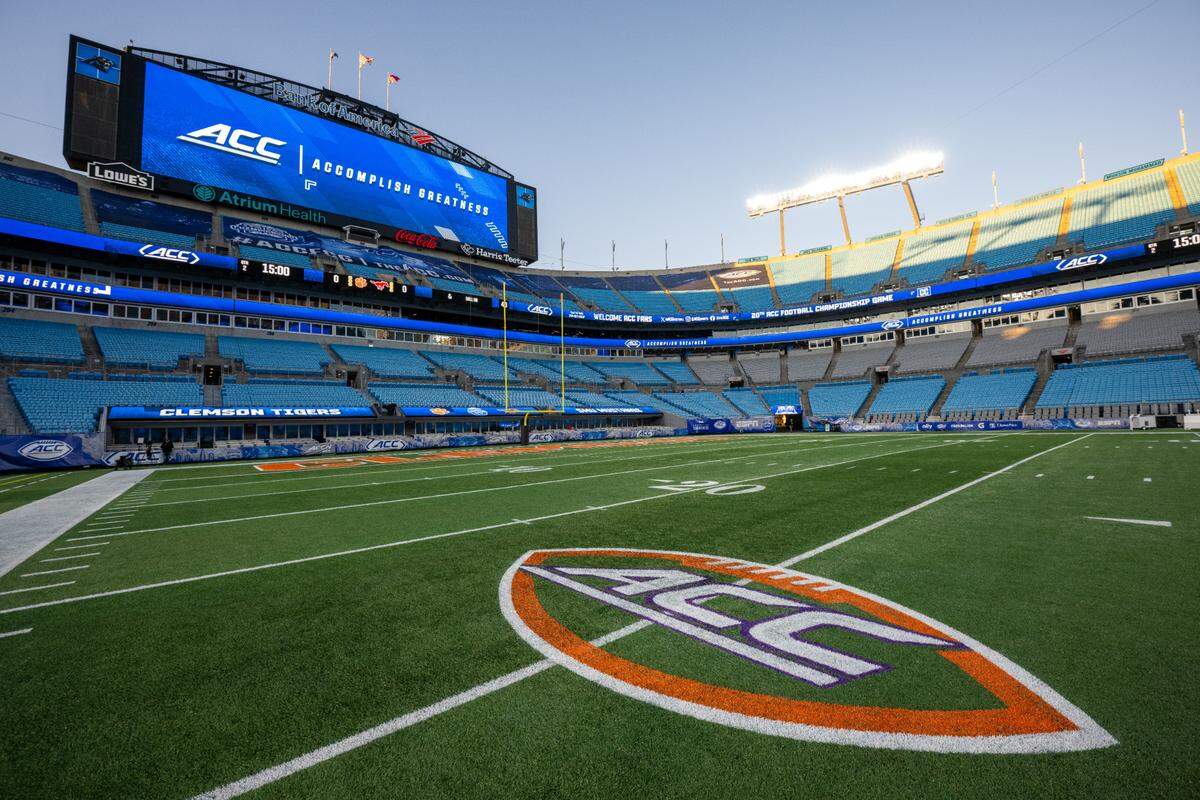
What does the Clemson-ACC settlement say?
Here are some additional technical takeaways from the document:
- Clemson and the ACC agreed to drop all litigation against one another.
- The ACC agreed to make four amendments to its constitution and bylaws regarding its exit fee and grant of rights and also established a new Multi-Media Revenue Policy (for the aforementioned brand initiative rewarding schools with higher TV viewership). The ACC cannot alter any of those changes without Clemson’s consent. Clemson agreed to vote in favor of all five changes.
- Clemson and the ACC both agreed to not participate in any future litigation regarding the “validity, enforceability or interpretation” of their settlement agreement, the ACC grant of rights or any of the changes they agreed to as part of the settlement. In other words, under this settlement’s terms, they cannot sue each other regarding the same sort of things they sued each other for in 2024.
The president or chancellor of each of the ACC’s 18 member schools (plus Notre Dame, a member in every sport but football) signed on and approved the changes.
McKenzie said the section about the ACC needing written consent or a “yes” vote from Clemson in order to alter policies regarding its withdrawal fees, revenue distribution and “brand initiative” policies essentially gives Clemson “veto power.”
The settlement creates a “protected period” through 2036 in which Clemson has “enhanced voting power on these issues, regardless of what voting thresholds would normally apply under ACC bylaws,” McKenzie said.
Florida State received similar perks in its ACC settlement.

New ‘brand initiative’ money available
Lots of the changes focused on the new “brand initiative” money pool available to ACC schools, which in theory would benefit Clemson and Florida State. FSU also sued the ACC but dropped its lawsuit in exchange for the same settlement this spring.
- An altered ACC bylaw regarding “multi-media revenue” distribution now says that the conference will distribute 40% of multimedia revenue equally among member schools and the remaining 60% per the terms of its new “multi-media revenue distribution policy.” Among that dollar amount (60% of the total money pool), 75% of the money will be distributed to schools based on football viewership and 25% will be distributed off men’s basketball viewership.
- Large portions of the ACC’s new multimedia revenue distribution policy, adopted in May 2025, is redacted in the settlement agreement. That includes which football and basketball games qualify for the multimedia revenue initiative, what viewership metrics the ACC will use and the “rating process and mechanism” for calculating total viewership and school viewership percentage. A Clemson representative said those portions have been redacted because the ACC has deemed them “trade secrets” in its dealings with TV partner ESPN.
An updated line on College Football Playoff “success incentive allocations” says that an ACC member shall receive “no less” than $4 million for making the 12-team CFP; $4 million for making the quarterfinal round; $6 million for making the semifinal round; and $6 million for making the national championship.
The settlement notes that if an ACC member school sues the conference, it will not be eligible for multimedia revenue pool money or success initiative money during “any fiscal year in which such litigation or proceeding is pending.”

Exit fee laid out year by year
The ACC’s constitution has also been amended to lay out the specific exit fee that a school would have to pay for leaving the conference through 2036.
A school must file a formal notice on or before June 1 in order for the withdrawal to be effective for June 30 of the following year and, crucially, maintains full control of its media rights upon exiting the ACC (a key component in Clemson’s lawsuit).
The settlement confirms that any departing ACC member “shall immediately possess, control, own and have the right to exploit on an exclusive basis” all of its media rights. McKenzie said that’s an extremely rare concession in college/pro sports.
“The whole point of a GOR is to make leaving economically impossible,” McKenzie said. “Schools can’t leave if they don’t control their media rights.”
To that point: FSU lawyers estimated early in their legal battle with the ACC that the combined cost to leave the league and forfeit media rights through 2036 could approach $572 million. The new exit fees are still large but manageable.
And there are no media rights attached. Pay a flat fee, and you can leave.
“This agreement says ‘You can have them back if you pay the exit fee’ — completely defeating the entire purpose of the GOR,” McKenzie said. “No other league, college or pro, would allow that.”
Here’s how the ACC laid out its exit fees through 2036. There’s a noticeable drop to a flat fee in 2030, when a number of conferences’ TV contracts are set to expire.
- 2025-26: $165 million
- 2026-27: $147 million
- 2027-28: $129 million
- 2028-29: $111 million
- 2029-30: $93 million
- 2030-31: $75 million
- 2031-32: $75 million
- 2032-33: $75 million
- 2033-34: $75 million
- 2034-35: $75 million
- 2035-36: $75 million
It’s no coincidence that ACC schools would be able to leave their conference on a significant discount starting in 2030. Around that time, ESPN reported, television deals for the Big Ten, the Big 12 and the College Football Playoff — which could expand from 12 teams to 16 teams — will be up for contract renewal.
TV deals play a huge role in conference realignment and often trigger major movements among schools. The 2030 drop in cost provides Clemson “flexibility” during that critical time, athletic director Graham Neff acknowledged in March.
McKenzie likened the ACC’s concession to a music record label agreeing to let one of its artists buy back their master recordings at any time for a one-time fixed fee.
“No intellectual property lawyer would typically advise their client to accept such terms,” he said. “It fundamentally undermines the value of the rights grant.”
This story was originally published July 3, 2025 at 2:27 PM.