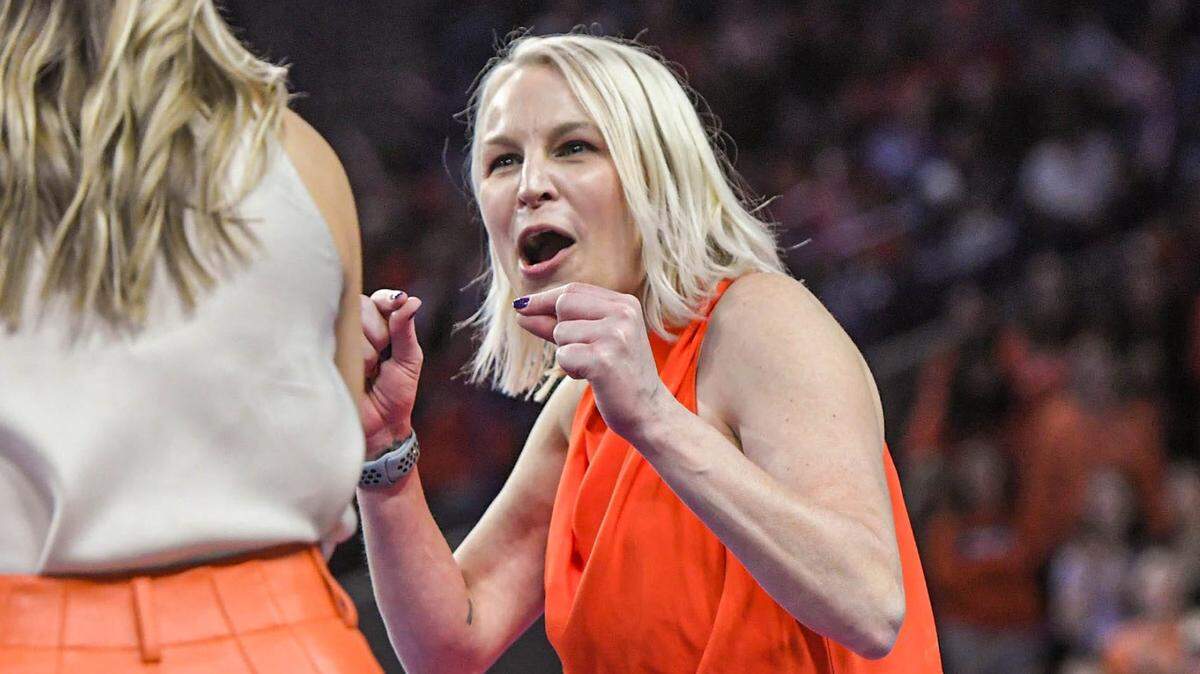
Parents say ex-Clemson coach Amy Smith mentally abused gymnasts. Smith denies claims
READ MORE
Amy Smith and Clemson Gymnastics
On April 18, Clemson issued a vague press release saying it had “parted ways” with Amy Smith, its first ever gymnastics coach. As a new investigation by The State reveals, there was a whole lot more to the story.
Expand All
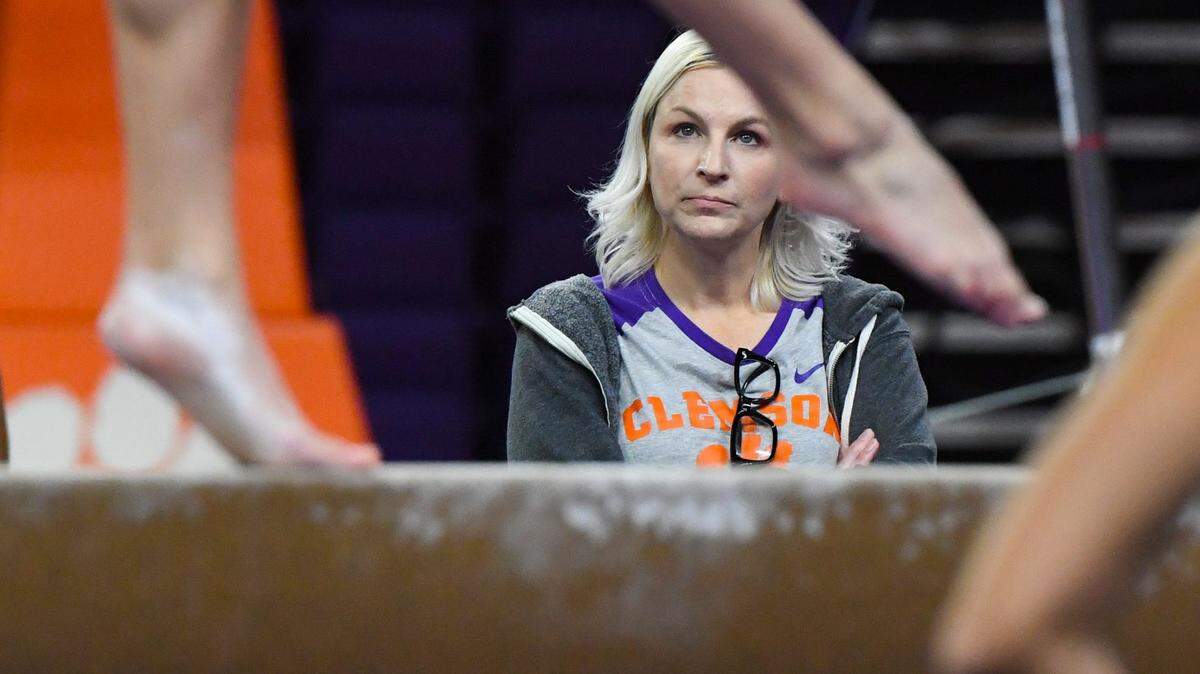
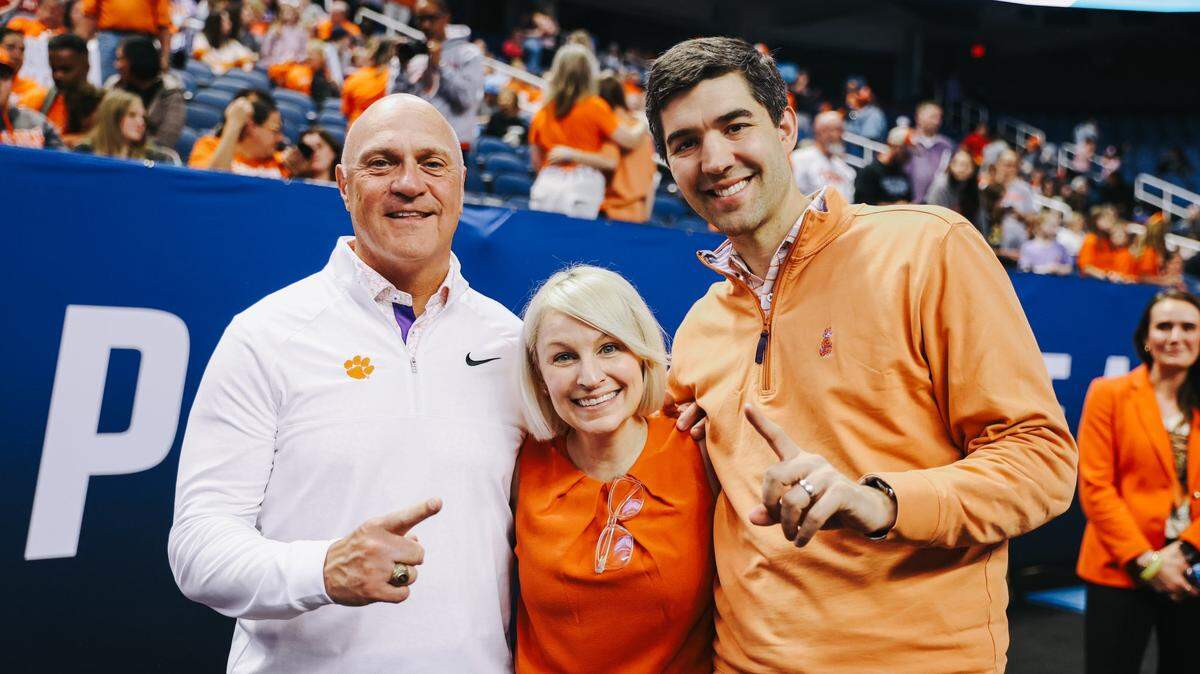
On April 18, Clemson athletic director Graham Neff sent a mass email to the parents of Clemson gymnasts. The school was firing gymnastics coach Amy Smith.
“It was important that you receive this information from me directly,” Neff wrote.
Neff’s email to parents was 102 words — simple and to the point.
But nothing about Smith’s tenure was simple and to the point. Her final season as Clemson gymnastics coach was clouded by an internal investigation and allegations of verbal, mental and emotional abuse of gymnasts.
Almost immediately after Neff’s email, messages of thanks and relief rolled in.
One parent wrote a sentiment that would be shared by many others: Smith’s firing “will make a statement in the gymnastics community that abuse in any form is not and will not be tolerated.”
That email exchange — obtained by The State via public records request — reflected the depth of the issues gymnasts and parents saw within the program.
But the fact Clemson got here at all also raises hard questions about what the university did and did not know about Smith’s alleged troubles in previous jobs at UNC and Utah State — and why they decided to hire her in the first place.
It’s a situation Clemson has tried hard to keep quiet, offering only vague comments to the media and initially refusing to release Smith’s termination letter, even though it’s a public record.
But an investigation by The State, which included interviews with parents of two Clemson gymnasts and a review of more than 900 pages of documents, offers a glimpse into the program’s internal struggles under Smith, and how Clemson leaders tried to manage what became a contentious final few months of her final season.
Clemson declined to make Neff available for an interview for this story, and a spokesman did not respond to a detailed list of questions about Smith’s tenure.
Smith, in her first media interview since she was fired, told The State that she has “never engaged in abusive behavior,” denied all allegations against her and said she is considering filing a lawsuit against Clemson over her termination.
Among key findings from The State’s investigation:
- Clemson gymnasts voiced concerns about “team culture and environment” starting in late fall 2024, emails showed. In reaction, Clemson athletics conducted a months-long internal investigation into Smith and her program. The investigation started in January 2025, right as a new season was getting underway.
- Clemson gymnasts suffered a notable amount of injuries in practice, according to parents, which raised questions about training methods. There were also multiple reports of athletes feeling forced to compete while injured.
- Multiple gymnasts on the team felt Smith’s leadership style was mentally and emotionally abusive, according to parents. One parent said in an interview that Smith’s “mental games” during the 2025 season were “absolutely unbelievable.”
- Clemson, according to Smith, was particularly concerned with a situation involving a sick gymnast who was administered an IV the morning of a meet in order to help her compete that day, and another situation where a gymnast was administered a cortisone shot in order to keep competing late in the year.
- Smith also said she and the team’s athletic trainer, Nolan Hartzell, had a heated confrontation regarding an injured gymnast’s practice routine. A parent said Smith and Hartzell often clashed over injuries, with Hartzell often standing up for gymnasts and pushing for them to have more recovery time.
Clemson fired Smith with cause on April 21. In a termination letter, the school contended that Smith had violated two separate clauses of her contract regarding “safe and responsible treatment” of athletes — including avoiding “physical and/or emotional abuse” — and violated another clause related to personal conduct.
“Clemson knew that I had done nothing wrong and that I was meeting the highest standards of coaching in my sport,” Smith told The State in an interview. “Yet they fired me anyway and destroyed my entire career.”
Clemson athletics spokesman Jeff Kallin provided The State with the following statement on behalf of the university for this story:
“Clemson researched Coach Smith’s background extensively, including checking references from previous employers as well as third-party evaluators. During this process, Clemson was not made aware of formal or informal investigations of Coach Smith from her previous institutions. Clemson does not have further comment on this personnel matter.”
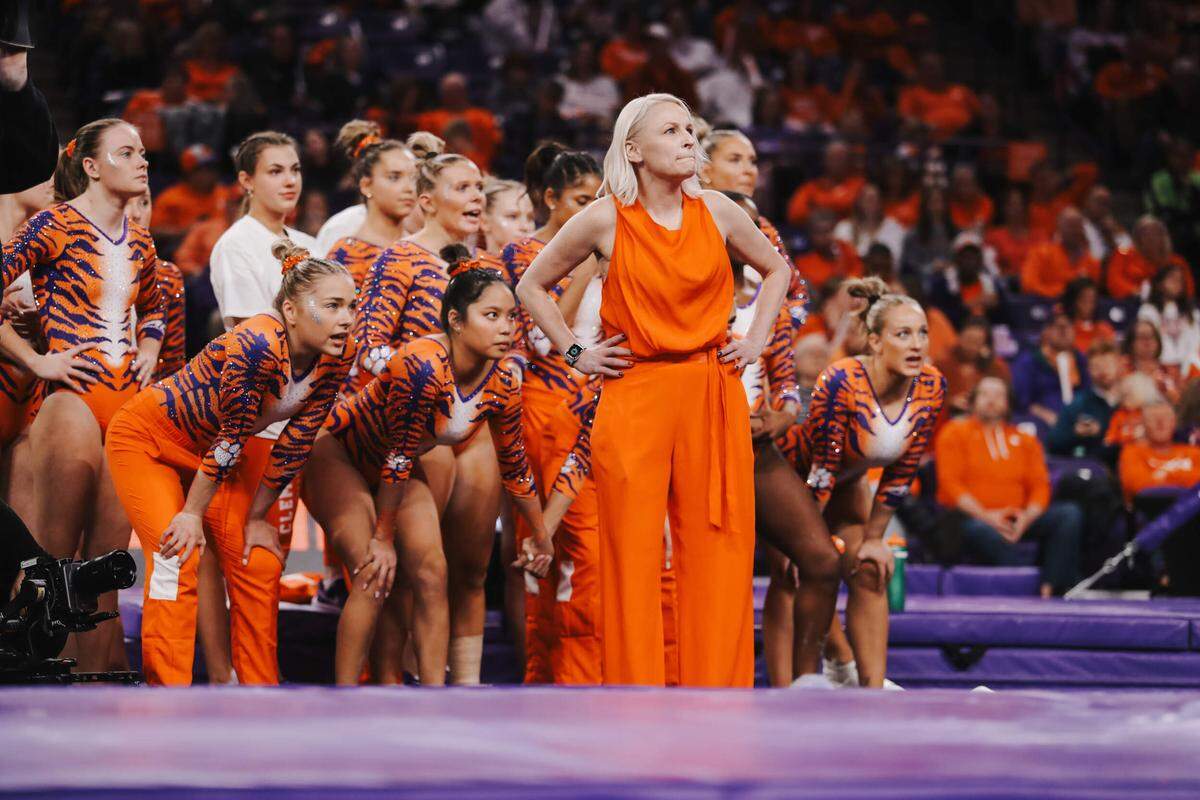
What went wrong during 2025 Clemson gymnastics season?
The State spoke with two Clemson gymnastics parents whose daughters had different experiences competing under Smith during the 2024 and 2025 seasons.
The first parent (Parent A) said their daughter had a positive experience competing for Smith and their family had “no issues” during Smith’s two seasons. The second parent (Parent B) said their daughter and family had a negative experience.
Although their daughters’ individual experiences differed, both parents corroborated a number of broader issues surrounding Smith and Clemson gymnastics in separate interviews. Both parents were granted anonymity in order to candidly discuss a sensitive situation.
Noticeable amount of injuries and pressure to play
Clemson’s volume of practice injuries was notable, parents said.
Parent A said they could not pinpoint a particular problematic drill or trend to the injuries, but practice injuries occurred so consistently that they were a frequent conversation between Parent A and their daughter during the season. At times, Clemson’s injury situation was so dire the team was in danger of not having enough healthy players to compete, the parents said.
Multiple times during the 2025 season, Smith asked injured gymnasts to compete and they agreed, Parent A said, because they didn’t feel comfortable telling Smith no.
“I think some girls felt intimidated, so they would say ‘I’m good, I’m good,’’’ Parent A said.
Smith described Division I gymnastics as a “demanding” sport and told The State that Clemson’s injury rate was not out of the ordinary and was comparable to other programs. She said Clemson’s weekly practice schedule was “built around athlete safety, recovery and mental health.”
“No athlete was ever asked to train or compete without medical clearance, and student-athletes regularly removed themselves from lineups when they felt they weren’t ready — those decisions were respected,” Smith said. “In fact, the reality at Clemson was the opposite of the narrative: At times, athletes were upset because we would not let them compete while injured.”
Crossing the line of tough coaching
Parent B said that during their daughter’s recruiting process, Smith pitched their family on an extensive “personality test” she had each of her gymnasts take once they got on campus. The goal of the test, according to Smith, was for her to gain a better understanding of each gymnast and develop individual coaching strategies.
“This never happened,” Parent B said. “If anything, she used the results to more easily manipulate the girls.”
Smith described her coaching style as “upbeat, positive and solution-oriented, the opposite of the negatives projected onto me.” She said the personality tests she had her gymnasts take were “never about control or manipulation” and were used to improve team communication.
She said that the allegations of verbal, mental and emotional abuse against her lack specifics and are more indicative of a “double standard.”
“When female coaches hold athletes to high standards, they’re more easily labeled ‘harsh’ or ‘abusive’ than male counterparts,” Smith said.
Allegations of favoritism lead to ‘completely divided’ roster
Younger gymnasts were irked that when older teammates missed practice for non-injury reasons or made other mistakes, they did not have to do as much extra conditioning as others, according to Parent A. Older gymnasts thought Smith coached younger gymnasts more actively, showing more excitement when those gymnasts learned and/or mastered a new skill.
By February 2025, about a month into the season, Parent A said the team was “completely divided” between older and younger gymnasts. The older gymnasts were primarily the six transfers who’d followed Smith to Clemson from her previous head coaching job at Utah State (there were 20 gymnasts on the 2025 roster).
Parent B agreed that favoritism and factions were an issue during Smith’s tenure, but they thought those issues impacted the 2024 season more than 2025.
Smith said these allegations are “contradicted by the fact that some athletes accused me of favoring younger gymnasts while others accused me of favoring older ones — both can’t be true. My responsibility as head coach was to challenge, support and develop every gymnast based on where they were in their journey.”
‘Mental games’ were ‘unbelievable,’ parent says
Citing student privacy laws, Clemson heavily redacted the specific complaints made about Smith and the program in the records it provided to The State.
Parent A emphasized their daughter had a positive experience with Smith. But Parent A said they’ve spoken extensively with other families whose daughters had negative experiences, and they understand and respect those complaints.
“I absolutely feel for them, and I will never dismiss any of their situations and experiences that they had,” Parent A said.
Parent B said Smith’s conduct impacted almost every gymnast on the roster.
“The mental games this year were absolutely unbelievable, and nearly every member of the team was a victim in one way or another,” Parent B said. “All of the same accusations about her in the past surfaced again with this team.”
According to Parent B, multiple parents also had a theory as to why Smith’s first season as coach was relatively quiet, as compared with her second: Clemson had an in-house camera crew following the team around in 2024 to produce a documentary series called “Building Legends.”
“All the show was off once the cameras weren’t rolling this year,” Parent B said.
Smith said she has “never engaged in abusive behavior.”
“No one ever explained what I supposedly did to deserve those labels, and no one can point to any action to substantiate the claim,” she said.
Specific complaints: IVs, cortisone shots and landing surfaces
During Smith’s final meetings with Clemson leaders, she said the university approached her with three specific complaints regarding her conduct.
Smith willingly volunteered details of all three incidents to The State. She said each situation was “easily rectified” because she was able to present facts and documentation to Clemson to clear her of wrongdoing.
The State was able to corroborate details on two of the three complaints.
1. An IV administered before a road meet
The first situation involved a gymnast being administered an IV the morning of a road meet after the gymnast had felt sick and gone to the emergency room the previous night.
Smith said Clemson officials told her in a meeting she had overstepped by bringing up the possibility of giving that gymnast an IV to the team’s trainer. But the actual issue, Smith said, was that the team trainer, Hartzell, had not gotten clearance from “higher-up medical staff” to administer the IV.
Parent A said it was their understanding that the gymnast in question consented to getting the IV, which was intended to give them fluids and help them recover quicker after feeling ill. But the situation still gave Parent A pause, since the gymnast had been sick enough to be admitted to the hospital the previous night.
The gymnast ultimately competed in that afternoon’s meet.
Smith said she did not pressure the gymnast to take the IV in order to compete.
“Here I am trying to do everything in my power” to help, Smith said. She described her thinking as: “Let’s get this on deck. Make sure that if she needs it, she’s got it.”
2. Gymnast receives cortisone shot for pain relief
The second situation, per Smith, involved a gymnast being administered a cortisone shot so she could minimize pain from a lingering injury and keep on competing.
Smith said she did not propose the cortisone shot. Rather, she said, a parent of the gymnast in question had proposed the idea of their daughter getting the cortisone shot in a separate conversation with Smith.
Smith said she was close with this parent and talked with them often.
“They just kept saying, ‘Well, football gets these shots, and they can get back out there. Can we do something like this?’” Smith said, recalling their conversation.
Parent A had a different recollection of the incident. Parent A said the gymnast in question consented to the cortisone shot, but the gymnast’s mother was “not on board with it” and was surprised her daughter agreed to the shot. Parent A said this situation occurred at a point where Clemson’s injury situation was especially shaky.
“I do know that Amy approached (the gymnast) and said ‘I need you for this meet,’” Parent A said. “And then the cortisone shot was given.”
Smith said the cortisone shot was administered under proper medical supervision.
“Clemson never clearly explained what it believed was improper about that situation,” Smith said. “It felt less like a genuine concern and more like an effort to collect information to see if I had done anything wrong — which I hadn’t.”
3. Alleged dispute about injury report, gymnast’s practice status
In a third situation, which The State was not able to corroborate, Smith said Hartzell, the gymnastics team athletic trainer, angrily confronted her and one of her assistant coaches after an injured gymnast practiced in a way her injury report status shouldn’t have allowed.
The dispute involved what type of “landing surface,” or landing mat, a gymnast was supposed to practice on that day at the team facility. Gymnasts practice on a variety of landing surfaces — some are softer, some are harder. Injured gymnasts usually practice on softer surfaces to reduce impact.
Smith said neither she nor her assistant coach had ignored guidance. Instead, she said, the issue was a poorly formatted injury report that was hard to decipher.
“He’s mad, accusing us of not looking at the injury report, defying his instruction and literally shaking to where I’m like, ‘Hey man, we’re on the same team here,’” Smith said, adding that after her assistant coach showed Hartzell how the injury report format looked on their cell phone, “the trainer immediately goes, ‘OK, I see where this got misconstrued.’”
Smith said it was her understanding Clemson administrators agreed with her concerns about injury report formatting and were looking to tweak the report’s format going forward to avoid miscommunications.
Parent A said they weren’t aware of this specific situation, but it was an open secret around the program that Smith and Hartzell often clashed about injuries and injury management. They added that Hartzell, who was retained by the new staff, is a beloved member of the Clemson gymnastics program.
“Everybody respected him, and they still do,” Parent A said of Hartzell.
Hartzell, through a Clemson spokesman, declined to comment.
Clemson athletics keeps quiet on Amy Smith’s firing
Although Smith took issue with how Clemson investigated her and is considering a lawsuit, gymnasts and parents were impressed with the university’s response.
Emails revealed an in-depth investigation that included individual meetings with nearly every gymnast on the roster; numerous meetings with parents; and a full team meeting where gymnasts could address Neff directly.
Multiple parents praised Neff and Clemson senior women’s sports administrator Stephanie Ellison-Johnson via email for how seriously they took the allegations.
Publicly, it was a different story.
The university issued a brief press release late on the afternoon of April 18 (a Friday) titled “Clemson Announces Change in Gymnastics Leadership.” The release said Clemson had “parted ways” with Smith and gave no additional details or quotes.
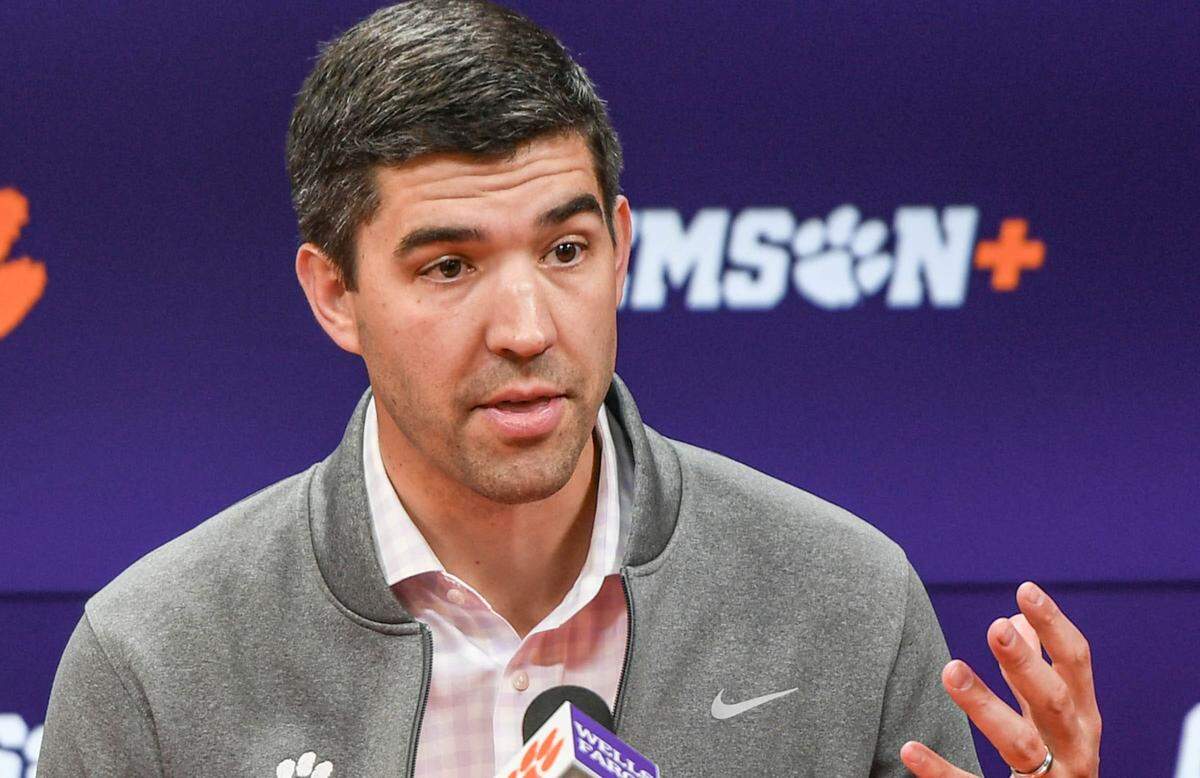
Neff publicly addressed Smith’s departure with the media a week later, but he did not give many specifics and said Clemson had a “forward-looking approach.” Neff did not substantially address Clemson’s decision to fire Smith or the allegations made against her until nearly four months after her firing (and only after additional details were made public following records requests).
Asked by The State in an Aug. 5 news conference if he regretted hiring Smith, Neff mostly touted the future of Clemson gymnastics under its new co-head coaches, Justin Howell and Elisabeth Crandall-Howell, a well regarded husband-and-wife duo Clemson hired away from Cal to replace Smith in May.
“We value the student-athlete experience in all of our sports,” Neff said, adding that Smith’s firing was “difficult and unfortunate” and that Clemson followed protocol.
In response to a public records request, Clemson’s office of general counsel also initially declined to provide The State with a copy of Smith’s notice of separation (also known as a termination letter) in May. Clemson said that document was exempt from FOIA under a section of the state’s FOIA law that allows public bodies to withhold “information of a personal nature.”
Clemson ultimately provided a copy of Smith’s termination letter in June after The State pushed back, citing a 2015 South Carolina Attorney’s General Office ruling which confirmed that “copies of disciplinary letters” for public employees must be provided under state FOIA law.
Without that letter, key details in Clemson’s firing of Smith — including the fact the university fired her with cause, and which sections of Smith’s contract Clemson determined she had violated — would have remained out of the public eye.
This story was originally published October 2, 2025 at 8:30 AM.