Clemson ‘destroyed my entire career,’ fired gymnastics coach Amy Smith says
READ MORE
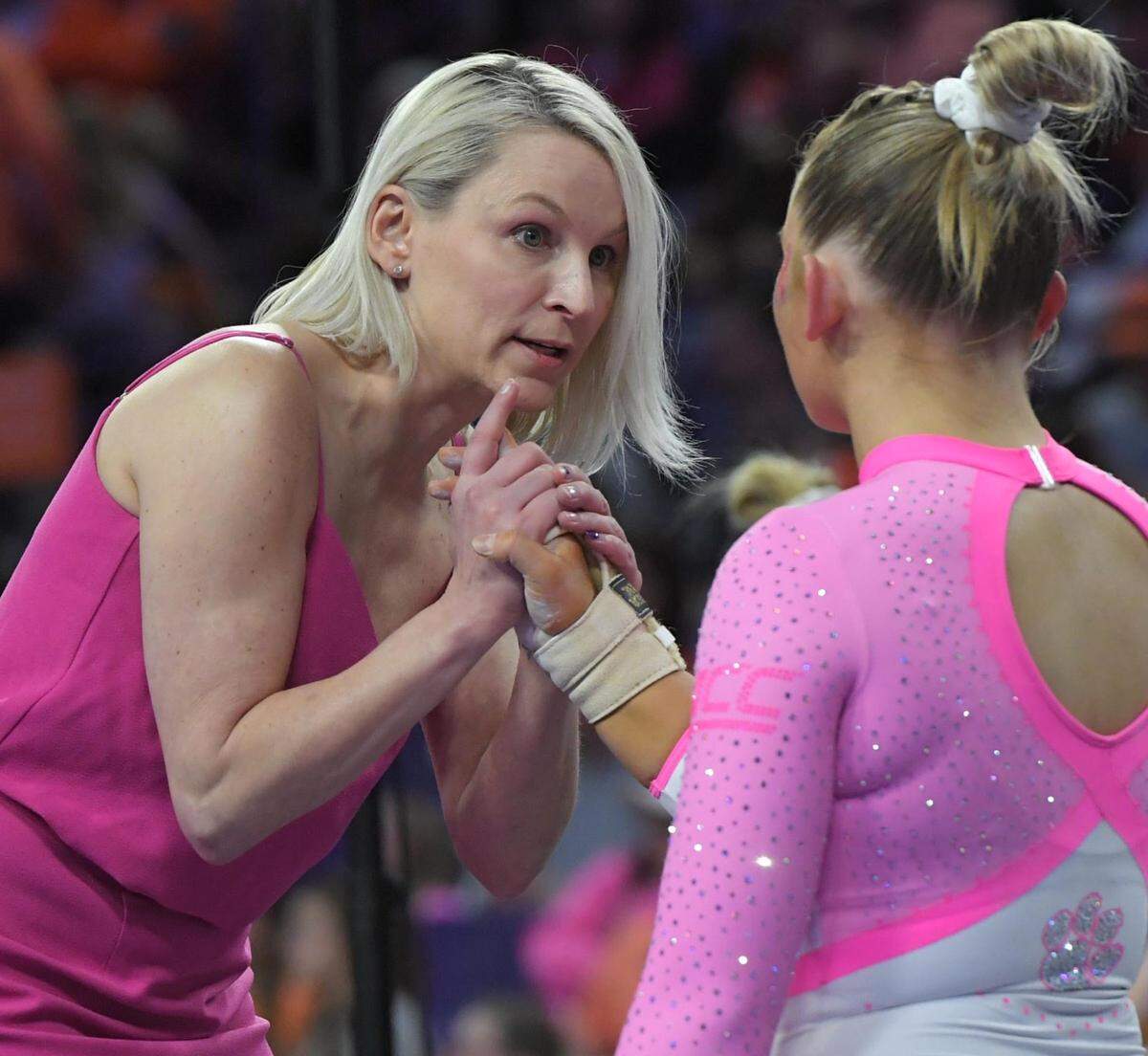
Amy Smith and Clemson Gymnastics
On April 18, Clemson issued a vague press release saying it had “parted ways” with Amy Smith, its first ever gymnastics coach. As a new investigation by The State reveals, there was a whole lot more to the story.
Expand All
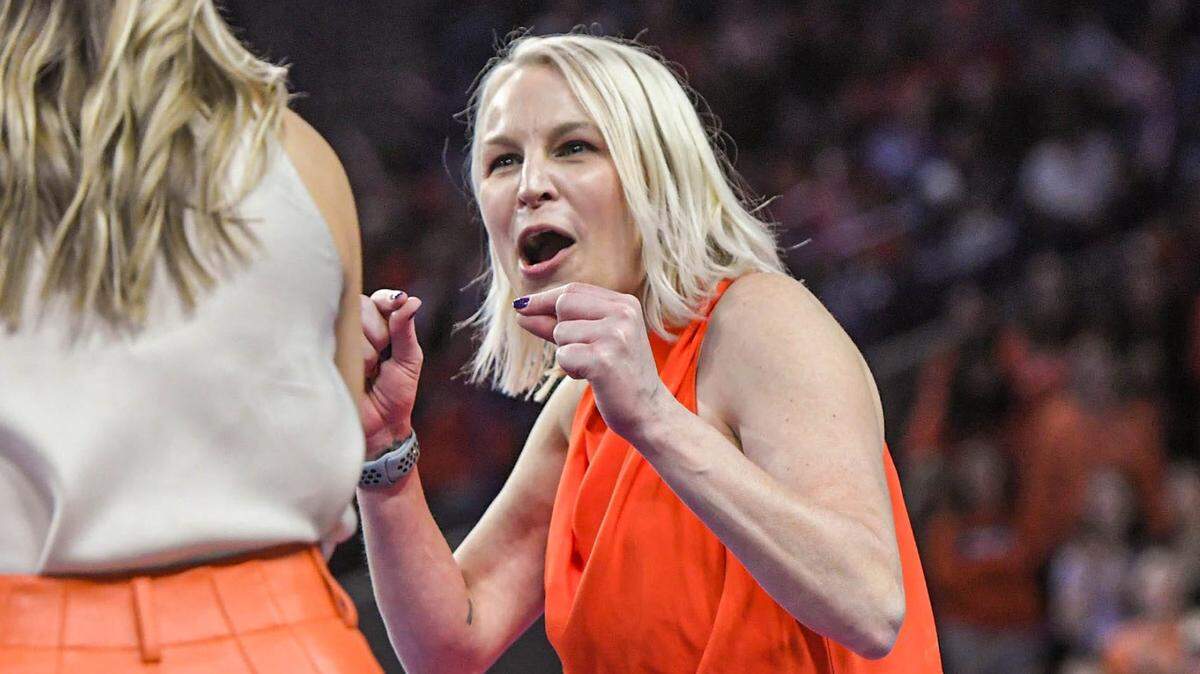
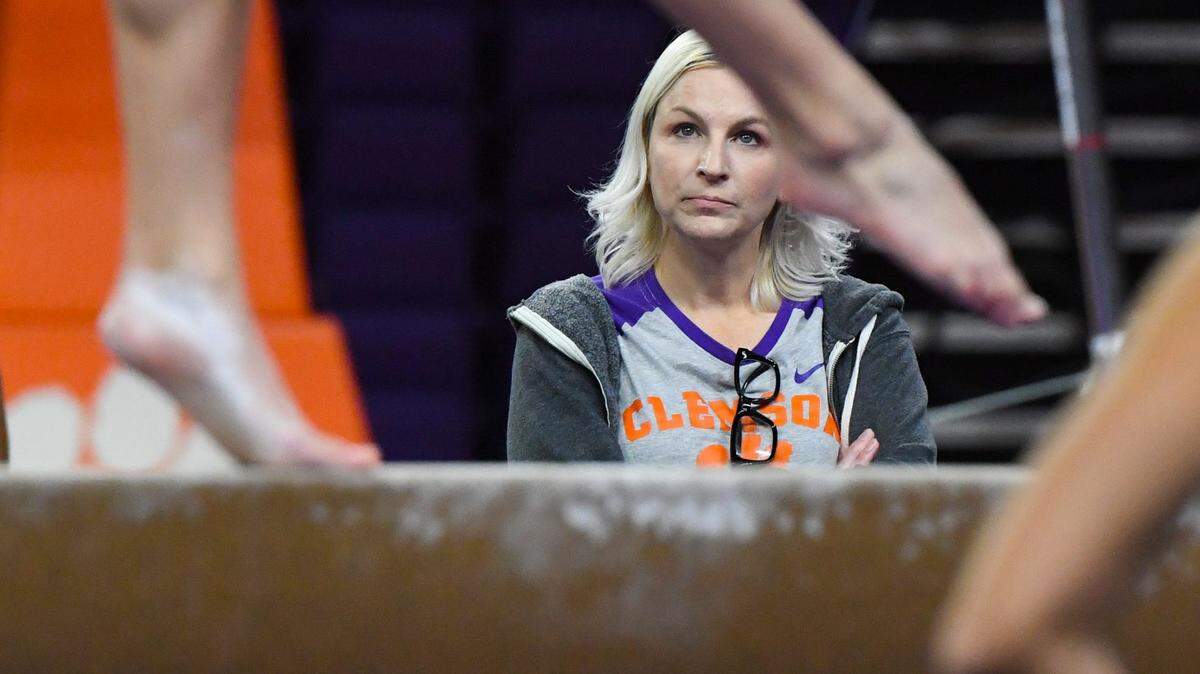
Amy Smith was announced in April 2022 as Clemson’s first ever gymnastics coach. For someone who’d dedicated her life to the sport, it was an “absolute dream job.”
Three years later, she has a very different opinion on the university.
“They destroyed my entire career,” Smith said of Clemson.
On April 18, Clemson announced it was dismissing Smith after two seasons as gymnastics coach. The university fired Smith for cause, ruling she had violated clauses in her contract regarding proper treatment of athletes and personal conduct.
Clemson’s decision came after multiple complaints from gymnasts and parents that Smith had engaged in verbal, mental and emotional abuse of athletes.
Smith, according to the Washington Post, had faced similar allegations of player mistreatment in previous coaching roles at North Carolina and Utah State.
But in an exclusive interview with The State — her first since she was fired — Smith passionately defended her coaching style, said she’s never engaged in abusive behavior and accused Clemson of ruining her chances of future employment.
“I have nothing to lose now,” said Smith, who provided eight pages of written responses to questions from The State and also participated in a wide-ranging, hourlong interview.
Smith and her lawyer, Tom Newkirk, contend that she is one of dozens of female college coaches who’ve lost their jobs because of a “double standard” and gender biases surrounding how their coaching tactics are perceived, as compared with their male coaching counterparts.
Newkirk has been representing coaches for 25 years and said his research shows Smith is “one of more than 300 coaches and counting who have been removed from college coaching simply because they are women or because they coach women.”
Smith is considering a lawsuit against Clemson, Newkirk said.
“Challenging young women to reach their potential is not verbal, mental or emotional abuse — it’s coaching at the highest level,” Newkirk said. “Only a female coach would be accused of wrongdoing for doing her job.”
Clemson declined to make athletic director Graham Neff available for an interview for this story, and an athletics spokesman, Jeff Kallin, did not provide responses to a detailed list of questions about Smith’s tenure. Neff, in limited public comments, has described Smith’s firing as “difficult and unfortunate.”
“(We) certainly followed protocol,” Neff said in August.

Smith pushes back: ‘No abuse was taking place’
Clemson announced it was adding gymnastics as a sport in summer 2021, and Smith was hired in April 2022 as Clemson’s first ever gymnastics coach. She spent her first 18 months on campus recruiting, ramping up the program’s 2024 inaugural season.
In her two seasons as coach, Smith led Clemson to back-to-back NCAA Tournaments (including an appearance in its inaugural season). Clemson also drew thousands of fans to Littlejohn Coliseum for home meets and ranked top 10 nationally in total and average attendance in 2024 and 2025.
But Smith’s tenure was also clouded by complaints and an internal investigation.
According to two parents of Clemson gymnasts who spoke with The State on the condition of anonymity, multiple gymnasts on the team felt like Smith made gymnasts feel pressured to compete when they were injured; had favorites on the roster and created a team culture that was “completely divided” between older and younger gymnasts; and was mentally and emotionally abusive toward gymnasts.
Smith said Clemson leaders approached her with complaints about a situation where a Clemson gymnast was administered an IV the morning of a competition in order to recover after going to the emergency room the previous night, and another situation where a gymnast was administered a cortisone (pain relief) shot in order to keep competing late in the season.
Smith also clashed with the team athletic trainer over injuries, a parent said.
One parent told The State that “nearly every member of the team was a victim in one way or another” and accused Smith of playing “mental games” with gymnasts.
Smith, in the interview with The State, did not push back on the idea she’s a tough coach, saying her leadership style is designed to “help guide young women into the best versions of themselves” and that includes a level of “accountability” that some gymnasts may not have faced before when competing at a high school or club level.
She and her lawyer denied all of the allegations made against her.
“You don’t come to college to continue to be coddled and treated like a child,” Smith said. “You come to learn, to critically think ... and it’s my job to help develop those things. And when you’re put in a position where maybe you’re held accountable for the first time, it’s going to feel harsh, it’s going to feel hard, it might feel unfair.”
“But accountability does not equate abuse, and I know that there was no abuse taking place.”
Newkirk, Smith’s lawyer, said the allegations of verbal, mental and emotional abuse against Smith — and how Clemson investigated and viewed those allegations — are a clear example of gender stereotyping and a national pattern he’s experienced.
“A female coach will be very often accused of abuse or being mean or a bully because she’s failing to meet the emotional needs of one athlete on one particular day,” Newkirk said.
Newkirk said the gender stereotyping in cases such as Smith’s go both ways, too. On top of female coaches facing a double standard that male coaches don’t face when they apply things like “accountability” and “discipline,” Newkirk said, the process also “undermines” female athletes.
“These female athletes, they’re stronger and braver than I am, doing the things they’re doing,” Newkirk said. “They can handle exactly what the men can handle, if not more. But we don’t think they can. And administrations don’t think they can. So they look at them like they’re little girls who are just participating, rather than athletes who can freakin’ take it.”
Clemson never gave Smith a ‘fair shot,’ she says
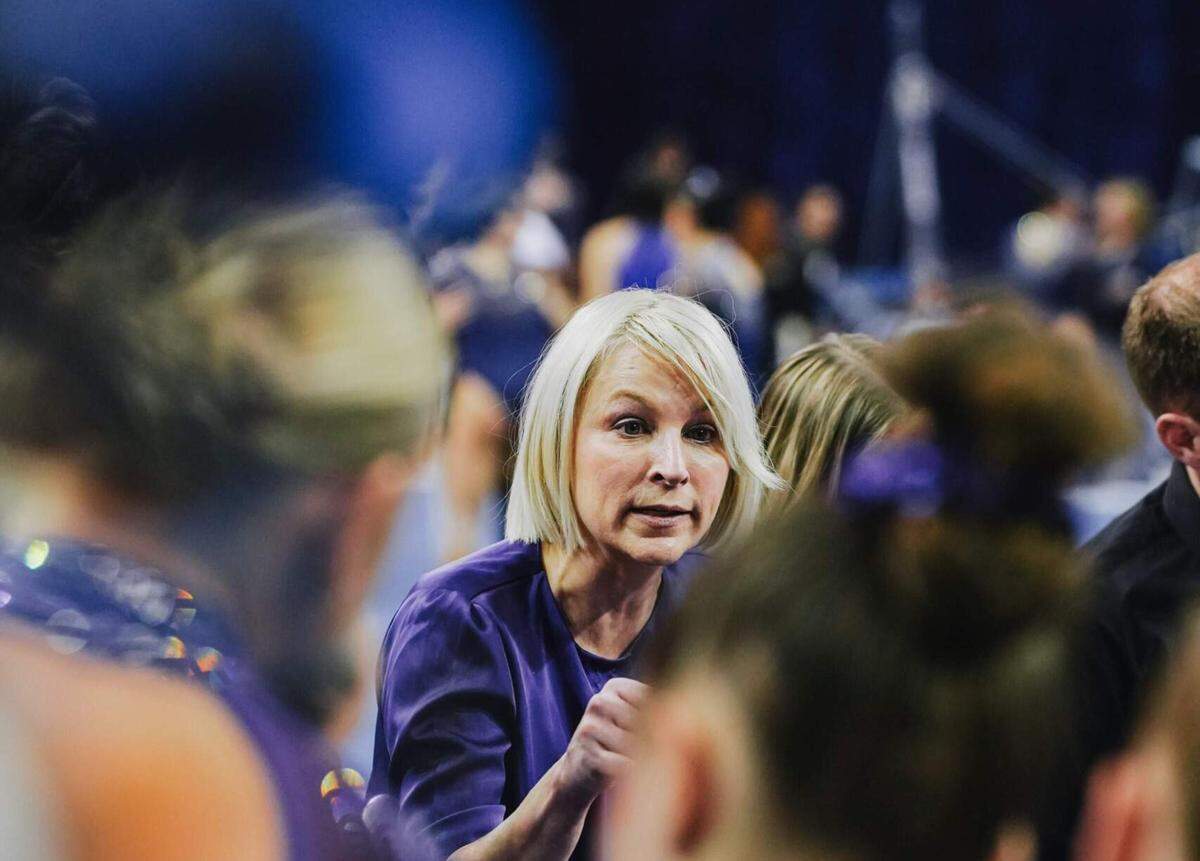
Asked to reflect on her Clemson tenure, Smith tried to gather herself.
“Oh, I don’t want to get emotional,” she said.
A few seconds into her response, she choked up anyway.
“I poured my heart and soul into it,” Smith said, her voice cracking. “And I feel like I built something really special. … Just proud of being able to build this environment and another female sport for Clemson to back. And it breaks my heart that it was taken away from me.”
That phrase — “taken away from me” — is intentional. Smith emphasized multiple times in the interview that she does not feel the need to change anything about her coaching style and she has zero regrets about how she approached her job as Clemson gymnastics coach.
“I know how I coach,” she said. “I know that I coach wanting the absolute best for my student-athletes, wanting to go above and beyond to put them in the best position possible at all times. At the end of the day, I can sleep well. I know the truth’s going to come out, as it is now.”
Even though she has denied all allegations made against her, Smith said she isn’t upset with any specific gymnasts on Clemson’s roster or the gymnastics program at large. Clemson hired Justin Howell and Elisabeth Crandall-Howell, a successful husband-and-wife coaching duo from Cal, to replace Smith and serve as co-head coaches. The majority of the roster was retained.
“I love those girls on that team, and I want to see them do well, regardless of the pain and the hurt that I’m being put through,” Smith said. “I’ll quietly be watching and cheering for them.”
Smith said her anger is directed exclusively toward the Clemson athletics and university leaders who did not give her a “fair shot” to defend herself before deciding to fire her with cause on April 18.
Among other complaints, Smith said Clemson never told her they were investigating her, never told her they had been meeting with gymnasts and gymnasts’ parents to field complaints about her and never gave her any “clear reasons or examples for my termination.”
College coaches are frequently fired without cause and for performance reasons, such as a bad coaching record. In those situations, coaches are entitled to a buyout, or a certain percentage of the remaining money left on their contract.
Firing a coach with cause is notable because it means a university does not owe the coach any buyout money.
In their final meeting, Smith said Neff, Clemson’s athletic director, gave her the option of resigning from Clemson (and publicly framing her departure as a resignation) as opposed to being fired for cause. Smith said no.
“I wasn’t resigning,” she said. “They were firing me for cause. They had given me no reason for cause, and I knew that I didn’t do anything wrong.”
Smith’s firing a ‘disservice’ to female coaches and athletes
Smith added that she was “shocked and stunned” at Clemson’s decision to fire her because she hadn’t received any recent negative feedback from administrators since the program’s midseason review in late January — which Smith said she had requested in order to be “proactive.”
Although she did not provide The State with specifics, Smith said she and Clemson officials discussed “issues amongst the team” in January, and she felt like those issues had been properly addressed following the meeting.
“I didn’t get any other negative feedback of, ‘Hey, this is bubbling up again’ or ‘I’m hearing a little bit of negative chatter’” until her final meetings with Clemson after the season ended in April, Smith said. “I’m like, ‘OK, what’s happening? I can’t fix problems that I’m being told aren’t there.’”
In an April 21 termination letter provided to Smith and later obtained by The State via public records request, a Clemson athletics representative said the university was firing Smith for cause and that “the specific reasons supporting the termination decision have been discussed with you prior to issuing this notice.”
But Smith said she didn’t learn what contractual clauses Clemson contended she had violated until the university mailed her termination letter a few days later via FedEx.
“I literally had to go get my contract and look through it,” she said.
What Smith and her lawyer see as a lack of due process is one of the main reasons they might ultimately sue Clemson.
Newkirk said he plans to give Clemson an opportunity to fix the situation by requesting they reinstate Smith as coach (which is unlikely, considering the school has already hired new co-head coaches, but it’s a formality within his process). If that doesn’t happen, Newkirk said, Smith could file a lawsuit, primarily on grounds of gender discrimination.
“When people react on their gut feeling and their biases, that’s what creates lawsuits,” Newkirk said. “And that’s why Clemson is now at risk of paying for her entire career when they could have just handled this thing” with a formal investigation.
Smith, who was a first-team All-American gymnast at UCLA in the late 1990s and had worked in college gymnastics in some capacity since 2003, said she’s operating as if her career is over.
She doesn’t see “any possible way” she’ll get another gymnastics coaching job — club, college, professional — after Clemson fired her.
Still living in the Clemson area and trying to sell her house, Smith said her new goal is to use her platform to speak out about female coaches in the same position.
Smith views firings like hers as a “disservice” not only to female coaches, but to female athletes who want to be developed and “coached hard” and are getting fewer and fewer of those opportunities in 2025.
“I think there was a certain element of, ‘She’s just going to go away and be quiet,’” Smith said. “But this is happening to too many women coaches. … It’s not OK.”
This story was originally published October 2, 2025 at 8:31 AM.