Rehiring Chad Morris was a risk. Why Clemson, Dabo think he’s still the right fit
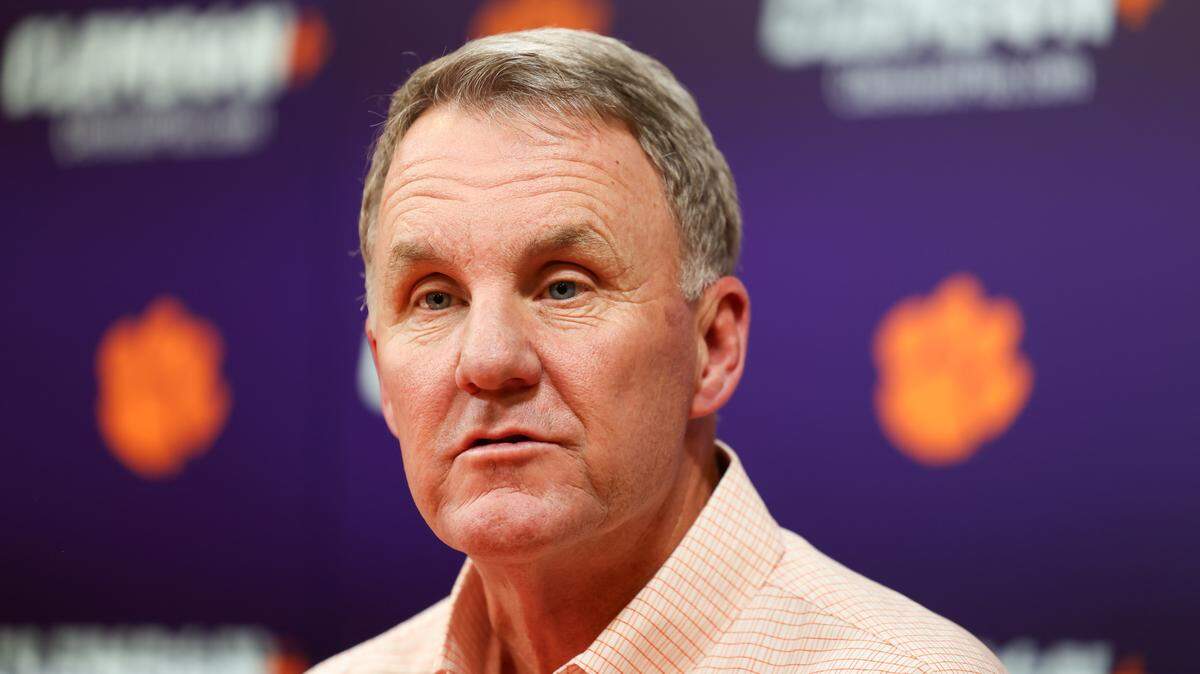
When Clemson coach Dabo Swinney interviewed Tulsa’s Chad Morris to be his next offensive coordinator in 2011, they were in sync. Maybe a little too in sync.
“I was like, ‘Somebody’s giving you the answers here,’” Swinney joked. “Because we spoke the same language. ... We thought the same, and it just clicked.”
The Swinney-Morris partnership was a great one. Behind a Red Bull-guzzling offensive coordinator who loved calling deep shots, Morris’ Clemson offenses lit up the scoreboard and helped build the foundation for two national titles.
Fifteen years later, Swinney is rolling the dice on Morris again — and hoping their shared vision for an effective offense helps his Tigers bounce back from a 2025 flop.
Morris, 57, has not called plays or been a position coach at a power conference school in five years. He didn’t coach at all in 2025. The last time he was an offensive coordinator, his team went 6-5, ranked No. 88 in scoring offense and saw its coach get fired despite having NFL star Bo Nix at quarterback.
But Morris knows Clemson and knows Swinney in a way previous offensive coordinator Garrett Riley did not.
So the Tigers are going back to the future after a 7-6 season — their worst record under Swinney since 2010 — and asking a veteran coach who worked wonders in his first stint at Clemson to do it again.
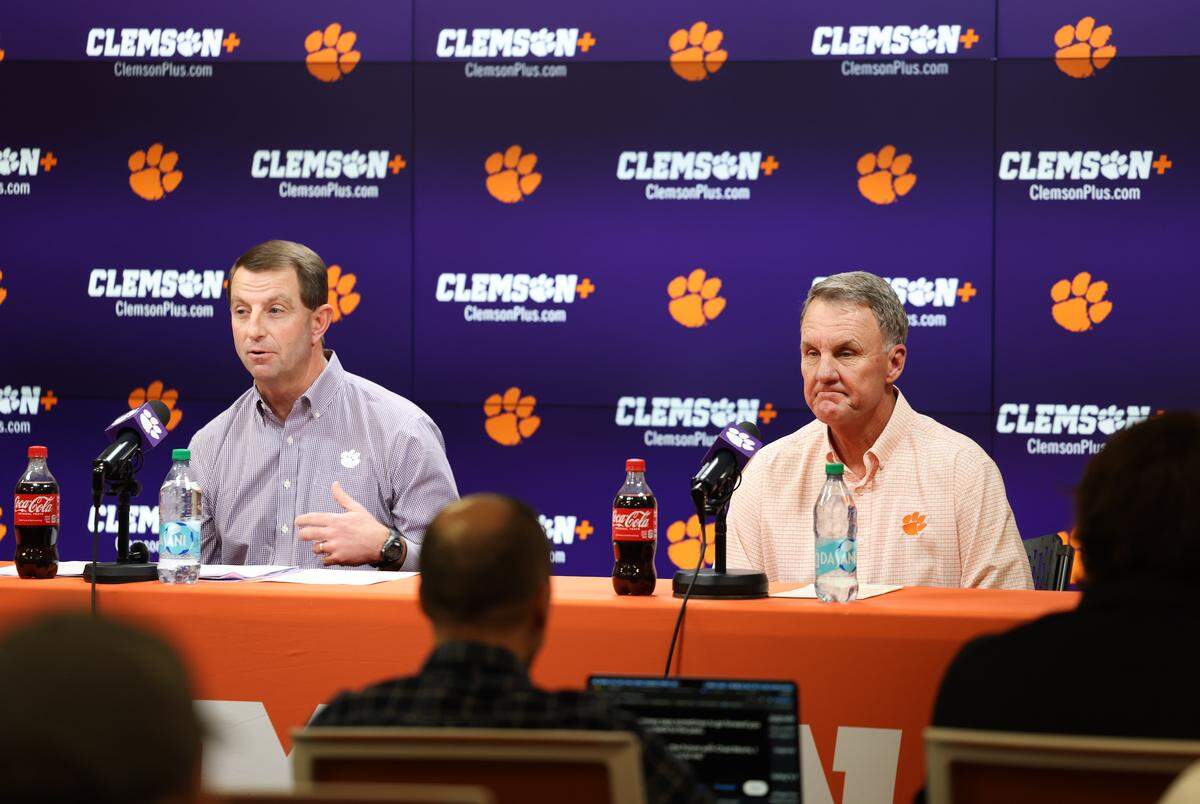
“Sometimes in life, you have to go back in order to go forward,” Swinney said Friday in Morris’ introductory news conference. “I think that’s where we are in this case.”
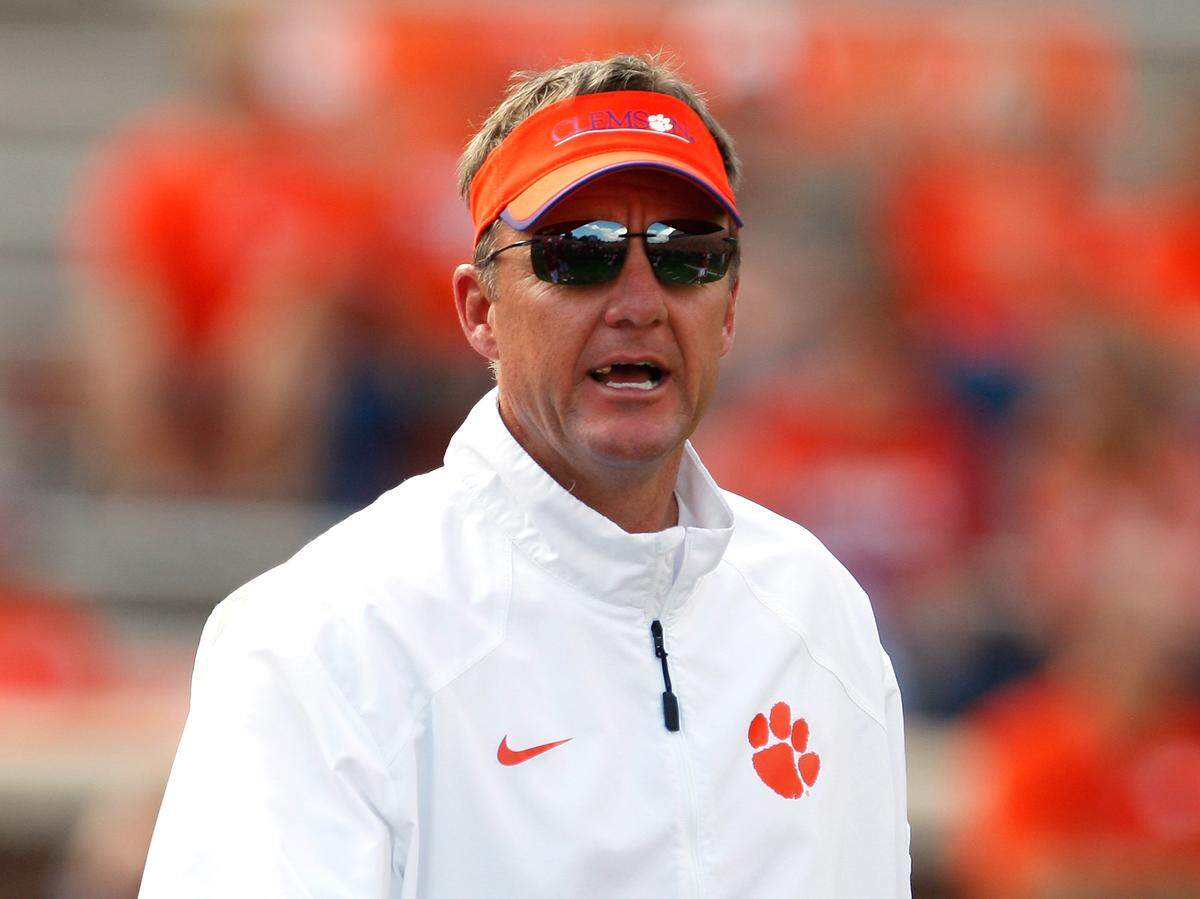
Morris: Clemson will ‘take pride’ in downfield attack
Morris’ return to Clemson comes at a critical time for the program.
The Tigers were the preseason No. 4 team in the country heading into 2025 and a popular national championship pick. Instead, they started 1-3 and finished the season with a deflating Pinstripe Bowl loss to Penn State in which Riley’s offense mustered just 236 yards and 10 points.
Swinney fired Riley — a celebrated hire when Clemson poached him from national runner-up TCU three years ago — two days after the bowl game.
It’s not hard to see where Clemson’s offense needs improvement. Last year, despite returning a projected No. 1 pick at quarterback, elite receivers and four of five starters at offensive line, Clemson averaged just 27.2 points per game, 11th among 17 ACC teams and No. 72 nationally.
The Tigers were even worse in rushing yards per game (No. 105 nationally) and third-down conversion percentage (No. 115 nationally). They bookended the year with 10-point outings vs. LSU and Penn State and lacked a consistent identity.
Enter Morris, whose Clemson offenses averaged 36.3 points per game and 468.5 yards per game during his 52 games as playcaller from 2011-14. That’s about 10 points and 77 yards better than Clemson mustered in 2025 (albeit with far more offense-friendly clock stoppage rules).
Morris vowed to bring that same approach to Clemson in 2026
“We’re gonna be a two-back, run-oriented, play-action shot football team that’s gonna take great pride in pushing the ball down the field,” Morris said. “We want to push the ball down the field at least three times a quarter — that means the ball traveling in the air 25 yards or more, three times a quarter. Chart it, and let’s figure out why it isn’t happening.”
Morris’ early Clemson teams often approached 90 plays a game, which was revolutionary at the time and part of a nationwide “tempo” trend. Since then, defenses have adjusted and running clock rules have shortened games and offensive snap counts. Morris said he now views tempo as “the ability to change the pace of play and doing it in different structures” and personnel groupings.
“But at the end of the day, let’s not complicate this thing,” Morris said. “Let’s get the ball to our playmakers, and let’s let those guys go make plays.”
Clemson has the talent at WR, RB. What about QB?
About those playmakers: Clemson has a lot of them.
The Tigers scored big retention wins when rising junior wide receivers T.J. Moore and Bryant Wesco Jr. agreed to new rev-sharing deals to return to Clemson in 2026. Moore and Wesco are both legit stars and likely 2027 NFL Draft picks.
The arrow is also pointing up at running back, where SMU transfer Chris Johnson Jr. joins sophomore Gideon Davidson, and at tight end, where starter/standout blocker Olsen Patt-Henry and young Christian Bentancur make for a great one-two punch. Don’t forget about receivers Tyler Brown and Tristan Smith (waiver pending).
That’s not exactly the skill position group Morris walked into at Clemson in 2011: The Tigers had an impressive eight future NFL players at receiver, running back and tight end that season, led by DeAndre Hopkins and Sammy Watkins.
But it’s not a bad place to start.
“To know what we have … I’m grateful for this opportunity,” Morris said.
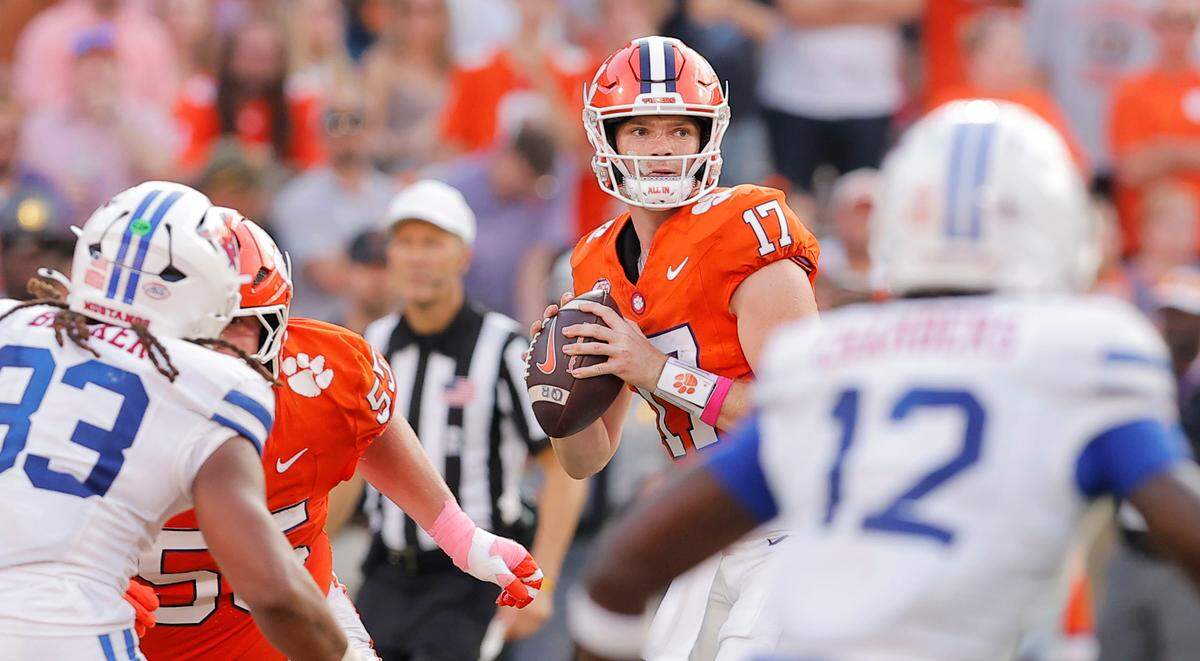
Swinney’s decision to stick with rising redshirt junior Christopher Vizzina as his likely starting quarterback, though, could prove definitive for the offense at large. It’s entirely possible Morris unlocks a new level of Vizzina like he did with Tajh Boyd, who thrived under Morris as a first-year starter in 2011.
It’s also entirely possible (probably more possible) the decision to not pursue a transfer quarterback — which Swinney said he and Morris were “in alignment” on — bites the Tigers to some degree in 2026. Vizzina, Klubnik’s primary backup since 2023, is a talented but unproven quarterback whose lone start and solid production came against the country’s second worst passing defense (SMU).
Clemson’s failure to land a quality starting offensive lineman from the transfer portal could be an impediment, too. As could Morris’ lack of recent experience — although he kept up with the modern college game and visited programs across the country through a data analytics job in 2025, the veteran coach hasn’t been a coordinator since the COVID season at Auburn under Gus Malzahn.
Swinney acknowledged the skepticism regarding his rehire of Morris, which came at a university discount. But he described his longtime friend as a “different Chad Morris” and a “better Chad Morris” than the one he hired in 2011.
“I’ve made a lot of decisions in my days,” Swinney said. “My best decisions have usually been the most unpopular.”
This story was originally published January 28, 2026 at 7:40 AM.