Top transfer Treysen Eaglestaff signed with USC, ended up at West Virginia. How?
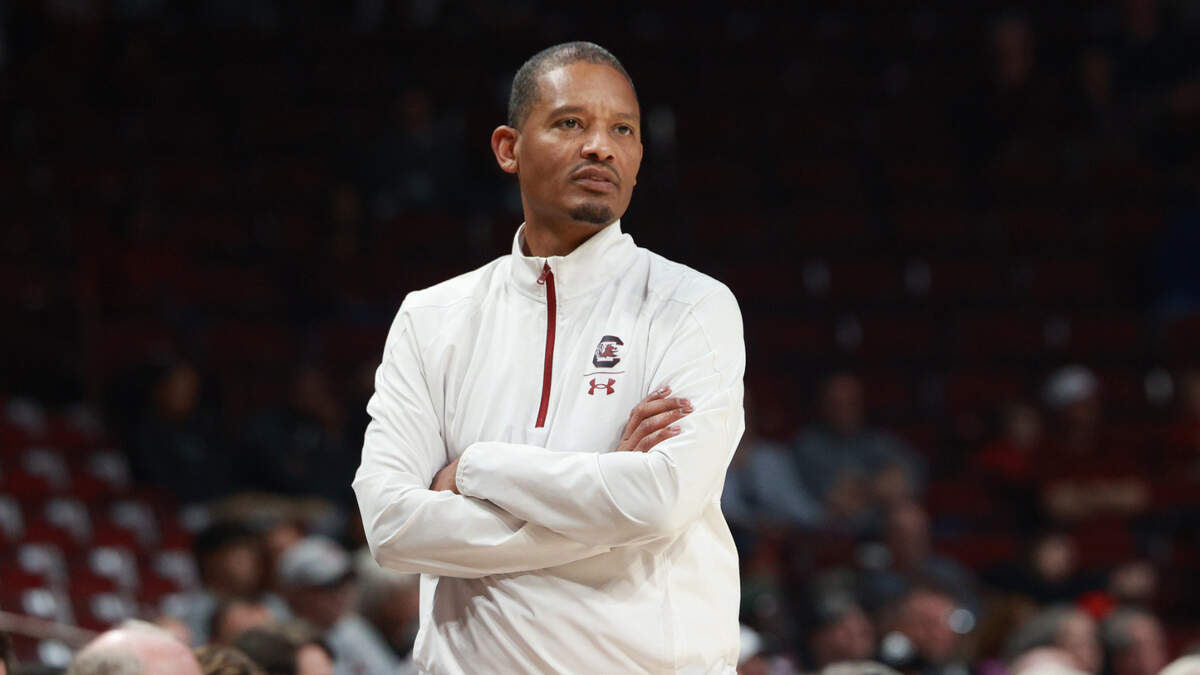
Lamont Paris never said his name, but it was clear he was still thinking about how North Dakota transfer Treysen Eaglestaff got away from South Carolina.
It’s hard to discern whether it was a recruiting win or loss because, well, Eaglestaff didn’t just commit to South Carolina, he signed with the Gamecocks and became arguably the most-anticipated addition for Paris and his staff.
During his junior year at North Dakota, Eaglestaff averaged nearly 19 points a game in a masterful season that included a 40-point performance against Alabama and a 51-point outburst versus South Dakota State. He entered the transfer portal as one of the top scorers in America with blue bloods galore coming after him.
Yet, one of his first stops on the transfer recruiting trail was South Carolina. Eaglestaff fell in love with Paris, his system and his future as a Gamecock. So much so that before Eaglestaff left Columbia, he told The State in late March, he canceled visits to Kentucky, Gonzaga, Kansas and others, committing to USC over a breakfast with the coaches.
“It was just the right fit for me,” Eaglestaff told The State when he committed. “(Coach Paris) wants a guard that can come in, play that role and he believes that’s me. That’s why I have so much trust in him.”
Eaglestaff committed to the Gamecocks on March 30. Two days later, South Carolina posted about Eaglestaff on social media, signaling he signed with the team.
Then, two weeks later, he decommmited from USC and then signed with West Virginia on April 21.
The simple question is, how? Even in a college athletics landscape where NIL and the transfer portal and never-ending litigation have made rules feel obsolete, it is still jarring to see a player open his recruitment, sign with a school and then sign with another school three weeks later.
The way Paris frames it is this: If your choice is strictly a basketball or relationships decision, nothing is going to change that.
If you commit to “School A” because it’s a better basketball situation, Paris said, “School B can’t come back in three weeks and say, ‘I’ve got a better basketball situation all of a sudden.’ ”
The only thing School B can do is dig a little deeper into its pockets
“You can have more money and bolster your offer in that way,” Paris said. “And I think that’s happening, unfortunately, in the environment that’s been created. And so it’s making some kids re-evaluate decisions that they made under all the right circumstances.”
The problem for Paris — and really any coach in college basketball — is there is no real solution. Well, aside from offering more money, and even then, nothing is secure.
Think about it: South Carolina’s financial package to Eaglestaff was enticing enough that he told The State that USC could monetarily “compete with anyone that was hitting me up.”
So what does this mean for South Carolina in the future?
“You have to just adapt. Just have to adapt,” Paris said. “No hard feelings. You’ve got to move forward.”