Revenue sharing is coming. Dawn Staley hopes South Carolina WBB gets a fair shake
College sports have been in a constant state of change in recent years. The future looks no different.
Starting with the next school year, schools will be able to distribute $20.5 million to its athletes as a result of a landmark settlement in the House vs. NCAA antitrust lawsuit.
The settlement is still awaiting final approval, but that $20.5 million is an influx of cash that can be given to athletes on top of name, image and likeness deals.
There will also be more money coming in for schools whose women’s basketball team make the NCAA Tournament starting this year. The Division I board of governors voted unanimously on a proposal in August 2024 that would allow performance units (media revenue) to be awarded to women’s basketball teams that play in March Madness, similar to the units men’s college basketball teams are awarded. NCAA membership will vote to approve the proposal on Jan. 15.
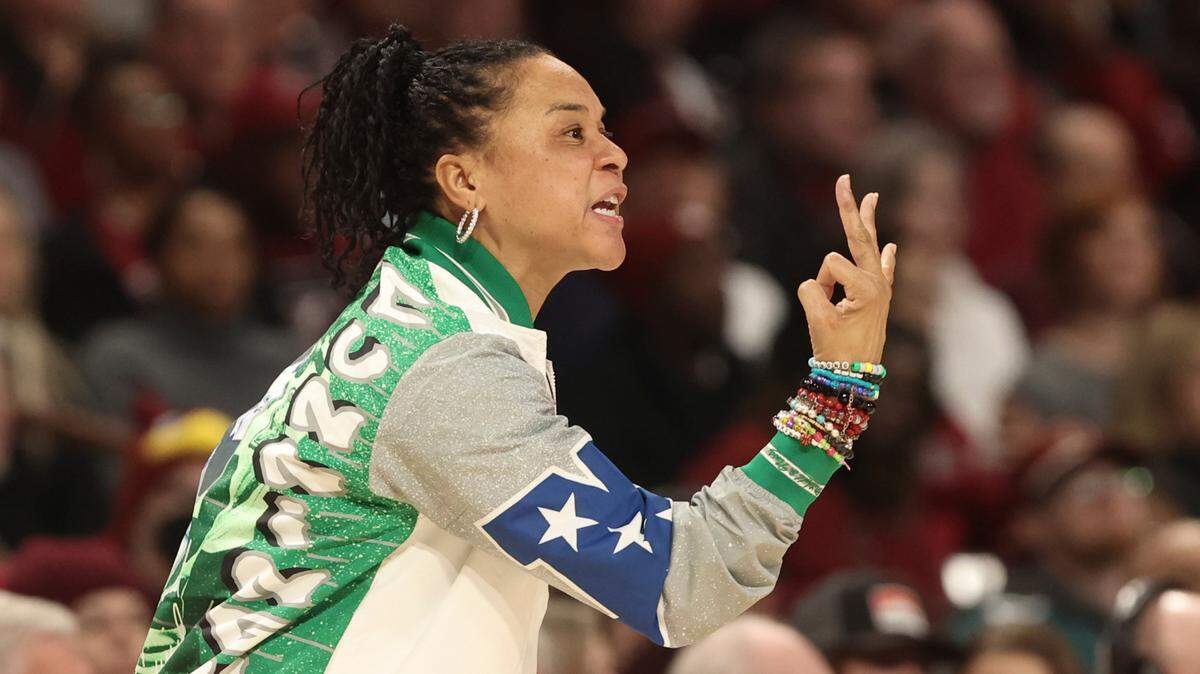
South Carolina women’s coach Dawn Staley was asked for her opinion on the March Madness revenue sharing during a recent “Carolina Calls” call-in radio show, but ultimately sounded off on college athletics’ new age of revenue sharing as a whole. Ever the voice of reason in women’s college hoops, Staley kept it simple before diving into her response: “That’s a sore topic right there.”
“Here’s the thing. I just hope, in the whole grand scheme of things, we do right by women’s basketball,” Staley said. “I know football is a high revenue-producing sport, and they should get theirs. They should. Everybody underneath should be sharing.”
The vast majority of FBS schools plan to disperse “as much as or more than 90%” of their $20 million to football and men’s basketball, Yahoo Sports’ Ross Dellenger reported. According to his estimates, schools offering the maximum under the rev-share cap would likely send $13 million to $16 million to football, $2 million to $4 million to men’s basketball while the remaining $1 million to $2 million would be left to split among all other sports.
“I don’t know what it’s going to be,” Staley said of a rev-share split. “I’m hearing 75%, 15%, 5%, 5%. I’m hearing that. I don’t know what it’s going to be, but I think we need to be a little more generous than 5%. That’s my feel on it. I’m going to scream to the top of my lungs because of who we are.”
No one would fault Staley for lobbying for a bigger piece of South Carolina’s revenue sharing pie. The Gamecocks have become a perennial contender under Staley in the last 17 years. The 400-plus wins and three NCAA national titles prove it.
Not to mention, South Carolina sold out all 13,046 of its season tickets for this season and has sold at least 10,000 season tickets seven times since the 2015-2016 season. Fans continually pack Colonial Life Arena to watch Staley and her Gamecocks play; it’s why South Carolina has led the nation in average attendance for the last 10 seasons.
“When this lawsuit came out, it was football, men’s basketball and women’s basketball,” Staley said. “I just hope we don’t lose sight of those three sports that started the lawsuit. And I know when we decide which way that the money’s going to be divvied up, that every school that is receiving the revenue sharing portion will definitely take women’s basketball seriously.”
Non-revenue generating sports at colleges across the country seem poised to reap hardly any benefits from the incoming revenue sharing cap. But Staley doesn’t want that to lead to her program and others being lower on the totem poll.
“Contrary to what people think, that women’s basketball isn’t a revenue-producing sport, we are a revenue-producing sport,” Staley said. “Our South Carolina women’s basketball team is a revenue-producing sport.”
Staley is technically right in that regard, but as is often with these sorts of financial things, there’s a caveat.
The South Carolina women’s basketball team recorded just over $11.5 million dollars ($11,511,993 exactly) in revenue last year, according to USC’s 2024 Equity in Athletics Disclosure Act (EADA) report.
During the 2023 fiscal year, the women’s basketball program reported $10,767,615 in total expenses while bringing in $5,049,838 in revenue, according to an NCAA financial report. Sportico’s College Finances Database shows that South Carolina women’s basketball has spent, on average, $5.1 million more than it’s made in revenue in each year from 2017-2023. A lot of that is tied up in salaries for Staley and her coaching staff.
“We may not make more than we spend — like a lot of programs. A lot of men’s programs don’t make what they spend — but, for all of the existence of women’s basketball, we have been held back,” Staley said. “And now we are going to get penalized for being held back even more when it comes to this.”
It’s still not entirely clear how any institution will handle the upcoming revenue-sharing age of college sports.
New South Carolina athletic director Jeremiah Donati told The State that no plan is finalized but he “more or less” knows how things will go. He also acknowledged that SEC presidents are weighing whether to have a conference-wide solution or let each school decide how it wants to distribute its money.
Regardless of how things shake out, it’s a likely a safe bet that Staley and other women’s basketball programs of South Carolina’s caliber will be lobbying for their fare share.
“I’m going to scream to the top of my lungs for more of the percentage from somewhere,” Staley said. “If it’s football (gets) 75% then let’s talk about the 25% and how that’s divvied up, because we run a really good program, and we’re fiscally responsible when it comes to all of that and we want to stay that way.”
This story was originally published January 14, 2025 at 7:00 AM.