Dawn Staley details how South Carolina women’s basketball deals with NIL, rev sharing
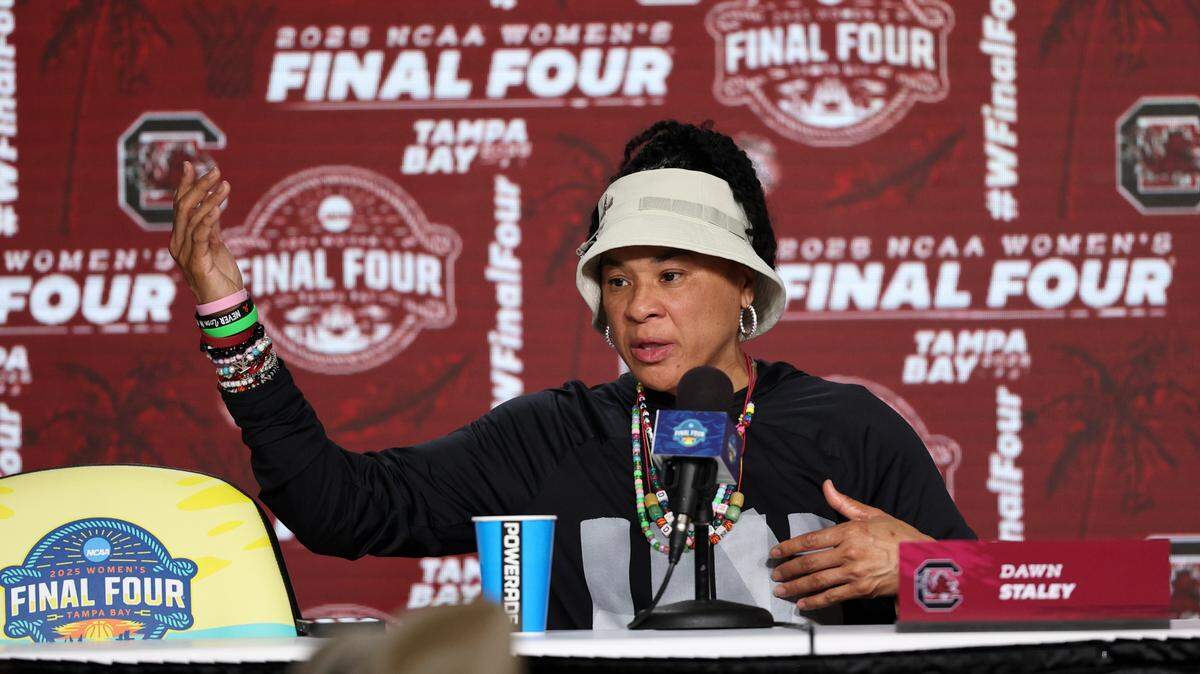
Dawn Staley is supportive of the new era of college athlete compensation. At the same time, those feelings of support come with mixed emotions about how things are changing.
The South Carolina women’s basketball coach revealed a piece of how she and her program are dealing with the revenue sharing age of college sports in her appearance Wednesday on a national podcast.
The Gamecocks’ head coach told former first lady Michelle Obama on her podcast, “IMO with Michelle Obama and Craig Robinson”, that she has players sign non-disclosure agreements, a contract of sorts that’s typically used when you don’t want specific details being made public. In this case, an NDA would attempt to prevent players from telling each other how much they’re making from NIL deals or revenue sharing.
Staley said it’s one way she keeps the money players receive from affecting South Carolina’s locker room. No revenue discussions have yet to affect the locker room, Staley said, adding a “knock on wood” for good measure.
Staley is believed to be one of the few, perhaps the only, head coach at South Carolina who prefers to directly handle the program’s name, image and likeness discussions. And it’s helpful that some of her players are represented by the same agents, she said.
“I think I do all my talking to the agents,” Staley said. “This is what it is. And I tell our players, too, I do make them sign NDAs about what they get. Now, whether they can stick with that or not, some of them get disgruntled and maybe transfer and just say what I was making, and then it could stir up the pot. But I’m very honest, and I’ll tell them, ‘There’s a reason why you get paid this, and you get paid that,’ right? And I’ll explain that to them.”
The revenue share age began on July 1 after the House vs. NCAA settlement was finalized. It allows schools to pay up to $20.5 million a year directly to athletes. That money comes in addition to any payments for NIL. The way that money is divided up is completely up to the individual schools, but the expectation is at least 70% of that money will go to football at power conference schools, according to CBS Sports.
South Carolina has not made its own distribution breakdown public, but Staley has long argued for a larger piece of the rev-share pie. She told Obama she does some “innovate things” to help out her players when it comes to getting more money.
“For us at South Carolina, we’ve got a certain amount of money that we have to work with, and I don’t over-promise” players or recruits, Staley said. “I stay within the budget, the revenue share budget that we have. I do some innovative things as well to help our players out in this space. We play games for money, and that money goes directly to our players, things like that.”
One example is by playing in the Players Era Women’s Championship. The multi-team event will take place in Las Vegas during Thanksgiving Week and South Carolina will play Duke and either Texas or UCLA. The event will provide South Carolina’s players with at least $1 million of NIL opportunities in each year that it participates. The Gamecocks were invited to participate in 2025, 2026 and 2027, according to a contract obtained by The State via a public records request.
Staley is supportive of this new era of college athletics that finds the players benefiting more than ever from a monetary standpoint. That being said, she feels additional control is needed. She used an example of a bench player in the transfer portal with little to no on-court production who might approach South Carolina and ask for $100,000, then use that as a bargaining chip to ask for $150,000 from another school.
“I think it’s long overdue. I do think it’s out of control as well,” Staley said. “We’ve got to find a way to balance, to keep it amateur, an amateur sport, while allowing young people to go out there and benefit. ... Five years ago, it was all the NCAA benefiting, and it didn’t trickle down to the players. And now it’s a waterfall down to the players.”
This story was originally published August 13, 2025 at 3:39 PM.