Columbia mayor wants to step back from long-awaited riverfront project, says private sector should pay
Efforts to open access to the Congaree riverfront near downtown Columbia that advocates say would bring business and people to the river have hit a major snag.
The city will not get $18 million in federal dollars for a road project that has been described as the final piece needed for development to begin along the riverfront between the Blossom and Gervais street bridges.
Now $9 million in state money that legislators set aside for the project also hangs in limbo.
Since the early 1990s, Columbia leaders, land owners and University of South Carolina officials have floated a grand vision for the city’s riverfront between the Blossom and Gervais street bridges.
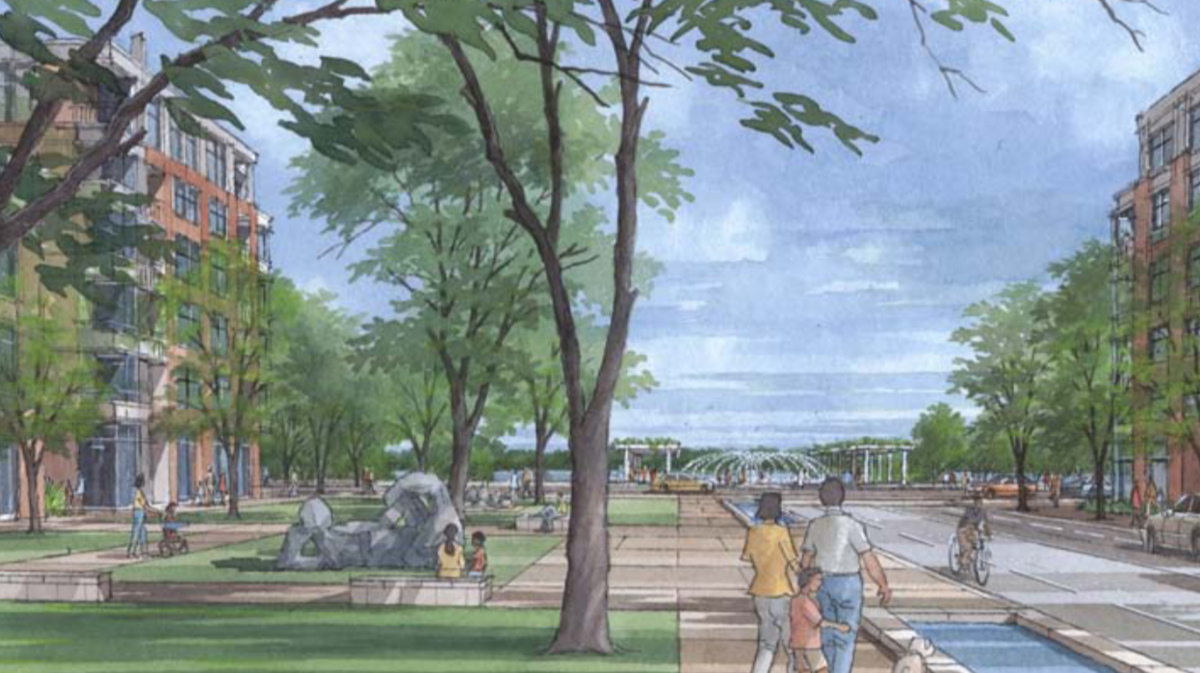
It imagines a sprawling public park with an amphitheater and boardwalks, an ornate fountain and easy river access for a variety of recreational activities, as well as room for shops, restaurants and apartments along the bank of the Congaree River.
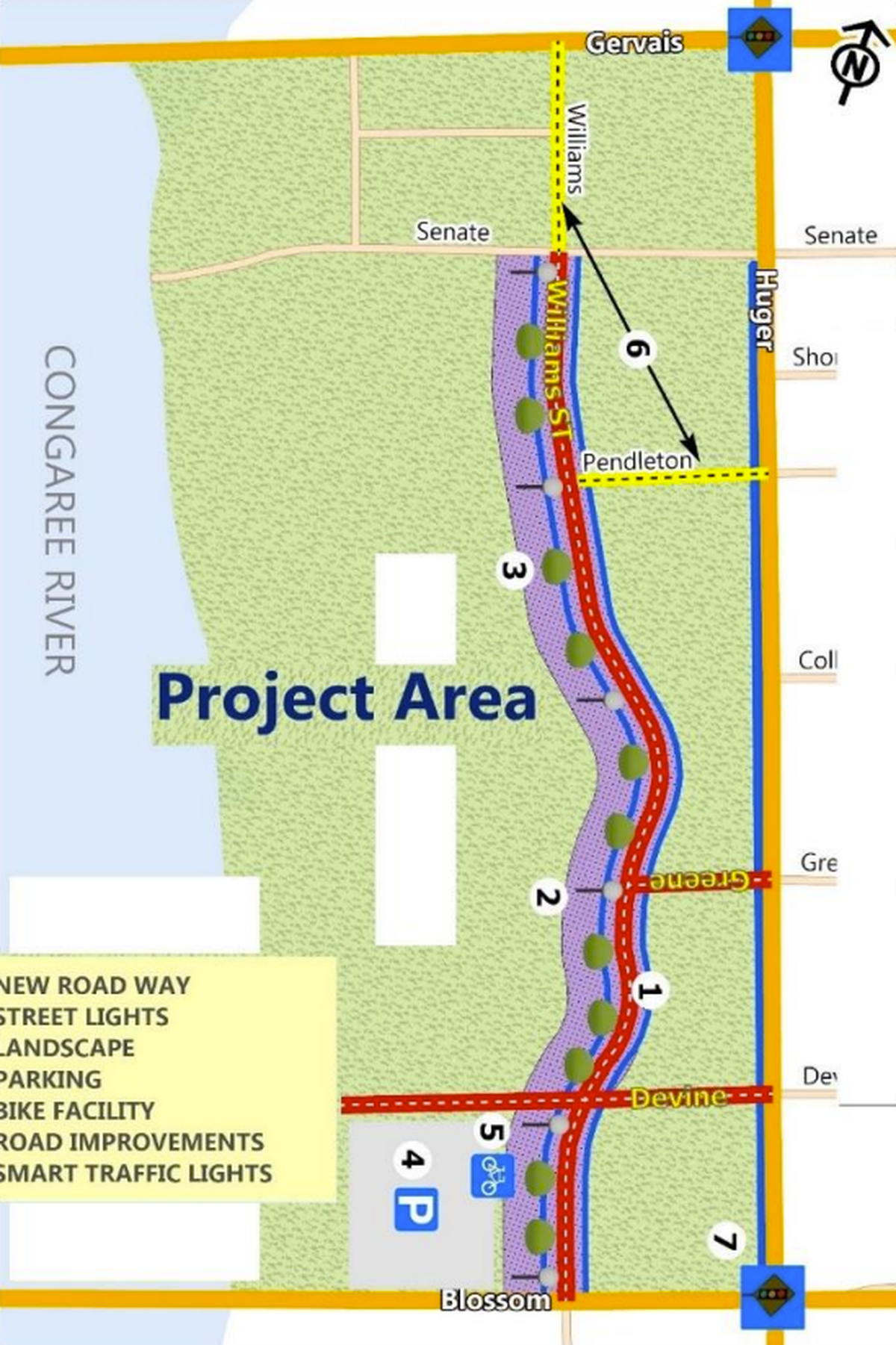
Before that park could become a reality, roads need to be built and connected across the stretch of land between Blossom and Gervais streets.
Columbia has for the past three years applied for federal dollars to extend Williams Street across that stretch. The application has been denied each time. Now Columbia’s mayor wants the city to step back.
There aren’t plans to pursue the money a fourth time, said Mayor Daniel Rickenmann. Instead, private developers and the landowners who control the area should be the ones to pay for the work, Rickenmann said.
“We’re not driving the train,” Rickenmann said, emphasizing that the city has never been the project’s lead. “You’re asking the caboose to be the engineer.”
The City Council has not formally discussed the project, said at-large Councilman Howard Duvall.
Mayor says time for land owners to ‘step up’
The Williams Street connection was initially supposed to be paid for with Richland County penny tax dollars.
In 2012, voters approved $50 million for the improvement of three roads with the express purpose of opening up the riverfront for development and public access. The county used the bulk of that money on the first two phases of the project, which saw Greene Street renovated from Assembly Street to Huger Street.
The final leg, the Williams Street connection, was estimated to cost roughly $23 million.
The city hoped to get $18 million from a federal RAISE grant, Assistant City Manager Missy Gentry previously told The State. During the state’s budget earmark process, lawmakers approved spending $9 million to help make up the difference.
It is unclear what now will happen with that $9 million from the state budget.
Rickenmann said he could not say, having not discussed the future of the project with any other stakeholders as of Friday.
He did say after years of effort by the city, he wants to see the private landowners take charge of the effort.
“It’s time for the property owners and the investors to step up,” Rickenmann said, adding the city is willing to work with investors on tax incentives. “If this is a monumental project like it’s been projected, then we need to sit down and have a real conversation ... But it can’t be a 100% government funded project.”
S.C. House Minority Leader Todd Rutherford, D-Richland, who asked for the $9 million earmark for Williams Street, said he is committed to finding a way to make the project happen.
He expressed frustrations with Rickenmann’s direction.
“So the mayor is not going to ask for more free money?” Rutherford, who sits on the House’s budget-writing committee, asked. “I’m hoping there is not a pattern of the mayor not being able to develop for the future.”
Rutherford referenced $9 million the state awarded the city in 2021 for the expansion of the Columbia Metropolitan Convention Center, which was reallocated this year after not being spent on the project.
Rickenmann said the city has not made any formal plans for next steps. He said he hopes the various stakeholders, including landowners and the university, will be able to sit down and identify a path forward.
Rutherford said he also looks forward to discussing how to make the project work.
The city had made no commitments to pay for the actual riverfront park envisioned by the University of South Carolina and private land owners. In 2007, designers projected spending $48 million on the park and amenities like boat landings, an amphitheater, fountains and greenway connections to trails across the city.
Still, the Williams Street infrastructure is needed for development to begin, said Charles Thompson, who co-owns and manages the bulk of the Guignard Partnership property the park would be built on.
“We’re not giving up,” Thompson said Friday. He called the news a setback, “but we will regroup and look at it another way.”
Thompson said he is committed to making the park a reality regardless of what avenue that takes, calling the project “the objective of a lifetime.”
He said private investment may be one option, but he added the city will benefit from the work in the form of public river access and in tax revenue generated by new development.
A formal master plan for the park and the connections to make it happen was outlined 15 years ago by USC, Columbia leaders and landowners.
That plan initially estimated the total cost of all improvements, including the park, would be $121 million but would generate $17.7 million each year in tax revenue for the city, county and area schools.
Long-awaited puzzle pieces had seemed to be falling into place, including the Greene Street road project that would form a necessary connection between downtown and the would-be Williams Street, and a Dominion Energy-led coal tar cleanup currently underway in the river.
Thompson told The State in March he hoped to begin scoping plans for the park during the three to five years it will take Dominion to finish removing the coal tar from the river. At the time he said it was not clear how the park would be paid for.
At the time, Thompson said he did not know if the park would be municipal or led by private money, but he did not want to wait another decade to build it.