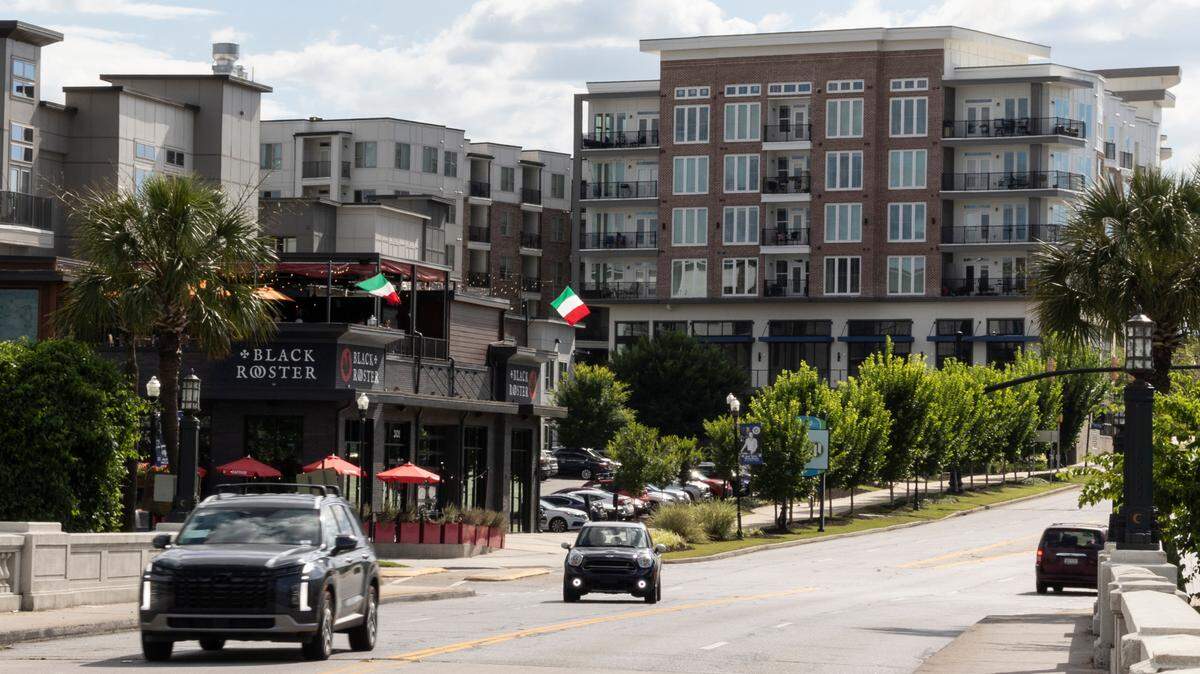
West Columbia as seen from the Gervais Street Bridge.
Tracy Glantz
tglantz@thestate.com
On pleasant Saturday mornings in the city of West Columbia, people brunch under their high-rise apartments on State Street. Steps away, shoppers sift through antique finds. Down the road, college students catch up over coffee.
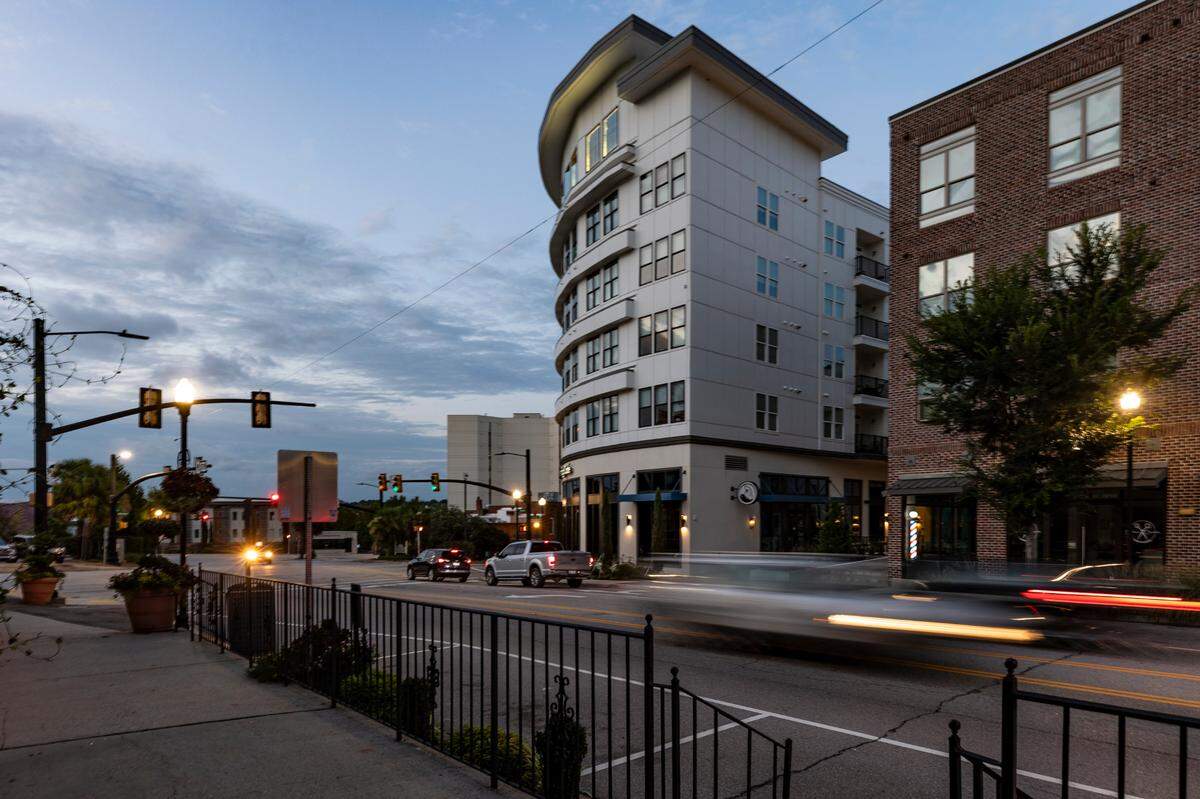
A towering mixed-use apartment complex adorned with a colorful mural commemorating the city’s history casts a shadow over a row of faithful brick buildings that hold longtime local businesses like the fine-dining restaurant Terra, the Old Mill Antique Mall and “Hangover Hash Browns” purveyor Cafe Strudel.
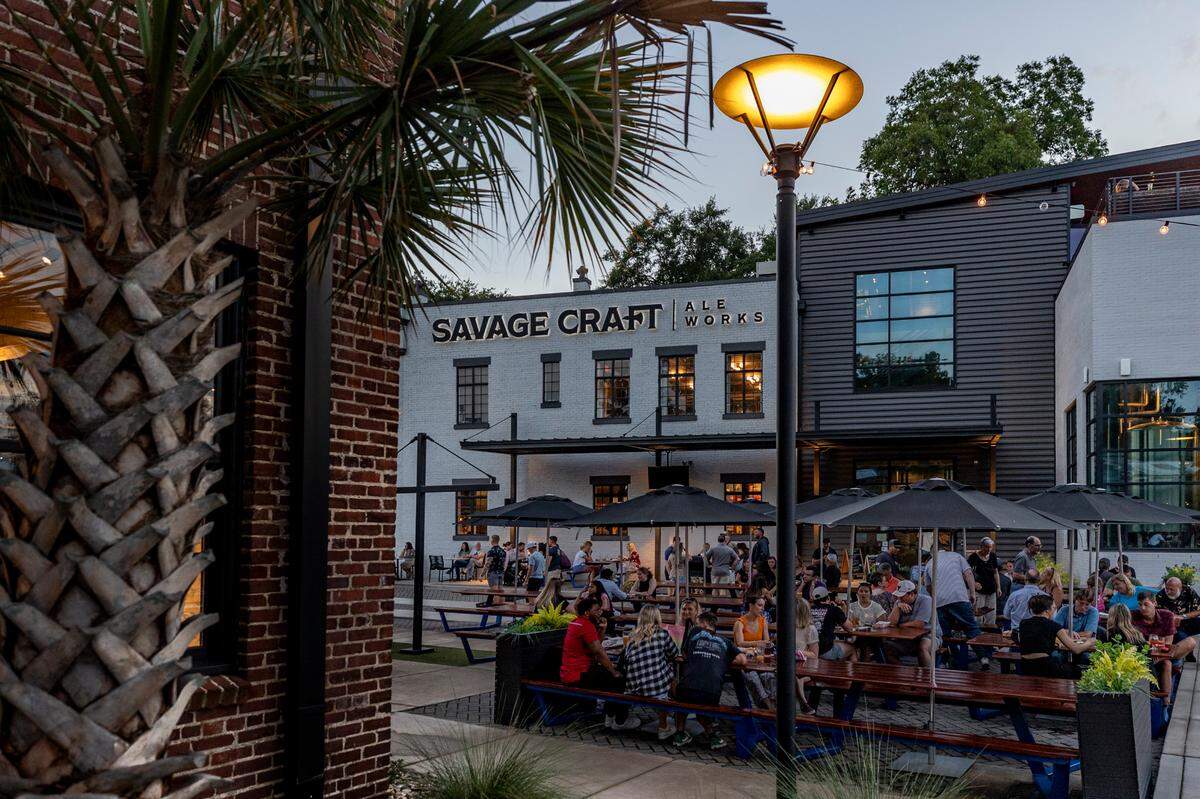
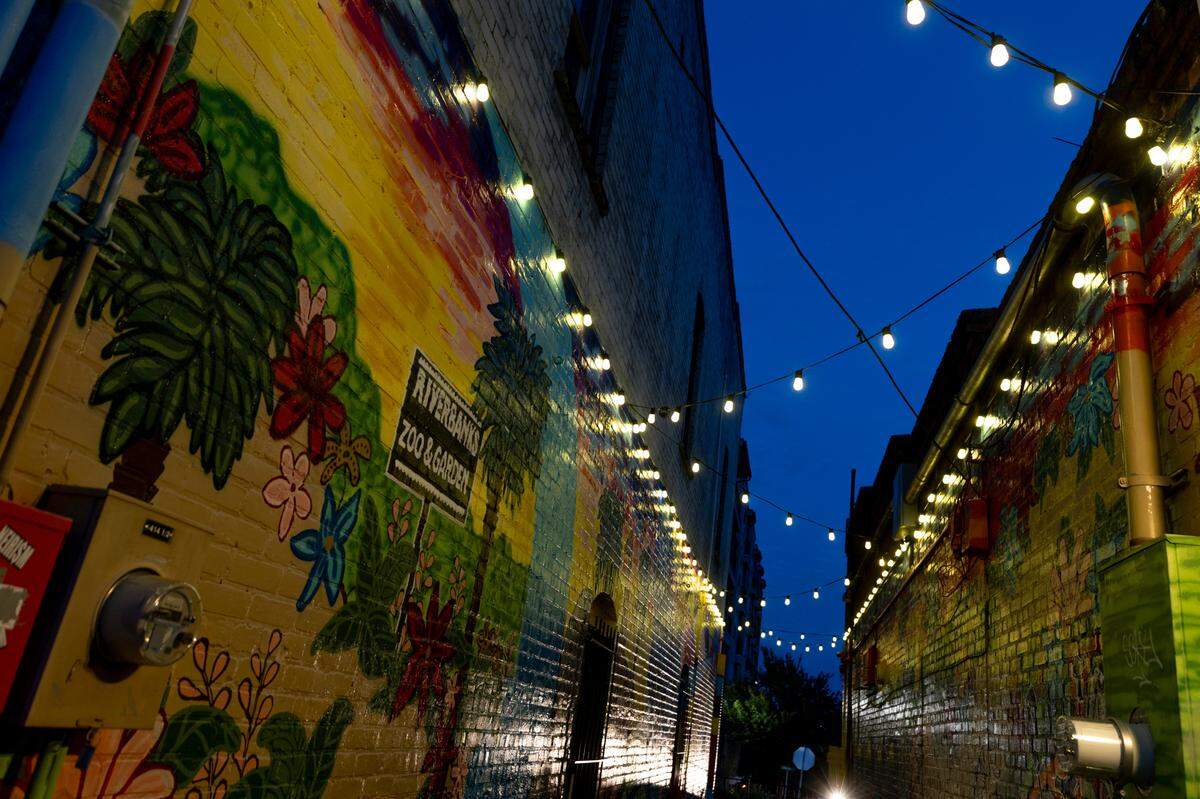
A string-light-lined alleyway connects the row of businesses to newer restaurants and bars located behind the main block, including Savage Craft Ale Works and D’s Wings, which relocated from the neighboring city of Cayce in 2021.
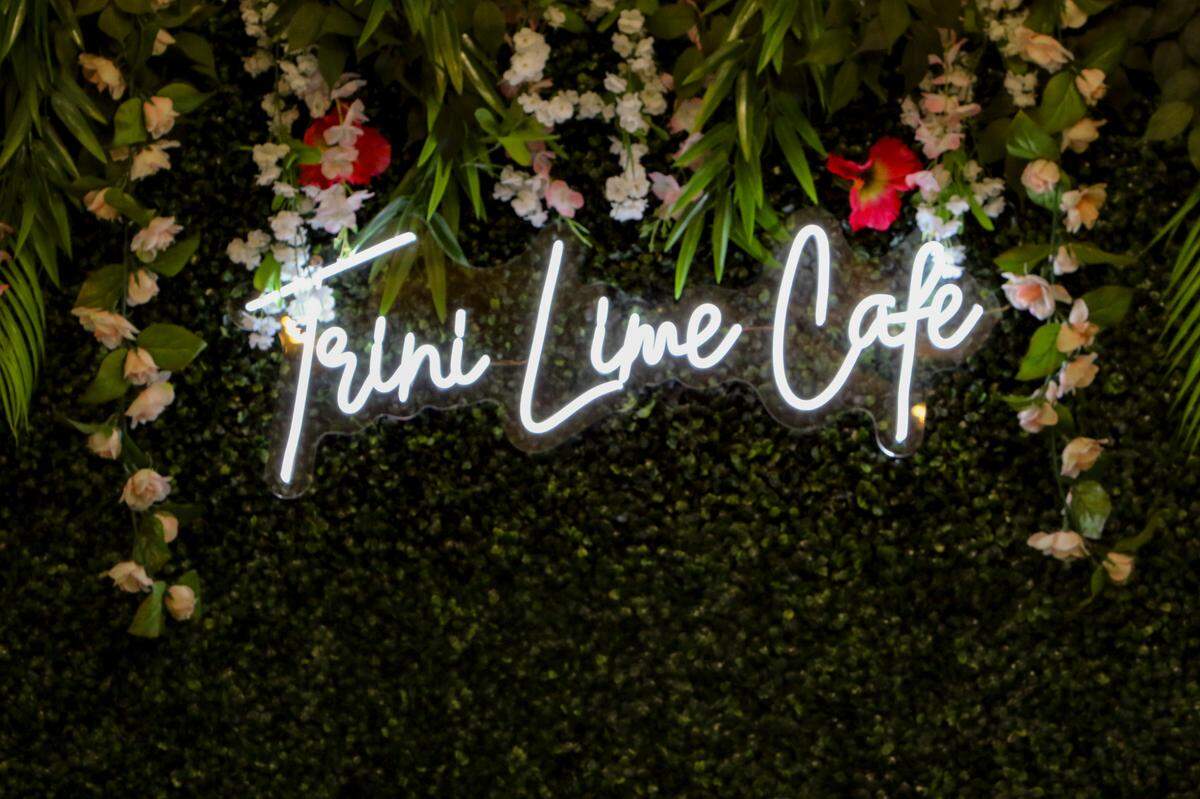
In Cayce, less than a mile down State Street, the bustling, walkable retail district gives way to a quaint area dotted with churches, parks and modest homes. There’s some activity in the city-proclaimed River Arts District, including the popular Piecewise Coffee and newcomer restaurant Trini Lime Carribean Cafe, but not to the level of what’s built up on West Columbia’s end of the street.
State Street is a small snapshot of the ways that the two neighboring cities have developed over the last decade. One has squished in new developments most anywhere it can find room, while the other has maintained such high standards for new construction that it’s restricted the amount built.
“You could not build housing in the city of Cayce, that was the case for the longest time,” said West Columbia Mayor Tem Miles. “As a result, people didn’t pull building permits, people didn’t build structures.”
People listen to the Abbey Elmore Band on the Biergarten stage at Savage Craft Ale Works in West Columbia on Friday, July 26, 2024. Tracy Glantz tglantz@thestate.com
As developers have reshaped West Columbia over the last decade, building houses on vacant lots and redeveloping areas that had fallen out of use, they have faced a tougher time in Cayce, where city staff and council members remain strict on requirements and expectations for proposed projects with the intention of maintaining the city’s picturesque small-town feel.
“When you start building new neighborhoods, they do not resemble old neighborhoods,” said Michael Conley, Cayce’s assistant city manager. “Are you building a community or neighborhood or are you building houses? Unfortunately, what we see today is people building houses.”
Since the beginning of 2023, only about 11 new home construction permits have been issued in Cayce, compared to West Columbia’s 97 permits in the same time frame, according to data provided by the municipalities.
But as South Carolina’s population grows, housing supply and the infrastructure to support both growing cities right outside the state’s capital are top of conversation for local officials. As the new year begins, the city of Cayce will revisit its zoning codes for the first time in over a decade, which could signal a shift in how development happens in the quiet city across the Congaree River from Columbia.
Motorists drive down State Street in West Columbia on Friday, July 26, 2024. Tracy Glantz tglantz@thestate.com
West Columbia hitting the gas
Almost a decade ago, the city of West Columbia sold a mostly vacant plot of land to a real estate developer in hopes of revitalizing the corner of Meeting and State Street, where drivers cross the Gervais Street bridge from downtown Columbia.
The sale was part of a mindset, city officials and developers said. One that would change the landscape and feel of West Columbia in a matter of years.
Since construction crews broke ground there on the mixed-use luxury Brookland Apartments overlooking the Congaree River in 2017, Savage Craft Ale Works, a hip brewery and taproom, opened in the an old fire station building, and D’s Wings, a longtime chicken wing restaurant in Cayce, relocated to West Columbia.
“That corner sat fallow for so long that you’re just like, ‘This is just a prime piece of real estate,’” said Kristian Niemi, a prominent restaurateur who opened Black Rooster in the retail space under the Brookland Apartments in 2019, years after the plot of land initially piqued his interest.
On the other side of State Street, where empty parking lots, law offices and thrift stores once sat, a regular pop-up market now takes place. Up the street, the space that once held a small music hall now holds WECO Bottle & Biergarten, where a rotating list of food trucks sling everything from tacos to pizza.
Alley Way by artist, Christine Lutfy is part of the interactive Art Park in West Columbia. Tracy Glantz tglantz@thestate.com
As developers tell it, a confluence of local government support for growth and an appetite among business owners and home builders to invest in the city across the river from the state’s capital helped spur West Columbia’s development.
“They were very aware of what they wanted West Columbia to be and really wanted us to try to be a part of that,” Mark James, a developer with Cypress Commercial & Investment Real Estate, said.
The gains have come with some losses. In 2023, the State Street area lost three businesses in the span of a month that had called West Columbia home for decades — the rock club New Brookland Tavern, the Chinese restaurant Jin Jin and the Italian dining mainstay Al’s Upstairs. Another longstanding Chinese spot, Eggroll Station, is slated to close to make way for the new Capitol Square development.
“Any time that there’s change that comes, there’s going to be some folks who like it and who are able to stay ... and there’s going to be other parts of that change that results in longstanding establishments being different and that’s just part of change and part of growth,” Miles said.
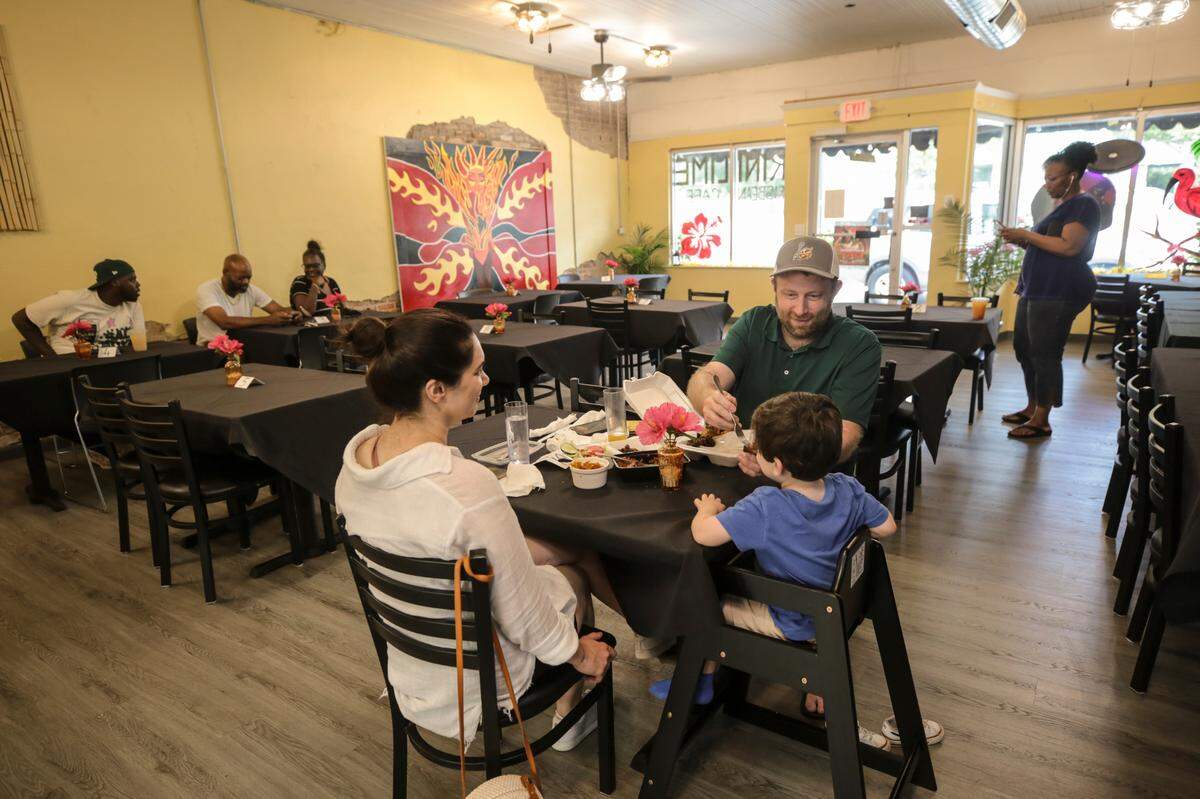
Alaleh Torkjazi, Robert Pettis and Kian, 2, dine at Trini Lime Caribbean Cafe in Cayce on Saturday, Aug. 3, 2024 Tracy Glantz tglantz@thestate.com
Why Cayce has moved slower
Directly bordering West Columbia, development in Cayce has been a different story.
While West Columbia officials signed off on new projects and laid out the red carpet for housing developers, Cayce leaders prioritized the look and feel of new projects that came their way, meaning some successful developments have taken years to get approved.
It took about six years for James, the real estate developer with Cypress Commercial, to get 12 single-family homes on the site of the old Cayce Grammar School, which closed in 1976, off the ground. Cypress Commercial owned three-fourths of the land, but the city had purchased the other fourth in 2017 and held off on selling its share until it was sure the project was right for the neighborhood.
The project is in the Avenues, a charming, historic neighborhood not far from Cayce’s riverwalk and River Arts District. Its long journey from ideation to work beginning points to the broader story of how Cayce has developed, holding fast to the idea of keeping the town’s character, often at the expense of growth.
Despite this, the town’s leaders and many developers who’ve successfully gotten projects approved deny the notion that city staff or council are hard to work with, but rather that the smaller number of new developments are a result of more stringent requirements and a conviction to preserve Cayce’s historic feel.
“When I say they were receptive, I don’t mean that the town bent to the will of a developer at all ... [but] they handled everything promptly and professionally,” said Walter Taylor, a local real estate developer behind the Congaree Bluff neighborhood in Cayce.
Indeed, developers seem to think that there’s been a shift in how Cayce handles new proposed development.
“What I see happening today in Cayce is a whole lot more of what you see in West Columbia,” James said. “There has been a refocus by [City] Council on trying to see some redevelopment and revitalization. That’d been talked about [in the past], but it hadn’t really shown up yet.”
The former Cayce Grammar School has sat abandoned for years. Jordan Lawrence The State
For the city’s mayor, Elise Partin, who was elected in 2008, her attention is less on developers and more on the desires of people who live in Cayce. Though she also denied that the city has been hard to work with for developers.
“My biggest focus, ever since I’ve been here, is making sure that our citizens have a voice in what we do. Before I got here, citizens were seen as [being] in the way, and that’s not how you create a great community,” Partin said.
Though West Columbia puts up higher numbers when it comes to new construction permits, Partin said she doesn’t believe those numbers tell the full story. She pointed to upfits and renovations as an area of growth in Cayce. In 2024, the city handed out over 300 construction permits, but less than 10 were for entirely new structures.
“That’s what you want, are buildings that are part of the fabric of your community to get to be retrofitted and upfitted to have their second life. We’ve seen a lot of that happen in the Cayce River Arts District,” Partin said.
The fear of rapid growth in both Cayce and West Columbia, and Lexington County as a whole, which have long been rural and relaxed, is palpable. Even Miles, the mayor who’s overseen West Columbia’s rapid growth, admits he’s fearful that the Southern hospitality, neighbors-taking-care-of-each-other mindset could change or disappear as South Carolina grows.
But despite what the comments on social media might indicate, not all growth is bad.
Some common fears about change — like the notion that new development will entirely upend the character of a neighborhood — are unfounded, said Yonah Freemark, a researcher for Urban Institute, an economic and social policy think tank. The reality is as new people move to the area more housing will have to be built to avoid higher costs and lower availability.
“If you don’t have space for those [new] people to live, then it becomes an increasing pressure on the existing residents. It makes it more expensive to actually be able to live in their communities,” Freemark said.
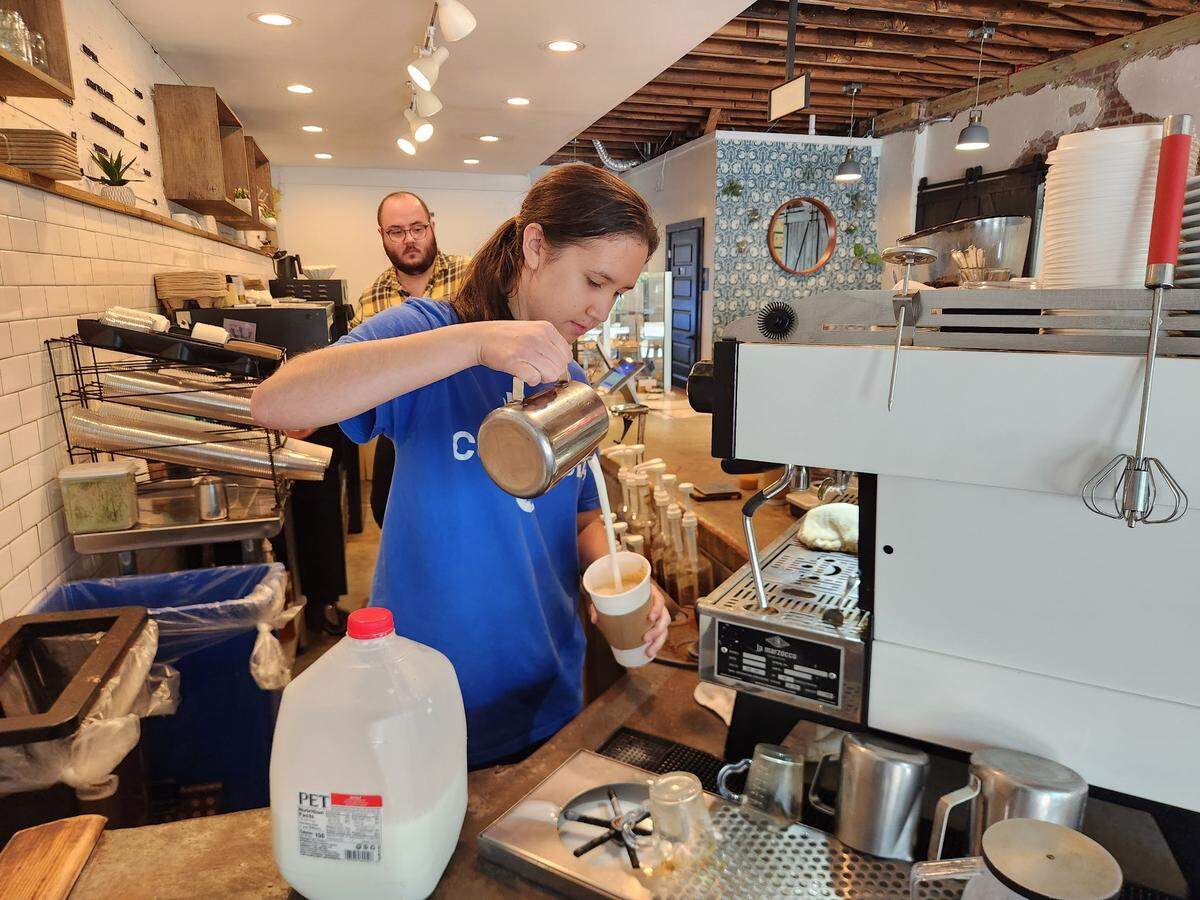
Piecewise Coffee Co.’s Zoe Ebo prepares a beverage on a recent morning at the shop in Cayce. Piecewise was the winner of The State’s recent 2023 Coffee Shop Poll. Photo by Chris Trainor
Cayce could change how it does business
Despite leaders in Cayce being slow to make significant changes or squeeze new developments into available spaces, they acknowledge that as South Carolina’s population is expected to grow by 15% by 2040, it’s time to reevaluate the plan for the future.
“We do have to build houses, we do have to have a variety of housing stock and we’re in a city in demand so land developers purchase property and we have to balance property rights with development rights with the character of the city,” Conley, the assistant city manager, said.
City Councilman Hunter Sox, who was elected in 2021, said he recognizes the city had the perception of being hard to work with, but city council members have begun putting more of an emphasis on helping move projects along and being more communicative with developers.
“If you’re not growing, you’re dying. We’re just going to have to continue raising taxes on folks if we don’t add any new homes or businesses to be able to cover inflation every year,” Sox said.
This year, the city will use $195,000 in federal American Rescue Plan funds to hire an independent contractor to update and modernize the city’s zoning ordinances. The last time Cayce updated the codes was a decade ago.
The process to update the codes, which will be handled by Raleigh-headquartered engineering firm Stewart Engineering, is expected to be completed within a year, according to city documents.
Partin said she’s approaching the process with the same central focus she’s always had: the residents of Cayce.
“Citizens shouldn’t have to worry or wonder what they should expect with new codes or those types of things because they are invited to be a part of the process. That is something that’s very important to me,” Partin said.
Customers dine at Trini Lime Caribbean Cafe in Cayce on Saturday, Aug. 3, 2024. Tracy Glantz tglantz@thestate.com
This story was originally published January 14, 2025 at 5:00 AM.
Follow More of Our Reporting on Stories shared from The State’s Instagram account