Columbia City Council is nonpartisan. Are politics at play in election anyway?

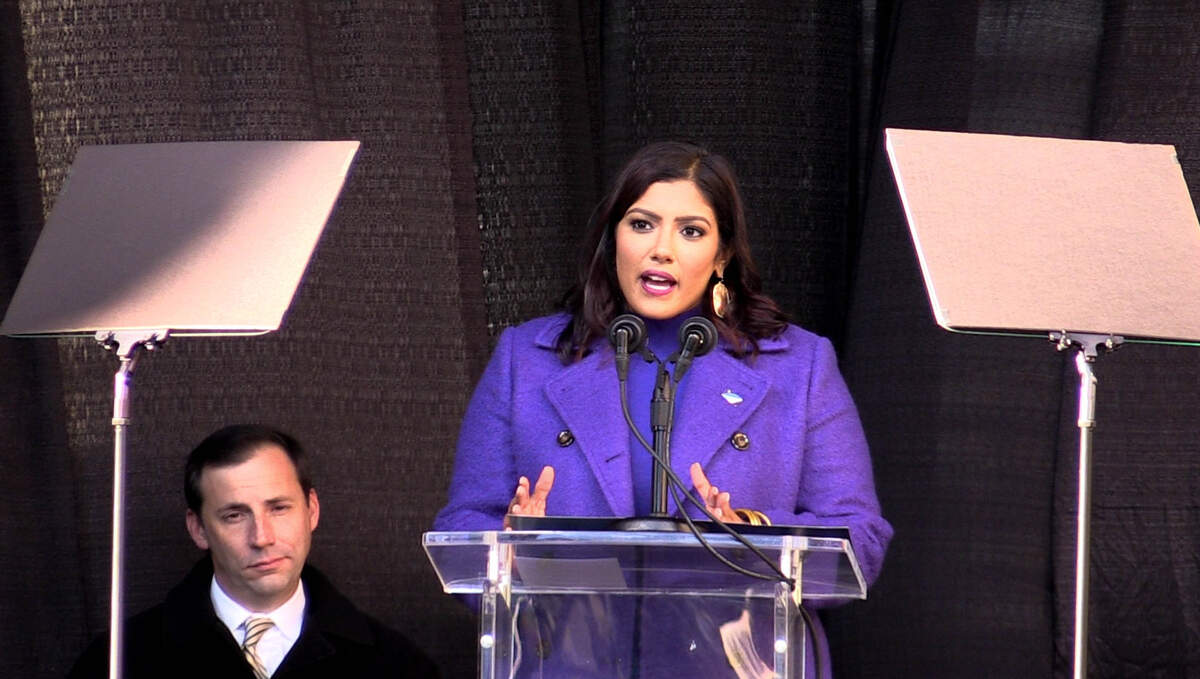
Columbia City Council is a nonpartisan governing body, but that doesn’t mean partisan politics aren’t playing a role in the discourse around the Nov. 4 election — particularly in the race for a citywide council seat currently held by Aditi Bussells.
Bussells’ campaign this year is being run by a consulting firm run by Mark Knoop, who is the campaign manager for Republican U.S. Sen. Lindsey Graham and a long-time advisor for Attorney General Alan Wilson. Bussells also worked with Knoop and a Democratic-led firm during her 2021 race, and this year has paid for work market research firm Crantford Research, which is working for Democratic candidate for governor Mullins McLeod.
Despite straddling the fence, her Republican affiliations have drawn attention in a city that is considered a rare blue dot in the red sea of South Carolina politics.
Both of Bussells’ opponents have criticized her connection to high-profile Republicans. Bussells says having support from both Republicans and Democrats shows she is a coalition builder — and she adds that in a race for a nonpartisan role, those associations shouldn’t be relevant.
Some, like Sam Johnson disagree, saying political affiliation matters a great deal to voters.
“[That] means that I’m not gonna employ a campaign manager or campaign consultant who is working with Lindsey Graham and others who are trying to take away our rights. … You have to make sure that you have an elected official who’s not talking out of both sides of their mouth,” he said at a recent forum.
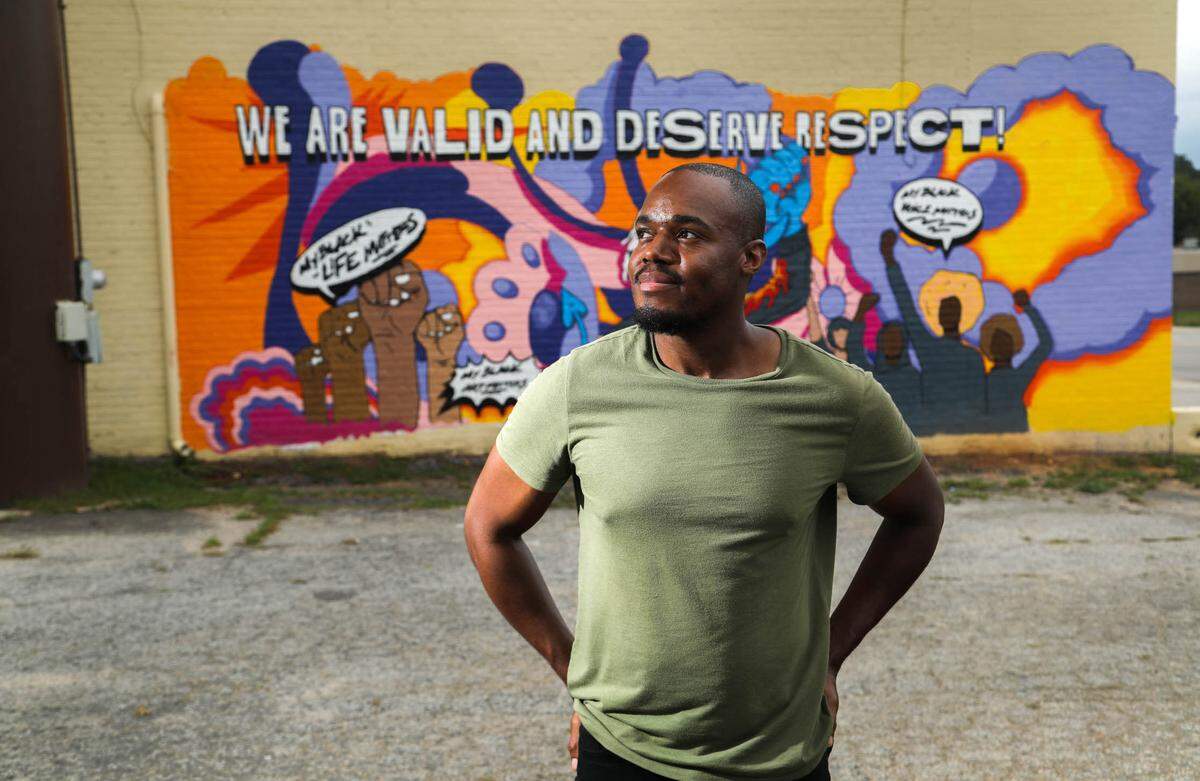
The former public health researcher and Deloitte consultant’s opponents have their own partisan connections as well. One of her principal opponents, Sam Johnson, has deep ties to the administration of ex-mayor Steve Benjamin, who bore close ties to former Democratic President Joe Biden, and has endorsements from some of the leading figures in South Carolina Democratic Party circles. In addition to serving as Benjamin’s chief of staff during his time as mayor, Johnson also serves as CEO of the municipal advocacy company Civint, which was founded by Benjamin.
Also running for the at-large seat is Jared Johnson — a local activist and the co-owner of Five Points bookstore All Good Books. Johnson has similarly made Bussells’ affiliations.
The race is supposed to be non-partisan. But the dynamic between the trio underscores how partisan politics has reared its head in what has traditionally been considered a non-partisan affair.
Are politics relevant in city council race?
In a Facebook post earlier this month, Jared Johnson criticized Bussells for speaking at a Richland County Republican Party meeting in September. “The level of shapeshifting and contradictions that’s happening in effort to supplement perceived lost votes should give all of us pause,” he wrote in part. “Columbia can’t afford to re-elect a person who is willing to trade in their values for votes and power.”
Bussells calls the criticisms a show of insecurity by her opponents, who haven’t criticized Bussells’ voting record or council priorities, which include improving public safety, affordable housing, and the city’s attractiveness to residents and visitors. Sam Johnson has shared similar priorities, with a focus on improving the city’s ability to collaborate with other local governments and area institutions on issues like affordable housing, homelessness, public safety and infrastructure. Jared Johnson’s campaign platform hinges on making the city more affordable.
“I’m excited to have the folks that helped me make history and win the first time around continue to believe in me,” Bussells told The State in response to the criticism from her opponents. “The model I’m using is not any different [from 2021].”
“I’m proud to have earned support from a wide and diverse range of people who cut across every corner of this city,” she added.
Bussells was dubbed a “wildcard” after her 2021 win because of her support from both Democrats and Republicans, and she has continued to garner support from high-profile people in both parties.
Remarks Bussells made at a Sept. 29 Richland County GOP meeting followed a similar structure to remarks she later made at SC Pride, and at following candidate forums, where she spoke about being a female candidate “with a foreign last name” who knows “what it’s like to feel like an outsider.” She added that she was invited to the GOP meeting, and said she speaks at most events she is invited to because she takes seriously the nonpartisan nature of the city council.
Bussells wouldn’t say how she identifies politically, telling The State, “I don’t want to alienate people that believe in our vision. … I think for so long, Columbia has just been focused on doing politics at the exclusion of others … so really this shouldn’t be the focus.”
She has a mix of endorsers, including former South Carolina Democratic Party chairwoman Carol Fowler and local businesswoman Sara Middleton, among others.
Sam Johnson, who is a Democrat, has been endorsed by former Democratic National Committee Chairman Jaime Harrison and state Rep. Heather Bauer, D-Richland, among others. He also held a fundraiser that featured Harrison and Democratic strategist Antjuan Seawright.
Johnson told The State that his concern is not about political party, but about whether Bussells would be influenced by others associated with her campaign consultants, such as Wilson, who is seeking the GOP nomination for governor.
Bussells’ bipartisan support when she was elected in 2021 was considered relatively unique, but it wasn’t the first time someone running for a city council seat paid both Democrats and Republicans to help their campaign.
For example, former mayor Benjamin worked with Republican strategist Richard Quinn on past mayoral campaigns. Quinn has also worked on campaigns for Gov. Henry McMaster and other high-profile South Carolina Republicans, before being indicted in 2019 for fraud.
“Richard Quinn never held a gun to the city of Columbia’s head,” Johnson said in response to that comparison, pointing to Attorney General Alan Wilson’s recent threat to sue the city if it didn’t repeal a ban on conversion therapy — a widely condemned practice that seeks to change a person’s sexuality or gender identity.
Bussells said her voting record, which included a vote to keep the city’s conversion therapy ban, should make clear that she is not being influenced by the ideals of others who have also worked with her campaign consultants.
Questions of influence
While Sam Johnson raised the question about Bussells’s ties to Knoop’s firm, Bussells raised questions about the possibility of conflicts on city council with Johnson’s company Civint, which describes itself as a “municipal advocacy firm.”
That firm helps private companies and nonprofits “understand how to navigate municipal government,” Johnson told The State.
“At Civint, we have a national network of relationships on both sides of the aisle in city halls across the nation. As our client, you get that network working for you,” Civint’s website notes.
The State has asked the city of Columbia if Civint has ever contacted the city on behalf of a client, but that question was not answered by press time.
Johnson has paid Civint employees for work on his campaign, and former Mayor Benjamin is also an advisor at Civint.
When asked if he was concerned about any perceived conflicts of interest regarding Civint, he said, “Absolutely not,” adding that if ever there were a situation in which a client wanted to work with Columbia, Johnson would not be involved with those efforts, and he would recuse himself from any council discussions or decisions where there may be a conflict.
Johnson told The State that Civint typically represents national clients, such as Starbucks and Orange Barrel Media, a technology company that champions “smart cities.” When asked if Civint had ever contacted the city of Columbia on behalf of a client, Johnson said the company had never asked any area local government for anything, and tends to represent companies looking to do work outside of South Carolina. Civint has coordinated a U.S. Conference of Mayors task force on public-private partnerships, which included current Columbia Mayor Daniel Rickenmann.
Who is getting paid?
Bussells paid Knoop’s firm Forward Communications and Strategies $36,077 for work on her 2025 campaign, according to a financial disclosure report filed Oct. 17. She also paid Crantford Research $16,000, according to the disclosure report.
In 2021, Bussells paid Knoop’s firm $67,610 for media buys and campaign services. She spent $54,776 with Democrat Tige Watts’s CR+S consulting firm. Watts told The State that he was not working with Bussells this year because he did not have the personal bandwidth.
Sam Johnson has spent $10,000 this year with Democratic consultant Kendall Corley’s firm, KL Corley and Associates. Corley has also worked with Benjamin, 2018 Democratic nominee for governor James Smith, and former state Rep. Ivory Thigpen, of Richland County.
During his 2021 run for mayor, Johnson spent $136,000 with Democrat Rania Jamison’s Purpose Promotions, which Benjamin also worked with on past mayoral campaigns. Jamison also works for Civint.
Jared Johnson has reported zero contributions and only one expense: $515 of his own money to file to run in the election. He told The State he is not fundraising, buoying a campaign platform that focuses on affordability and representing the “working class” in Columbia.
Other Columbia elections
Early voting for the city of Columbia election has already begun. Other seats up for re-election include District 1, currently held by Tina Herbert, District 4, currently held by Peter Brown, and the mayorship, currently held by Daniel Rickenmann.
The State earlier this month published candidates’ answers in each of those races to questions about their platforms and ideas for leading the city.
The Columbia City Council election will take place Nov. 4. You can find out where your voting precinct is located and check your voter registration status at scvotes.sc.gov.