A pain clinic pill mill sparked an epidemic in SC. Where are the ‘Myrtle Beach eight’ now?
READ MORE
Pain Killer Beach
Twenty years ago in Myrtle Beach, authorities shuttered one of America’s first “pill mills.” No one knew the nation’s opioid crisis was just getting started.
Expand All

The dark history of the deadly SC opioid epidemic begins at a Myrtle Beach pain clinic
A pain clinic pill mill sparked an epidemic in SC. Where are the ‘Myrtle Beach eight’ now?
From patients to addiction, ‘a mess’ plagued victims in fallout of SC pill mill closure
From OxyContin to fentanyl, Myrtle Beach’s current drug epidemic is ‘larger than ever’
Twenty years since the closure of a notorious Myrtle Beach pain management clinic, the doctors charged with overprescribing OxyContin and other narcotics appear to have mostly moved past the ordeal after serving prison sentences that ranged from two to 13 years.
While none of the “Myrtle Beach eight” agreed to speak on the record to The Sun News regarding their lives post-trial, some information about each could be gleaned from various public records.
Here’s what we learned:
The ring leader
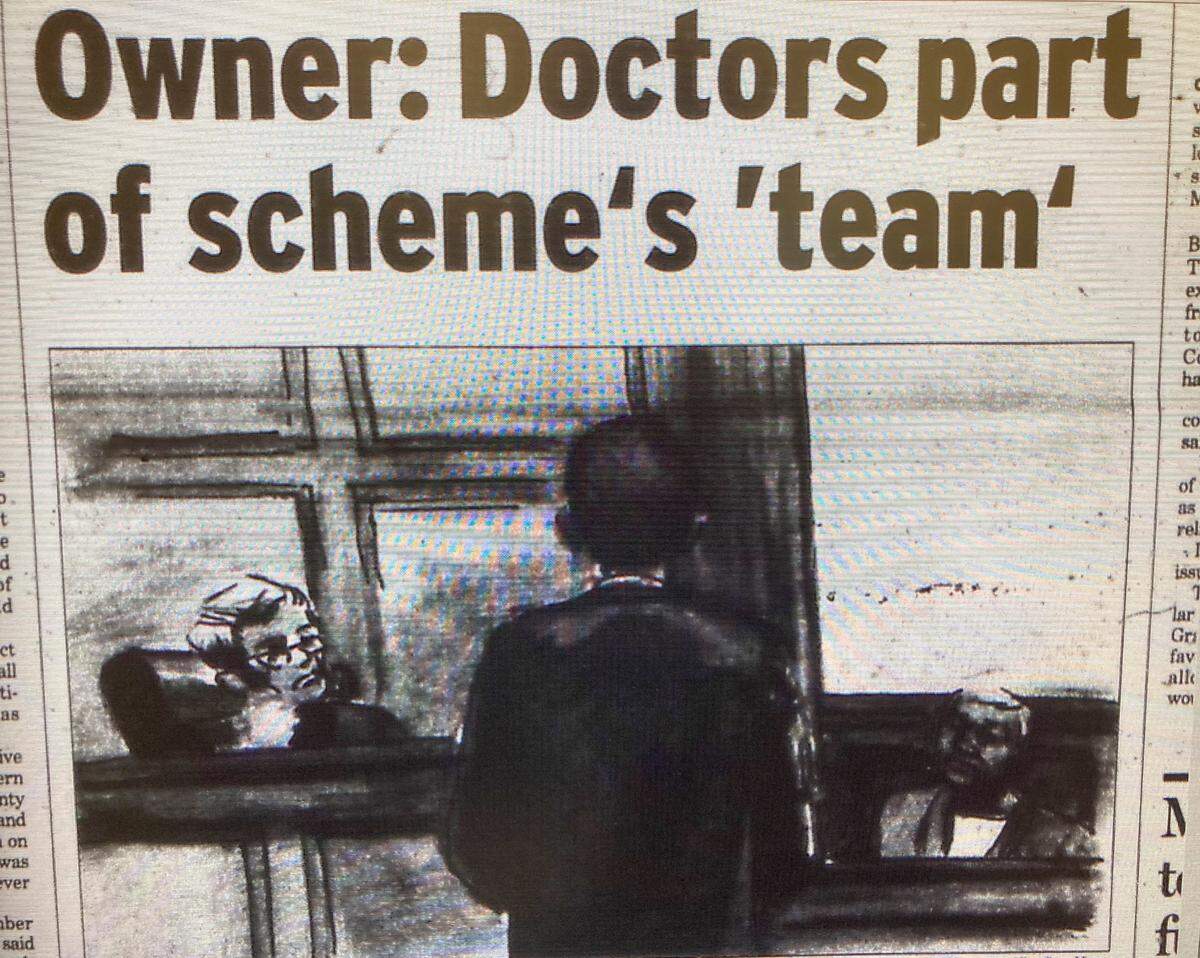
Dr. David Michael Woodward, the owner of the former Comprehensive Care and Pain Management Center, served the longest prison sentence of the eight despite pleading guilty shortly prior to trial and testifying against three of his former employees.
He was initially sentenced in September 2003 to 15 years imprisonment when he was 45 years old, though that was reduced to 13 years after continuing to offer assistance to federal prosecutors.
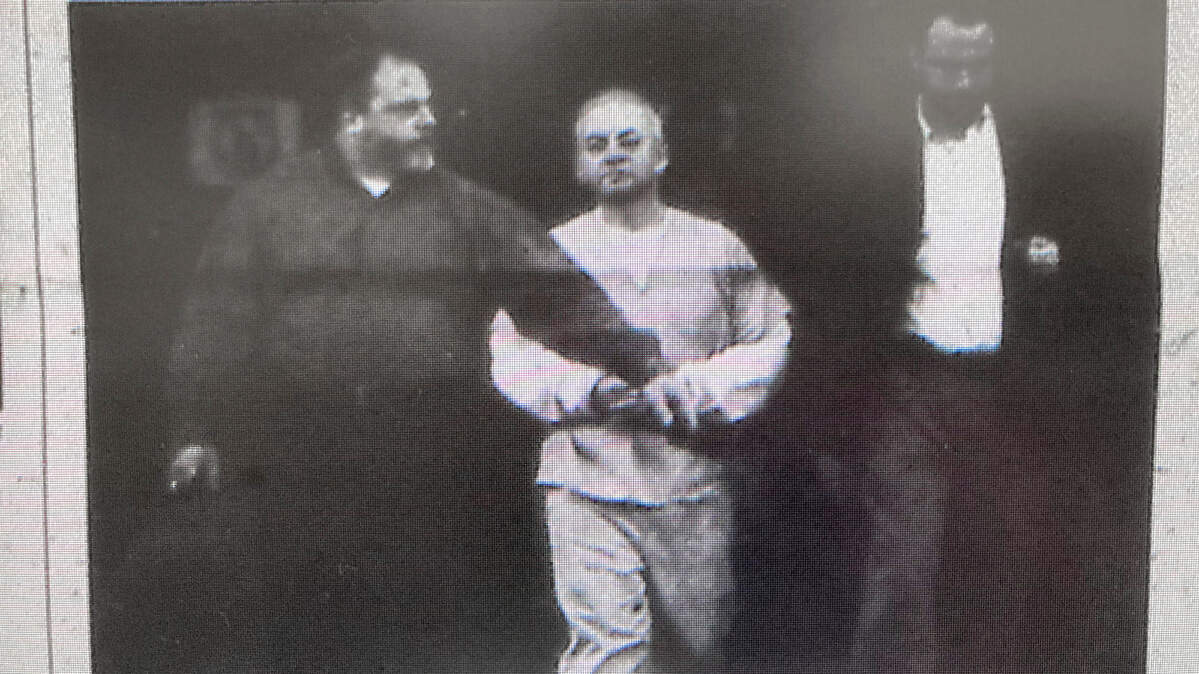
That assistance included providing evidence against an MRI scanning business with mafia connections.
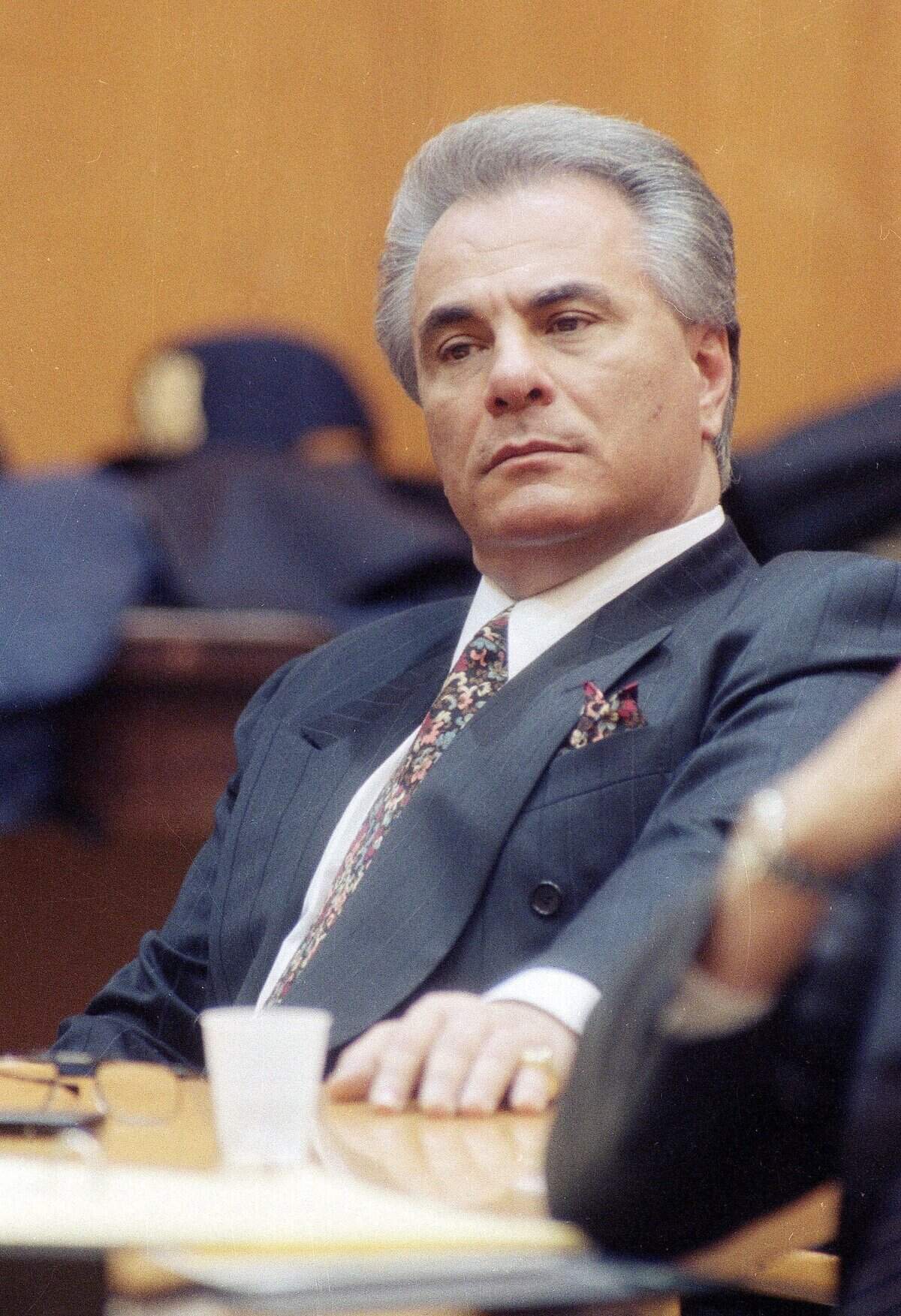
Woodward had leased space within his Myrtle Beach clinic to Preferred Imaging and received kickbacks totaling more than $300,000 in exchange for referring patients there for unnecessary MRI scans, according to federal court records. That company was run by relatives of Frank LoCascio, who served as second-in-command to notorious New York mobster John Gotti.
Four people connected to the business ended up pleading guilty to health insurance fraud.
Woodward spent time in several prison facilities across the country including South Carolina, Pennsylvania, Oklahoma and Georgia, according to court records. He appealed on numerous occasions for a further reduced sentence, arguing that he should be treated similarly to his co-defendants, who had their sentences reduced more significantly.
But a judge made clear that Woodward’s involvement in the criminal enterprise “was entirely different from those of his co-defendants.”
“He was the one that put it together and made it work. He brought the others in,” the judge wrote in a 2007 opinion denying his appeal. “In the case of Dr. Woodward, I suspect strongly that, if I were to release him today, he would start another clinic such as the one in Myrtle Beach in short order. He’s capable of doing that, and I believe that he is at risk [to] do that.”
In 2007, Woodward filed a habeas corpus petition against the Atlanta prison warden, alleging he was unlawfully being denied consideration for transfer to a residential reentry center where he could access resources to continue his medical education, but that plea was also denied in federal court.
Woodward was released March 11, 2013, according to court records. Public records show his most recent address in Bradenton, Florida, where he’s listed as the registered agent for corporations named Global Church Ministries Inc. and Woodward Integrated Financial Corporation, according to Florida business filings. Both are currently listed as inactive. No information was available online about what type of work the businesses did.
He voluntarily surrendered his South Carolina medical license in 2001 shortly after Drug Enforcement Agency officials shut down Comprehensive Care and doesn’t appear to have pursued regaining his license since getting out of prison.
The ‘fugitive’
Dr. Deborah Sutherland, who authorities labeled a “fugitive” when she was found in New Zealand months after charges were filed, was released from prison September 16, 2004.
She was 52 at the time of the 2003 trial and worked at the clinic February 1999 to March 2000, The Sun News previously reported.
Sutherland later testified in 2005 for a grand jury in Virginia regarding an ongoing investigation into OxyContin maker Purdue Pharma, explaining that a sales representative assured her the drug was not addictive due to its time-release feature, according to the New York Post.
“We talked about the medicine not lasting more than 12 hours, and the recommendation of Purdue was to double the dose,” she told the panel. “I told her I was not comfortable with that. On her next visit, she told me how to legally write an illegal prescription.”
The New York Post characterized her as a Manhattan doctor, though her medical license was revoked in 2004 in South Carolina, and there’s no record of her ever holding a medical license in New York. Her current whereabouts could not be confirmed.
The deceased doctors
Drs. Ricardo Alerre and Thomas Devlin have died in recent years, according to online obituaries.
Alerre, one of the three doctors who elected to go to trial, originally received a 19-year, seven-month sentence, but that was reduced to just two years after a related Supreme Court ruling gave the judge greater flexibility to deviate from sentencing guidelines. He was released February 29, 2008, according to prison records.
A former U.S. Air Force surgeon born in the Philippines, Alerre died earlier this year at the age of 90 in Duncan, South Carolina, according to his obituary. The S.C. Board of Medical Examiners revoked his license in August 2004.
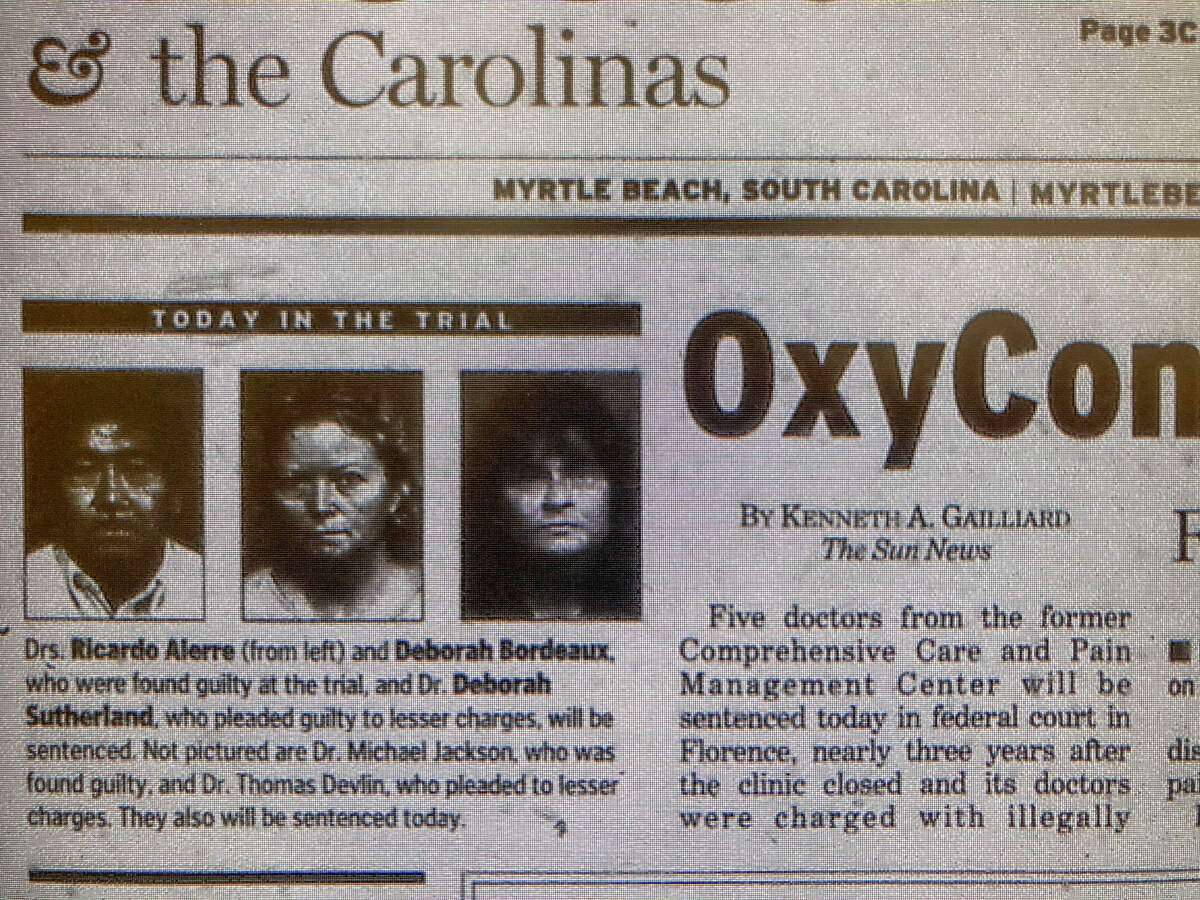
Attorney Bill Nettles, who represented Alerre during the trial, said that he truly believes Alerre, who worked part-time at the clinic from August 2000 to April 2001, thought he was doing the right thing.
“I believe Dr. Alerre’s main crime was (that) he was too trusting of his clients,” he said. “Having said that, I believe if Dr. Alerre were practicing medicine now, (he’d practice differently). Nobody really knew all this weird stuff was going on with people with addiction. This was early on.”
Nettles, who would later serve as U.S. Attorney for the District of South Carolina, added that it’s unfair to judge these doctors based on what we know now.
Devlin, a doctor of osteotherapy, moved with his family from New Jersey to Myrtle Beach in the late 90s, briefly working at the clinic from October 1998 to January 1999, and remained in the area after his release in January 2006. He died in 2014 at 71 years old.
The martyr of a movement
Dr. Benjamin Moore died much earlier, committing suicide at his mother’s home in North Carolina in July 2002, awaiting a sentence of up to 45 years in prison after pleading guilty.
Moore, who was 44, was the most outspoken of the eight in the months following the closure of Comprehensive Care and the charges being filed.
He told The Sun News in July 2001, after his license was suspended, that he’d done nothing wrong and was following approved pain management protocols.
“They made it look like I was wantonly wanting to make people addicted, and that is simply untrue,” Moore said. “I had no financial incentive to get people hooked. I had a flat salary. I got paid whether patients came or didn’t come to the clinic.”
At the time, he said he was willing to go to court to prove his innocence, claiming he was simply “collateral damage” in the U.S. Drug Enforcement Administration’s vendetta against Woodward and the clinic.
After his death, Moore became a sort of martyr for a growing movement at the time fighting back against the “War On Doctors.” Advocates argued government officials were unfairly targeting medical professionals for attempting to treat chronic pain, making it more difficult for patients with legitimate ailments to obtain needed medication.
Ronald Libby, a professor of political science at the University of North Florida, dedicated his 2007 book, “The Criminalization of Medicine: America’s War of Doctors” to Moore and wrote a chapter specifically about his case.
While searching for a permanent position, Moore worked short-term roles at clinics in California and North Carolina in an effort to repay student loans, Libby wrote, before ending up in 2000 at Comprehensive Care in Myrtle Beach.
Moore was meticulous in following medical guidelines with regard to his prescribing habits, checking with various agencies and medical associations, but a budding campaign against OxyContin ensnared him as the U.S. Drug Enforcement Agency was looking to target doctors whose prescriptions ended up in the hands of those abusing the opioid, according to Libby.
“The leap of logic from the criminal behavior of addicts to Ben Moore’s guilt for unknowingly prescribing drugs to addicts is breathtaking,” he wrote.
The doctor who quit ‘in disgust’
Dr. Deborah Bordeaux, 50 at the time of the trial, was also a favorite among advocates in the War on Doctors movement.
Another of the three that chose to go to trial, Bordeaux worked at the Myrtle Beach clinic less than three months in early 2000 “before quitting in disgust” after witnessing the prescribing habits of the other doctors, the Associated Press reported.
Siobhan Reynolds, a leading advocate and founder of the Pain Relief Network, helped fund Bordeaux’s defense and called the case against her a “witch hunt.”
Bordeaux’s husband, Ed Swaim, posted a letter on Reynolds’ website shortly after dropping his wife off in 2006 at a prison in West Virginia, expressing his anger.
“Yesterday was the darkest day of my life, as I sacrificed my wife, and she her freedom, a noble and brave soul and fine Physician, to this crazy war on Physicians and Pain Patients,” he wrote.
She spent two years in prison, reduced from an initial eight-year sentence, before her release in February 29, 2008, according to prison records. Her South Carolina medical license was revoked in 2004, but no public records could be found regarding her current location.
The right-hand man
Dr. Michael Jackson, who also stood trial when he was 55, initially received the longest sentence at 24 years after working at the clinic from April 1998 to March 2000, but his was also reduced to two years.
He was being trained to take over the clinic and served as second-in-command during his time at Comprehensive Care, Woodward testified during the trial.
Jackson continued to maintain his innocence following the conviction, telling Inter Press Service in 2006 that Woodward perjured himself by implying there was a conspiracy to illegally distribute opioids.
“I’ve done everything by the book — I don’t even have a parking ticket,” he said. “I think this is just a mistake the government made.”
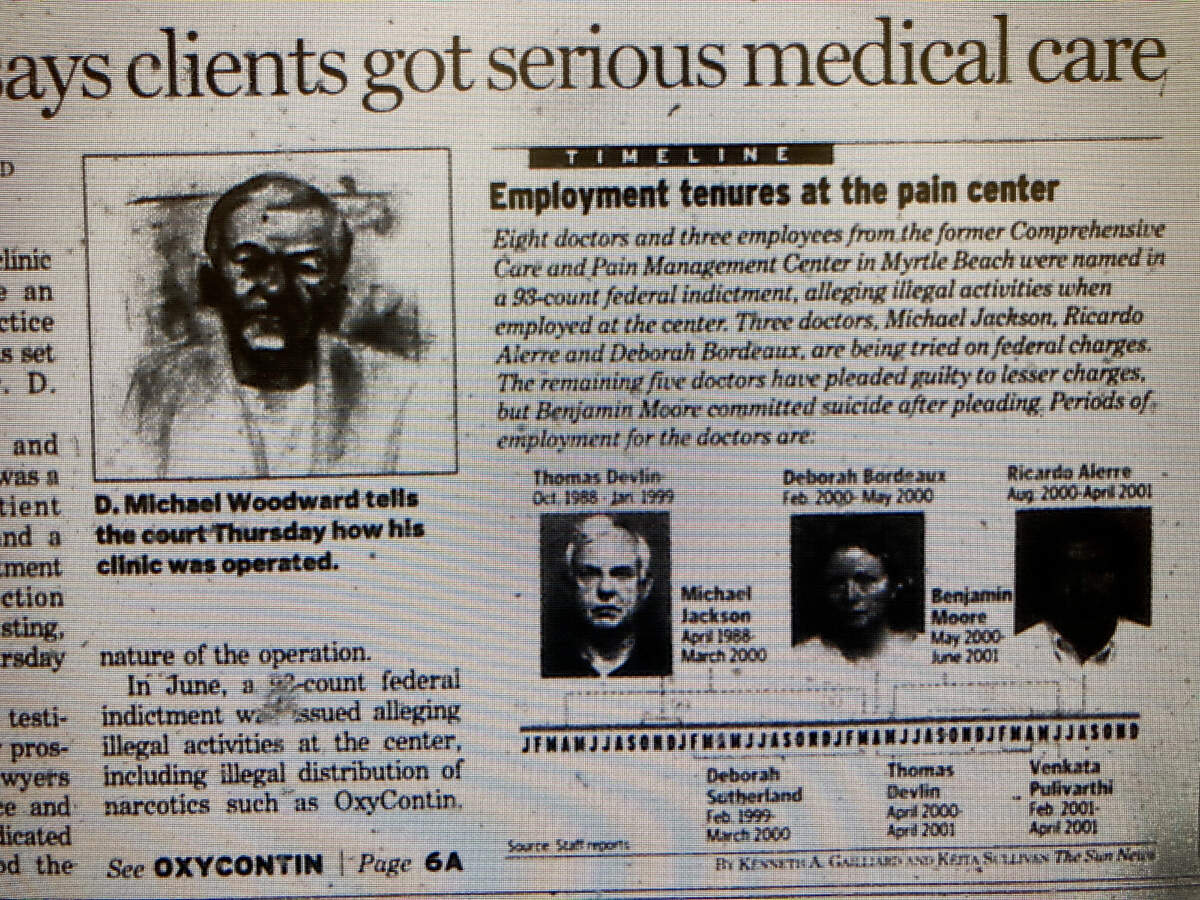
He was released December 3, 2009, according to prison records, but he voluntarily surrendered his medical license in 2003 in Alabama, where he was living at the time. He’s still living there, according to LinkedIn, which doesn’t list an active job.
The one who avoided prison
The one physician from Comprehensive Care who still has an active medical license in South Carolina is Dr. Venkata Pulivarthi, who was 42 at the time of the trial. He was also the only one to avoid prison time after receiving three years probation following a guilty plea.
Despite his license being restored after a brief suspension, Pulivarthi has been unable to reestablish his medical career as his license was revoked in North Carolina, Tennessee and New York due to his actions at the Myrtle Beach clinic, where he worked from February to April of 2001.
He applied for his Ohio medical license in 2010 while living in Westerville, Ohio, but the board ultimately rejected his application in 2012, citing his previous actions in South Carolina as a primary reason, according to records from the State Medical Board of Ohio.
Pulivarthi served as a consultant to a hospital in Maldives from 2007 to 2009, and was then unemployed, “doing odd jobs” prior to applying for his license in Ohio, according to his application. Pulivarthi also noted in communication with the Ohio medical board in 2011 that he was suffering from stage 4 cancer and was undergoing chemotherapy.
He was living in Columbus, Ohio as recently as 2018, online records show.
Read next: From patients to addiction, ‘a mess’ plagued victims in fallout of SC pill mill closure
This story was originally published October 7, 2021 at 5:00 AM with the headline "A pain clinic pill mill sparked an epidemic in SC. Where are the ‘Myrtle Beach eight’ now?."