
‘It’s going to take us to save us.’ SC Black grassroots groups work to combat gun violence
Sammy “Nagi” Njuguna was celebrating one of the best moments of his life just before he was shot.
Njuguna had a featured role in “Black as Night,” a film by top-tier horror studio Blumhouse. Amazon Prime Video was releasing the film, and a preview featuring him had received some major social media buzz in early October. The preview went side by side with #samminaginjuguna.
The Dutch Fork High School grad and former theater student, now 33 years old, had hit the highest mark in his acting career after years of hustling to auditions and being cast in supporting roles by smaller players in the film and television industries. His future seemed to be calling.
On Oct. 6, he was in Columbia with family and friends to celebrate the upcoming film and its buzz. About 1:30 a.m., he went to the CK Mart gas station on Broad River Road. He paid the clerk for gas and a drink, went out the door and headed to his car. Three bullets hit him in the chest, shot from a car that sped away.
“My main thought was to fight dying,” he said. “I knew that it was looking bad ... I prayed to God to not let me die.”
He didn’t know his shooter, who turned himself in hours later, and the shooting appears totally random.
Njuguna, who is Black, was one victim in 206 shootings in Richland County in 2021.
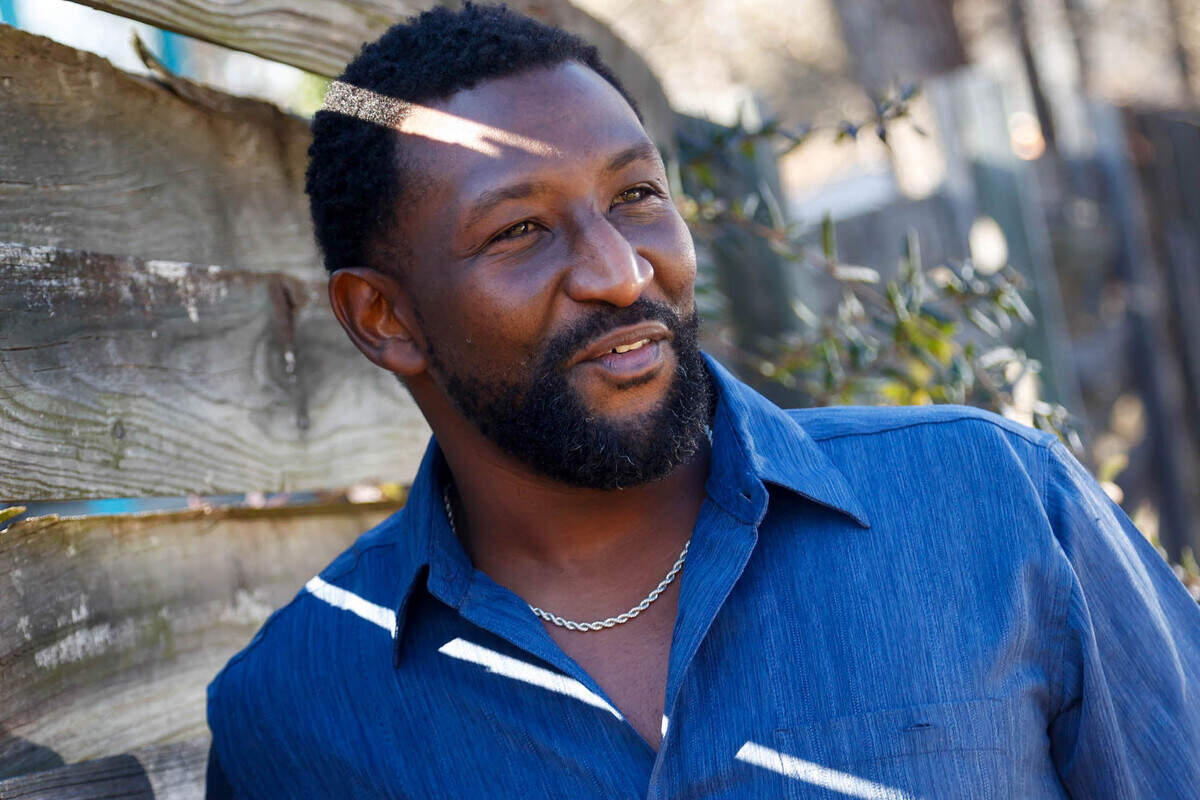
Njuguna’s shooting demonstrates the disproportionate risk of being shot just for being Black in Richland County. In a county that’s nearly half Black and half white, 85% of the fatal shooting victims in 2021 were Black, according to police data. All 16 of the fatal shooting victims in the city of Columbia were Black. And they’re young. Nearly 65% of all the fatal shooting victims were teenagers or in their 20s. The shooters were disproportionately Black too. Of the 51 people arrested in Richland County’s fatal shootings, 48 are listed as Black, according to the data.
The impact of shootings on communities of color in Richland County last year has led Black grassroots organizations to tackle the challenge of reducing gun violence. Those groups, while still developing their strategies, are taking a direct approach in confronting gun violence and creating ways to stop young people from clutching the trigger.
Some organizations, like Building Better Communities, have worked for anti-violence and Black community improvement for years, including programs and events last year to try to curb shootings.
Njuguna’s shooting shows how bullets can steal the human potential out of Black communities.
At the very moment he could have capitalized on his success, he had to put off his acting career for more than a month as he recovered in the hospital, Njuguna said.
He still has a bullet in his back that has to be removed in the coming months, but he’s partially recovered and getting back to acting. Njuguna wants his success to “give people hope, give shooting survivors hope to fight through it.”
The new class of Black grassroots groups is also looking for ways to enact their hope of slowing down the shootings.
For some members of these groups, the mission to reduce gun violence is personal.
‘Fighting this thing’
In July, 18-year-old Zakyiah Staley was shot and killed on Leesburg Road outside of Columbia.
His case shows the risk faced by young, Black men of becoming gun violence participants and victims. Staley attempted to carjack someone at gunpoint and was shot in self defense, according to police.
“A lot of times we don’t get involved until it hits home,” said Jacqueline High, Staley’s cousin. “When he was killed it really pushed me into action.”
Staley’s death — along with prayer and her Christian faith — compelled High, 57, to form Parents Against Gang and Gun Violence (PAGGV) in August.
The group has been putting on events in the Midlands and elsewhere in which former gang members and former gang leaders discuss their pasts with young people and encourage them to get out and stay away from gangs and guns.
PAGGV plans to take a big step forward within a few months. The group will be getting non-profit status, which will allow it to raise funds and to put that money toward reducing gun violence. High said people and other organizations are already lined up to donate.
Meanwhile, PAGGV will continue to put on anti-violence events and “to let people know we’re here.”
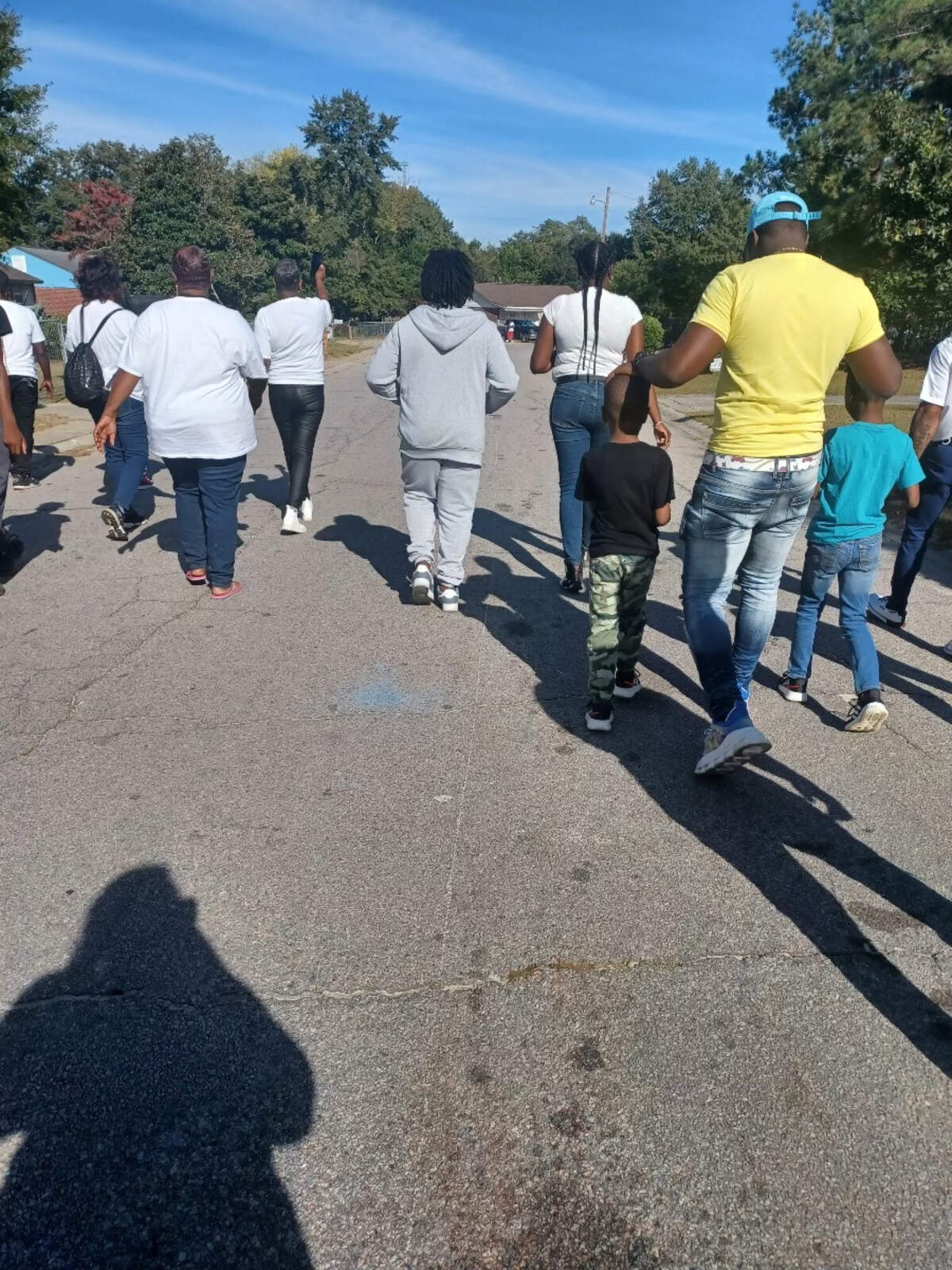
In October, the group took a big step forward in letting people know they’re here.
As then-mayoral candidate and long-time Columbia City Council member Tameika Isaac Devine unfurled her gun violence reduction plan at a news conference, PAGGV was asked to stand with her. That was a moment that solidified that PAGGV was in the fight against gun violence, High said.
The group may have already grabbed a victory in that fight.
Also in October, PAGGV put together prayer walks in Columbia and West Columbia, where it was rumored that a person was illegally selling guns out of a house on one street.
A police report said that people had complained of shootings and drug dealing on the street. At the end of December, West Columbia police and the Lexington County Sheriff’s Department raided a house on the street and arrested a person for unlawful possession of an “AR style pistol,” distributing marijuana near a school and contributing to the delinquency of a minor, according to police reports. Police also confiscated from a car on the street a stolen handgun. Stolen guns factor into the rise in shootings, The State reported in December.
“We may not have all the answers, but we’re planning on fighting this thing,” she said.
The village
John Tyler, 36, has two children, and both have already lost friends to shootings, he said.
Tyler, a Columbia resident, is one of the main organizers of One Common Cause Community Control Initiative, better known locally as One Common Cause.
Like, PAGGV, One Common Cause wants to focus on ways to teach children, teens and young adults to stay away from guns, Tyler said.
While the group is still working on how to do that, one part of its youth focus will be getting relatable role models to teach children about gun violence. One Common Cause wants to get more “reachable” people in front of youth to discourage gun violence rather than police officers and politicians, who regularly teach anti-violence but aren’t as relatable, Tyler said.
One Common Cause grew in prominence during the 2020 protests in Columbia over George Floyd’s killing by a Minneapolis police officer. The group advocated for more resources in Black communities rather than more police involvement. In the last two years, the group has been part of protests and calls for police and school accountability in response to issues involving Black people. Now, the group is also focusing on the gun violence plaguing Black communities.
Black communities need more “self policing,” Tyler said.
Nobody knows the Black communities’ problems more than Black people, he said. But Black communities need money and resources to combat those problems. Access to mental health counseling for adults and children is one of the resources he mentioned.
He presented the “self policing” viewpoint while he campaigned last year as a candidate for one of the City of Columbia’s at-large council seats. As he spoke with Black community members, he often talked about the cases of two girls who went missing last year as examples of self policing.
Black groups and people came together to help gather information about the girls before the police took the cases seriously, Tyler said. One of those cases was the abduction and shooting death of Sanaa Amenhotep. Her parents and other Black community groups criticized the Richland County Sheriff’s Department response to her missing report. Richland County Sheriff’s Department did not respond to the criticism at the time, but deputies charged three people in Amenhotep’s abduction and death.
“We really need to get back to the principal of ‘it takes a village,’” Tyler said. That mentality can reduce gun violence.
Parents, of course, have to teach their children not to turn to guns for resolving conflict and they have to teach their children “they don’t have to grow up as fast as they do,” Tyler said. Experiencing grief and proving one’s maturity through guns seems to be part of the gun violence issue.
Though the problem is complex, reducing shootings can come down one strategy, Tyler said — speaking up.
In the summer of 2021, Tyler and another member of One Common Cause were driving along Two Notch Road and talking about the group’s future plans. They drove by two “young brothers” in an altercation and one was clutching at his waist, looking as if he was about to draw his gun, Tyler said.
Tyler and his friend stopped. They talked to the guys and asked if they had kids. They did. Did they want their kids doing what they were doing a decade from now, Tyler and his friend asked. They didn’t. Then the time to make sure their kids don’t die from gun violence is right now, Tyler said.
“They ended up letting that situation go.”
Now, those two come to any One Common Cause event that they can because they want to see a change in their community, Tyler said.
“Sometimes that’s all it takes,” he said. “It really takes person to person, individual to individual, to get things done sometimes,” he said.
‘We’re not stopping’
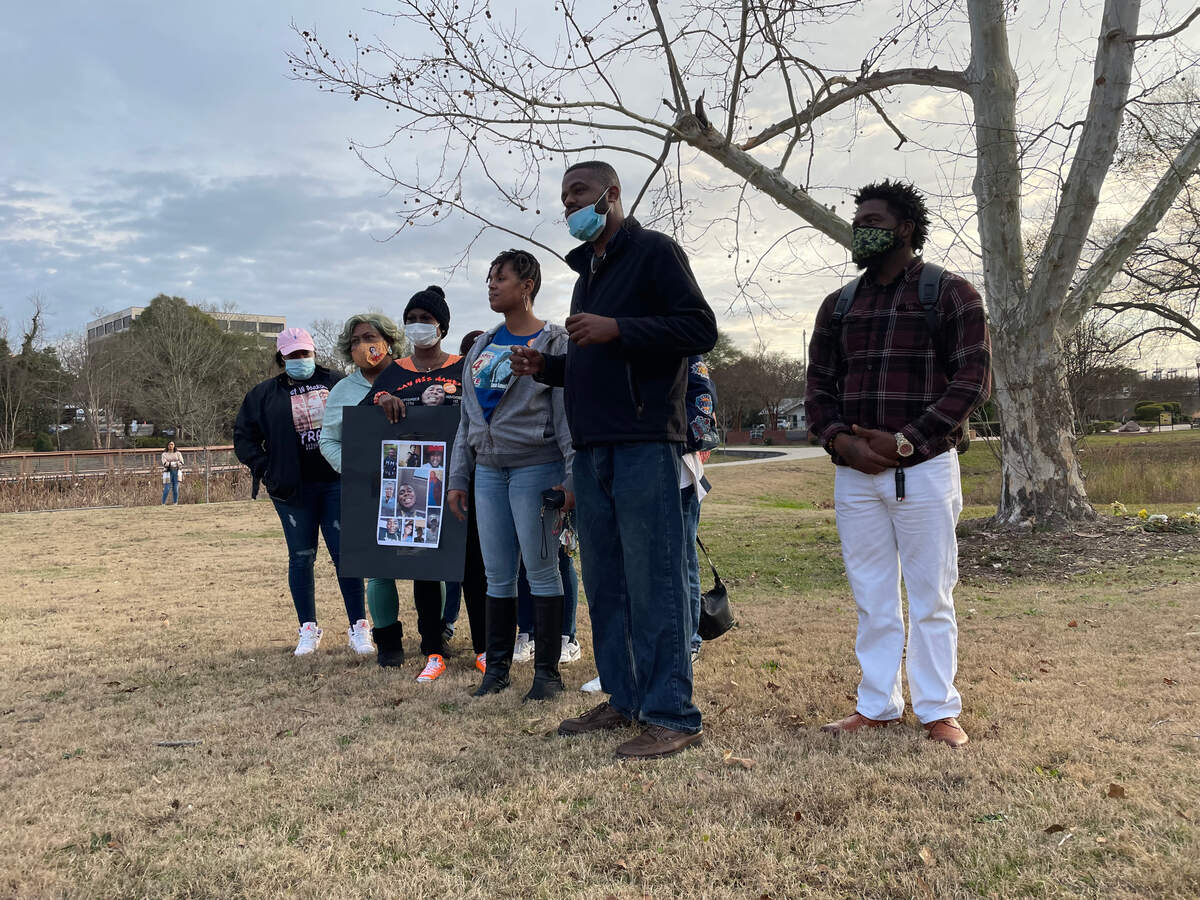
On Jan. 9, High and Tyler as well as a representative from the South Carolina Black Activist Coalition came together with the families of shooting victims to amplify their message about reducing gun violence. They gathered at Columbia’s Martin Luther King Park near Five Points.
2022 needs to start “with a new narrative,” Justin Hunt of the Black Activist Coalition said. Gun violence “has to stop.”
“We can’t depend on law enforcement,” he said. “It’s going to take us to save us.”
Near the end of his speech, Hunt said it doesn’t take a lot to help. People need to “just get involved” with any of the new class of grassroots organizations.
Before the event started, an issue with the use of a recreation center made some think it wasn’t happening. Some people didn’t show. The group of about a dozen that gathered was smaller than it was supposed to be. Some talked about canceling it.
“We’re not stopping,” Hunt told everyone before he started talking about reducing gun violence.
Njuguna isn’t stopping either.
He’s become involved with anti-violence groups in Columbia and later in the year he’ll be coming back to work with them, he said.
This story was originally published February 2, 2022 at 11:49 AM.