
SC judge bows to USC’s, Legislature’s request to delay FOI case to reveal NIL info
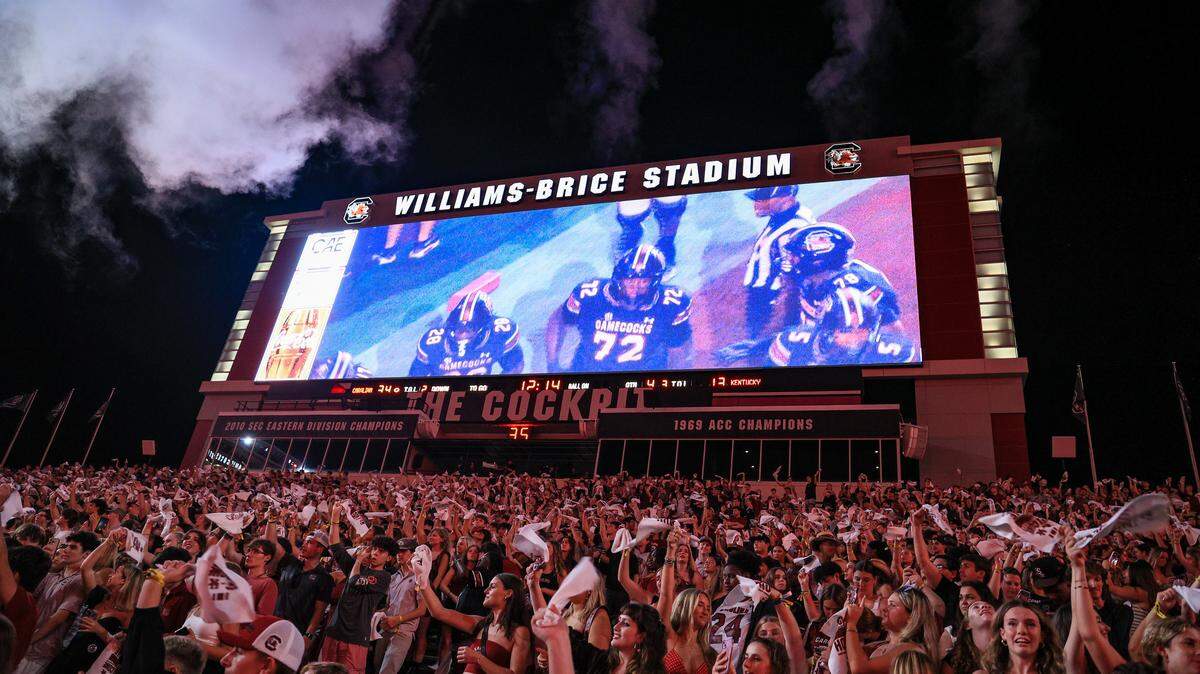
A South Carolina state judge has agreed to delay a hearing in a high-profile Freedom of Information lawsuit where a resident seeks to learn information about $20.5 million in Name, Image and Likeness revenue share payments to some athletes at the University of South Carolina
The $20.5 million is the total in revenue-sharing money USC can spend on student athletes, who can also negotiate separate NIL deals independent of money they might receive from the university.
Judge Daniel Coble of Richland County said in an order delaying indefinitely a scheduled Feb. 2 hearing that he was deferring to the wishes of both USC and state lawmakers.
In a Jan. 15 motion for a delay, USC said “several necessary witnesses — most of whom are executive-level employees within the University’s Athletic Department — are unavailable on Feb. 2 and thus the university would be at a disadvantage if a hearing were to be held.”
USC also noted in its motion that Jan. 14, a bill was filed in the S.C. Legislature that would make secret information sought by the plaintiff in the FOI case, Frank Heindel, an open records advocate.
If the bill passes, it would mean that information sought by Heindel is not subject to the state FOI law, the motion said.
Heindel is seeking details about how USC is doling out $20.5 million to its student athletes in revenue-sharing money. The $20.5 million is the amount set in last year’s global settlement of a long-running lawsuit between players and universities. In his lawsuit, Heindel cites a current state law, which makes all NIL deals private except those to which the school is a party.
Coble agreed the bill could affect his decision.
“When, and if, the General Assembly speaks, this Court must listen. This Court will not rush into a decision which could have impacts statewide and nationwide,” Coble wrote in his Jan. 16 order. The bill in the Legislature “is directly related to this pending litigation and could have an impact on the merits of the case,” he wrote.
The governor weighs in
On Thursday afternoon, in a press conference at the State House, Gov. Henry McMaster jumped into the controversy, coming down squarely on the side of those who favor openness in public matters.
“It (NIL deals) ought to be public, and it shouldn’t be happening in the first place,” McMaster said. “I think, NIL is ruining college sports.”
McMaster, a former attorney general known for favoring transparency and has pushed for transparency in how public money is spent on budget earmarks for lawmakers’ pet projects.
“I don’t think we’ll understand the impact that it’s having on sports unless we know how much money is being paid. I don’t think it ought to be a secret,” McMaster said.
McMaster could potentially veto any bill coming out of the Legislature that clamps a lid of secrecy over the $20.5 million USC is going to give — or has already given — to unidentified athletes. The governor is also an ex officio member of the USC’s board of trustees and appoints one at-large member of the board.
Secrecy concerning largesse to USC students has created headaches for the university before.
In the 1980s, former USC president Dr. Jim Holderman was discovered to have secretly given hundreds of thousands of dollars in public money to favored students in his intern program in the form of clothes, computers and frequent air travel to expensive places, where Holderman put students up in fancy hotels and took them to expensive restaurants. After investigative reporters publicized the secret gifts, controversy erupted and Holderman resigned.
Rep. Hiott’s bill
On Jan. 15, the House voted 111-2 to make revenue sharing contracts between schools and intercollegiate athletes not subject to the Freedom of Information Act. The bill was introduced by House Majority Leader David Hiott, R-Pickens.
Hiott’s bill — which applies to all public colleges in South Carolina that opt in to the revenue sharing cap — not only makes secret the amount of money going to individual athletes, it also makes secret the total amount going to various athletic teams and programs. Thus, the public would not be able to learn the total of how much USC’s women’s basketball team gets compared with say, the men’s basketball team, or the football team as a whole.
Another section of the bill says, if passed, the secrecy provisions apply “retroactively to any pending legal action or disclosure request for which a final judgment has not been entered.”
No House committee hearing was held on the bill, which went to the state Senate and is now in the Education Committee.
Supporters of the bill say secrecy is needed for several reasons, including to protect athletes from people who might steal their money. Also, contracts that the university has with student athletes are “scholastic records” and protected by privacy laws, USC has contended.
Supporters of the bill also contend money paid to athletes is private money not subject to disclosure — a view contested by critics.
Moreover, the money paid to individual athletes is like a trade secret and exposure would lead other colleges and universities with teams using that knowledge to get an unfair advantage over USC’s teams, supporters of the bill said.
John Crangle, a Columbia lawyer who has written on ethics issues in state government, said Coble certainly had the discretion to delay a crucial hearing.
But, predicted Crangle, any new law making payments to athletes and teams secret won’t be effective because people gossip and talk, and before long the payments will be matter of public knowledge.
“It’s trying to do the impossible. There’s no way in the world you can hide the fact that a quarterback at USC, for example, is making $2.5 million a year in NIL payments because his family will know, his mother and father will know and his girlfriend will know,” Crangle said. “Players are going to talk about it, and they are going to call reporters and reveal it.”
Crangle made another prediction: That anonymous offensive linemen who make it possible for headline-grabbing quarterbacks and running backs to make their scoring plays will file lawsuits to get a bigger share of NIL payments.
“There will be fights over money because if they (offensive linemen) don’t block, the quarterbacks and running backs will get creamed,” Crangle said.
Jay Bender, a veteran media and public access lawyer, criticized the bill for its secrecy and purported misplaced priorities.
“This is just another example of how the State of South Carolina will do anything if it thinks it will help a football team,” said Bender, who sometimes represents the State Media Co. in court.
“Because it looks like USC is going to lose a case in circuit court that will force NIL contracts entered into by the university with athletes to be made public under the FOI, football somehow deserves to be made private,” Bender said.
“If you are worried about somebody finding out how much money the quarterback makes, you can redact the name of the quarterback from the contract,” Bender said.
Revealing how much money players get should not be a big deal, said Bender, noting that in the National Football League, players’ salaries are made public all the time.
Moreover, said Bender, secrecy hurts players and benefits USC. “If there were a free market, players could go where they could get the most money. But key to that is knowing how much money you can make going somewhere else. But if by law you suppress knowledge of what is being paid, then the market is diminished.”
USC spokesman Jeff Stensland declined to comment for this article as did Rep. Hiott, who sponsored the secrecy bill, and Will Lewis, one of the lawyers representing USC. Another lawyer representing USC, Andrew Lindemann, did not respond to an email seeking comment.
Heindel, the person seeking information on the payments to athletes, said in an email, “If judges step back every time the Legislature promises to ‘clarify’ the law, public bodies learn a dangerous lesson: stonewall first, lobby later.
“That’s not how open-records laws are supposed to work,” Heindel said. “FOIA only works if courts enforce the law as written, not as agencies wish it were rewritten.”
Heindel filed his Freedom of Information lawsuit Sept. 4.
Heindel requested any executed revenue-sharing contracts or agreements between the university and its football players. Six days later, the university denied the request in an email stating that the documents were “scholastic records” protected by the Family Educational Rights and Privacy Act, a federal law that shields a student’s educational records from disclosure. “Therefore, there are no records responsive to your request,” wrote the school’s FOIA coordinator.
In his lawsuit, Heindel said important principles are in play. “These are not trivial administrative documents; they govern the distribution of tens of millions of dollars in public funds. Transparency in such contracts is essential to ensure accountability in the use of taxpayer-supported athletic revenues.”
Heindel’s push for these records comes as schools around the country have begun programs to offer student-athletes a share of the millions of dollars the schools make from athletics each year. The opportunity for athletes to get money from the schools came in June from the landmark House v. NCAA settlement, that includes the NCAA shelling out $2.8 billion in back pay over the next 10 years.
Each school that opted into the settlement is permitted to pay its athletes a combined $20.5 million in 2025-26, with increases each year after. South Carolina and Clemson — along with almost every other school in the SEC, ACC, Big 10 and Big 12 — are expected to fully fund that $20.5 million, The State earlier reported.
This story was originally published January 22, 2026 at 10:47 AM.