Parents notified amid reports that SC school land was once a waste disposal site
Reports of contaminated land at a new elementary school have caught the attention of a South Carolina school district, which says it is notifying parents about the matter and will work with state regulators to learn more.
The Darlington County School District said it had a study done before Black Creek Elementary School was built to determine whether the land had any “environmental issues.’’
But the district study, known as Phase I report, did not turn up any environmental problems with the site, according to a district news release issued just before 5 p.m. Friday. The district built Black Creek Elementary last year and the school opened in the fall with about 700 students.
The district’s statement follows the recent release of state data showing that 91 tons of waste sludge from the old Galey and Lord textile plant were applied in 1998 and 2001 on part of the school property, before Black Creek was built in 2025. Separate information indicates sludge might also have been applied there in 2006.
Basins at Galey and Lord that contained waste sludge, like the material shipped to farmers in the area as fertilizer, contained high levels of forever chemicals, also known as PFAS, federal records show. These chemicals can cause an array of health problems for people exposed over time, including cancer, immune system deficiences and thyroid problems.
The state Department of Environmental Services will test the soil at Black Creek in coming weeks to determine if forever chemicals are in the soil of the school property.
“The S.C. Department of Environmental Services has indicated there is no immediate concern at this time,’’ the Darlington County School District statement said. “As part of a broader review of historic sludge application in the area, additional soil testing is planned. The district welcomes this step and will fully cooperate.’’’
The U.S. Environmental Protection Agency has declared the Galey and Lord property a Superfund priority site for cleanup because it is so contaminated and the site is abandoned. It is now looking at whether to expand the Superfund site to include farm fields polluted by sludge from the factory.
For more than 20 years, beginning in the early 1990s, Galey and Lord shipped waste sludge to area farmers for use as fertilizer, which was cheaper than manufacturered fertilizer. State regulators gave Galey and Lord permission to put sludge on about 10,000 acres in the area. At the time, sludge was thought to be good for crop growth and harmless, but it was later discovered that waste sludge is often contaminated with forever chemicals.
Dozens of wells surrounding former sludge application sites in Darlington County are polluted with forever chemicals, many at levels above a proposed federal safety standard. Little testing has been done on soil on the 10,000 acres, but tests that have been conducted have identified potential problems. The soil on about 20 of the former sludge fields has shown forever chemical contamination, raising questions about the safety of growing crops. Yale University researchers have done most of the testing.
The school district’s statement, similar to letters being sent to parents, noted that Black Creek Elementary does not draw water from a well on the property, but gets drinking water from a public system.
“Darlington County School District is aware of recent questions regarding the history of the land on which Black Creek Elementary School is located,’’ the district statement said. “We understand families and community members may have concerns, and we want to share what we know and what steps are being taken.’’
The statement said “the safety of our students and staff remains our highest priority.’’
A key question is where the sludge was applied in relation to where the school was built. The district bought more than 100 acres for the school project in 2022. About 55 acres of the school site received sludge, the DES said in a statement this past week.
Drone footage taken by The State indicates that the school was built in the immediate area of the property where sludge was applied. The land that received sludge is shown in Department of Environmental Services data provided to consultants for a Chesterfield County landowner.
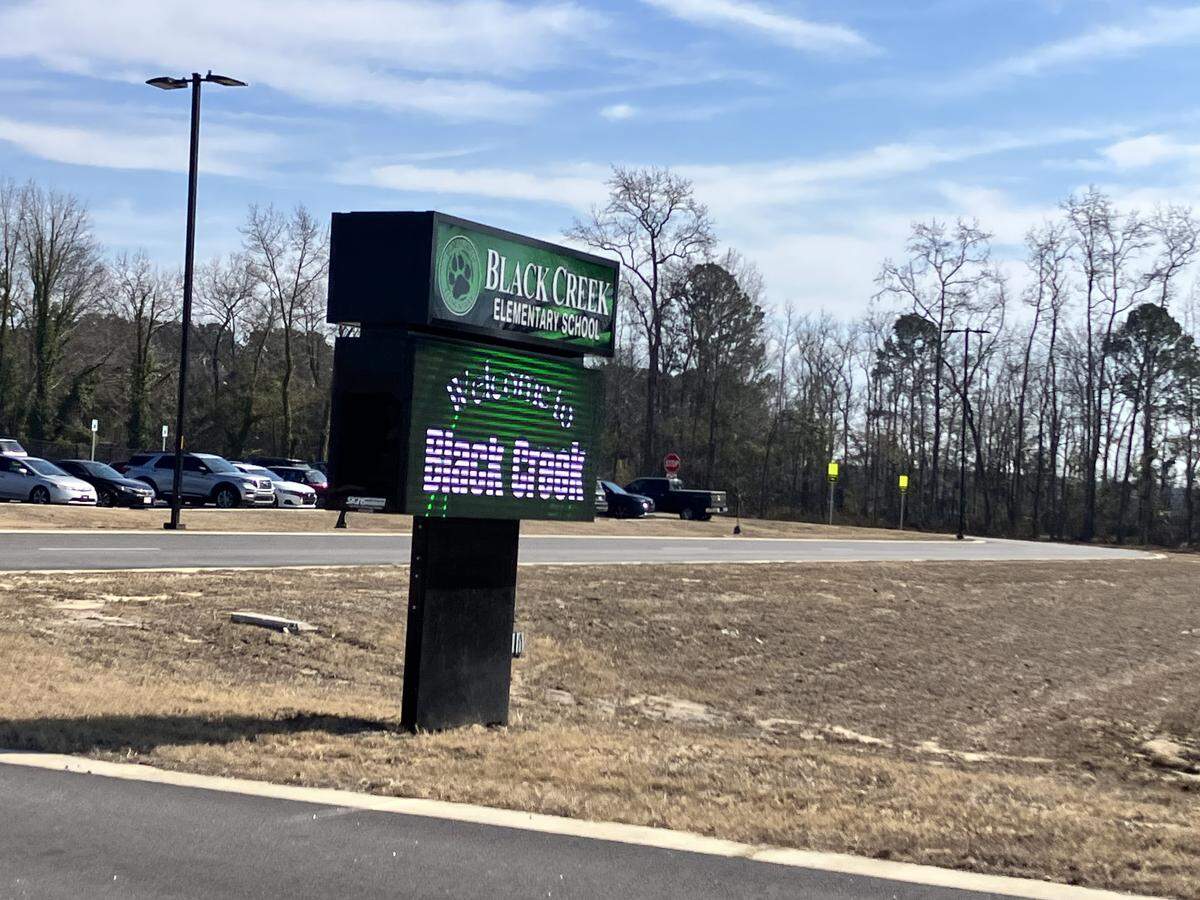
A spokesperson for the Department of Environmental Services was not available Saturday to respond to questions, but the overall issue of spreading sludge is being met with growing concern. It’s a statewide issue that has manifested itself in Darlington County.
At a meeting Thursday night in Darlington, residents said they were concerned that sludge has been — and is continuing to be — applied to farmland in the county. They asked state regulators for help, but DES officials said there was not much they could do without stronger laws over the disposal of sludge in South Carolina.
Rep. Joseph Bustos, R-Charleston, said the school issue in Darlington, as well as the overall question about sludge disposal on farms, is something South Carolina should pay attention to. He has introduced legislation to limit spreading contaminated sludge on farmland, but fellow lawmakers have not taken up the matter.
So far, powerful farming interests have been cool to the idea of limiting the use of sludge as fertilizer because it is cheaper than buying manufactured fertilizer, the Mount Pleasant lawmaker said. But he said protecting food and water is more important.
“It’s important for the people of South Carolina to know what they’re eating and what they are drinking,’’ Bustos said Saturday. “I guess that’s kind of my mission now, and I don’t care who gets antsy about it.’’
This story was originally published March 21, 2026 at 2:20 PM.