Effort to allow the direct sales of electric vehicles in South Carolina hits a roadblock
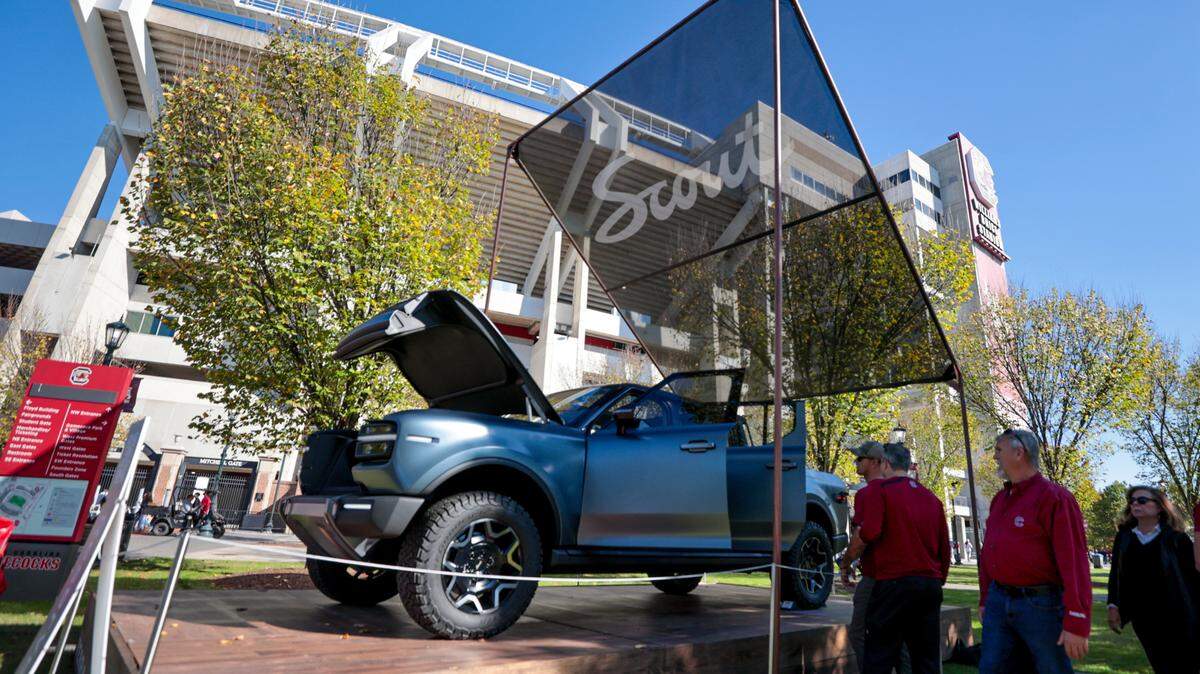
A legislative effort to allow consumers to buy vehicles directly from automakers has been put on hold — until further notice.
A House Labor, Commerce and Industry panel adjourned debate on the bill, effectively putting a pause on the legislation that would allow electric vehicle makers such as Rivian, Scout Motors and Tesla to sell directly to consumers in South Carolina without using franchise dealerships.
“I think the message was a pretty loud and clear message from the committee members, these stakeholders need to come together and work out these differences and find some middle ground where they can they can both coexist in that space, because there was no appetite to change the laws as they are currently,” said state Rep. Mark Smith, R-Dorchester, who chaired the House panel and was one of the bill’s co-sponsors.
Despite the decision from House lawmakers, Scout Motors said it plans to continue to advocate for a change as it does not plan to use dealerships to sell its vehicles when the start rolling off the Blythewood assembly line in 2027.
Wednesday’s hearing illustrated the battle between Scout Motors and the influential auto dealership lobby.
Scout argued this bill is not a specific carve out for the company building a $2 billion plant in Blythewood, citing how electric vehicle manufacturers such as Tesla and Rivian would benefit.
“There are no gimmicks, no endless negotiation with several trips to speak to their manager or intense pressure to leave with a new car,” said Zach Kahn, a senior managing policy advisor at Tesla, which supports the change. “Instead, we spend time educating customers on our new technology, answering questions and preparing them for EV ownership. We offer uniform, transparent pricing, and do not look at our service operations as a profit center.”
Part of Scout’s plans is to build an experience center at its Blythewood plant and have locations around the country sell vehicles and provide service.
Dealers say they never had any financial assistance from the government to build up their businesses, while Scout Motors received $1.3 billion in incentives to bring their $2 billion plant to Scout Carolina.
Cody Thacker, Scout’s vice president of growth, said the bill does not effect any existing franchise dealerships and argued in states where direct sales are allowed, franchise dealers still thrive.
“We’re also here in the South Carolina community, paying taxes, sending our kids to Little League and participating in charitable causes,” Thacker said. “Thousands of us are your neighbors, too, just like franchise dealers.”
Thacker also pointed to a 2000 state attorney general’s opinion that said a bill that barred automobile manufacturers from opening retail locations in South Carolina was unconstitutional.
“After this legislature passed a dealer bill deemed patently unconstitutional in 2000, the dealer lobby has continued to pursue more and more protectionist rules to shout out competition,” Thacker said,
The Attorney General’s office, however, in an opinion published Friday said the current laws on the books are constitutional.
Volkswagen, which is backing the Scout Motors venture, also has dealerships in South Carolina, as well other brands it owns such as Audi and Porsche.
“Scout wants to come in and circumvent our state franchise laws, but yet their website didn’t say anything about services provided. How are they going to take care of their customers versus a franchise dealer that’s in almost every community in the state,” said Claude Burns, who owns Chevrolet, Cadillac and Ford dealerships in York County.
The dealers are upset that Scout received $1.3 billion incentives, when they didn’t receive financial assistance from the state.
“Free market is not free cash, despite popular opinion, Volkswagen received $1.3 billion incentives and loans to be a manufacturer in South Carolina and build cars, not to then become a retailer and compete against their own retail dealer network,” said Sims Floyd, the executive vice president for the South Carolina Automobile Dealers Association.
Scout argues the incentives were to build its Blythewood factory and have nothing to do with choosing to do direct sales.
State incentives for automobile or automobile related manufacturers are not unique to Scout Motors. The governor’s office on Wednesday announced a $280 million investment by Isuzu to open a factory in Greenville. The state’s Coordinating Council for Economic Development approved job development credits and provided Greenville County with a $7 million grant to help the project.
“State incentives for Scout Motors and the liberty of citizens are unrelated,” Thacker said.
Automobile dealers argued they’re already equipped to provide maintenance for vehicles and will have a long-term relationship with consumers.
“The dealer has incentive to take care of the customer, especially on recalls and warranty work,” Floyd said.
The panel of lawmakers sided with automobile dealerships for now pointing to the number jobs dealerships already provide, the relationships they keep in their community, and how auto dealers give back to their communities.
“Let’s be fair. It’s not fair for us to give that kind of money and hey, we’re going to boot our dealers out,” said state Rep. Carl Anderson, D-Georgetown. “Our dealers ought to have the opportunity of being here and staying here.”