Money for SC roads, charter school oversight among 5 topics to watch in State House
Ending race-based quotas for state contracts, finding ways to raise money for road infrastructure and increasing penalties for not moving over for emergency vehicles are expected to be on the agenda for lawmakers this year.
Here are five issues that may catch the General Assembly’s attention during their session which begins on Tuesday, Jan. 13.
Road infrastructure fees
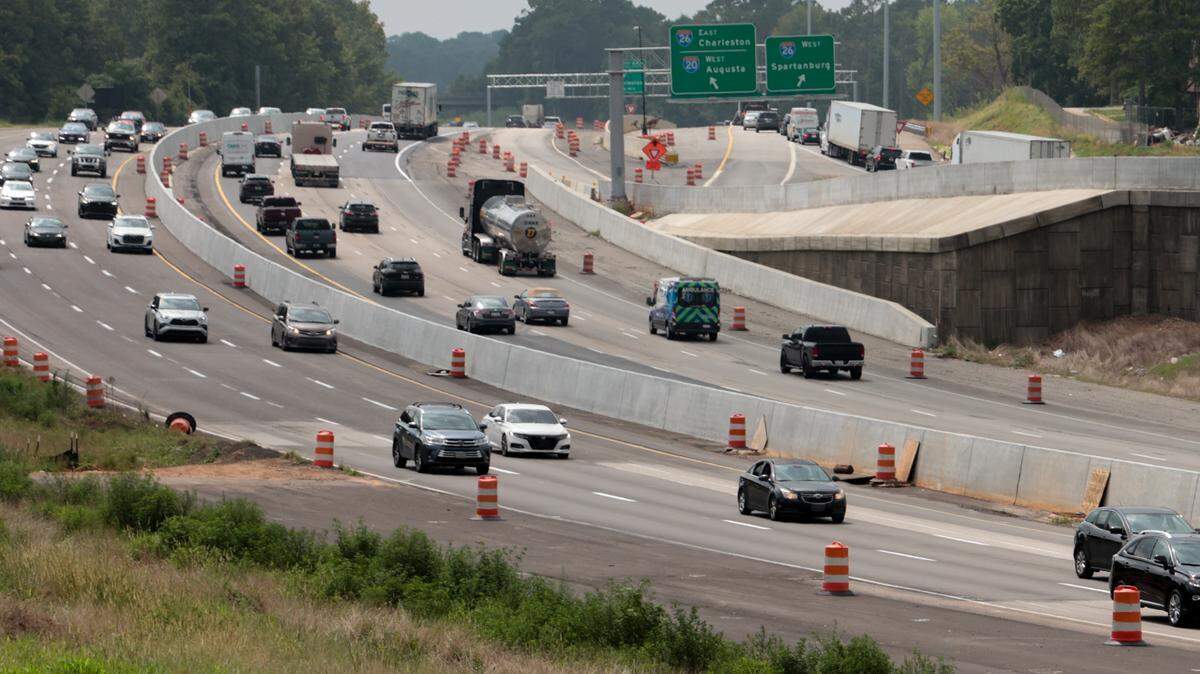
South Carolina lawmakers will look for ways to improve the state’s roads and bridges this year.
Population growth has added to demand for infrastructure upgrades, and inflation has made large projects more expensive, South Carolina Department of Transportation Secretary Justin Powell told lawmakers in December. He wants an additional $1 billion annually over the next 25 years for his agency to complete planned infrastructure upgrades, primarily for the interstate and bridges.
Revenue from the state’s 28.75 cents per gallon gas tax and annual fees are no longer going far enough to pay for construction, Powell said during several House ad hoc committee meetings. House lawmakers looked for ways to raise money for infrastructure projects throughout the back half of 2025.
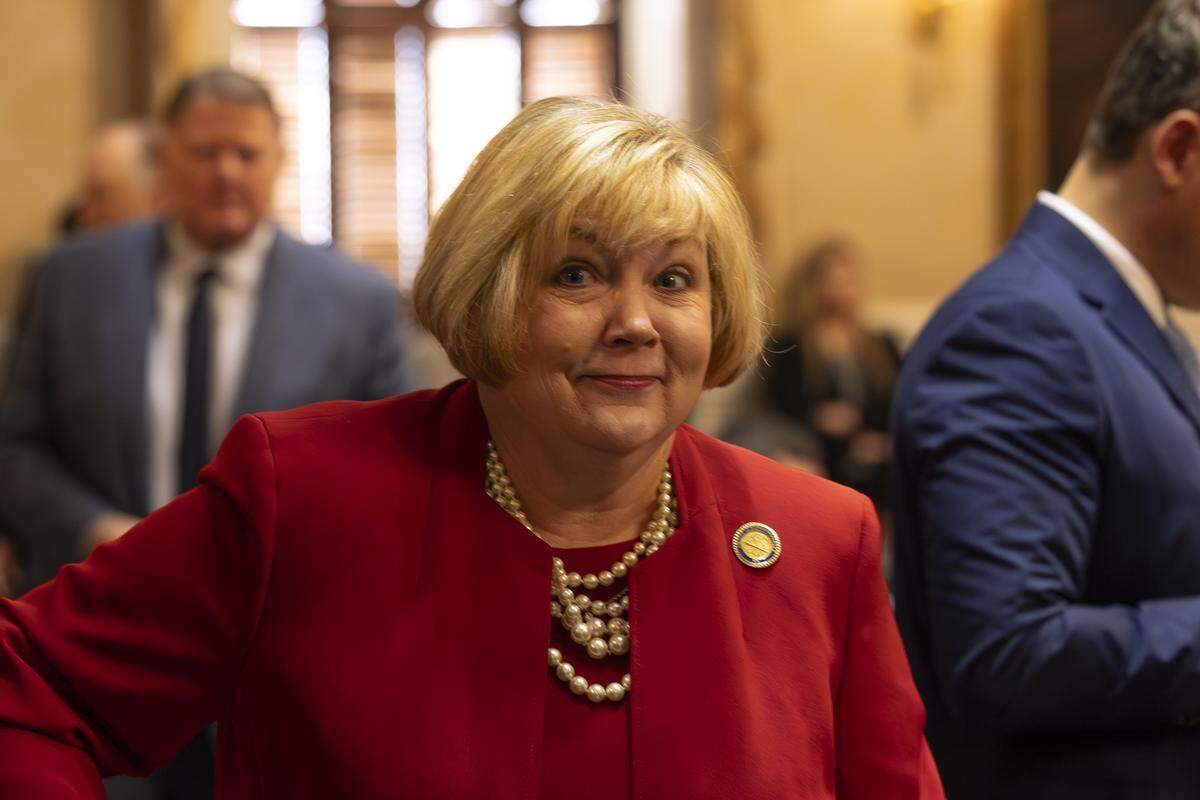
In December, the large panel of lawmakers discussed raising registration fees or creating toll roads. The committee may also look at reducing regulations intended to make projects more affordable, said committee co-chair state Rep. Shannon Erickson, R-Beaufort.
“Everything’s on the table,” Erickson told reporters in December. “I don’t believe there’s appetite for the gas tax to be raised.”
Gov. Henry McMaster will also propose adding $1.1. billion in new road spending to avoid delays in construction caused by rising costs. McMaster’s plan includes $1 billion in one-time money and $100 million new annual money for road projects. He cited several ongoing construction projects, including Widening I-26 between Charleston and Columbia, that have risen in costs, sometimes by $1 billion.
“We can’t make more time, but we can use this new surplus money to keep road projects moving and on schedule,” McMaster said in a news release.
Race-based quotas
South Carolina lawmakers in the Republican controlled General Assembly are expected to try to remove race-based quotas in state contracts.
This comes after an executive order from McMaster to hold off on awarding contracts where race-based quotas exist.
State law requires the South Carolina Department of Transportation to award at least 5% of certain contracts for highway and infrastructure money to minority businesses every year.
Another law requires each state agency to develop and submit a plan demonstrating how 10% of the agency’s total controllable annual budget will be spent through minority-owned businesses.
Senate President Thomas Alexander, Senate Finance Chairman Harvey Peeler, Senate Majority Leader Shane Massey, and state Sens. Wes Climer, Shane Martin and Ross Turner are sponsoring legislation to prevent public entities from requiring any procurement preference, set-aside, quota, goal, or similar programs based on race.
Alexander and House Speaker Murrell Smith are working with McMaster to push through this item.
“Obviously state agencies are caught in between state law and federal law, and so what we want to do is align with federal law, and what the United States Supreme Court has ruled on that issue,” Smith told reporters in December.
Charter school accountability
Placing more guardrails on charter schools and their authorizers could be a priority for state senators this year. Massey told reporters Wednesday charter school accountability legislation would be taken up early by the Senate.
“We need to put those accountability measures in there to make sure that the schools are performing the way we need them to perform, so that you do have a strong choice option there,” Massey said.
Authorizers provide administrative support for charter schools in South Carolina, but authorizers themselves need oversight, Massey said. State Sen. Greg Hembree, R-Horry, who chairs the state Senate Education Committee, has previously proposed bills giving the state Education Department authority to monitor and sanction charter schools, but it did not receive attention from the House last year.
“They [charter schools] want to be able, if they’re failing, to figure out a way, a backdoor-way, use another authorizer or use some other method to avoid being closed or being held accountable,” Hembree said Jan. 7. “I mean, that’s fundamentally the biggest problem we’re trying to fix.”
A report issued by the Legislative Audit Council also recommended lawmakers adjust laws related to charter school authorizers and conflicts of interest. Other changes could include subjecting charter school authorizers to open records and ethics laws, Hembree said.
Stiffer penalties for not moving over for emergency vehicles
Motorists may face higher penalties for not slowing down or moving over for emergency vehicles.
A bill in the House and a bill in the Senate call for increasing the fine and adding jail time for not moving over or slowing down for an emergency vehicle on the side of the road with its lights flashing.
Each bill has its different approach on how it would levy fines, while also adding points to a person’s driver’s license for violating the move over law.
Currently, fines range from $300 to $500 for violating the move over law.
The House version of the bill proposes increasing the maximum fine to $1,000.
The Senate version includes a broader range of $75 to $25,000 depending on whether an injury or death is caused. The Senate version also calls for prison time for violating the move over law.
The move to increase the penalties comes after four law enforcement officials were struck while on the side of roadways over the course of little more than a month. A state trooper died in August from his injuries.
During a five-day enforcement blitz in September, almost 2,400 tickets were issued to motorists for not obeying the move over law.
Immigration enforcement
It’s an election year when the entire state House of Representatives, which has a Republican supermajority, will be on the ballot. Immigration enforcement and removing people wanted for deportation remains a top issue for Republican primary voters.
So requiring local law enforcement agencies to participate in the U.S. Immigration and Customs Enforcement’s 287(g) program will be a push for the House GOP Caucus. A bill with 47 co-sponsors, including Speaker Smith and House Majority Leader Davey Hiott, would require participation by local police departments and sheriff’s offices to participate in the program which has become wrapped in partisan politics.
The 287(g) program has three models, one where jails determine if someone they have in custody has immigration issues, another where local law enforcement serves warrants on behalf of ICE, and one where law enforcement agencies help detain and question people suspected of being in the country illegally, during routine police enforcement.
“We are enforcing immigration laws with zero tolerance for sanctuary policies and strengthening partnerships with federal ICE agents to keep our communities safe,” the House GOP Caucus wrote in legislative agenda for this year.