Will SC redistrict? Is abortion ban looming? 7 questions for state lawmakers in 2026

What the state’s income tax system and an additional income tax cut will look like, whether lawmakers will be able to direct money for special projects in their district and will the South Carolina General Assembly will join the mid-decade redistricting efforts are among the issues facing the Legislature in the next several months.
The 2026 legislative session begins Tuesday, Jan. 13. It’s the second year of the two-year general assembly and the session runs through May 14 leaving four months for politically, strategic moves.
Here are seven potential developments to watch out during the 2026 legislative session.
$1,000 a month for lawmakers?
When the state Supreme Court struck down the $1,500 a month lawmaker pay raise, it also took away the $1,000 a month lawmakers received for in-district expenses in addition to their $10,400 salary. The $1,500 a month increase was meant to help cover the increased cost of in-district expenses such as holding town halls or traveling around the district.
The money is considered taxable income, however, and lawmakers didn’t have to itemize how they spend it.
Taking away the $1,000 a month was not the intent of state Sen. Wes Climer’s lawsuit to stop the pay raise, but rather an unintended consequence that occurred because of the way the annual budget bill is written.
Lawmakers may move quickly to restore the $1,000 a month they previously received.
“Whatever we do, my hope is that it’s going to be much more transparent and open than the process that we had before,” Senate Majority Leader Shane Massey said. “But I think you’ll see an effort to try to restore the amount of money that everybody thought that legislators were going to get, the legislators have received for decades.”
How difficult do Democrats make life for Republicans
In recent years, the hard-line conservative House Freedom Caucus has forced votes on amendments and posted photos of those roll calls as a way of embarrassing members of the House GOP Caucus.
Every seat in the House chamber, where Republicans hold a supermajority, is up for election in 2026. Will House Democrats propose amendments to force potentially difficult votes that could hurt GOP members at the ballot box in November?
“It’s making them fight for every vote. It’s making them take that vote so we can have a chance of the candidates run across the state to win,” state Rep. Heather Bauer said during a Richland County Democratic Party event on Sept. 30.
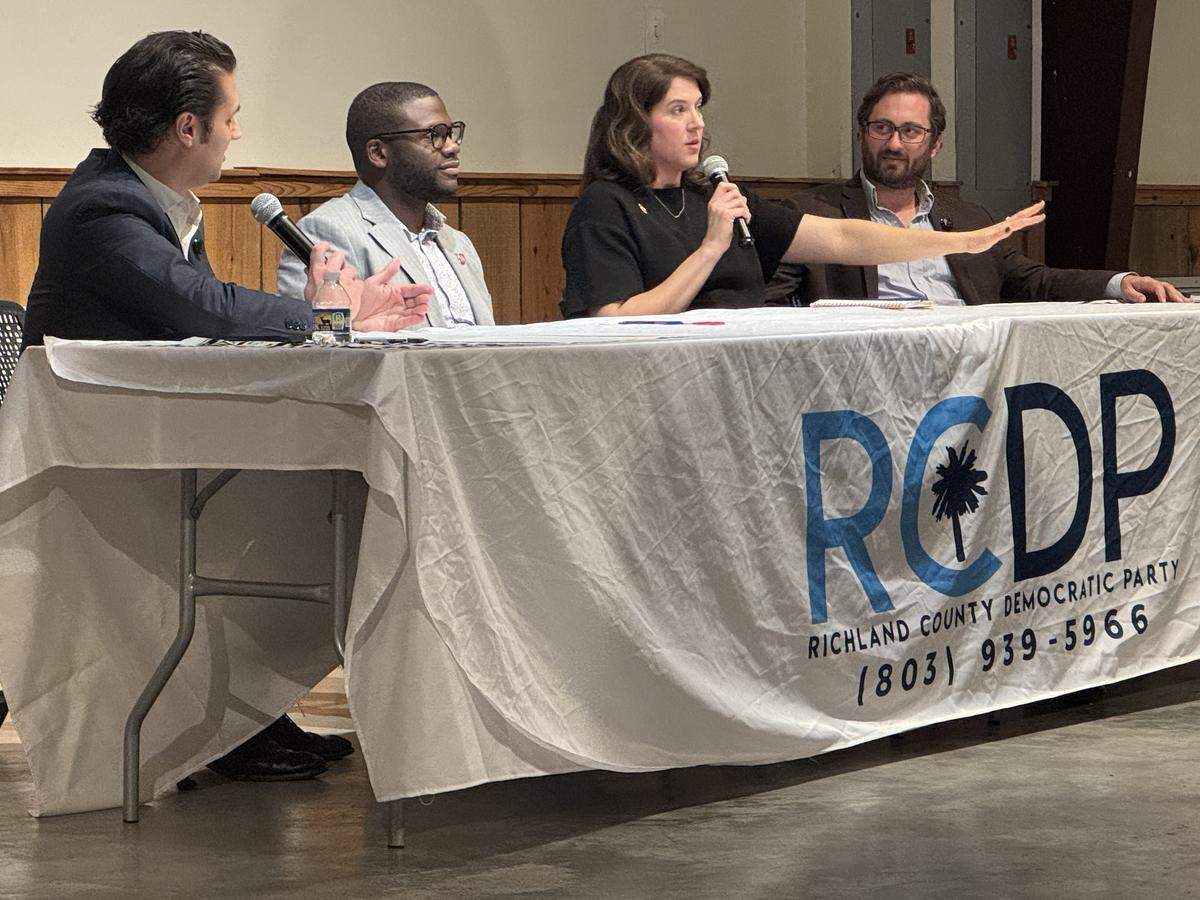
House Majority Leader Davey Hiott said he would expect the Democratic caucus to try to force tough votes for the GOP caucus.
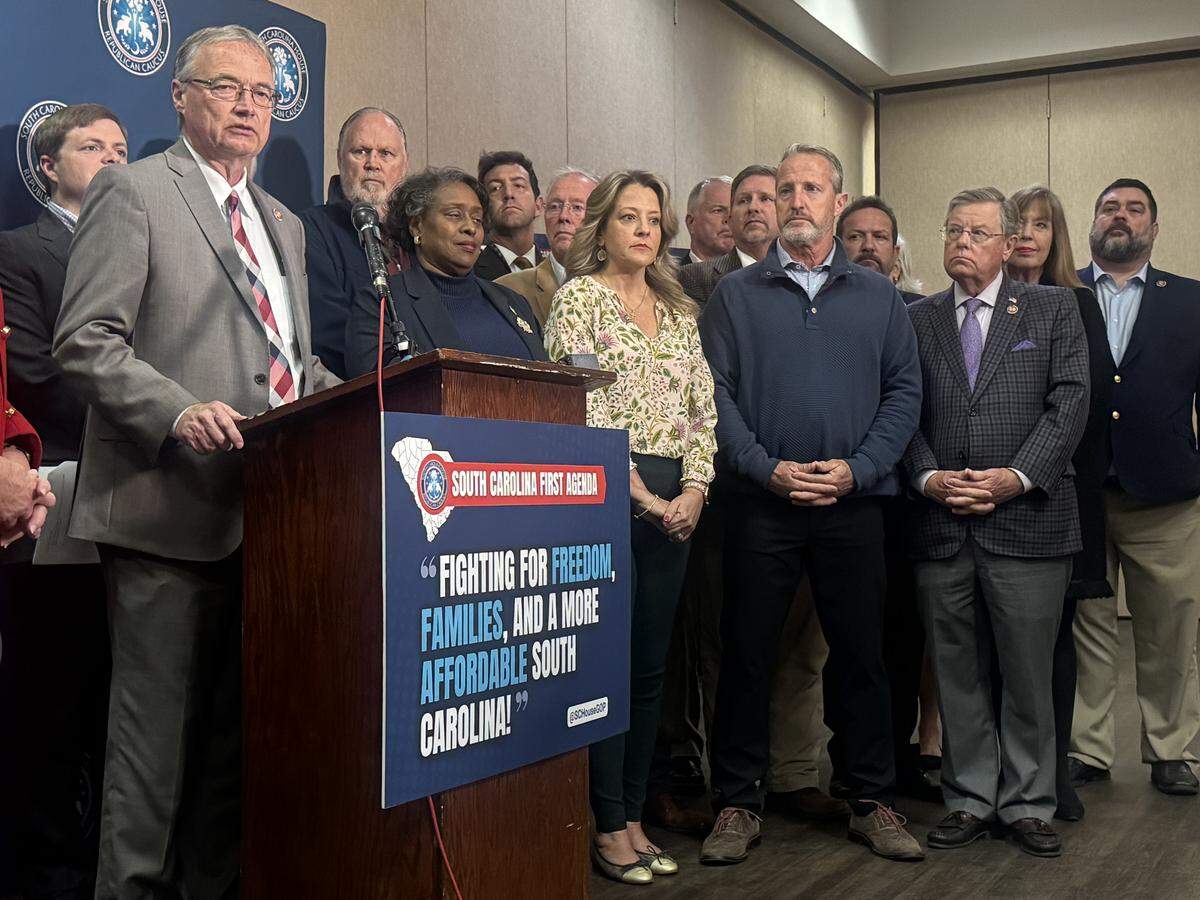
“Anytime we go in on the floor, we know that public will be attacked from both angles,” Hiott said. “Especially when the budget comes up and controversial issues come up, you always know you’re going to get it from both sides. And we always kind of keep our eyes open and see what’s put up on the desk, and go from there.”
Those potentially difficult votes would come ahead of the midterm elections where the party controlling the White House sees losses in Congress and potentially in state legislatures.
Will earmarks come back?
When budget writers finalized the 2025-26 spending plan, one aspect kept out were lawmaker directed community investment projects, more commonly referred to as earmarks.
Senate Finance Chairman Harvey Peeler chose not to include earmarks in the budget even though they are often used to gain support for the spending plan. He had said the earmark requests were out of control.
Still, the practice of earmarks were not eliminated all together. It can always come back.
In an election year in the House, members may want to show they’re bringing back resources for their district.
Further income tax cuts?
Last year the House passed a plan putting the state onto the path to eventually eliminate the state income tax. The plan initially keeps the state’s tiered income tax system.
The state would have a two-tiered system with the first $30,000 of a person’s taxable income taxed at 1.99%. The remaining income would be taxed at 5.39%. Further tax rate cuts would be triggered if income tax revenue to the state grows by at least 5%. The plan would keep an additional $200 million out-of-state coffers each year.
The wrinkle is where the state starts calculating how much income tax a filer pays. It would shift to shifts to adjusted gross income instead of the lower federal taxable income.
In the first year of the plan, more than three quarters of income tax filers would see a tax cut or no change in how much they pay to the state in income taxes, but 24% of the filers would see an increase.
The plan was approved late in the session by the House. The Senate is expected to consider it and the question remains is whether the upper chamber will agree with the plan, or try for a larger tax cut.
“There’s work to be done on that proposal, and it’ll go through the committee process,” Senate President Thomas Alexander said.

Redistricting in the middle of the decade
A lot of noise has been made by members of the hard-line conservative House Freedom Caucus and U.S. Rep. Ralph Norman, a Republican hopeful for governor, about the need to join the mid-decade redistricting efforts pushed by President Donald Trump.
South Carolina has a 6-to-1 Republican advantage in its congressional map, with the 6th Congressional District represented by U.S. Rep. Jim Clyburn being the only seat held by a Democrat. Norman has called on the Republican-controlled General Assembly to draw a map that has a 7-0 Republican advantage.
Norman supporter state Rep. Jordan Pace, R-Berkeley, has proposed a new congressional map, but whether it moves is another question.
However, GOP leadership in South Carolina has pushed back against the idea. A mid-decade redistricting is not among the priorities laid out by the state House GOP caucus in a chamber where every seat is up for election this year.
Gov. Henry McMaster, who has spoken to White House officials about redistricting, says it should not be a priority.
In September, the state Supreme court finally signed off on the state’s maps from the redistricting after the 2020 Census.
“It’s taken this long to get this finished, and then a lot of work went into it, as U.S. Supreme Court left it alone. Our state has said it’s okay, and I think that we’ve done our job. I see no need to start the lawsuits up again,” McMaster told reporters in December.
South Carolina’s 1st Congressional District previously was a toss-up district and in 2018 flipped blue, creating a 5-2 split in the state’s congressional districts. Lawmakers redrew the district after the 2020 Census to ensure it was a safe Republican district.
Massey fears redrawing the maps to make the 6th Congressional District more competitive could lead to Democratic gains.
“I think if you get too cute with this, that it can very easily go to 5-2 or 4-3,” Massey said. “We’ve done our job, and I don’t see any reason to get back into that. I think if we do, we risk doing going the other way more than going I think you’re more likely to get 5-2 than you are to get 7-0.”
Will there be more judge selection reform?
Further reform in how South Carolina picks judges is a priority of the House GOP. A bill that is being pushed by DOGE SC has 58 sponsors in the House. A Senate version has 14 sponsors.
Currently, the governor, the Senate and the House each appoint four members to the Judicial Merit Selection Committee, which screens judge candidates. It’s a system agreed to in 2024. The legislation being pushed would give all the appointments to the JMSC to the governor.
“I think at some point that bill, if it moves from the House and gets to the Senate, it’ll be something that we take up,” state Sen. Michael Johnson, R-York, told reporters Wednesday. “Personally I think it’s important that ... we don’t play the role that we’re currently playing. You shouldn’t be on the committee that screens and then making the vote ... I think our caucus, at some point will, you know, we’ll get together, we’ll have a real conversation about the issue.”
Will abortion debates continue?
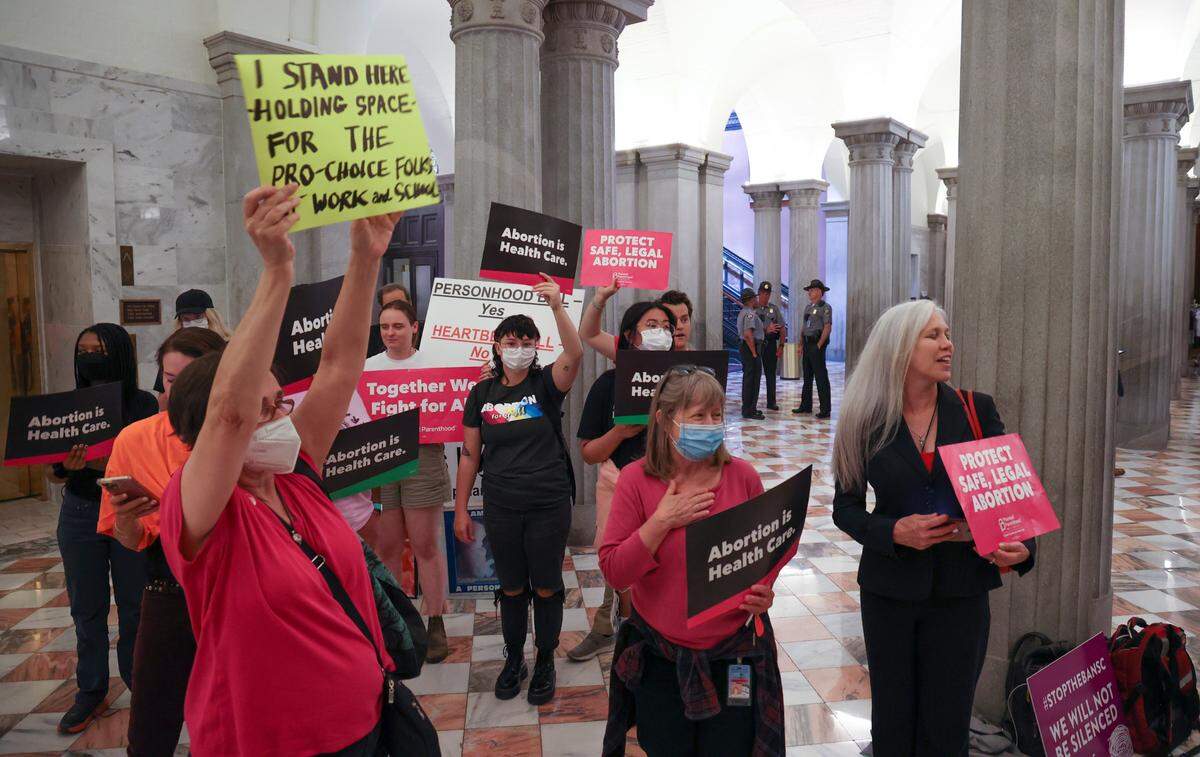
After a near-total abortion ban failed to make it out of a Senate subcommittee this fall, some lawmakers are gearing up to attempt to further limiting access.
South Carolina bans abortion after a heartbeat is detected, which typically falls on the sixth week. The ban has some limited exceptions up to the 12th week. But some Republican lawmakers want to further restrict access to abortion, though they haven’t been successful since the “heartbeat bill” passed in 2023.
The most politically probable avenue may be tackling medication abortion, such as the use of mifepristone and misoprostol. Medication is considered to be the most common, and often convenient, way to have an abortion in South Carolina.
While South Carolina law bans virtually dispensing abortion drugs, the Society of Family Planning, an abortion advocacy research group, predicts physicians in other states prescribe mifepristone and misoprostol to people in states with bans.
A bill to reclassify mifepristone and misoprostol and place penalties on possessing and distributing abortion pills in some instances was filed in the House ahead of session with broad support from Republican lawmakers, including House Speaker Murrell Smith, R-Sumter. The bill has a hearing scheduled Jan. 14, the second day of session.
The GOP House caucus wrote “stopping dangerous mail-order abortion pills” would be a priority this legislative session in a Dec. 12 news release. Plus, Massey told reporters Jan. 7 that a bill tackling medication abortion could pick up support in his chamber.
“I think there’s a strong consensus of folks who are very concerned about this fairly recent trend of mail order abortions,” Massey said. “And so I think there’s, if there are efforts that we can focus on that, that we could probably get a strong support for something like that.”
Other efforts to limit abortion could also come up this year. A bill to change the legal definition of “person” to include “unborn child” will also receive a hearing Jan. 14. If passed as written, people that have an abortion could be charged with homicide. Criminalizing the woman who receives an abortion was a sticking point for Senate lawmakers last year during debates on the near-total ban.
This story was originally published January 8, 2026 at 5:00 AM.