
Should SC governor pick state’s judges? Executive role debated in calls for reforms
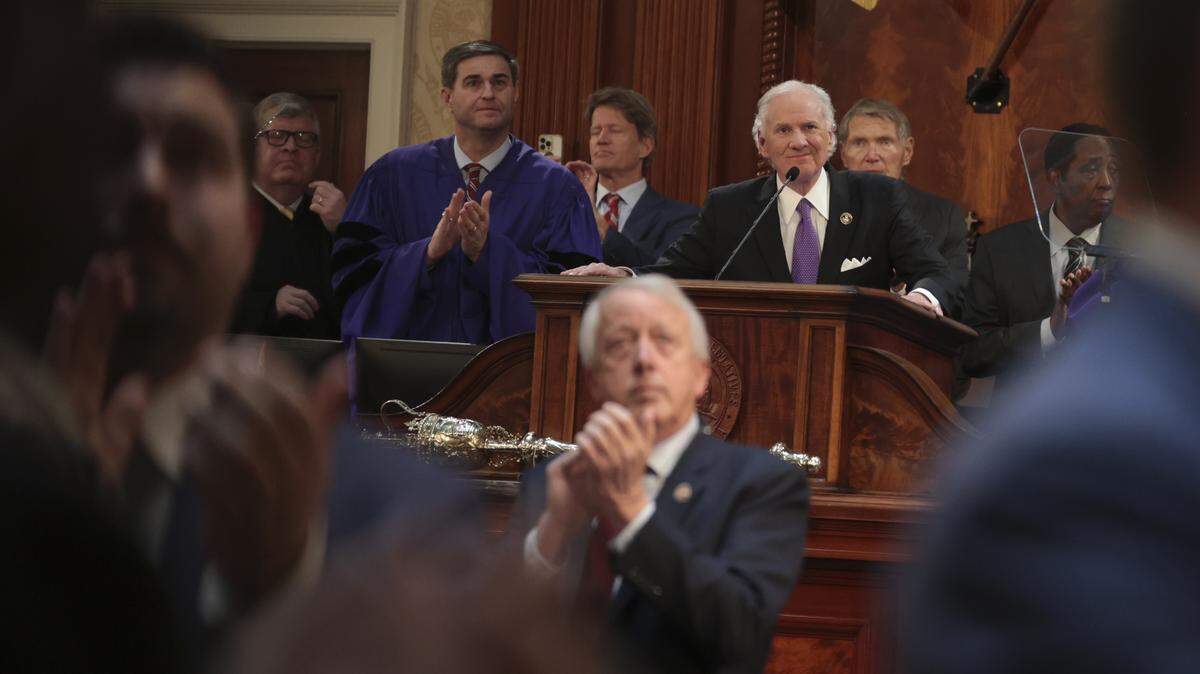
Gov. Henry McMaster thinks South Carolina should pick judges like the federal government: The executive selects candidates and the Senate confirms them.
Many influential House lawmakers say only the governor should pick the people who select the judges. Others question changing the executive’s role.
“Have you seen the candidates for governor?” state Rep. Chris Hart asked a 25-member state House committee Wednesday. “Have you seen them? Have you seen the comments they make? Y’all want to give the judges to the current candidates. Now, anybody here who wants to give the judges to any current candidate?”
No one on the panel weighing a shift of power from the legislature to the governor raised their hand.
“No hands are raised,” Hart continued. “Raise your toes. No toes are raised. I say that sort of tongue in cheek, but it’s true. It’s a lot of power.”
Reforming how the state picks judges was on the minds of many in the South Carolina state house Wednesday. McMaster called for a more “transparent and accountable” selection process during his State of the State address, and lawmakers had a heated debate over a proposal to hand total power to the governor to choose judicial selectors.
McMaster said Wednesday changes made last year to judicial selection, which gave the governor four seats on the vetting commission, was a “first step” but should be further reformed. An initial report on candidates the new Judicial Merit Selection Commission deemed eligible to stand election this year was released Wednesday. Judge elections are currently scheduled for March 4.
In his State of the State address, McMaster recommended allowing the governor to appoint judges with the Senate’s approval, which matches his previous stance on the process.
“Gubernatorial appointment of all judges, with the advice and consent of the state Senate, requires no re-invention of the wheel,” McMaster said. “It will inspire the confidence of our people and will encourage more excellent attorneys to seek public service.”
Currently, a commission vets and selects eligible candidates and the General Assembly elects the judge. The commission members are appointed by the House, Senate and governor, and it includes members of the General Assembly.
The process has received some pushback and concerns about conflicts of interest from lawmakers and DOGESC creator Rom Reddy.
A panel of lawmakers pushed a bill through a committee to have the governor appoint every member on the judicial selection commission. It would also bar General Assembly members from serving on the commission. But Democratic lawmakers on the committee described the bill, and continued debate, as a power struggle between the legislature and executive branch.
“Let’s say what we mean, and that’s that we don’t like who has the influence right now, and we think the legislature has too much,” said state Rep. Spencer Wetmore, D-Charleston.
While state Rep. Beth Bernstein, D-Richland, said she believed McMaster would pick “stellar” candidates for the commission, she worried the process would not have enough bipartisan representation in the future. And state Rep. Justin Bamberg, D-Bamberg, criticized the bill striking diversity, equity and inclusion from considerations. He said it would lead to fewer Black and women judges in the state.
The bill passed 15-7, though not entirely along party lines. It will now go to a House floor vote.
What about Magistrate judges?
Magistrate judges, which assist U.S. district judges, are paid by counties and do not have to have a law degree, under state law.
That has led to disparities in magistrate pay across the state, McMaster said. In his State of the State address, McMaster recommended paying magistrates and requiring candidates to be a lawyer.
“I believe that the time has come to reform the operation of our Summary Court system, in which over 300 of our state’s magistrate judges handle the overwhelming majority of the cases that go before a court every day,” McMaster said.
A House committee gave preliminary approval to a bill that would place qualifications for magistrate judges and require approval from the Judicial Merit Selection Commission.