How much did Clemson spend to sue the ACC? Here are the final legal bills
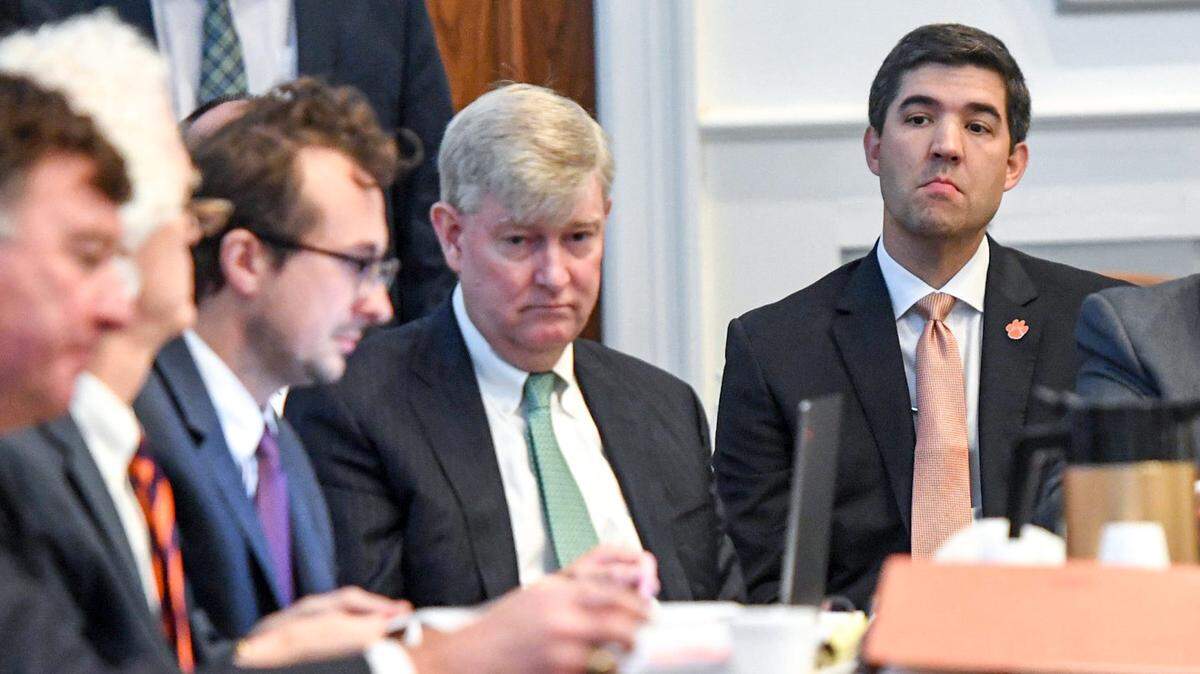
The final cost of Clemson’s legal battle with the ACC is coming into focus.
The university will wind up paying around $3 million in total legal fees after suing its own conference and ultimately agreeing to a settlement, public records revealed.
Given what Clemson achieved in its litigation, though, the money it spent could wind up being a bargain.
As of July 3, four law firms had billed Clemson 44 times for a combined $2,861,653.91, according to invoices obtained by The State.
That $2.86 million covers over 4,200 hours of legal work for an average rate of $669.92 per hour, records show.
Clemson still has a handful of invoices from law firms that must be submitted and paid. But a university spokesman told The State those remaining charges will not drastically change the final total, which will end up at roughly $3 million.
That’s a big number — and some of the money individual lawyers made representing Clemson is notable.
But all indications are that it could be a worthy investment because of the short-term revenue opportunities and long-term flexibility to potentially leave the ACC that Clemson earned as a result of its settlement.
Clemson will not use any taxpayer money to pay for its legal fees, a university spokesman previously said. The school is funding its litigation with a combination of “self-generated” athletic department funds from media rights and ticket sales as well as “unrestricted” private funds from IPTAY, the school’s athletic fundraising arm.
Here’s a closer look at Clemson’s final legal fees — and the potential benefits for the school:
Clemson’s legal bills, split by law firm
Clemson was approved by the S.C. Attorney General’s Office to work with four different outside law firms. Here are their total charges through May 2025:
- Nelson Mullins Riley & Scarborough: $2,040,344.57
- Ropes & Gray: $511,232.80
- Parry Law: $248,045.66
- Willson Jones Carter & Baxley: $62,030.88
Columbia-based Nelson Mullins is responsible for 71% of Clemson’s legal fees to date. The law firm has billed the school for 3,199.8 hours of legal work through April 2025 — that’s 74% of the total hours spent on the case, and 2,600 more than any other firm.
New invoices show that Nelson Mullins billed Clemson for 671.6 hours of work and over $440,000 in a three-month span from January to March 2025.
That was a key period for settlement talks in the dueling lawsuits. Clemson’s board of trustees wound up voting unanimously to settle litigation on March 4.
Behind Nelson Mullins, Ropes & Gray (Boston) accounted for 17% of Clemson’s final legal fees, Parry Law (Chapel Hill, North Carolina) accounted for roughly 9% and Willson Jones Carter & Baxley (Greenville) accounted for just over 2%.
A university spokesman said Clemson is still waiting on final invoices from Nelson Mullins and Ropes & Gray.
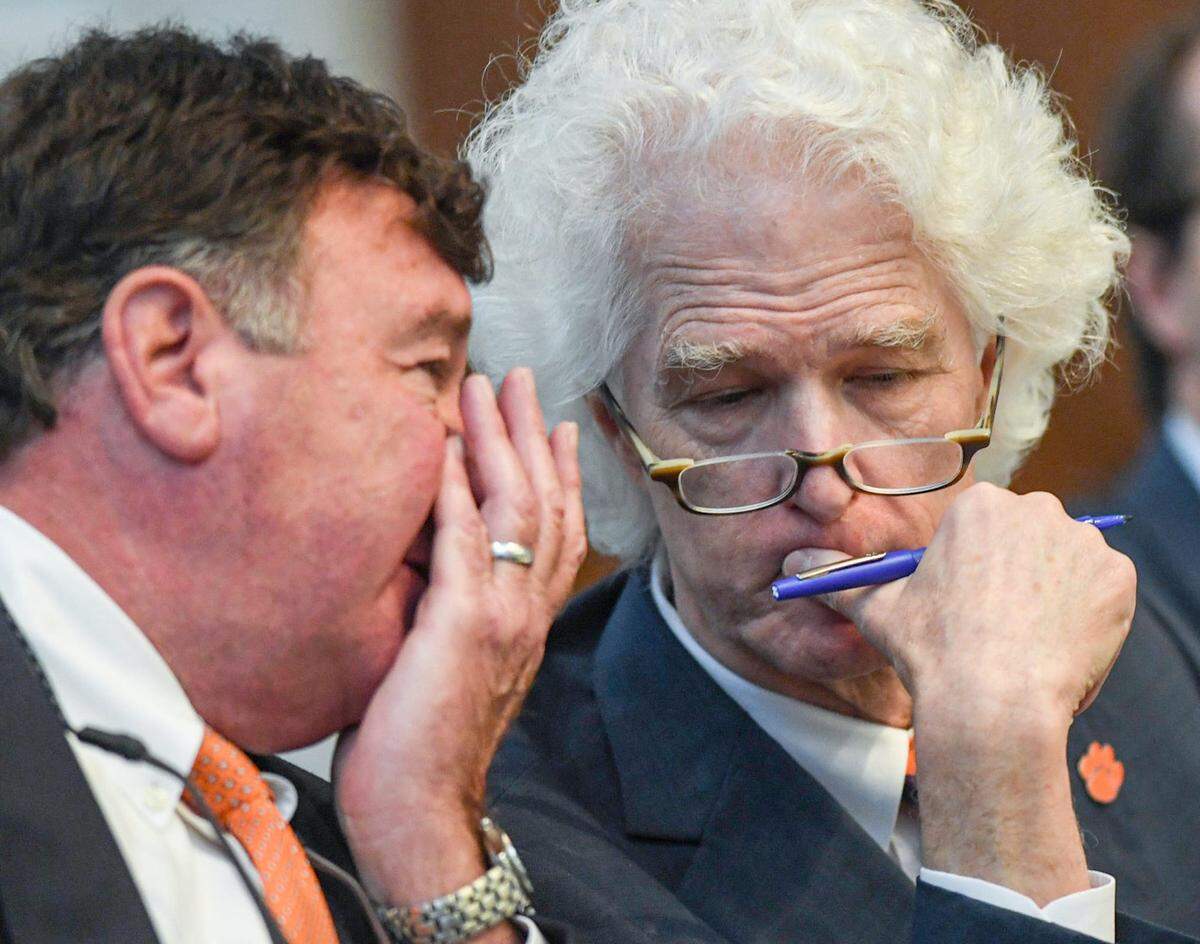
Hourly rates lead to major earnings
Clemson’s invoices provide an inside look at just how lucrative law can be — especially when a lawyer has decades of experience and takes on a long-term case.
Nelson Mullins’ lead trial attorney representing Clemson was David Dukes. Dukes, who has 40 years of legal experience, is also a 1981 Clemson graduate who currently serves on the university board of trustees. He bills clients at $750 an hour.
And Dukes did not work on a hometown discount. Clemson paid him at his full rate for all legal work. Through March 2025, per records, Dukes had logged 920.1 hours of legal work on Clemson’s case against the ACC and earned $690,075.
Clemson’s payments to top attorneys at Ropes & Gray are also eye-opening.
That firm’s senior counsel, Dennis M. Coleman, has been practicing law for 40-plus years, represents a number of major sports clients and bills at $1,700 an hour. John Bueker, a prominent partner at Ropes & Gray, also bills at $1,700 an hour.
Bueker worked 218 hours for Clemson from July 2024 through May 2025 and made $370,600, invoices showed. For context, Bueker made around half of what lead attorney Dukes made ($690,075) despite Bueker working 700 fewer hours.
As for Coleman: He worked 31 total hours for Clemson over the span of eight months and no more than 9.5 hours in any given month — and he still made $52,700.
Splitting invoices
As The State previously reported, Clemson tapped into private funds in order to pay its legal fees while staying within state-mandated spending caps.
The S.C. Attorney General’s Office only authorized Clemson to spend $1.45 million on outside legal counsel from March 2024 to June 2025, records showed.
Clemson got around those limits by using its athletic department funds to pay the approved state hourly rate portion of each invoice and funding the difference on each bill with money from IPTAY.
Updated invoices show that Clemson had been invoiced $1,321,989.91 in public, athletic department-funded money from March 2024 to May 2025, which fell within the spending cap and represented about 46% of Clemson’s final costs.
The remaining 53% ($1,539,664.00) was funded with private IPTAY money.
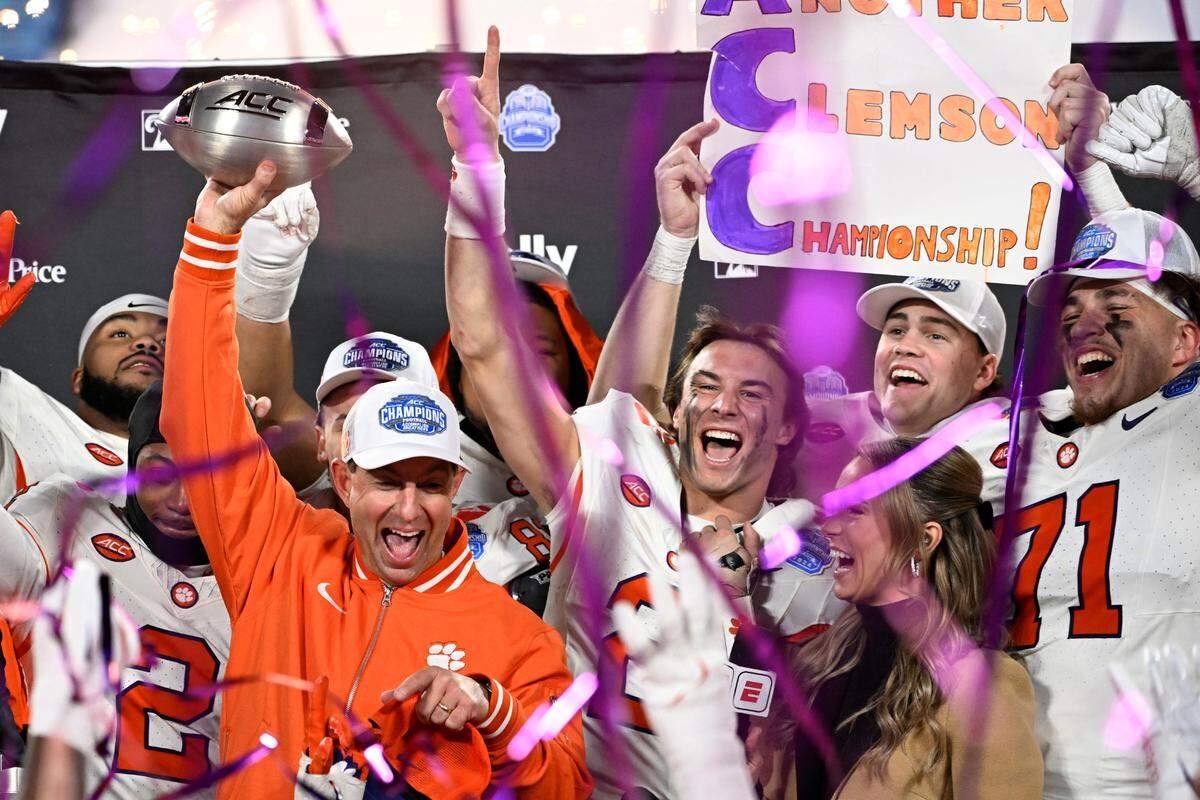
The benefits of suing your own conference
Here’s a simple way to think about Clemson’s legal battle against the ACC:
If the Tigers football team makes the 2025 College Football Playoff, Clemson will immediately earn more money ($4 million) than it spent on the entirety of its litigation (roughly $3 million).
That’s one of a few new revenue streams available to Clemson (and all other ACC schools) as a result of the settlement it agreed to with the conference.
Clemson athletic director Graham Neff told board members in March that the school, because of the settlement, could now earn around $120 million over the next six years — or $20 million in new revenue annually — if it hits various benchmarks regarding TV viewership and football/basketball success.
The ACC’s settlement with Clemson also features various concessions regarding its grant of rights and exit fees, including a year-by-year timeline for what it would cost for any ACC school to leave and specific confirmation that a school leaving the conference would leave with its media rights.
For those reasons, the settlement was already seen as a win for Clemson.
To many observers, Clemson and Florida State’s full settlement with the ACC — obtained last week through a public records request — only cemented that point.
The settlement revealed new details, including the fact the ACC agreed to give Clemson and Florida State individual veto powers over a number of key revenue and realignment policies (which were implemented as part of the settlement).
The settlement document also effectively nullifies the ACC’s old grant of rights and is remarkably “one-sided” in favor of Clemson, one lawyer told The State.
This story was originally published July 8, 2025 at 10:18 AM.