Unmet expectations. Was the Panthers’ project in Rock Hill doomed from the start?
READ MORE
The dream that didn’t come true
Here’s how the Panthers failed project in Rock Hill unraveled.
Expand All
Rock Hill Mayor John Gettys wrote a letter in 2018.
No one knew it then, but that letter was the start of what would be perceived as the city’s biggest success — and ultimately unravel into a huge failure.
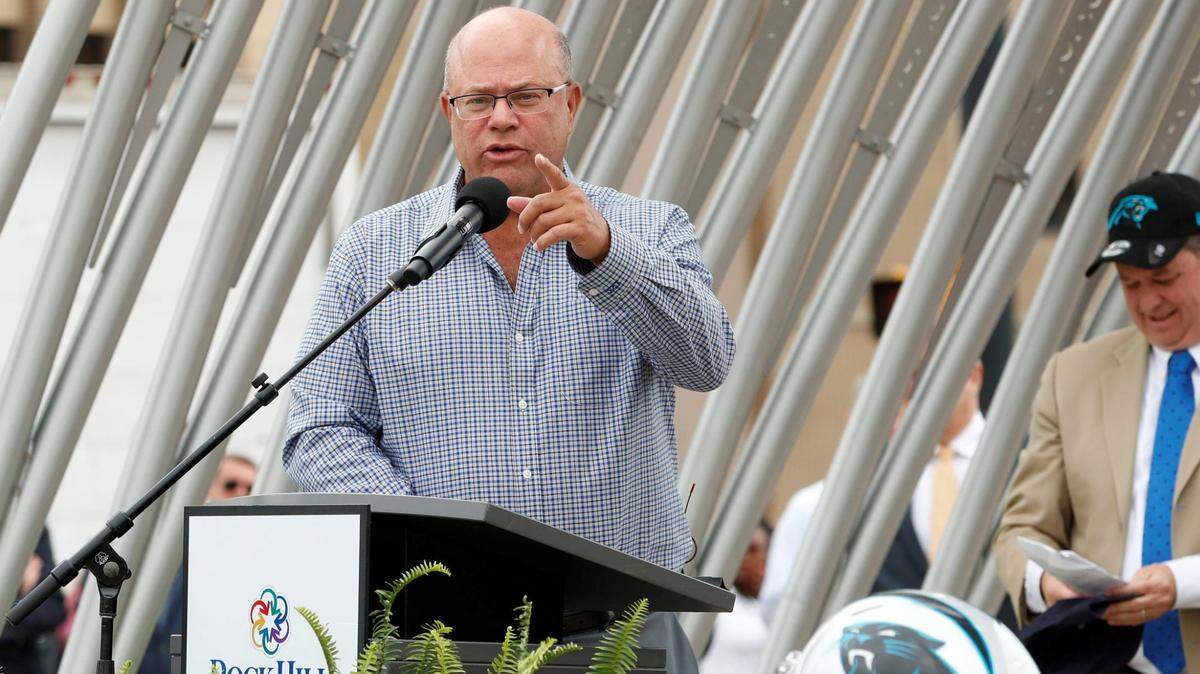
“There are few places in the country that have as high a reputation for competition and sport as Rock Hill,” Gettys wrote in the letter to Carolina Panthers owner David Tepper.
Tepper had purchased the Charlotte-based team for $2.275 billion, the highest sale price in NFL history and, at the time, tossed around the idea of moving the Panthers’ training facilities.
Gettys saw an opportunity.
“We believe an NFL training facility would be right at home here,” Gettys wrote. “Rock Hill has a legacy of producing great NFL players...”
Tepper agreed.
Within months, Gettys’ idea gained momentum.
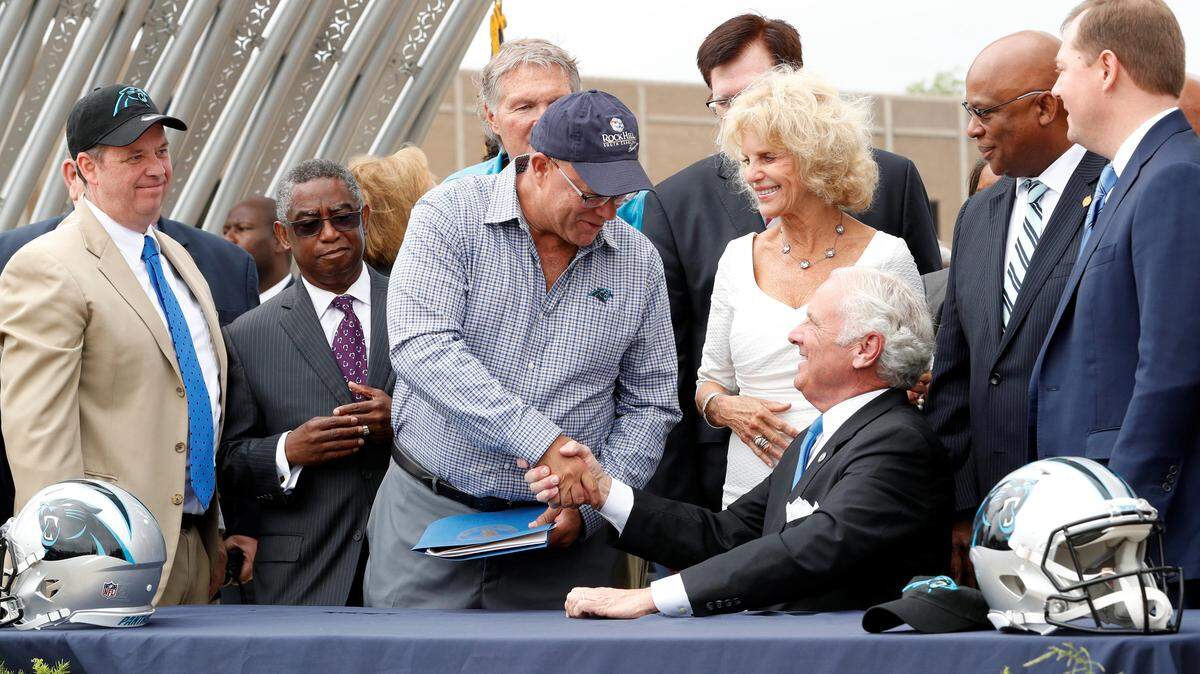
Team representatives hinted at a possible Rock Hill development. The Panthers met regularly with local and state elected officials. South Carolina legislators and Gov. Henry McMaster discussed tax incentives.
York County joined in.
There was a pep rally.
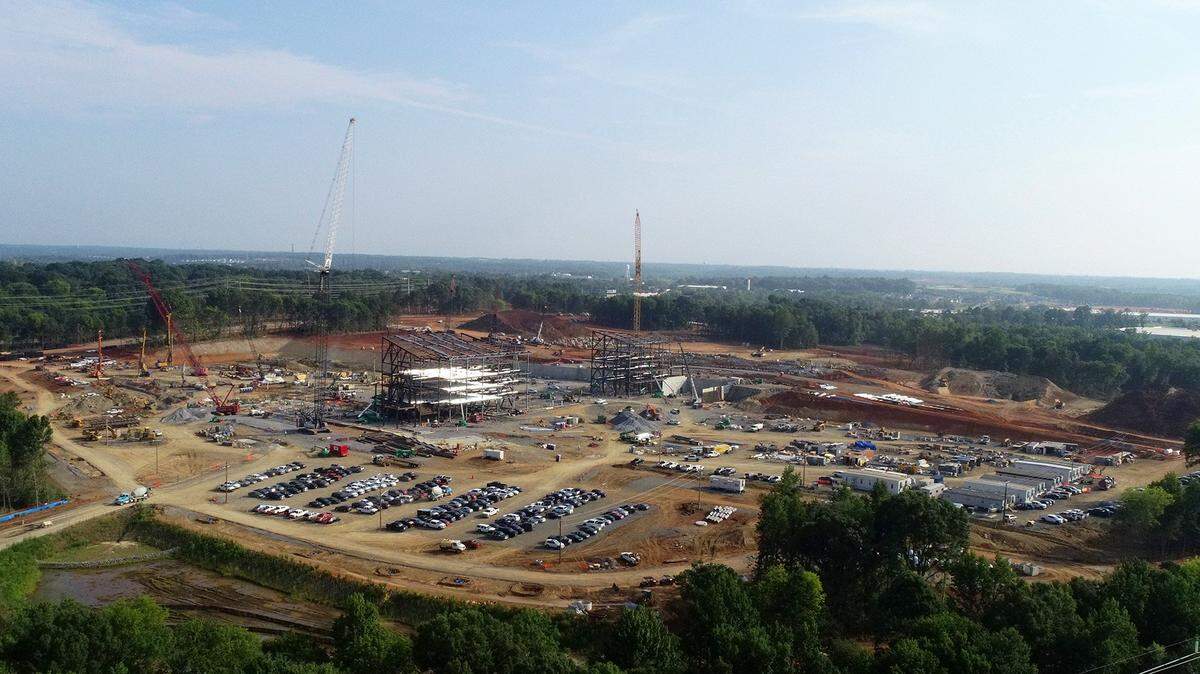
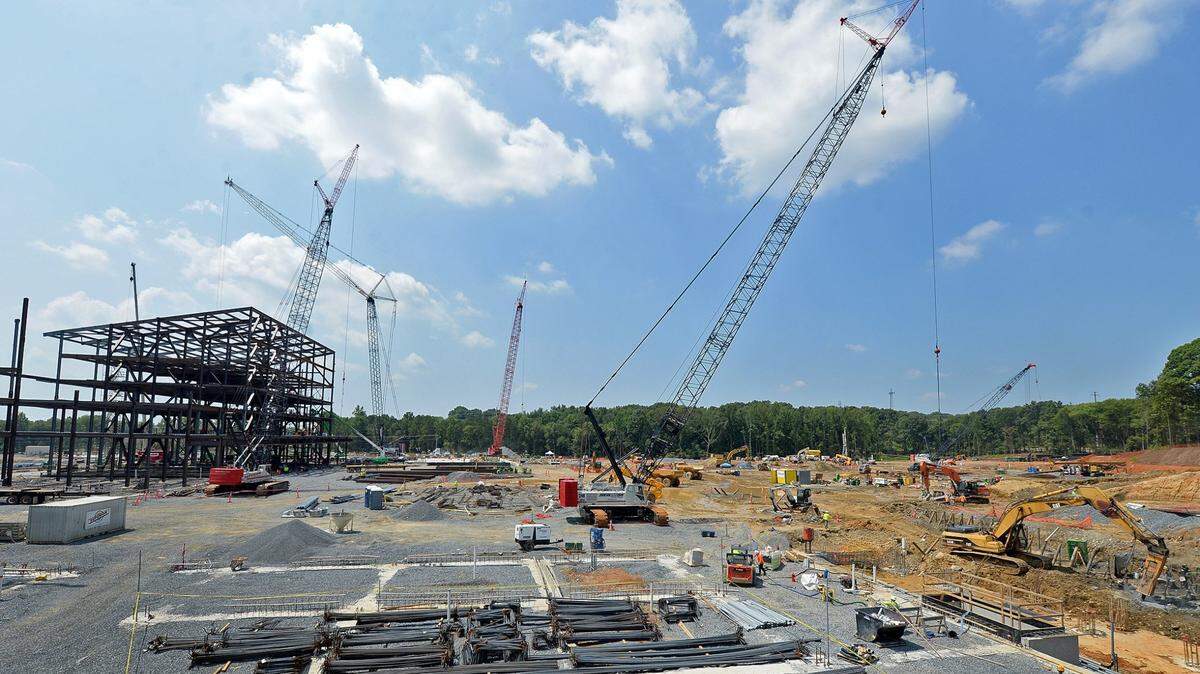
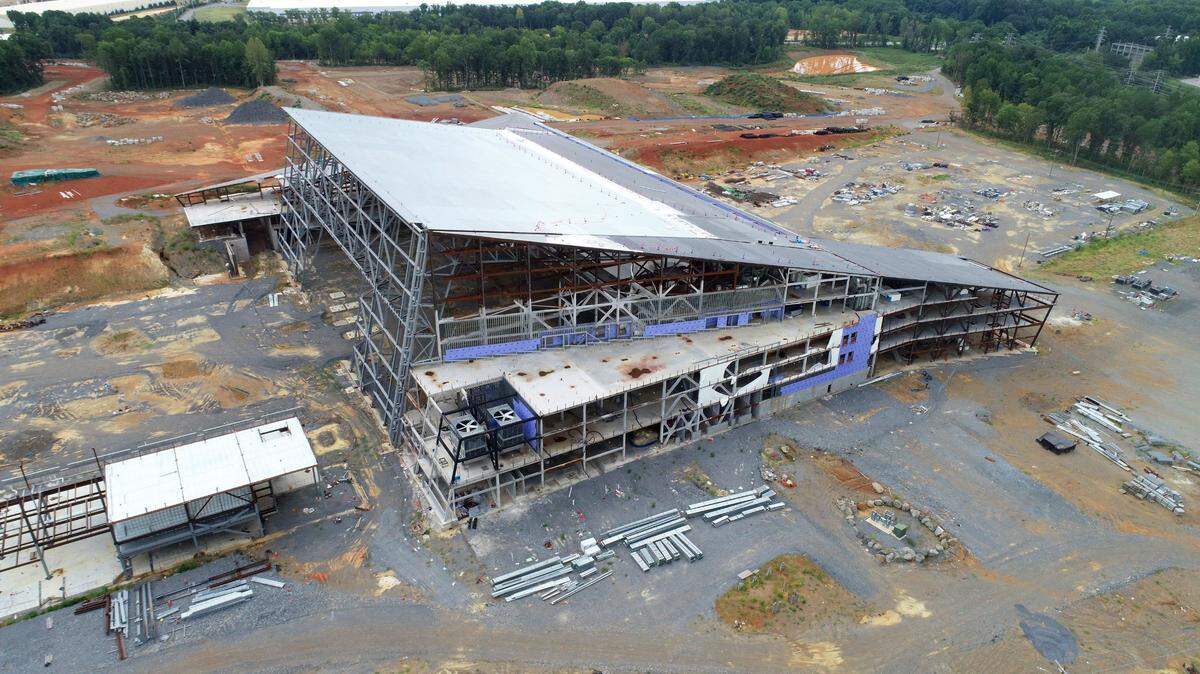
Hundreds of acres of land was sold. Contractors were hired. A new I-77 interchange was approved. A groundbreaking was held and construction started.
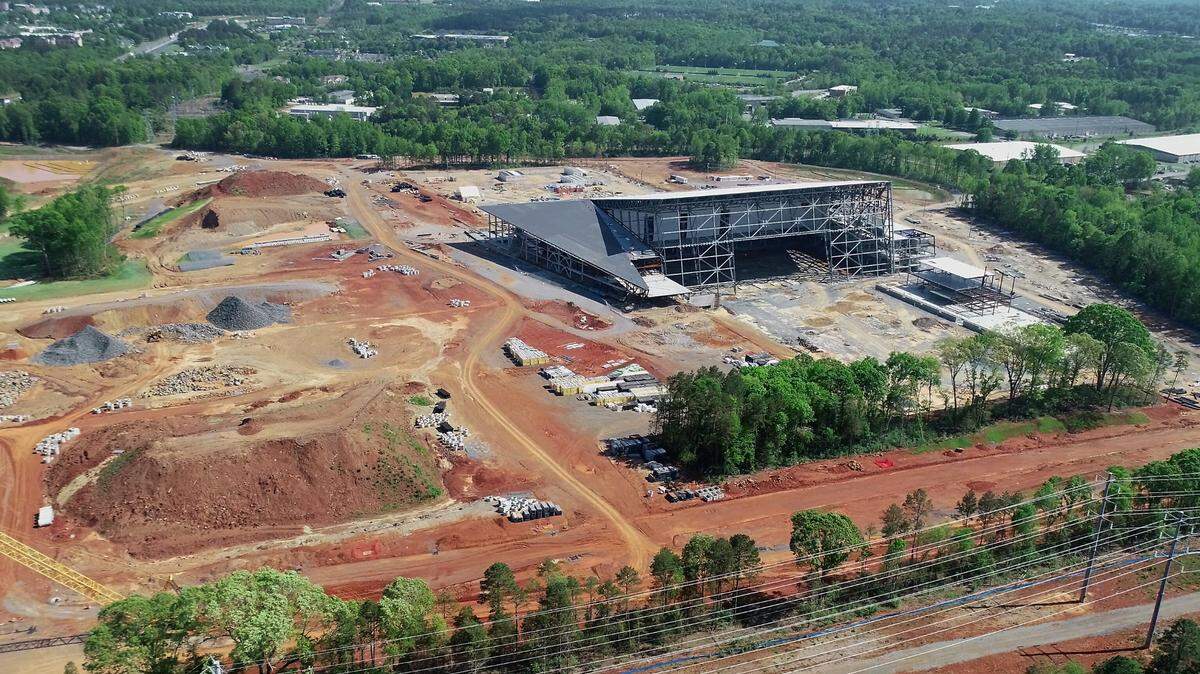
The team’s new headquarters and practice site — 240 acres off I-77, between the Cherry Road and Dave Lyle Boulevard exits in Rock Hill — would be completed in 2023.
Gettys’ letter, it appeared, had worked.
Then, as fast as the idea came together, it fell apart. And who’s at fault remains unanswered.
A pact based on a flawed premise
The site was predicted to be more than a headquarters and practice facility.
Dubbed “The Rock,” the site would include almost four million square feet of development. Design plans showed a 500-seat indoor practice space with 80-foot-tall sliding glass doors that connected indoor and outdoor fields. A small stadium would house events with 5,000 to 20,000 fans — and not just for football.
Panthers’ then-vice president and COO, Mark Hart, said during a virtual community meeting in 2020 that team officials envisioned the new facility drawing dozens of athletic activities, including road races, youth and adult sports and concerts.
There had even been discussions about hosting high school football games and proms, Hart said.
Hotels, restaurants, corporate headquarters and other development would come. An advanced medical facility with world class sports medicine options was part of the vision.
“What we’re going to see, according to the Panthers’ vision, is development on I-77 that is for office space, for corporate tenants, for Fortune 100, 200, 500 companies that we don’t have in Rock Hill — that we would never get in Rock Hill without the Carolina Panthers’ vision coming to Rock Hill,” Gettys told The Herald in a 2021 interview.
However, professional teams have long wielded similar promises associated with new sports facilities — especially those that get public support. The promises include jobs, new spending, tourist attractions and economic expansion, says Andrew Zimbalist, a professor of economics at Smith College.
And more often than not, those promises are empty, he said.
Zimbalist, who has analyzed the economic impact of new stadiums and sports facilities since the 1990s, has argued that most new sports facilities, especially NFL stadiums, have a minimal (and in some instances a negative) impact on an area’s overall economic activity and employment.
“Regardless of whether the unit of analysis is a local neighborhood, a city, or an entire metropolitan area, the economic benefits of sports facilities are de minimus,” he wrote in a 1997 article about his book “Sports, Jobs, & Taxes: Are New Stadiums Worth the Cost?”
The Panthers’ Rock Hill site would have been no exception, he said.
“The practice facility, in and of itself, should not be expected to have any impact whatsoever,” Zimbalist said. “Dan Snyder in Washington tried to charge people to watch practices, and then he was told he can’t do that. I assume there’s no ticket charge here. There’s no revenue per se being generated.”
Still, NFL teams are lucrative ventures and do impact business around them.
Teams are worth billions, according to Sportico’s 2022 valuations of NFL franchises. The Dallas Cowboys topped the list at over $7 billion, followed by the Los Angeles Rams and the New England Patriots at around $6 billion.
The Panthers’ new practice facility would have been particularly unique because it involved two states, Zimbalist said.
“To the extent that you can move activity that generates revenue from North Carolina to South Carolina — other things being equal — that would have a beneficial effect on the South Carolina economy,” he said. “Usually that’s not what happens. Usually, you’re moving your practice facility 500 yards away, or two or three miles away.”
Teams typically prefer to have their headquarters at their stadium, he said.
“Why are they building an extra set of headquarters?” Zimbalist asked. “That seems duplicative and wasteful. But the more operative question, in this case, is what headquarters activities are actually going to happen there?”
Who would have actually benefited?
If the plan was to move a large number of the team’s employees to the planned Rock Hill site, the project would have had more impact on the state’s economy — not Rock Hill’s, Zimbalist said.
“If you’re talking about 100-150 employees who are going to be working in South Carolina rather than North Carolina, then their income becomes subject to the state tax in South Carolina,” he said. “This isn’t beneficial to the city ... but it could help tax revenue in South Carolina. But I’m somewhat skeptical that that would happen.”
Zimbalist said there are multiple factors — especially the financing — that determine the economic impact of a new sports facility.
“Sometimes the real financing is hidden because the city or the state grants tax exemptions,” he said. “You don’t have to pay property tax for 10 years, and then you only pay 50% for 10 years — stuff along those lines. You have to take all of that stuff into account.”
The Panthers got several exemptions.
The York County Council agreed to give the site a super fee status, Gettys previously told The Herald. All commercial property in South Carolina is typically taxed at 6%. With super fee status, the Panthers project would have been taxed at 4%, he said.
The city agreed to give up 100% of its property tax revenue for the next 30 years to help finance public infrastructure. The county agreed to give up 65% and the Rock Hill School District agreed to give up 75%.
“If somebody is going to make a claim in a particular case that there’s something beneficial economically going on, it is because — and only because — money from outside the area has been brought into the area,” Zimbalist said. “During a typical Panthers’ game on a Sunday, people travel from South Carolina, people travel from Virginia or people travel from other places to go to the game. Then, you’re bringing new money into the area and that can be beneficial.
“To the extent that the Carolina Panthers are getting national television money through the NFL, and that’s being spent in the Charlotte area, that too can have a positive impact.”
But neither of those examples would have applied to the Rock Hill site.
The fight over money
The project came to a halt in March 2022.
The Panthers paused construction due to a financial dispute with Rock Hill. York County’s last-second effort to sink more money into the deal failed. And in April, the team terminated its agreement with the city.
In June, GT Real Estate Holdings LLC, which Tepper specifically created to build the team’s Rock Hill site, filed for bankruptcy in court in Delaware. That was the project’s final blow.
Lawyers soon began seeking money -- allegedly owed from the unfinished project -- on behalf of their clients.
Rock Hill wanted $20 million. York County wanted $21 million. Dozens of contractors, from companies working at the site, wanted as much as $60 million, court documents from the bankruptcy case show.
The onslaught of legal maneuvering in Delaware and South Carolina courts cost hundreds of thousands of dollars in legal fees.
But the high-profile verbal jabs had started long before the legal battle.
A dispute over financial obligation
In May 2021, Hart asked York County for help with infrastructure costs. A letter from Hart stated that expected money from Rock Hill hadn’t come. The city had been expected to issue about $200 million in bonds by October 2020, according to the letter, and an extension into February 2021 had already been missed.
“Unfortunately, the funding for the infrastructure remains at a crossroads,” Hart wrote.
City officials insisted they’d met all financial obligations required under the deal.
City Manager David Vehaun told The Herald in a 2021 interview that there was a higher risk associated with the Panthers’ bonds because, under the agreement, Rock Hill was not required to provide any financial guarantee.
“The people who loan the money that’ll be used to build the roads and the infrastructure out there are doing it with the understanding that there’s no guarantee behind the debt,” Vehaun said. “They’re taking whatever risk they decide is the appropriate amount ... knowing that they’re going to get repaid only from the development as it occurs on site.”
The team unearthed the same dispute when the site’s construction was paused. Tepper Sports & Entertainment, which represents the NFL team, said in a statement in March that Rock Hill has been “unable to contribute the agreed upon investment to fund the construction.”
City officials again disagreed.
“Any implication by the Panthers that the city did not do its absolute and professional best is simply not true,” Gettys said.
According to the financial and construction administration agreement between Rock Hill and GT Real Estate, which The Herald obtained, the city was expected to use its “reasonable best efforts” to issue $225 million in bonds by Feb. 26, 2021.
The agreement stated that the city’s “reasonable best efforts” would not require Rock Hill to “pledge, use or contribute any funds, revenues or assets” to repay the bonds.
Vehaun said in March that despite several requests by the Panthers, the city insisted it would not “backstop” — or guarantee — the debt.
The agreement also stated that the city’s failure to use its “reasonable best efforts” to issue the bonds by Feb. 26, 2021, would result in a default. And GT Real Estate issued a 30-day default notice to Rock Hill a few weeks after construction was halted.
Vehaun said in March that the team delayed Rock Hill’s ability to issue the bonds.
He said team officials failed to provide key information, including development and financial plans, for potential investors. Vehaun said the city was weeks away from issuing the bonds when the Panthers asked the city to stop, and indicated that the team wanted to “try additional things to get the debt issued.”
For weeks, Tepper refused to speak about the matter.
But he made his message clear when the team terminated its agreement with Rock Hill over the project.
The court battle begins
In June, Tepper’s lawyers were the first to fire their legal cannons.
His lawyers claimed in court that GT Real Estate had no money after the failed project, and needed another of Tepper’s companies to lend it $20 million to pay the bankruptcy court administrative costs.
His lawyers also claimed Tepper’s companies had millions of dollars invested in the project, court documents show.
The hearings had so many lawyers present that they couldn’t all fit at the courtroom’s tables. Many sat in the gallery.
Mike Roeschenthaler, lead lawyer for general contractor Mascaro/Barton Malow, ripped Tepper and the Panthers in early court hearings. Mascaro/Barton Malow claimed it was owed tens of millions of dollars.
GT Real Estate claimed the team itself had nothing to do with the fact that there was no money.
At one point, Roeschenthaler displayed in court a check for millions of dollars the team had paid Mascaro/Barton Malow during construction. He demanded to know why the Panthers were paying contractors millions if the team had nothing to do with the project.
Roeschenthaler said the proposal that one of Tepper’s companies would loan money to another would be the worst case of insider dealing in the history of American courts .
“Every aspect of this case has the fingerprints of a David Tepper controlled entity,” he said in court in June.
Tepper’s lawyers said no one else was willing to lend GT Real Estate as much as carfare to pay for the administration of the bankruptcy case.
So the judge approved the $20 million loan. But it paid only for the case — not the debtors.
Settlement, then no settlement
Lawyers for York County and Rock Hill went after Tepper and his companies. York County filed a lawsuit a week after GT Real Estate filed for bankruptcy.
The county filed its lawsuit against Tepper’s companies, including Appaloosa Management, DT Sports Holding and Tepper Sports Holding. The lawsuit described the project as Tepper’s failed “vanity project,” and said $21 million in road tax money had been misused. It also claimed Tepper tried, but failed, to re-work the project in early 2022.
After a couple of months of wrangling, GT Real Estate in August agreed to make $82 million available to resolve creditor claims. The contractors would get $60 million. York County would get $21 million and Rock Hill would get $20 million when the site of the failed project had been sold.
A deal seemed possible.
Then, York County filed a lawsuit in late August, this time against GT Real Estate. York County alleged that the company “squandered” its $21 million, and demanded $81 million, which included lost future tax revenues.
York County claimed the road tax money could be used only for road improvements, but GT Real Estate threw it in the pot of money for construction.
A week later, the city of Rock Hill filed its own lawsuit.
Rock Hill claimed the company breached its contract with the city through “fraud” and “dishonesty.” For the first time, Rock Hill asserted that it had no legal requirement to issue millions of dollars in bonds.
Rock Hill, in its lawsuit, also did something no other entity had done. The city claimed it was ready to issue the bonds, but Tepper’s company told Rock Hill to hold off. The city also claimed Tepper couldn’t find an anchor hotel and hospital tenants for the project, and his companies tried to scale the project back.
The case got personal
The bankruptcy case revealed a side of the project no one had seen.
Local and state officials for years decorated the project as a huge success.
The lawyers’ claims — from all sides — were new and impacted how people, who were still trying to discern which party was at fault, saw the project.
Tepper’s lawyers denied all the claims and fired a legal bomb.
GT Real Estate pulled its $82 million offer off the table.
The company, in court documents, called the city’s claims “preposterous.” Tepper’s lawyers, in court documents and hearings, said GT Real Estate no longer owed anything to Rock Hill and York County.
The contractors, who had reached a $60 million settlement deal, would have to wait for the city, the county and Tepper to fight it out.
Rock Hill lawyer’s issued subpoenas for Tepper himself. The city wanted to know what Tepper knew and when he knew it.
All sides filed flurries of documents against one another and blamed each other. The case appeared to be headed for a very public trial.
Yet, behind the scenes — and sometimes in court — a deal was being worked out.
The contractors made it clear they wanted their money — soon.
Donald Detweiler, a lawyer for a subcontractor, said in what may have been the simplest terms uttered during six months of court hearings: “They (GT Real Estate) owe us money. It’s time to pay.”
In early November, Rock Hill agreed to a $20 million settlement with GT Real Estate. The lawsuits between the city and GT Real Estate would go away.
York County, which was asking for $81 million, still had nothing.
The sides argued in court about turning over tens of thousands of documents, emails and other communication.
In December, York County and GT Real Estate worked out a settlement. The lawsuits against each other would be dropped. And the county agreed to take back allegations made in the lawsuits, documents show.
Rock Hill and York County agreed to support a bankruptcy confirmation hearing on Dec. 14.
GT Real Estate lawyer Stephen Moeller-Sally said in court that the settlement was a “complete and global settlement of all claims.”
GT Real Estate acted in good faith in the negotiations, Moeller-Sally said.
“This was an extraordinary action taken by the debtor (GTRE) at no cost to creditors,” Moeller-Sally said.
Unfinished business
The project’s blame game later took a turn to a different area of the law.
The South Carolina Law Enforcement Division acknowledged publicly that it was investigating the money York County gave GT Real Estate for the project and how it was used.
The York County Sheriff’s Office, along with 16th Circuit Solicitor Kevin Brackett’s Office and the state’s Attorney General, asked for the probe into the $21 million that allegedly could be used only for roads.
GT Real Estate, in a statement, said the county’s funds “were handled consistent with the terms of those contracts.”
The sheriff and SLED said the investigation in no way implies wrongdoing. They acknowledged again on Dec. 8 that the investigation remains ongoing.
Settlement reached; no blame assigned
During a court hearing in June, one of Tepper’s lawyers, Chris Shore, said: “We are going to get into who was at fault at a later date.”
That didn’t happen.
No side has ever discussed in court who was at fault for the project’s failure.
The contractors will start to be paid in the coming weeks. The money that was argued about — Rock Hill’s $20 million and York County’s $21 million — ended where it started.
There’s no Panthers practice facility or headquarters in Rock Hill.
Despite the outcome, Gettys’ letter, which is still posted online, is a reminder of that optimistic time — and the unmet expectations.
This story was originally published January 11, 2023 at 8:23 AM with the headline "Unmet expectations. Was the Panthers’ project in Rock Hill doomed from the start?."


121322.jpg)