
SC Supreme Court strikes down Columbia mask mandate for schools as COVID surges
READ MORE
COVID-19 mask news in Midlands schools
Curious to learn what local schools are doing about face masks as COVID-19 rises in South Carolina? Here’s a roundup of the latest updates from elementary schools to universities around the state.
Expand All
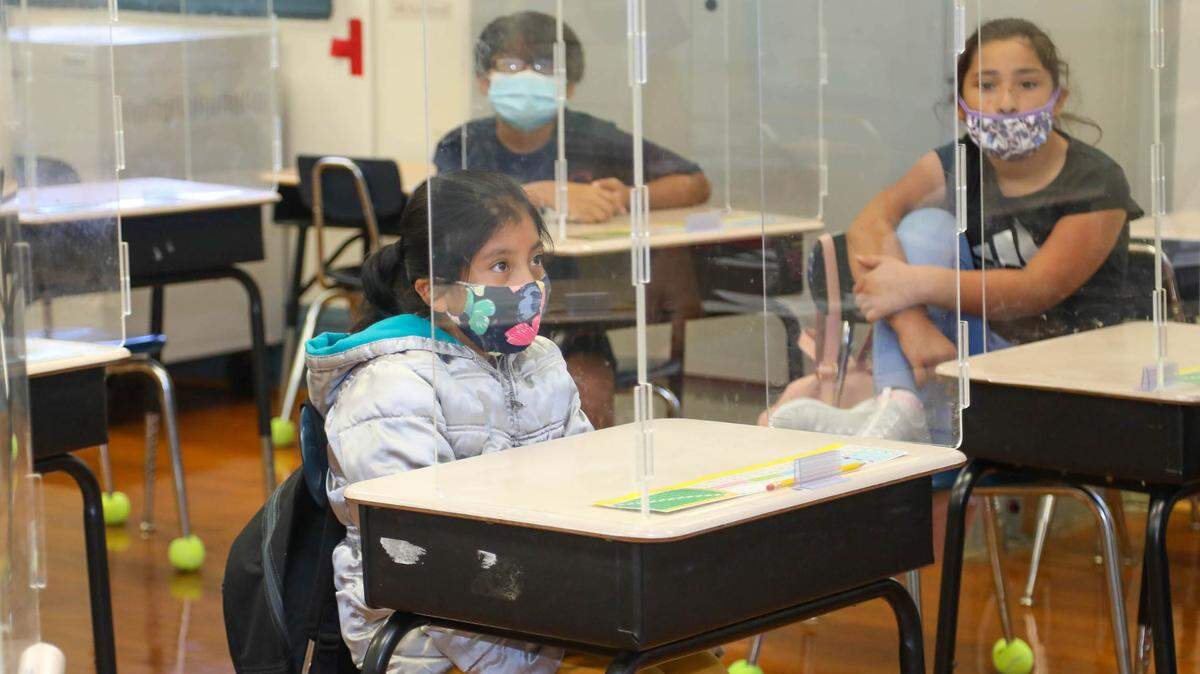
The city of Columbia cannot require children to wear face masks in the city’s public schools and day care facilities.
That was the upshot of a ruling Thursday afternoon by the S.C. Supreme Court, which said a city emergency ordinance, passed last month, was in clear conflict with a state law. And in this case, state law prevails, the high court said.
On Aug. 5, the city issued an emergency ordinance requiring masks in elementary and middle schools, as well as day cares. It said the intention was to protect children — especially those under 12, who are not eligible to take a vaccine — against the spread of COVID-19, which is transmitted in people’s breath.
On Aug. 19, Attorney General Alan Wilson filed a legal challenge to the city’s law in the state Supreme Court, saying the city’s ordinance, though well intended, could not trump a state law to the contrary.
The result of the Supreme Court’s 14-page ruling against the city was unanimous, but several justices added their own explanations of the opinion.
“In this declaratory judgment action, the Court finds the City of Columbia’s ordinances mandating face masks in public schools that serve grades K-12 are in direct conflict with Proviso 1.108 of the 2021-2022 Appropriations Act,” the state’s highest court said in a summary of its decision posted on the court’s internet site.
The proviso referred to was passed in late June by the General Assembly. It declared no state funds could be used to enforce mask mandates in public schools. In late June, COVID-19 infections seemed to be decreasing.
During arguments in the Supreme Court on Tuesday, Chris Kenney, a lawyer for the city, said city inspectors — and not school officials — would be in charge of educating students about masks and implementing the mask mandate in city schools.
But the Supreme Court decision rejected Kenney’s argument, saying that not only teachers, but other school employees — all paid for by state funds — would have responsibility for enforcing the mask mandate.
“The notion that City employees would infiltrate the schools and, without any assistance from school personnel and without a penny of state funds, would be able to mandate masks and impose civil penalties for violations strains credulity and, in fact, is demonstrably false, as proven by the terms of the ordinances themselves,” the decision said.
During Tuesday’s arguments, and in their Thursday opinion, justices noted the issue was controversial and stressed their ruling was about the law, and the law alone.
“We fully recognize that strong and passionate opinions exist on both sides of this debate,” the opinion said. “Yet, we must remind ourselves, the parties, and the public that, as part of the judicial branch of government, we are not permitted to weigh in on the merits of the face mask debate. Rather, we are a court that is constitutionally bound by the rule of law — specifically, separation of powers — to interpret and apply existing laws; we do not, and cannot, set public policy ourselves.”
In a statement after Thursday’s ruling, Attorney General Wilson also called attention to the importance of following the law.
“The Court emphasized what we’ve been saying all along, that we are not arguing mask policy, we are arguing the rule of law. The Court has confirmed that a city ordinance cannot conflict with state law,” Wilson said.
Columbia Mayor Steve Benjamin was disappointed in the court’s decision but said the city will “always act to preserve and protect the health and safety” of the city’s children.
“This is a sad day for children in South Carolina,” the mayor said. “What is even sadder is the people who have been elected to protect them, who should always and only act to keep them healthy, educated and alive, won’t fight for them. With record numbers of our children falling ill to this deadly virus, we pray for our children.”
Children increasingly sick
Dr. Deborah Greenhouse, a Columbia pediatrician who has spoken out about the importance of masks, said she appreciates the justices’ focus on the law but the decision leaves a growing number of school-age children vulnerable to COVID-19, a respiratory disease.
South Carolina’s four major children’s hospital’s — in Columbia, Greenville, Charleston and Florence — called the Children’s Hospital Collaborative, are reporting increasing numbers of children with COVID-19 in their wards.
On Thursday, Greenhouse said, the Collaborative reported that COVID-19 had put five children on ventilators, 13 in intensive care units and hospitalized 35 more. Those numbers are sharply up from a month ago, she said.
At-large City Councilman Howard Duvall, the former longtime director of the state Municipal Association, also was disappointed by the court’s ruling.
“I am sorry that the court took such a narrow view of this important issue,” Duvall said. “I think they are completely overlooking the home rule aspects of it, and the authority, both constitutional and statutory, for a municipal government to protect the health and safety of its citizens.”
Duvall said he remains hopeful the city can do something to increase mask wearing in city schools.
“I think we need to review the ruling of the Supreme Court and see if there is any space available for us to help the school districts protect the ages we were looking to protect, which is age 2 to 14,” Duvall said.
On Aug. 5, at the urging of Benjamin, the Columbia City Council approved by a 5-1 vote an emergency ordinance requiring masks be worn at day cares, elementary and middle schools in the city limits. The city also released a list of 43 schools inside the city limits that fell under the mask mandate.
City Council members noted children faced a “perfect storm” of health threats caused by COVID-19 and that as more children and others were diagnosed, capacity at the city’s major hospital complex, Prisma Health, was being strained.
On Aug. 19, Wilson filed suit with the state Supreme Court, saying the Legislature had specifically said that state funds cannot be used in connection with mask mandates in public schools.
“Although we recognize that the city is acting out of genuine concern about the spread of the COVID-19 virus and its variants, it cannot do so contrary to the law of this state,” Wilson’s suit said. “The proviso is quite clear that masks are not to be mandated by government for the schools of this state.”
Thursday’s ruling was the second Supreme Court decision in weeks concerning mask mandates. In an Aug. 19 decision the high court ruled unanimously that the University of South Carolina had the right to require students and teachers to wear masks on campus. The budget proviso that applies to public schools did not apply to the state’s public universities, the court said.
Since Wilson filed his lawsuit against Columbia, the spread of COVID-19 infections in South Carolina has gotten worse. The state is now among the nation’s leaders in new weekly COVID-19 infections. South Carolina also has one of the nation’s lowest vaccination rates.
The Centers for Disease Control and Prevention has said wearing masks, along with social distancing, good ventilation and vaccinations, are all ways to stop the disease from spreading, especially when all techniques are used together.
Parental rights?
Shortly after the Supreme Court’s decision, S.C. Gov. Henry McMaster tweeted, “The S.C. Supreme Court has come to a sound conclusion based on the rule of law — a parent’s right to decide what’s best for their child is now definitively protected by state law. I would again encourage anyone eligible to receive the vaccine to get vaccinated.”
In its Thursday decision the Supreme Court called attention to the Legislature’s having given precedence to parents’ rights when it comes to masking children during a pandemic over any effort by public health authorities to impose requirements.
“The state legislature has elected to leave the ultimate decision to parents,” justices said. “Conversely, the City of Columbia has attempted to mandate masks for all school children by following guidance from the Centers for Disease Control, which has the effect of disallowing parents a say in the matter.”
McMaster is one of several Republican governors — including Gov. Ron DeSantis of Florida and Gov. Greg Abbott of Texas — who have taken the position that parents, rather than public health authorities or local school boards, should decide whether children should wear face masks in public schools.
On Tuesday, the State Supreme Court also heard a second challenge to the Legislature’s mask proviso and the idea that parents should be the deciders on masks from the Richland 2 school district and an Orangeburg County parent. But shortly before 5 p.m. Thursday, the court had issued no decision in that case.
The unanimous opinion was written by Associate Justice John Kittredge and joined by Associate Justice John Cannon Few.
The other three justices concurred with the result of Kittredge’s opinion but wrote separate opinions.
Associate Justice Kaye Hearn, joined by Chief Justice Don Beatty, wrote that Kittredge’s majority opinion wrongly injected politics into the matter by needlessly bringing up the hot-button issue of “parental choice.”
“The majority characterizes this conflict as a debate between parental choice and government mandates,” wrote Hearn.
“Nowhere in the Appropriations Act is the verbiage ‘parental choice,’” Hearn wrote. “The Attorney General mentions the concept only once, and yet the majority uses it five times. Neither the Attorney General nor this Court has the authority to create legislative policy. This Court should not, through its language, construct a binary which, in my view, puts an unnecessary political gloss on the issue before the Court.”
Hearn continued, “Regardless of the motivations or how one frames the policy issue, the Court’s sole responsibility in this case is to decide whether the City’s ordinances conflict with Proviso 1.108, which they unmistakably do. Our responsibility stops there.”
Kittredge in turn objected Hearn’s charge that the majority improperly injected the term “parental choice” into its opinion, and he called her out by name in a footnote on page 3 of the ruling.
“Justice Hearn characterizes the role of parental choice in the legislative policy debate as ‘political gloss.’ This characterization is completely and utterly incorrect,” wrote Kittredge. “The role of parental choice in that debate is a fact.”
Associate Justice George “Buck” James, in his concurring opinion, said he “wholeheartedly concurred with the majority” but wanted to stress that the court must remain neutral in the politically heated current debates over mask wearing.
In a long paragraph, James criticized extremists on all sides of the mask debate, saying, “respectful and productive public debate has been drowned out by people who cast those with opposing views in pejorative terms too numerous to list.”
James added, “In spite of the explosion of public opinion on masks and mask mandates and the sometimes unfortunate manner in which these opinions are expressed, our focus and our authority are limited to applying the law.”
Joe Bustos contributed reporting.
This story was originally published September 2, 2021 at 2:29 PM with the headline "SC Supreme Court strikes down Columbia mask mandate for schools as COVID surges."