Women in politics: South Carolina has the fewest female state senators in the nation. Here’s why.

READ MORE
Women in politics
South Carolina set a record with six “sister senators.” Now it has two. Columnist Matthew T. Hall asked why.
Expand All
Sexual harassment is alive and apparently welcome at the South Carolina Statehouse. The $3 sign suction cupped to the window of the six-wheel truck that new state Sen. Tom Fernandez parked in the Statehouse garage on his first day last week said: “My other ride has huge boobs.”
Instead of apologizing to those he offended, Fernandez told FITSNews, “What, are they jealous? My wife has an F-cup and theirs are flat? I’m sorry you don’t have as much fun as I do.”
There should be no place in leadership or the working world for such a juvenile sign or appalling retort, but seeing the display at the Statehouse helps explain why South Carolina’s 46-member state Senate will have just two women next session, fewer than any other state in America, after having six in the last session.
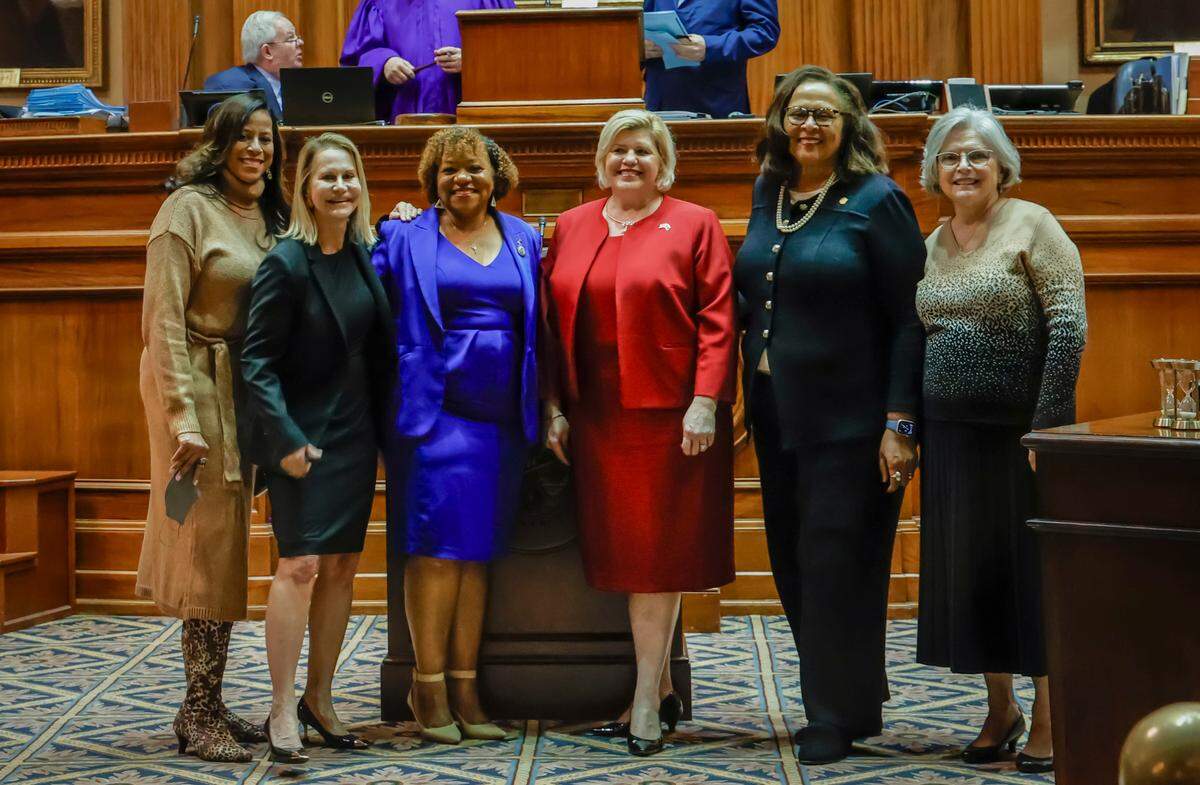
South Carolina’s women make up 51% of its population and 55% of its registered voters but now just 5% of its state Senate — 4.3% to be exact. Women face many headwinds, especially in the South, but this is ridiculous, even for a state that didn’t let women serve on state juries until 1967 and that didn’t ratify the 19th Amendment, which gave women the right to vote in 1920, until 1969.
No state will be near South Carolina’s nadir when its senators begin work next month. Alabama, West Virginia, Louisiana, Arkansas and Mississippi will be closest with 11% to 17%. Every other state will have at least 20% of its state senators — 1 in 5 — be women. Only California, Arizona and Nevada will have female state Senate majorities in a nation with more women than men.
Female representation in houses of representatives of state legislatures is not much better.
There are many reasons: sexism, racism, the negativity of political campaigns, actual threats of violence, low legislative pay, fundraising hurdles like donor limits and disproportionately fewer female business leaders, and childcare and caregiver responsibilities borne far more by women.
Some of these issues are as old as the fight over a woman’s right to vote in the 1800s. An 1895 editorial in The State went well beyond the argument that allowing women to vote would be just.
“We believe that and maintain that to extend the suffrage to taxpaying women is not only just in itself, and an honest safeguard against any possible ‘Negro domination,’ but that it will promote the good order and the purity of elections. Rowdyism at the polls will not be tolerated when the wives and sisters of the men are to visit them; those who think nothing of cheating men out of their votes will hesitate to cheat women.”
Go back and reread that. It’s a lot to unpack. Lynne E. Ford unearthed the century-old logic in 1996 for an article headlined “Women in South Carolina Politics” in the Journal of Political Science that explored why there were so few despite many advancements in women’s rights.
“Women are largely invisible in South Carolina politics,” Ford, an assistant professor of political science at the College of Charleston, wrote then. She said that the problem is most acute at the state level because it’s where “many of the issues of direct concern for women are decided.”
How bad is it overall?
South Carolina has 46 senators and 124 representatives at its Statehouse but has never had total female representation higher than 17%. Here’s how Ford illustrated the problem: “When women’s numerical presence falls below the token level of 15%, they, like other minorities, are constrained in their legislative goals and behaviors and are therefore less likely to introduce and pursue legislation regarding the interests of women, children, and the family.”
That makes representation in the state Senate, where lawmakers serve four-year terms instead of the two-year terms of state representatives, especially important. It’s called the upper chamber for a reason. Senators are generally seen as the adults in a smaller body known more for decorum and mutual respect than the hurly burly of the state House of Representatives.
So what does the future hold? Perhaps a censure for and an apology from Fernandez, who didn’t reply to an interview request. But beyond that?
Sara Ballard is executive director of South Carolina Women in Leadership, a nonpartisan organization trying to get more women to seek and secure political office.
Ballard said men, women and groups like hers should start searching now for strong candidates for South Carolina’s 2025 municipal elections, 2026 elections for state representatives and 2028 elections for state senators because efforts like networking and raising money take time.
Progress will take time, too. But despite obstacles to getting female candidates elected at all levels of government, nearly 2 in 3 of the women on Nov. 5 ballots statewide won, Ballard said.
“No one is going to give it to us,” she said. “We need to work for it.”
Who knows? Maybe the third female state senator is reading this now. And the fourth, and the fifth, and the sixth, and the record seventh. As Ballard said, you won’t be elected because you are a woman. You will be elected because you deserve to be heard and have something to say.
This story was originally published November 20, 2024 at 6:00 AM.