
If Columbia can be bullied, no South Carolina city is safe from coercion | Opinion
Bullies always believe they will get the better of you until they don’t. But standing up for the most vulnerable residents of a city, fighting for a city’s rights to home rule and pushing back against state politicians threatening to take your money or take you to court are why a city has leaders.
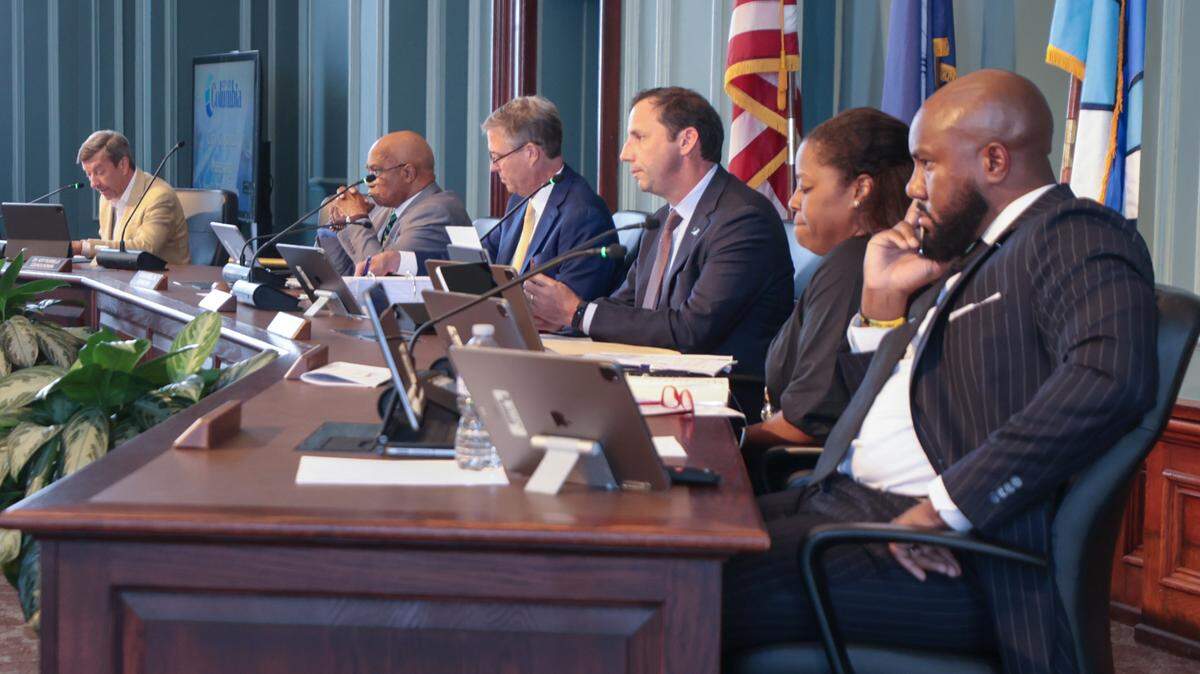
Tuesday, a divided Columbia City Council disappointingly and embarrassingly caved to political, legal and financial pressures, voting to repeal the only conversion therapy ban for minors in South Carolina.
The council’s 4-3 abandonment of principles drew sighs and groans from a crowd who had urged it to resist the coercion. It left members of the city’s LGBTQ community feeling shunned just three days after the annual Outfest celebration in the Vista again drew an estimated 10,000 people to city streets, and it caused Attorney General Alan Wilson to crow.
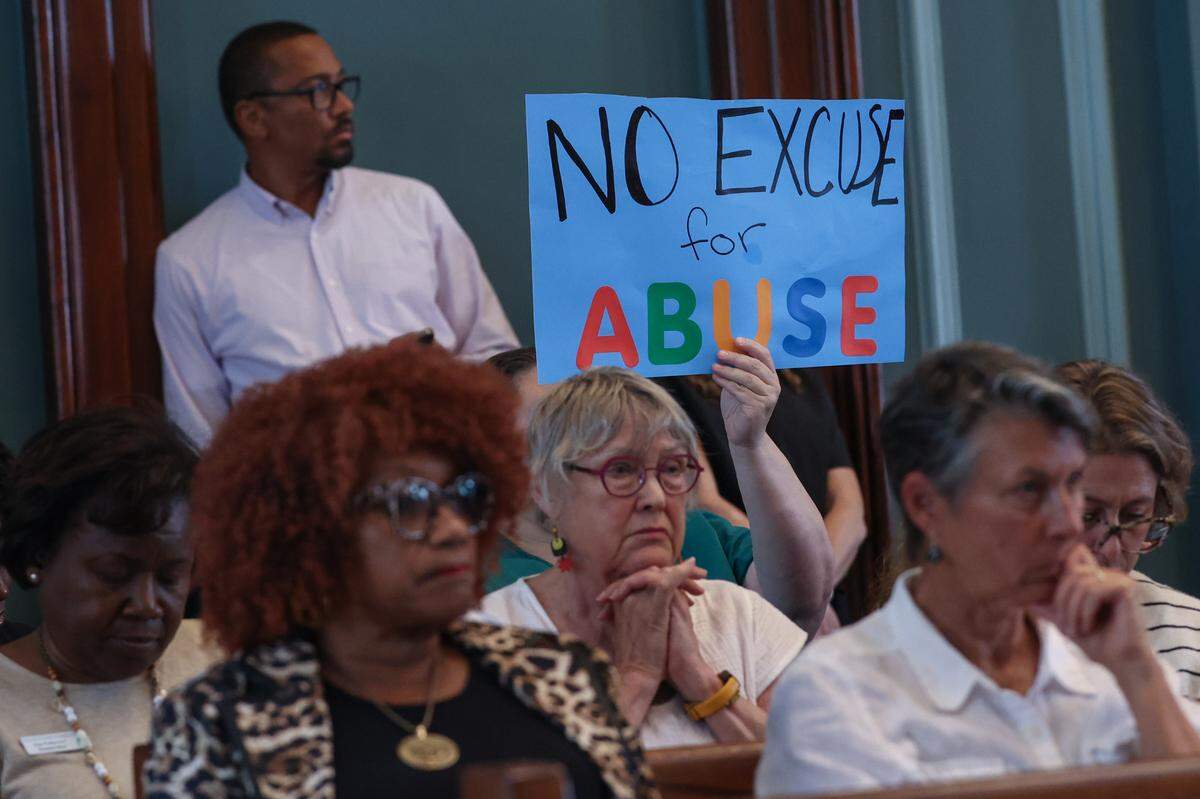
A second vote is required for the council to repeal what has been a brave but divisive law since day one. The question now is whether courage and conviction will trump cruelty and cowardice.
“This ordinance was never truly about ‘conversion therapy,’ but stifling faith-based speech and targeting counselors guided by their religious convictions,” Wilson said incorrectly in a statement shortly after the vote. “Even this initial step is a meaningful victory for faith-based institutions.”
Wilson is wrong. The ban on conversion therapy for minors, which is the widely discredited practice of trying to change the sexual orientation or gender identity of anyone under 18, had nothing to do with religion and everything to do with science and safety. I know because I went back this week and listened to the discussion when the council passed the law 4-3 in 2021.
“There is no word in this ordinance that deals with religion,” then-Councilman Howard Duvall said at that meeting.
“It does nothing to restrict a pastor’s pastoral duties,” he said. “It is clearly aimed at licensed practitioners. Many, most, of the pastors in the state of South Carolina are not licensed practitioners, licensed by the state of South Carolina, as has been stated by several people that did call [into council], and the practice of conversion therapy has been shown to be a terrible practice on young adults. All of the major organizations that license practitioners, whether they’re psychiatrists or philosophers or counselors or whatever, have shown that conversion therapy does not work, and it has a lasting impact on the individuals that go through it.”
Duvall said at the time that he expected the ban to be challenged and that the council was “probably in uncharted territory as far as whether or not the city of Columbia has the authority to pass this.” But, he added, “This is a home rule state, and we have the authority to do what the state Legislature has not told us not to do. And in my opinion, the state Legislature has left this area of regulation on this specific topic up to members of the City Council.”
In 2021, Councilman Will Brennan supported the law. He is the only person who voted for the ban four years ago still on the council, while two people who opposed it at the time remain: Councilman Rev. Ed McDowell and now-Mayor Daniel Rickenmann. Those three and Councilman Peter Brown voted to repeal the law. Council members Tyler Bailey, Aditi Bussells and Tina Herbert voted against it.
I called the mayor Wednesday morning to ask if he was worried about the effects of a repeal on home rule in Columbia and statewide and also on Columbia’s youth. He did not return the call Wednesday
How welcoming is Columbia?
For a brief period Tuesday, it seemed as if the council might do the right thing.
During a roll call on the vote, Councilwoman Herbert opposed the repeal with an impassioned speech that invoked God and the Negro Motorist Green Book, which from 1936 to 1966 in the Jim Crow era informed Black travelers where they could stop without facing discrimination or danger.
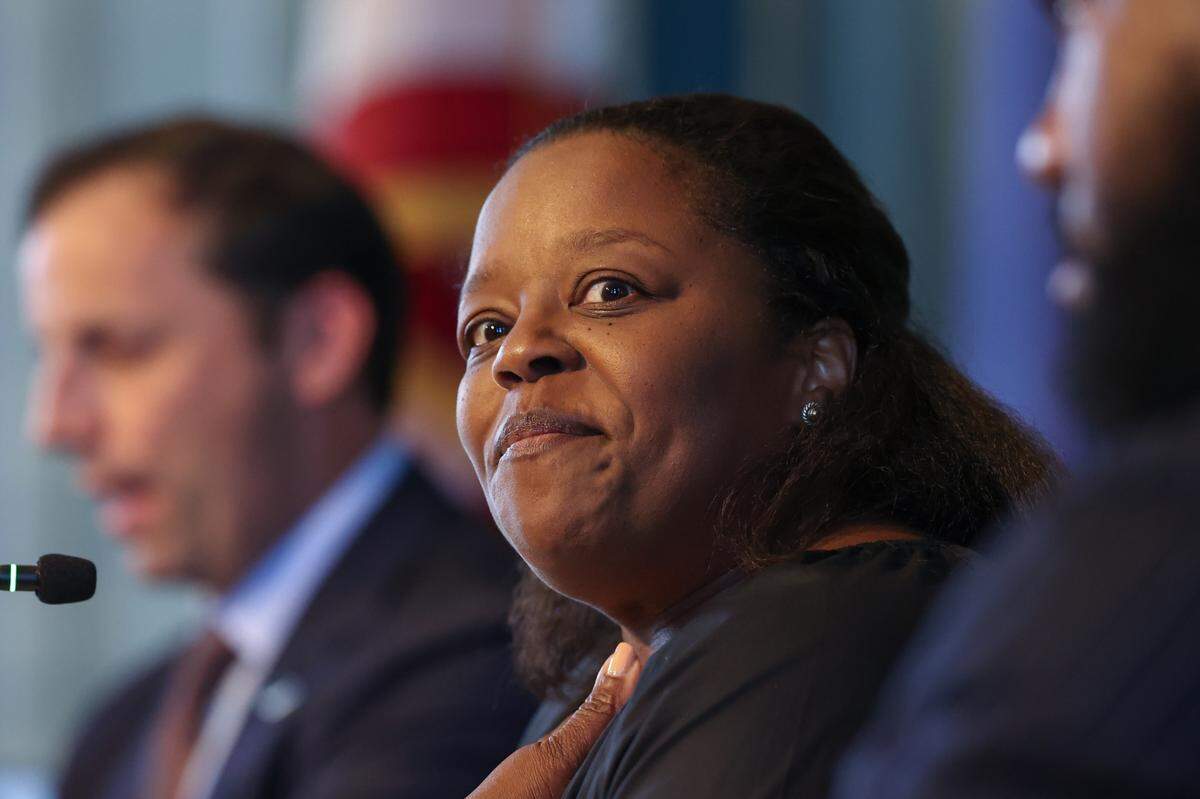
“As a Black female, African American female, growing up in Columbia, South Carolina, born and raised, I know that feeling of walking into rooms and not feeling comfortable,” she said.
“Most of you all know that I have been on both sides of this issue, but I also believe that when you know better, you do better,” Herbert said. “When I did my research, I did not know anything about the Municipal Equality Index. Knew nothing about it. As I read it and I saw that the tool is used by folks in the LGBTQ community to know where to live, I likened it to the Green Book.”
Herbert told the crowd that as a young lawyer, she had worked for the first female African American Circuit Court judge in the state of South Carolina, and they had traveled together.
“Some places we felt welcome, and some places we simply did not,” she told her colleagues. “I can say, today, even as a member of City Council, there are places here in Columbia that I’m not made to feel welcome. … I think it needs to be said and I think it needs to be heard, how people treat you has so much to do with how you see yourself in this space and how you see yourself in this world and where you belong, and I needed to say that. And because my judge is here, and her husband, Judge (Alison) Lee, who I did not ask to be here, and she was a part of my comments, that is my confirmation, yes Lord, that I am doing and saying the right thing.”
It was the most emotional moment of a hearing in which numerous Columbia residents shared personal stories and pleaded with the council not to cave to the extortion of Wilson and state Sen. Josh Kimbrell, R-Spartanburg. Kimbrell had won the backing of lawmakers at the State House for a proviso to withhold state funds from Columbia if the council didn’t repeal its ban.
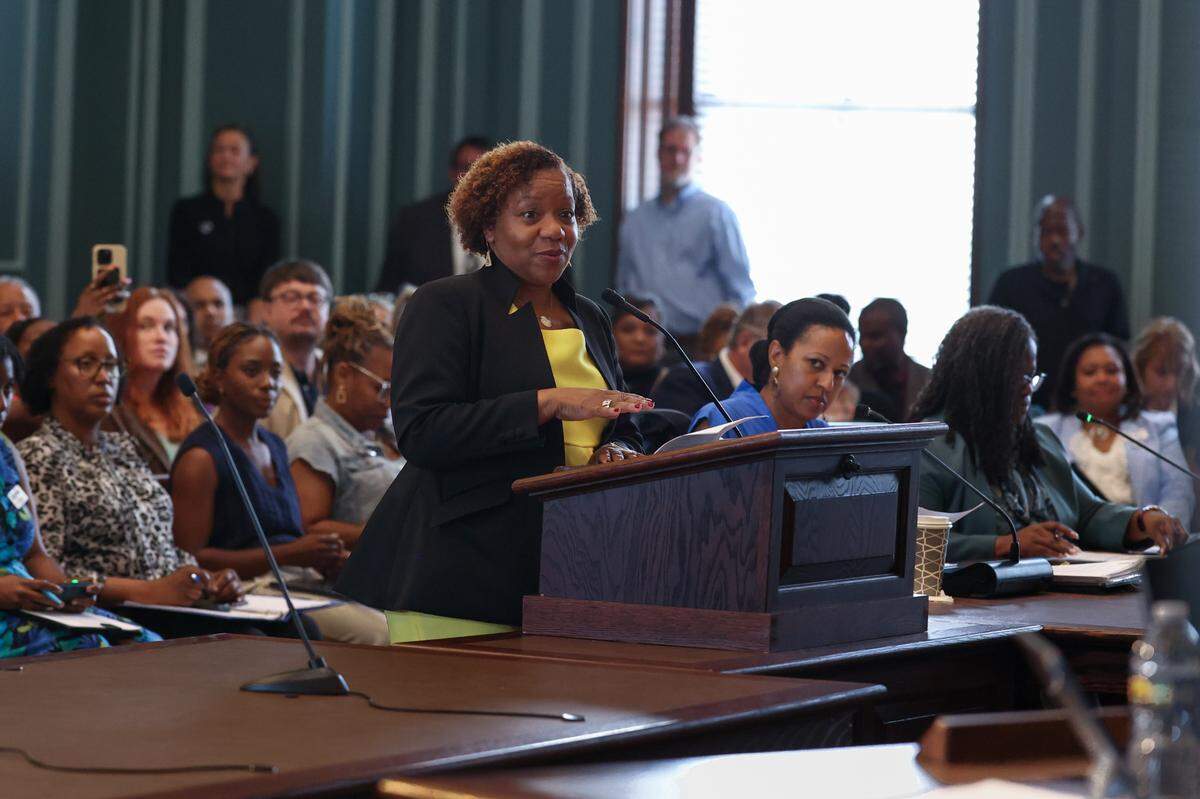
State Sen. Tameika Isaac Devine, D-Richland, who backed the ban as a member of the City Council in 2021, told the council Tuesday that it was being manipulated for “political theater.”
“This is a headline grabber for two men who want to be governor,” she said. “This is not about Columbia but is about their ambition and who can be the strongest person on the right.” She added that she had “spoken to several of my colleagues in the state Senate who have confided in me that had they not thought that the city wanted them to keep the proviso they actually would have voted to remove it from the budget, and that is deeply troubling.”
So much for home rule. The lawmakers voting on this didn’t even have all the facts.
Several speakers noted the money at risk — $3.7 million — was less than 1% of the city budget.
Several others said the council needed to take a stand for home rule to protect not only its own interests but those of other municipalities that the state might decide to steamroll next over any number of issues, from hate crime laws (like one Columbia has but the state refuses to adopt) to local short-term rental regulations (like those Columbia is grappling with now.)
’It all comes down to local’
It was only a few minutes after Councilwoman Herbert spoke that Councilman Brennan sapped the energy from the room. To his credit, at least he tried to explain his change of heart.
But his comments, which I’ll share below in their entirety, raised more questions than answers, starting with why haven’t the things he mentioned been done already and where is a specific plan to do them and why can’t the approach he outlined be done in addition to keeping the ban so many want?
After a month of deliberations and private conversations, Brennan had become the swing vote.
Tuesday, he said his support for the ban four years ago “came from the urging of many to focus on getting the highest score on the Human Rights Campaign’s Municipal Equality Index.”
He went on, “The equality index was designated to help residents, as my colleague mentioned, to learn how inclusive their city’s laws and policies are for LGBTQ+ people. Columbia received a score of 72 out of 100. Charleston received a 70 and Greenville received a 66. Of note, the conversion therapy ordinance was worth a bump in our ratings of two points out of 100.”
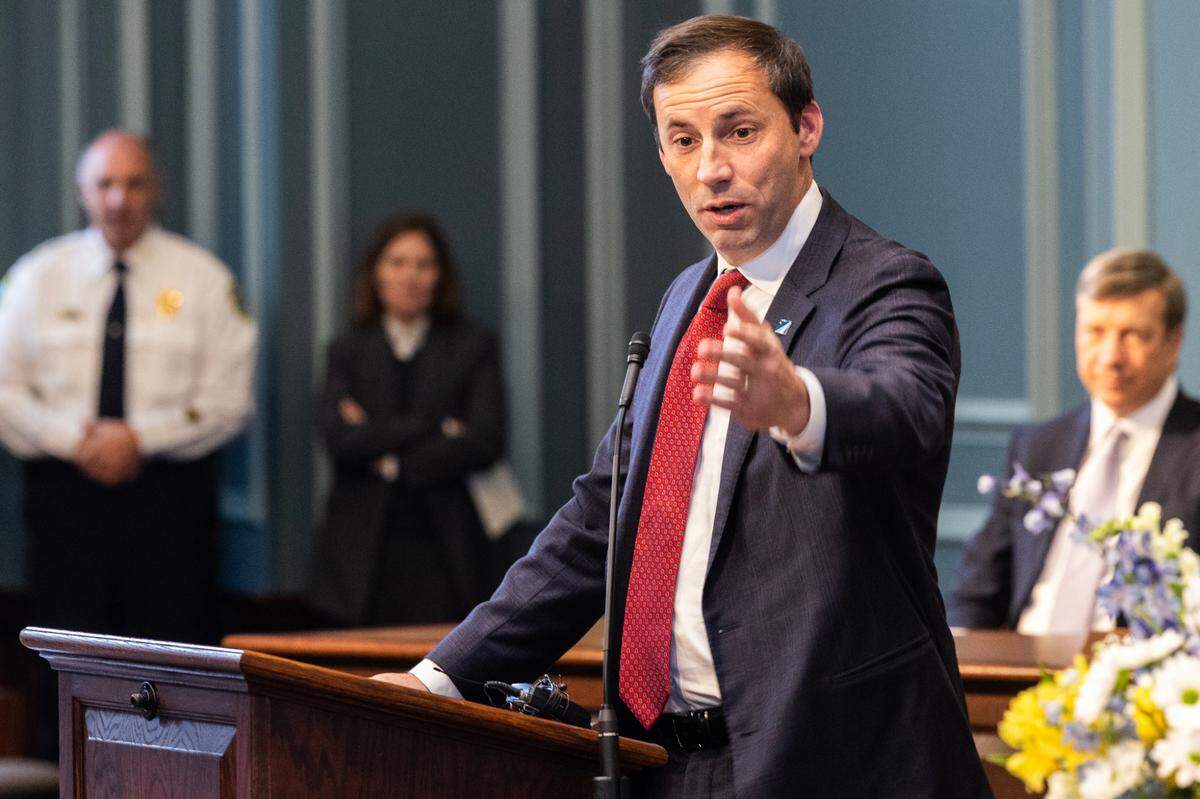
“The calls for staying strong and to keep up the equality index scores continue to come through the push for a repeal of the conversion therapy ordinance,” he said. “But there is truly so much more that I have found that we could be doing as it comes to the index and our quality of life here in Columbia. So many more issues, policies, community outreach, partnerships and trusted networks that we could create and grow to increase Columbia’s score on our equality index.
“Forming a LGBTQ+ advisory council that helps our staff and our Columbia Police Department, growing a network and a culture of safe, reliable resources. More points. Growing our liaison programs within the city and Columbia Police Department to create the safe communities that so many people spoke about during all these public input sessions. More points. There are many other categories to realize more points for us on this index.
“I recognize it has come to the point it is not completely about scoring on an index, but when it’s all considered, the conversion therapy ordinance’s intent is to stop the abuse of our youth. I do believe there’s a better path to working together to be more responsive when abuse reports are heard about, getting to the teenagers to let them know, to show them that there is a wonderful community of welcoming organizations and resources, and a way forward for them is something that we can do to combat the suicide rates that many mentioned in all these public hearings. Helping our homeless youth that have left home and are now on the streets of Columbia know where they can find safety is something we can do with true understood partnerships.
“I also know that all of what I’m saying will be met with, ‘Yeah, but…’ I choose to believe in, ‘Yeah, let’s try.’ At the end of the day, it all comes down to local. And Columbia’s committed to trying to do the best for all of our citizens despite what is happening around us.
“With that in mind, I am voting yes to repeal,” he concluded.
I called Brennan Wednesday morning to ask him what had changed since his support in 2021 to sway his vote seeing as then-Councilman Duvall acknowledged the possibility of a challenge at the time. I wanted to ask Brennan if he is worried about the effects of a repeal on young people and their families in Columbia, to ask if he is worried about the ripple effects on home rule statewide and to ask if he would reconsider his position if he heard from more people before the required second vote.
Brennan, who declined comment May 7 when contacted by a reporter from The State, didn’t return my call Wednesday.
Might he reconsider his position before a second vote? He seems the likeliest candidate.
Clear answer to a conundrum
The council had twice postponed votes on this issue after earlier public hearings, on May 20 and May 28. After the council’s second delay, I wrote that the answer to its conundrum was clear.
I still think it is.
And I think the council is making a mistake by not keeping its ban.
It’s jeopardizing the lives of young LGBTQ community members, putting any number of policies at risk for Columbia and other municipalities that may wind up sparring with the state, and it’s doing this all under the threat of legal action on an issue that the U.S. Supreme Court has said it will decide.
So where does that leave locals who still want a say? Not out of hope.
Columbia residents who respect home rule and the rule of law and expect city leaders to fight for vulnerable people with more than vague promises should email Councilman Will Brennan at will.brennan@columbiasc.gov and CC me at mhall@thestate.com and urge him to reconsider.
I may publish some of the messages I get, and I sure would love to hear if you agree or not.