Great Expectations: Demetris Summers’ story full of promise, pitfalls, second chances

READ MORE
Demetrius Summers: A football star’s rise, fall and rebirth
Expand All
Great Expectations: Demetris Summers’ story full of promise, pitfalls, second chances

High school hero: Demetris Summers’ star status at Lexington grew to epic heights

An unhappy marriage: Demetris Summers’ time with Gamecocks ends with ugly breakup
.JPG)
Drugs, and a different path: Demetris Summers couldn’t be caught. Until he was

Second chances: For Demetris Summers in 2025, regrets and a new path forward
The Demetris Summers story, Chapter 1: A hometown football legend with so much promise, Summers was a convicted drug dealer at age 33. Now 42, he opens up about his past, including getting kicked off the USC Gamecocks, and his hopes for the future.
Demetris Summers is both god and ghost.
He occupies the in-between, splitting the spoils and scars of fame, caught somewhere between legend and letdown.
There are many people for whom he is a myth, a man whose tales grow more grand with each retelling. But for every person who will talk your ear off about the greatest high school football player they ever saw, there’s another who just shakes their head.
Because he screwed it all up. Because before they can revel in his YouTube highlights, they have to scroll past the police mug shot staring at them.
It can be easy to blame his failings solely on his Gamecock career, as if there is a universal response to glory. Take, for example, the differences between the two greatest running backs in South Carolina history: George Rogers and Marcus Lattimore.
On Saturdays in the fall, George Rogers revels in his fame, setting down his Heisman Trophy next to his statue as a line forms for pictures and autographs. Meanwhile, Lattimore lives in Oregon, happily putting 3,000 miles between himself and his college identity.
And then there’s Summers, the man who was supposed to join them in USC glory. Instead, Summers has settled in Irmo, now 42 years old and living between Lexington High School and the University of South Carolina. Between the constant reminders of what was and what wasn’t.

For Summers’ life in ‘The Hill,’ everything was normal
Demetris Terrell Summers grew up in a little section of Lexington informally known as “The Hill.” It is not on any map. It’s also not much of a hill.
It’s more of a gully right off Lexington’s main street, packed with trailers and depleted homes crying out for fresh paint. Intermittently, you’ll see a newer house. Bright paint. Front porches intact. They stick out.
Just outside a trailer on George Street, there is a man sitting in the shade of a big tree. He’s wearing a Carolina Panthers hat, waving to every car that rolls down the road. After a while, he hops on a bike and begins to ride — just before someone stops him.
A big eye patch covers his face. He points down the street, where there used to be a house until it burned down in the late 1990s. Now it’s a white double-wide trailer surrounded by mature trees. That’s where Summers’ grandmother, Marelda, lives. Where the biggest college coaches in America had shown up, often with Rush’s fried chicken in hand.

Summers did not always live with his grandma. He and his older brother, Jacques, grew up in the now-extinct Lakeside apartments with their mother, who was a general manager at Hardee’s. But his mother Jacqueline married Alton Ludley, a Waste Management truck driver, and the couple moved 20 minutes away to Edmond just before Demetris entered high school.
To stay within the Lexington High boundaries and play football for the Wildcats, Summers was forced to move in with his grandma.
“He didn’t want to go with me,” Jacqueline said, “because he didn’t want to go to White Knoll.”
Summers’ father, Preston Leaphart, was in and out of prison throughout Summers’ life. He was charged for criminal domestic violence in 1998 and again in 1999. In 2004, he was sentenced to two years in jail for distributing crack. On and on.
Though there was little gang activity in Lexington back then, Summers said, there were always drugs. Everywhere. And the thing you must know: “Everyone on ‘The Hill’ are cousins,” said Summers’ friend, Brock Mills. “Any block you go to, you’ve got cousins here, cousins there.”
Added Summers: “Weed. Cocaine. Crack. Pretty much everything. I had older cousins, uncles, and all them who did it.”
“You might see them at the store,” said Maurice Lavington, Summers’ older cousin by three years. “They’d give you money for candy and drinks and stuff. I guess, we kind of saw it all our lives, so I guess we thought it was normal — which is strange.”
But Summers had to play football at Lexington. It was only there where he could continue a lifetime relationship with the man who would become his father figure, legendary high school coach Jimmy Satterfield.
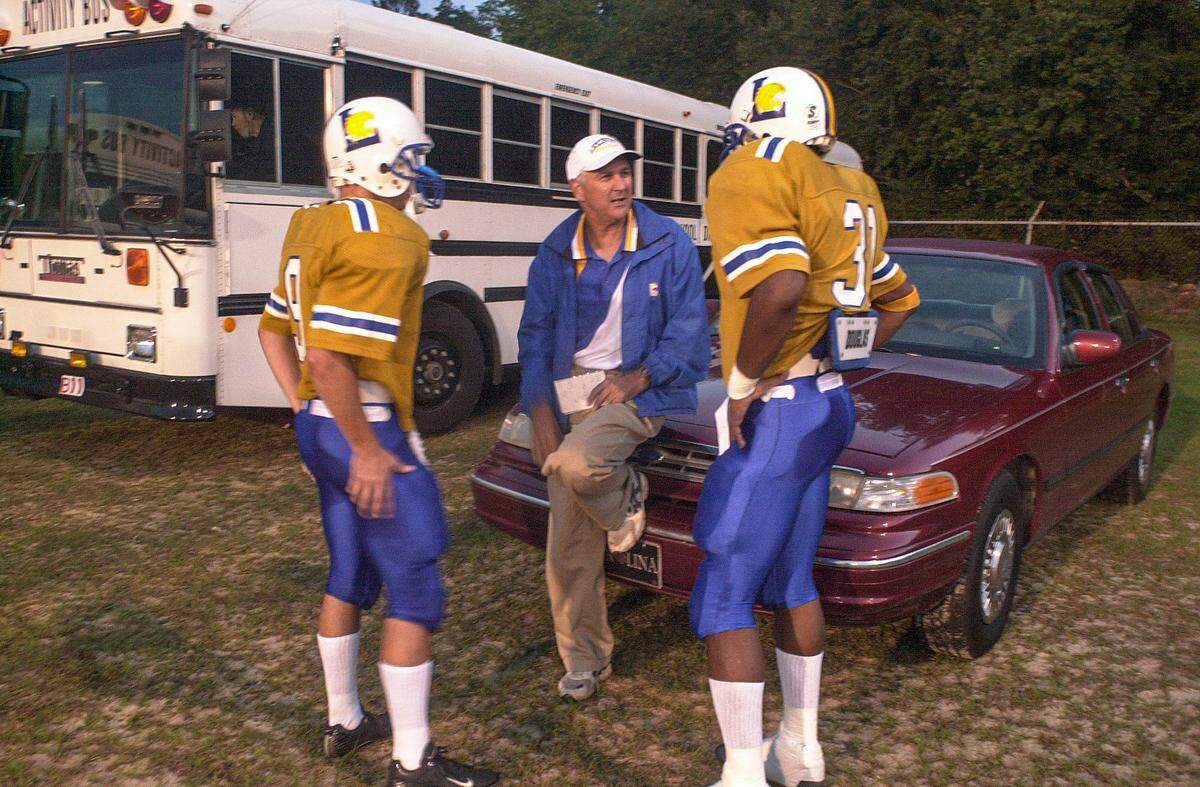
Demetris Duty: All hands on deck to help Lexington’s star
Satterfield was just over a decade past leading Furman to a national championship when he took over at Lexington High. The story goes that Satterfield showed up to one of Lexington’s “C-team” games, watched an eighth-grade Summers run a kickoff back 90 yards, turned to his starting tailback and asked, “Are you OK with being fullback?”
Of course, it wasn’t that easy. Summers told everyone he was done with football. He was a basketball player and that’s all he was going do in high school. And then he met Satterfield, who first recruited Summers’ buddies to the football team, then invited Summers out to a varsity practice — you know, just to watch. He was on the football team within hours.
It is clear that when Satterfield looked at Summers he saw two things: A young man who needed help to fulfill his life’s potential, and a once-in-a-lifetime talent who could lead Lexington to otherwise unreachable heights.
That latter vision allows for a picture of Summers that can very easily be painted: A coddled, entitled athlete whose talent allowed him to get away with almost anything.
There was a ritual in the Lexington football program: Attend 80 percent of summer workouts to get your name on the back of those blue and gold jerseys. No workouts, no last name. Unless that last name was Summers.
“Demetris probably went to 30 percent of those workouts,” said Kris Clark, Lexington’s then-quarterback who has known Summers since fifth-grade recreation league football. “And he still got his name on the back of the jersey. … That upset some of the guys.”
Summers — or, as everyone calls him, “Meat” (short for Demetris) — does not deny the absences. He does, however, push back on the notion that he needed to be there in the first place. One time he walked past the Lexington weight room during one of those semi-mandatory workouts. A teammate hollered: “How come we’ve gotta lift weights and Meat ain’t gotta?”
Summers recalls looking at his teammates struggling to bench press 225 pounds and picking up the weights and doing five reps like he was holding a pool noodle. “That’s why I ain’t gotta lift weights,” he said, walking out.
Accommodations made for Summers often went to unusual lengths.
One time during a bus ride to an away basketball game, Summers realized he forgot his jersey. Bailey Harris, the longtime Lexington basketball coach, instructed the bus driver to divert to Summers’ grandma’s house so the star could fetch it from the dryer.
Satterfield took it further, assigning players and coaches to what was, essentially, Demetris Duty. They called to wake him up, to tutor him, to drive him home after school. They would buy food for Summers. Anything he needed.
No one did this more than Chad Staggs.
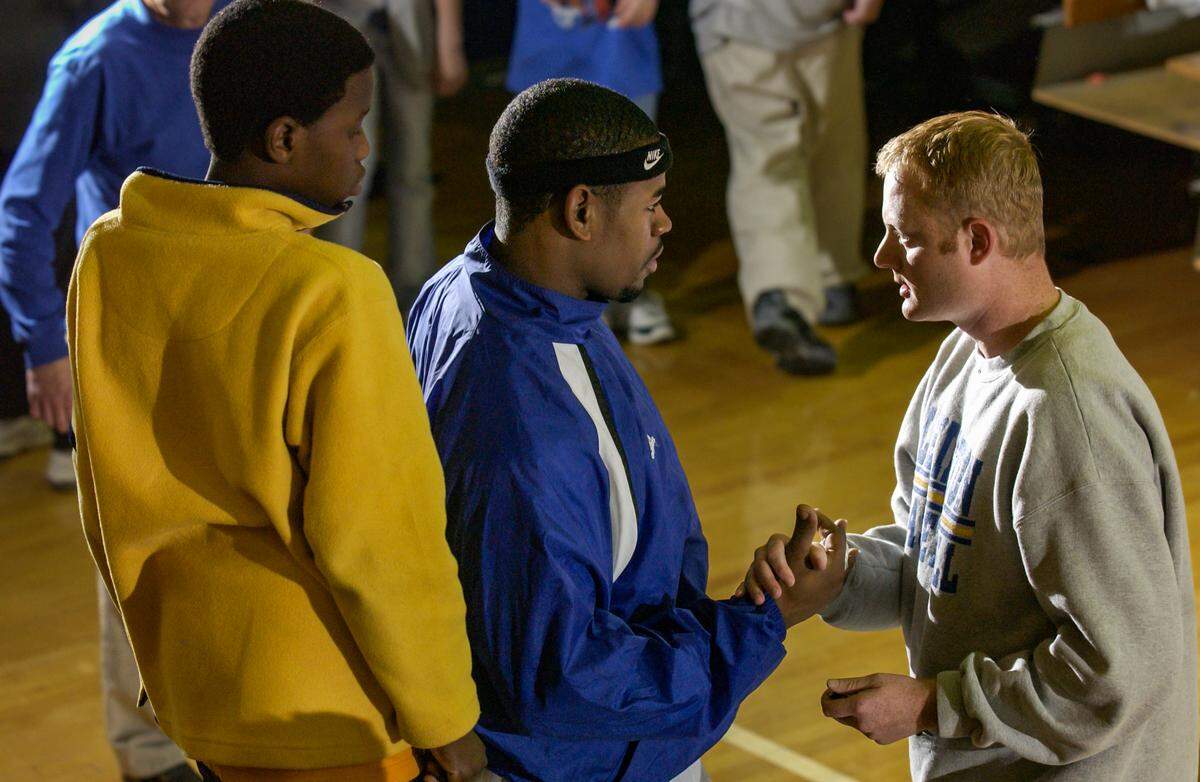
Before he followed Summers from Lexington High School to South Carolina in a role many thought was that of Summers’ personal butler, he was a student at USC-Upstate. He’d often drive down to watch Lexington football games because his stepfather was Tim Satterfield, the brother of Lexington’s coach.
By 2000, he was student-teaching at Lexington and getting introduced to the coaching world via Satterfield. Somewhere along the line, his duties came to include the team’s high-maintenance star.
“He was a coach and an enforcer,” Brock Mills, a former Lexington football player and one of Summers’ best friends, said of Staggs.
“Bodyguard, chaperone, however you wanna put it,” said Lavington, Summers’ older cousin.
Staggs tracked Summers’ grades. He tutored him in math. If Summers missed the school bus, Staggs went and picked him up. When Summers’ now-wife Latesha “Candi” Boykin had the couple’s first daughter, Nyishia, in 2001, it was Staggs who drove Summers to the hospital.
Almost 25 years later, Staggs understands his portrayal as Summers’ manservant. It drives him mad — not because of what anyone thinks of him, but because, Staggs says, people used it to drive a false narrative about Summers. That he was lazy. Aloof. Cocky. Disrespectful.
Never mind that he was 18 and didn’t have a car. Or that his mother and grandmother both worked. Or that his father was almost completely out of his life. Or that he had a little girl running around.
“People don’t realize what he had to overcome,” Staggs said. “But he needed help.”
But at what point does help turn into a crutch?
At what point does thinking become almost obsolete? Why communicate to arrange a ride when someone will just show up at your door? Why go to workouts if there’s no consequence? Why do your homework when you could just wait for a tutor?
Why worry about anything?
Satterfield opens up his home to Summers
To Satterfield, there was only one real way to change Summers. To change his situation. His habits.
So Satterfield gutted the top of his A-frame home, installed flooring, wiring, lights and lathered on fresh paint. One day, he brought Summers over to his house and took him to the newly renovated attic.
Pictures of Summers covered one wall, and in the middle sat a large bed. Summers could live here, the coach said. Not forever, but until he graduated.
No more having coaches drive to Summers’ house to wake him.. No more mandatory stops at Rush’s to ensure he gets something to eat. No more picking Summers up at his grandma’s house and seeing kids sleeping on the floor.
The idea became more real when Satterfield showed the attic to Summers’ mom. She was taken aback.
“Now, coach,” Jacqueline Summers asked Satterfield, “are you trying to take my son?”
“No,” Satterfield responded. “We’re gonna share.”
“Ok, we’re gonna share,” she said.
Not long after, Summers moved in. He finally had a real schedule. A time to go to bed. Someone to wake him up. Reliable transportation. Someone to hold him accountable for his schoolwork. He had everything he could want … until he wanted something different.
The arrangement lasted two weeks.
“I can’t remember why that kind of fizzled out,” said Satterfield’s son, Shaun.
Summers can.
“Me being a bonehead, I just wanted to go back to my grandma’s house,” Summers says now. “I was free to do what I wanted to do instead of being at his house and going by his rules.”
.jpg "demetris summers rim348 (1).jpg")
This story was originally published November 4, 2025 at 5:00 AM.