Drugs, and a different path: Demetris Summers couldn’t be caught. Until he was
.JPG "Demetris Summers played three seasons with the Calgary Stampeders of the Canadian Football League before being released in 2010. In the years that followed, he started selling drugs.")
READ MORE
Demetrius Summers: A football star’s rise, fall and rebirth
Expand All

Great Expectations: Demetris Summers’ story full of promise, pitfalls, second chances
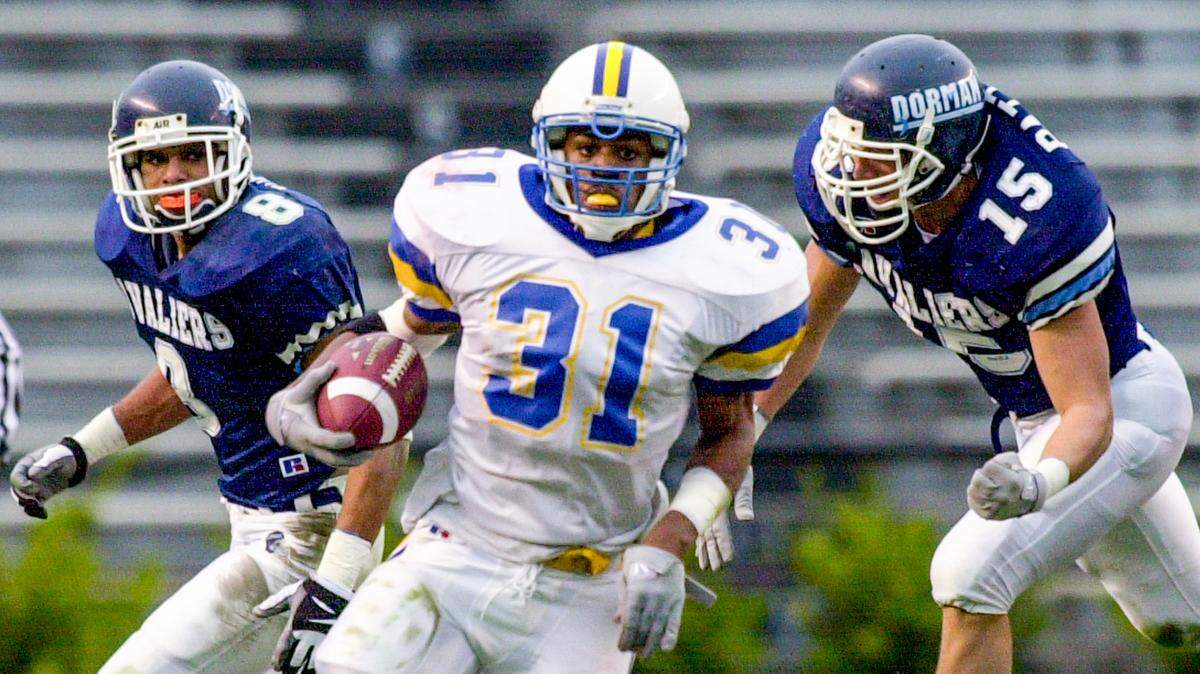
High school hero: Demetris Summers’ star status at Lexington grew to epic heights

An unhappy marriage: Demetris Summers’ time with Gamecocks ends with ugly breakup
Drugs, and a different path: Demetris Summers couldn’t be caught. Until he was

Second chances: For Demetris Summers in 2025, regrets and a new path forward
The Demetris Summers story, Chapter 4: Demetris Summers, a hometown football legend with so much promise, was a convicted drug dealer at age 33. Now 42, he opens up in this five-part series about his past, including getting kicked off the USC Gamecocks, and his hopes for the future.
Demetris Summers and George Rogers met once. Years ago. Back in the days when Summers’ life story was boiled down to the high school legend who couldn’t cut it at USC.
Summers was eating a late-night meal alone at a Waffle House in St. Andrews when, all of a sudden, who walked in? Big George, all alone, strolling in before ponying up next to Summers.
“We’d just sit there and talk and laugh,” Summers said.
They, of course, knew of each other. Yes, Rogers was the guy with the Heisman and Summers was supposed to be the one to follow him. Rogers’ son, Tray, was a linebacker at Irmo — one of the unfortunate tasked with trying to tackle Summers. Then the two were together in South Carolina’s 2003 recruiting class — Tray a three-star safety and Summers a five-star sure thing.
At Waffle House that night were the greatest college running back in USC history next to the greatest high school running back in South Carolina history — connected by their college but intertwined by so much more.
If Summers, soon to be implicated on drug charges, was in search of someone to relate to, Rogers would have been one of the few humans who could relate.
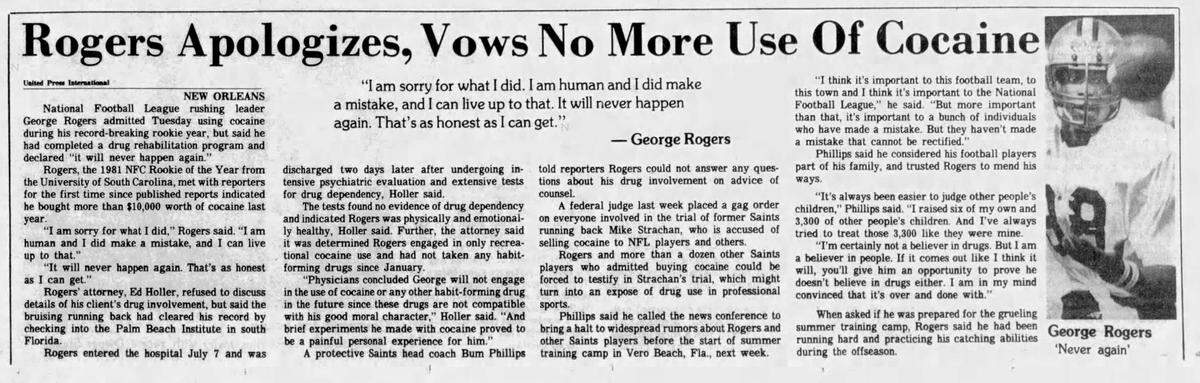
Rogers, like, Summers, knows what it’s like to hide cocaine. Knows what it’s like to be a public demigod hiding something. Knows how retirement is not some fall from grace, how it can be a hydraulic press, slamming you back down to where you came from. Thuds you back to mortality, back to a world where actions come with negative consequences.
When Summers talks about tough stuff — drugs and prison and those six years and nine months away from his family — you’re drawn to his eyes. They’re brown. But not a muddy brown. To stare into Summers’ eyes is to see a lake at sunrise, when colors aren’t visible so all you see is mist overtop darkness.
And then in those eyes — wait, what’s that? Is he crying? OK, he’s not crying. But are his eyes watering?
Yes, they are. Apparently, it happens all the time. Summers isn’t quite sure why his eyes sometimes leak. Maybe all those years running into linebackers forced some malfunction in his tear glands. Or perhaps the culprit is simply allergies. He’s not sure.
Whatever the problem, it’s not isolated. Because there at Waffle House, Rogers looked into those cloudy brown eyes and realized he wasn’t alone.
“Your eyes be doing that, too?” Rogers asked, pausing for a moment. “I guess it must be that good running back vision.”
Needing money, Summers starts selling drugs
After being booted from the University of South Carolina in 2003, Summers tried to keep his football career going.
He trained for over a year in Spartanburg, staying in shape in preparation for the 2006 NFL Draft. No one selected him, but the Dallas Cowboys invited him to training camp and quickly cut him.
Almost two years later, the Calgary Stampeders of the Canadian Football League picked him up and he played for three years, even winning a Grey Cup (the CFL’s Super Bowl) before being released in 2010.
He returned to Lexington and looked for jobs.
He was still enough of a luminary that years after he stopped playing football and went to the staffing agency, hanging on the wall was a photo of Summers that he must’ve signed years earlier. And enough of a pariah that they gave Summers back the picture, accepted the applications of him and his buddy, Maurice Lavington, and didn’t call either of them.
Summers worked at UPS for a while. Then Michelin. Different plants. But when life got hard and his family needed feeding, he went a different direction.
He started selling drugs and, boy, was it easy. He hardly did a lick of work, yet said he was bringing in $6,000 to $8,000 a month.
“I did not agree with it,” said PJ Green, a longtime buddy. “But I’m not gonna sit here and say that I tried to talk him out of it, either. … I understood the struggle.”
“I don’t even know how and when he started,” Lavington said. “I was never a nagger, but I’d say something every now and then. Like, ‘Hey, you need to quit. If something ever happens, you’re gonna be an example.’”
Summers’ cousin, Cory Greene, knew Summers was only selling drugs because he needed money. Greene helped him land a job packing trucks for Howell’s Motor Freight, less than a mile away from Williams-Brice Stadium.
“I told my boss I’d split my pay with him,” Greene said. “Just to try and help him get away from what he was doing.”
Summers’ new path ends with arrest, major charges
Crack, as it turns out, is not hard to make.
“Oh man,” Summers said, a bit taken aback to be asked for a step-by-step guide. “I mean, (get) water, baking soda and the cocaine and you’re just mixing it. You put it in the microwave, take it out. It has to go in and out a couple times.”
Summers has seen “Breaking Bad.” He chuckles at the thought that his drug production could be thought of in the same realm as the TV kingpin Walter White’s. There were no tankers of methylamine. No chemistry. Heck, there was hardly any equipment.
Summers would pour the three ingredients into a Pyrex measuring glass, letting expertise and art take over from there.
“You just had to go off your eyeballs,” he said.
The criminal file of Summers reads like a middle-school assembly on gateway drugs. In 2013, he was charged with possessing less than an ounce of marijuana. Summers denied that making crack ever led to him smoking crack, but he owns up to long-term marijuana usage.
“Only thing I did was smoke weed,” Summers said.
Others, most notably the police and the justice system, saw it differently.
In 2015, just a month after being inducted into the Lexington High School’s Athletics Hall of Fame, Summers was involved in a car wreck just before 5 a.m. Inside the car, officers found bags of cocaine and a 40-caliber Taurus handgun, which wasn’t registered to Summers.
Summers contends two things: He wasn’t driving — he says he was on Xanax, zonked out in the passenger seat — and neither the drugs nor the gun belonged to him. The courts gave him a slap on the wrist. Two misdemeanors. A $400 fine. No prison time.
The justice system had doled out its two strikes and afforded Summers time to change.
Summers is not shy to own up to mistakes. At least to a point.
He smoked plenty of weed at South Carolina. He was around too many bad influences, allowed himself too many distractions. And, yes, he both manufactured and sold crack cocaine; and, sure, he thought about stopping, but he was going to stop and do what? No one would hire him.. And even if they would, why would he stop? No one was going to catch him.
Plus, he figured, he was safe. He kept his drug dealing somewhat of a secret. Those who needed to know, knew. But when he was cooking or selling crack, he made sure his daughters were never in the house. He’d either send them over to a neighbor’s house or have them play outside.
And then it happened. The Lexington County Sheriff’s Department, Summers said, enlisted an old high school acquaintance to serve as a plant. He bought crack. Then he showed up at Summers’ house unannounced and bought more. Then he had Summers deliver. Not long after, Summers was at his day job packaging windows when his phone started blowing up.
The police were raiding his house. His daughters were in their hands. He was caught. He waited at his job until the police who’d had been following him all morning got the go ahead to haul him to jail.
Summers was charged with 14 felonies — including five charges of unlawful neglect of a child and four more for selling drugs near a school. The two heaviest charges were for trafficking more than 10 grams of crack; and, well, trafficking crack makes him sound like a drug lord.
But that trafficking charge, Summers said, only came about because the sheriff department’s plant had Summers meet him somewhere. So Summers, he said, got in his car and made a short drive for the delivery. Boom. Distribution becomes trafficking.
The Lexington County Sheriff’s Department declined to answer any questions about Summers’ arrest.
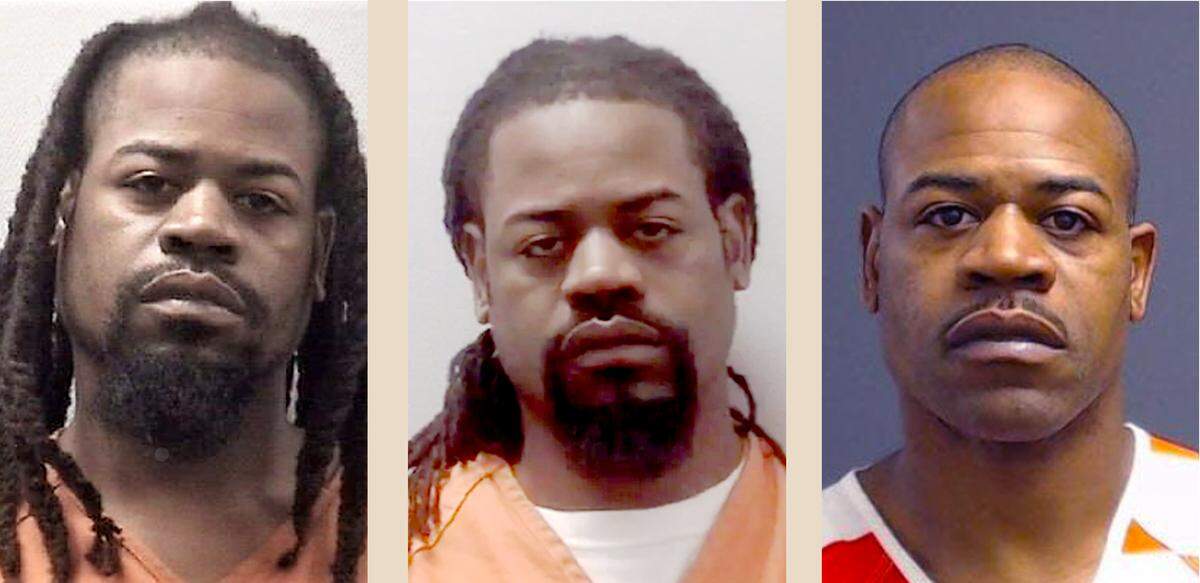
Nineteen months after he was arrested on charges relating to crack cocaine, a 33-year-old Summers pleaded guilty to one trafficking charge and two more relating to the manufacturing and distribution.
On April 14, 2017, Summers was sentenced to eight years in prison. One of the greatest football prospects in South Carolina history, the man who seemed capable of elevating the Gamecocks to new heights, of becoming the school’s next George Rogers, of making his name known around the country, now had a new name.
Inmate No. 00372191.
Summers finds routine in prison
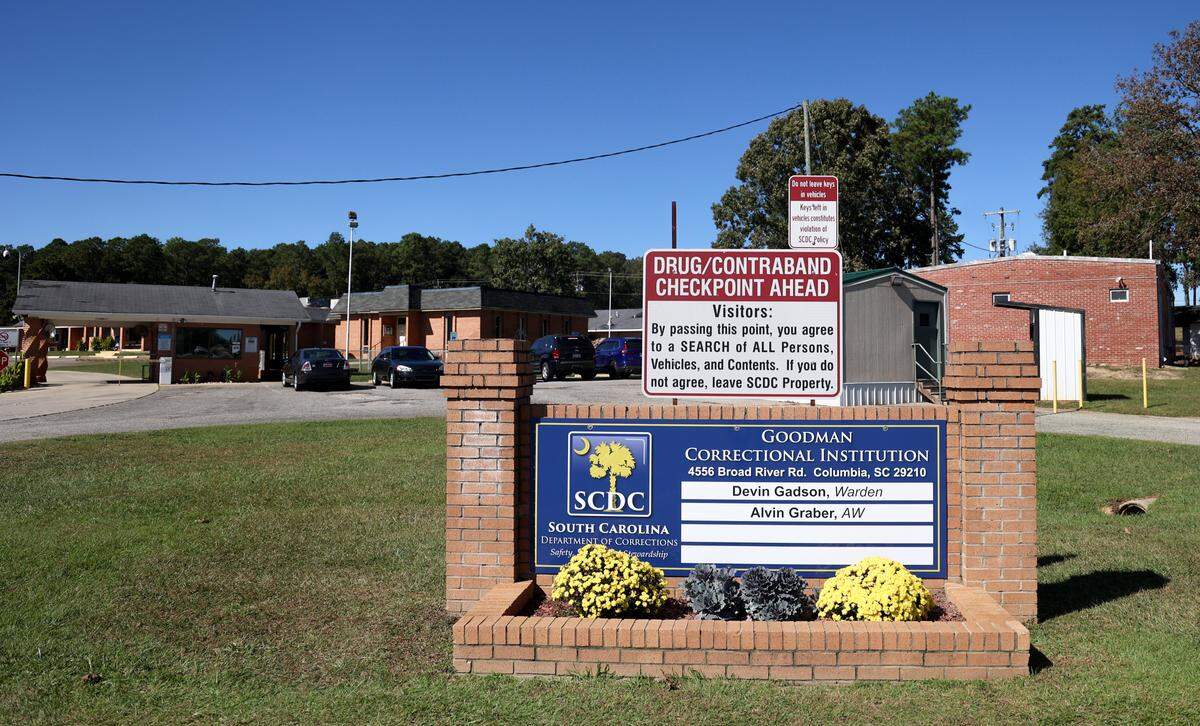
This is a prepaid call from … Demetris Summers …. an inmate at the Goodman Correctional Institute …”
Jacqueline has heard the script thousands of times. Her son called relentlessly, usually a few times a day. She’d press ‘1’ and sometimes he wanted to talk, other times he’d tell her to patch in one of his buddies to a three-way call.
One time, Summers called with an odd question. Apparently, he told his mother this new guy showed up to Goodman and was walking around, claiming to be his cousin.
“Demetris,” she told her son, “everyone in that jail is kin to you because they know who Demetris Summers is.”
For better or worse, Summers is able to live much of his life as if it was frozen in 2003.
He shows up to prison — in a place where everyone is supposedly equal, where everything is facing the same circumstances — and he is still Demetris Summers, and that still means something.
“As crazy as prison was and as violent as it could be, he had a lot of fans there,” said Anthony “Free” Martin, Summers’ cellmate for two years at Goodman Correctional. “He didn’t have too many problems with people. They knew him and they liked him or loved him.”
That extended to everyone.
“The guards, too,” Martin said. “They wanted to pick his brain about football. … High school games. Games he played as a Gamecock. Talking about stats.”
The only time Summers would get harassed, Martin said, was when guys started arguing about Carolina and Clemson. All the Clemson fans — guards and inmates — would start teasing him about the rivalry, which at that point Clemson was dominating.
Summers refrained from talking much about himself. Martin didn’t even know Summers played sports until other inmates started telling him his new roommate used to be the baddest running back in South Carolina.
Martin, who got out of prison in 2022, was locked up at 18 years old, going to prison in the mid-1990s for manslaughter and assault. Summers wasn’t yet in high school at that point in time. Martin didn’t grasp the hype about his roommate until the pick-up games.
“They used to try and do everything they could to keep him from getting dunks … old Charles-Oakley-type fouls,” Martin said, describing hard, physical fouls the former New York Knicks player would deliver on star players such as Michael Jordan. “Quite a few officers would come out there to watch if they knew he was playing.”
Summers found routine in prison. Or rather a routine was forced upon him. Wake up. Roll call. Work out. Go do a job. Summers worked in the tool room, passing out screwdrivers and hammers and whatever for other inmates to use in their jobs.
He served 85% of an eight-year sentence — away from his family for six years and nine months. Most of his time was at Goodman Correctional, but he did move around. Twice for disciplinary reasons. The culprit? Marijuana.
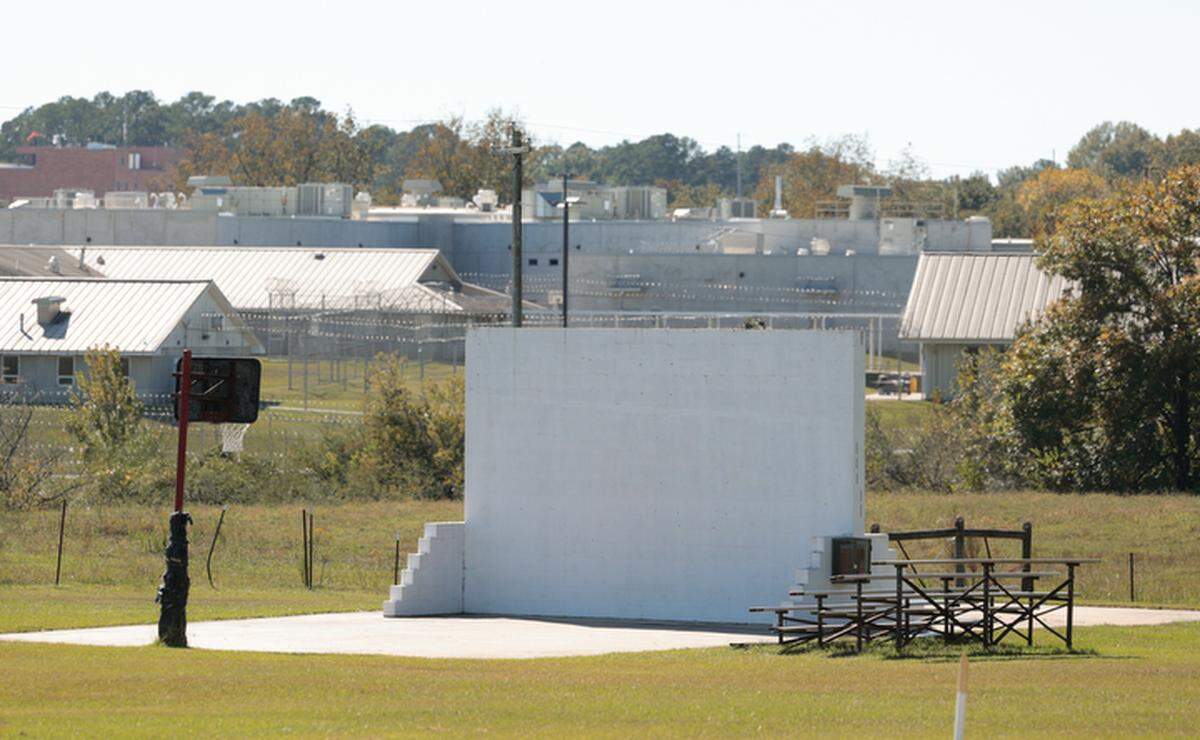
Summers in prison when mentor Satterfield dies
A few years into Summers’ prison sentence, Brock Mills — as he often did — showed up to visit his buddy in prison. This time, he persuaded former Lexington High football coach and Summers mentor Jimmy Satterfield to make the two-hour drive from Easley and surprise Summers at the prison.
They stopped by Rush’s on their way over. Satterfield wanted to grab an extra cheeseburger for Summers, just like old times. Mills had to tell him prisons don’t allow outside food.
“We sat there and cried,” Mills said. “We were just reminiscing.”
Not long after, in May 2019, Satterfield passed away — and it was sudden. He had a successful bypass surgery and within days, Shaun Satterfield said, “his body was not reacting right.” He died within a week of his surgery at the age of 79.
His funeral was held at Easley First Baptist Church. Jacqueline Summers and her sister were in attendance. The service was led by Rev. Dr. John Adams, who at one point acknowledged a man grieving remotely.
Summers was 106 miles away, all alone, watching from a TV set in the prison chapel.
This story was originally published November 6, 2025 at 5:00 AM.