An unhappy marriage: Demetris Summers’ time with Gamecocks ends with ugly breakup
READ MORE
Demetrius Summers: A football star’s rise, fall and rebirth
Expand All

Great Expectations: Demetris Summers’ story full of promise, pitfalls, second chances
High school hero: Demetris Summers’ star status at Lexington grew to epic heights
An unhappy marriage: Demetris Summers’ time with Gamecocks ends with ugly breakup
.JPG)
Drugs, and a different path: Demetris Summers couldn’t be caught. Until he was

Second chances: For Demetris Summers in 2025, regrets and a new path forward
The Demetris Summers story, Chapter 3: A hometown football legend with so much promise, Summers was a convicted drug dealer at age 33. Now 42, he opens up about his past, including getting kicked off the USC Gamecocks, and his hopes for the future.
Lou Holtz was not one to make a lot of promises.
The previous fall, the legendary coach took the extraordinary step of promising the state’s No. 1 recruit, Demetris Summers, that if he committed to the Gamecocks he would get the first carry of the upcoming season.
“(Holtz) had never done that at South Carolina,” said Todd Fitch, then a USC assistant coach and Summers’ lead recruiter.
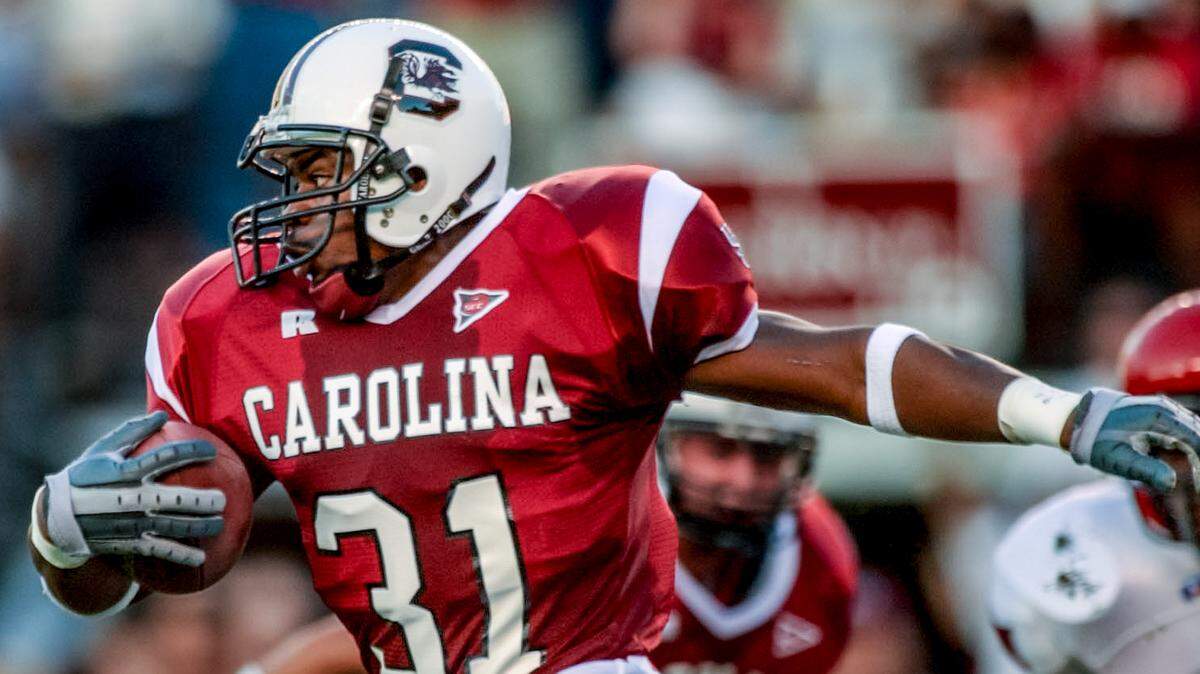
Sure enough, the 2003 season began with The Summers Show. In front of 82,227 fans, Louisiana-Lafayette’s opening kickoff came to South Carolina’s five-star freshman, who bolted upfield for a 27-yard gain.
Then came the first real play, the one Holtz had promised Summers. Quarterback Dondrial Pinkins took the snap and put the ball in the belly of Summers, who quickly went for 10 yards. First down.
This was the start of greatness.
Oh wait, hold on. Is Summers is being subbed out? Yep, he’s out of the game.
Summers recalls now: “I’m like, what the …”
Summers waits for USC opportunity that never comes
Imagine you’re Demetris Summers.
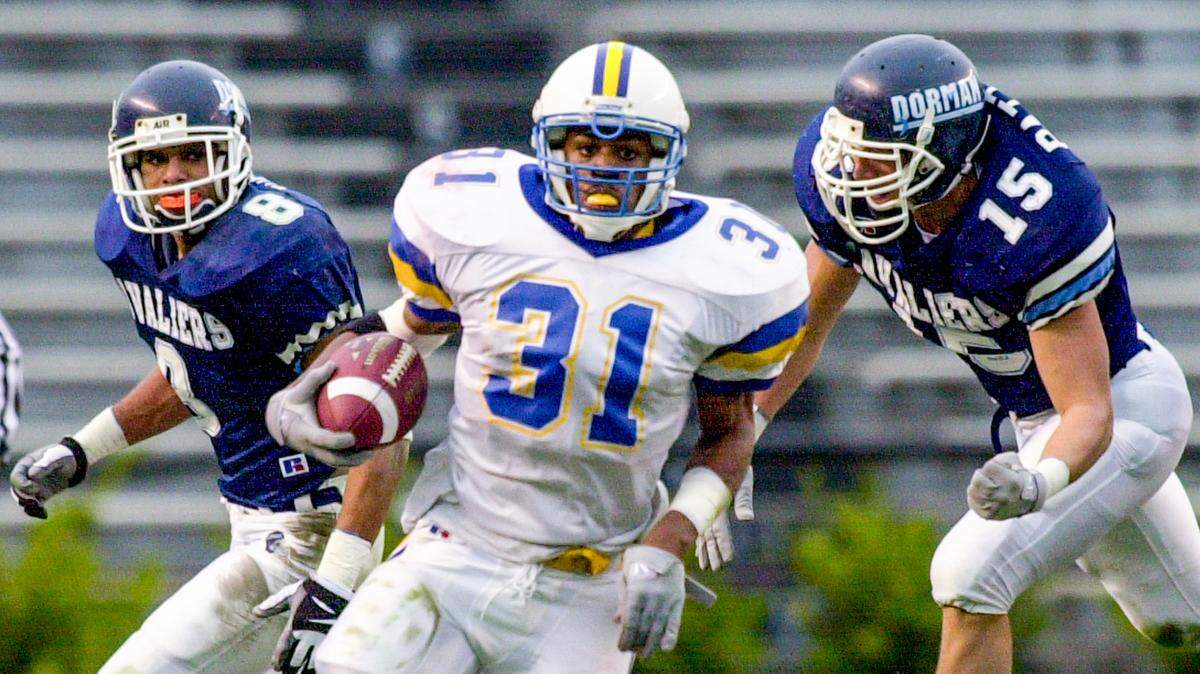
You just spent four years in a high school offense that was boiled down to four words: Give it to Demetris. You played for a man who cared about you so much he built a room in his house just for you.
You’ve been told by every college coach in America that you are God’s gift to football. You’ve been promised the world. Told that your talent and clairvoyant vision on the field can make you the best player in the country.
And then you don’t play.
Summers wound up in a loaded running backs room with guys who all thought they were talented enough to get the lion’s share of carries. Kenny Irons, Daccus Turman and, to a lesser extent, Cory Boyd all became frustrated with how South Carolina’s coaches handed out carries.
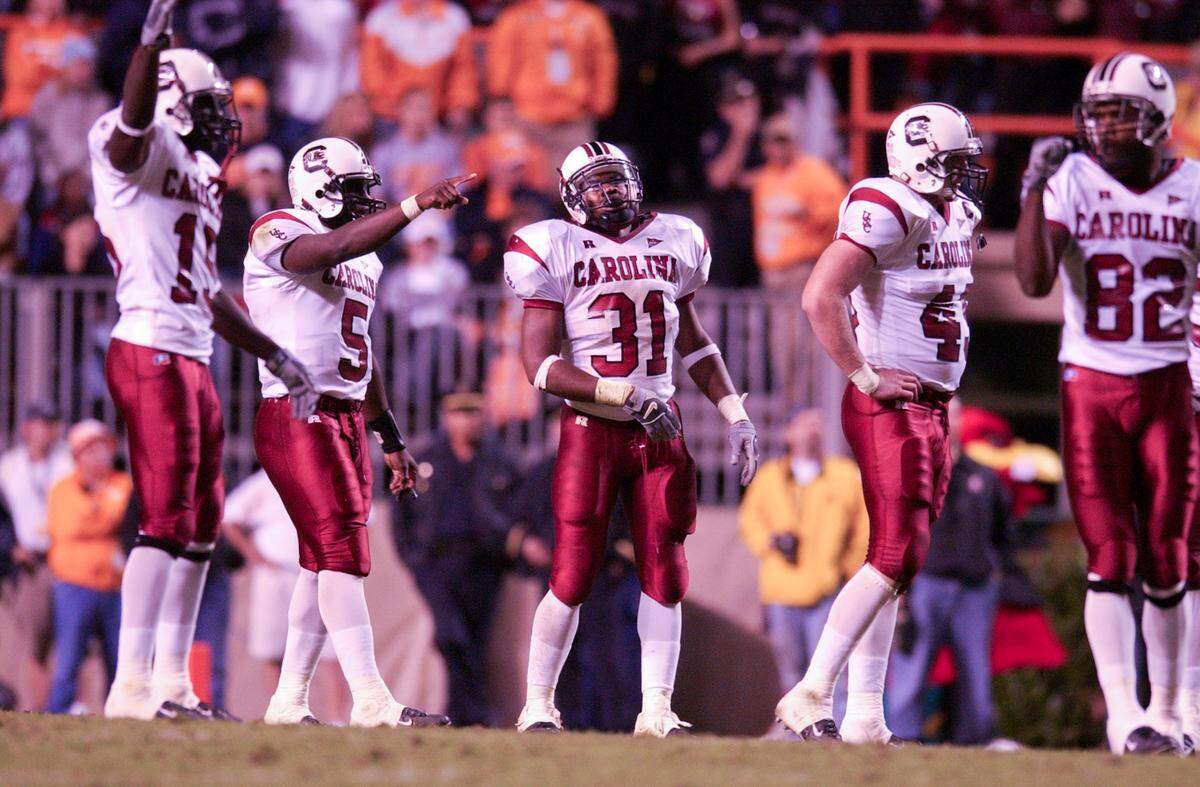
Irons transferred to Auburn after the season, saying years later that he bolted after seeing No. 31 South Carolina jerseys (Summers’ number) being sold at the bookstore, a claim that lacks evidence.
Summers almost left, too. Faced with the first football inconvenience of his life, he wanted to flee. There was no transfer portal then, but Summers seriously considered spending a year in junior college then going to a school that would actually give him the ball.
Stick it out, everyone told him.
“You’re always just trying to make sure they’re not running from something,” Fitch said. “There were things Demetris was fighting there — he was gonna fight them someplace else, too.”
Fitch was in a weird place with Summers. He was the Gamecocks’ running backs coach in 2002, the lead recruiter in the Summers’ sweepstakes who formed a relationship with the family, who went to his basketball games, who helped get him to South Carolina. Then Summers signed and Fitch became USC’s quarterbacks coach, no longer in charge of his crown jewel.
Fitch still tells stories about how smooth Summers was as a freshman, running so effortlessly that a lot of people thought he was loafing. Fitch would have to chime in: “He’s not loafing. He’s just that gifted.”
But he also noticed other things. That Summers was not always “ready to work.” The guys who are successful in college football, Fitch said, are the ones who quickly figure out how to adjust their lives to be the best players. The guys who pick up the playbook quickly. The guys who are always in class. The guys who are ready to roll at the 5 a.m. workouts.
That was not Summers. It didn’t help, either, that he was in a running backs room loaded with experienced talent who the coaching staff trusted. It also didn’t help that he was playing in an era when freshmen weren’t expected to come in and rush the ball 300 times.
Even Southern Cal’s Reggie Bush — the future Heisman winner so often compared with Summers throughout the recruiting process — had 34 fewer carries than Summers did as a college freshman.
As a sophomore, Summers led South Carolina in rushing, which sounds great until you hear the stats: 487 yards on 88 carries. Yawn. Each game that wasn’t like Lexington — which is to say every game that he didn’t get the ball every other snap — were gashing slashes to his ego, dismembering whatever motivation or patience remained.
“I was like, man, f— this. Let me just do what I wanna do,” Summers said. “I mean, I’m not really getting the shine, the playing time that I want.”
He continued: “I wasn’t working out. I’d be late to practice. Late to workouts. I’d have to run the whole stadium five times.”
In his two-year college career, he carried the ball more than 16 times in a game twice — both during his freshman season. Those are the moments Summers’ defenders cling to, evidence that he had everything but opportunities.
There was the UAB game, his fourth in college, when he ran for 161 yards and three scores. Then he one-upped himself a week later, going for 158 yards against No. 8 Tennessee — a game USC lost in overtime.
“He went off,” John Strickland, an offensive lineman on that team, said of Summers against the Vols. “It just seemed like every time I’m blocking my man, I just see a flash go by me and Demetris is downfield.”
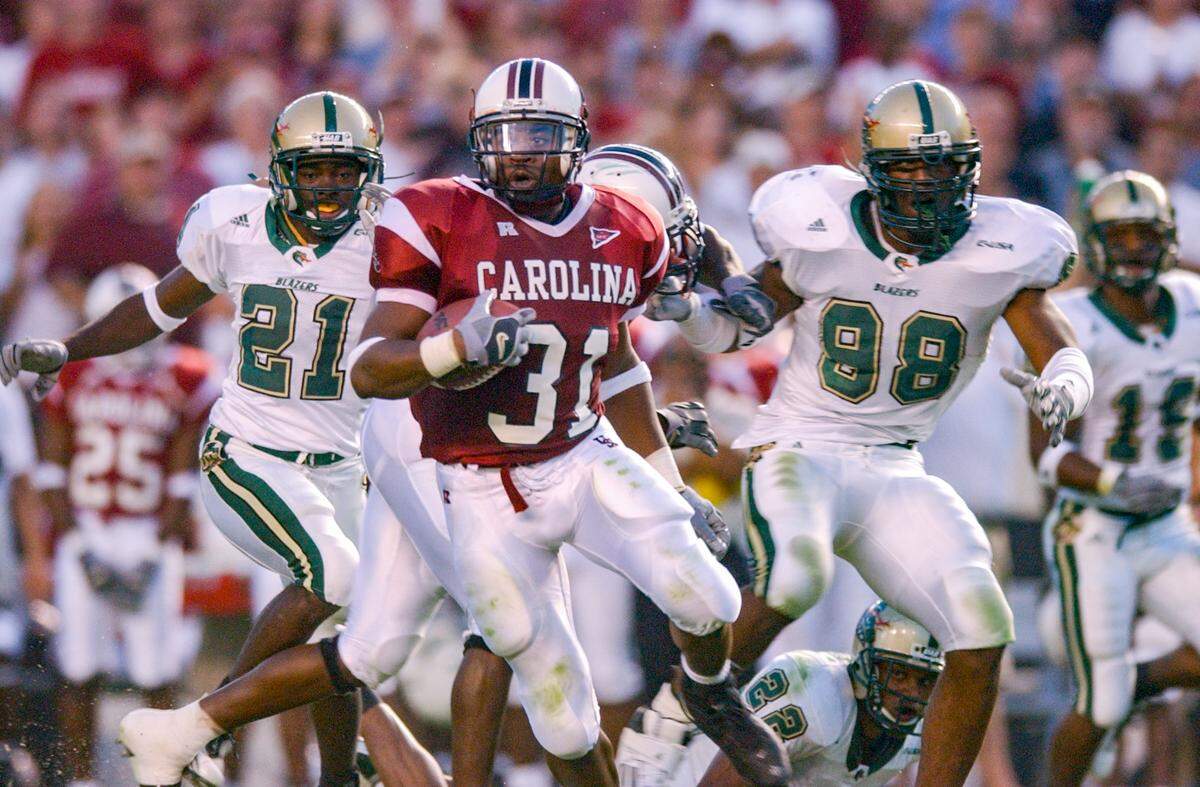
It didn’t matter. A week later, Summers was back to the sidelines, lucky to touch the ball 10 times.
Holtz could not be reached for comment on his recollections of his time with Summers. Messages left for the coach were not returned.
“We all know Demetris should’ve gotten 18 to 20 carries a game,” said Syvelle Newton, a freshman quarterback for USC in 2003. “If he got 70 percent of Marcus Lattimore’s carries….”
Newton pauses and starts laughing. The thought goes unfinished.
First comes new hope, then a positive drug test
Newton was a 6-foot-2, 210-pound dual-threat quarterback before such a moniker was cool. In 2003, he was the best quarterback in South Carolina and, among other things, had a state title to back it up.
Though he didn’t shout it from the rooftops, Newton tied his recruitment to Summers. Wherever Summers went, Newton was going to follow — which needs some clarification: So, if Summers chose Clemson, would Newton be a Clemson alum right now?
“100 percent,” he says. “110 percent.”
When the two finally got to South Carolina, though, it was Summers who leaned on Newton, because the latter was the one with a car. Which meant there were many nights when Summers would spill into Newton’s room on a mission to get back to Lexington.
“He’d come grab my keys almost every night and he’d be like, ‘You got anywhere to go?’” Newton recalled. “I’d be like, ‘No, you got it.’ He’d always go home.”
He did go home, usually just on weekends. Because his mom was there. Because his longtime girlfriend, Boykin, was there. Because his daughter was there. After games, he’d jet back to Lexington and sit around the house all day until it was time to head back for practice.

On campus, Summers had a tutor in every class while graduate assistant Chad Staggs — who The State wrote was hired by USC as a “dormitory counselor” — was living down the hall, making sure Summers stayed in line.
Even though he wasn’t finding trouble, he was counting the days until he could transfer.
Then came his savior — a 59-year-old with a high-pitched twang and a high-octane offense.
“When Steve Spurrier came in, I was like OK, this is gonna be my year,” Summers said. “He came to me like, ‘You ready to carry the ball 25 times a game, 30 times a game?’ I was like, ‘Yes, sir, I’ve been waiting on this.’”
Spurrier was announced as Holtz’s replacement on Nov. 23, 2004. Summers said he committed himself to being the guy everyone expected, training for three months as if he’d been given a fresh start.
“I saw him actually working harder than I had ever seen him work,” said Staggs, speaking about the weight room, running and mat drills. “You were starting to see what he could become.”
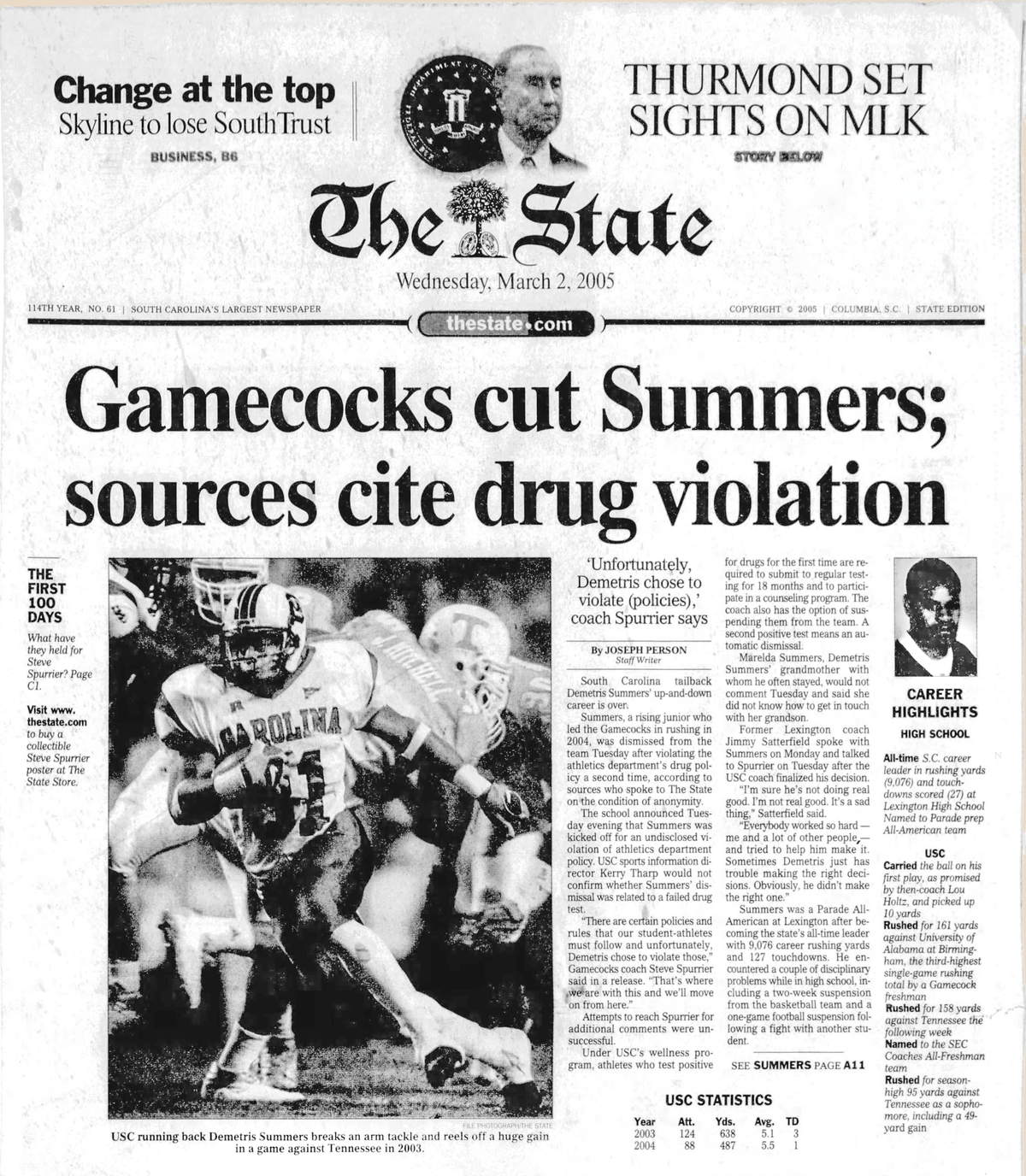
Then came the positive drug test.
‘You should’ve sent him to Clemson’
When his world came crashing down, Demetris Summers ran back to Lexington. His mother was waiting.
Her son, the boy they called Superman, sobbed in her arms, repeatedly trying to get the words “I’m sorry” out of his mouth.
Summers couldn’t make sense of what had just happened. How was South Carolina kicking him off the football team? Two years after welcoming him as the savior of the program, he was being thrown to the curb? Over a drug test? Ha. That’s rich, he thought.
Failing drug tests didn’t seem to matter much when Lou Holtz was in charge. Summers failed two of them. The university made Summers sit through some counseling sessions then wiped the slate clean.
Then there’s this: Summers doesn’t think he actually failed the test that got him kicked off the team.
Sure, he smoked weed under Holtz. But, Summers claims, he didn’t smoke marijuana in the five months leading up to his failed drug test, especially not after Spurrier took over.
No, he wasn’t screwing that up. Weed went out the window. He started training harder, lifting more, taking practices as serious as a college running back should. And that’s what he told his mother, Jacqueline.
“I know I ain’t been smoking,” Summers told his mother. “This is gonna be my breakout year.”
Summers figured this was all some big misunderstanding. He ran to Spurrier’s office, looking into the eyes of a man who, while the head coach at Florida, badly wanted him on his team.
Yet, Summers got the sense that Spurrier was actually enjoying sending him away.
“Maybe you can go try out for Newberry or something,” he told Summers, shrugging.
Summers had been hearing rumors that Spurrier wanted to bring in his own players. He also heard a highly touted running-back commit from Columbia named Mike Davis told the Gamecocks he wouldn’t sign if Summers was on the team. Was this all a ruse to eject Summers from the picture?
Jacqueline Summers couldn’t believe how South Carolina handled everything, especially the fact that her son failed two earlier drug tests and no one contacted her or Lexington High football coach Jimmy Satterfield. She says that if she had known she would’ve put some sense into her son and there would never have been a third failed test.
But it was too late. She demanded South Carolina do another drug test. Soon after, Summers, under the watchful eye of a South Carolina trainer, retook the test and passed.
The university wouldn’t budge.
“(They) couldn’t explain it to me,” Jacqueline Summers says. “And they wouldn’t put him back on the team.”
Panicked, she drove to Lexington High and found Satterfield. He fixed everything. He knew everyone. And he had done more for her baby than any other man on the Earth. She just needed one more miracle from him.
Satterfield got Spurrier on the phone, but Summers could tell the conversation was not going well. Satterfield, always so mellow and gentlemanly, screamed “Bullsh–,” hung up on Spurrier and looked at her.
“You should’ve sent him to Clemson,” he said.
Summers’ time over with Gamecocks
Hindsight is beautiful. It affords someone the opportunity to call every wrong decision a mistake.
Sometimes that’s true. Sometimes, the decision is correct and the execution spirals.
Would things have turned out differently had Summers chosen Clemson? Maybe. Or maybe Summers just wasn’t mature enough, or disciplined enough, for college and the demands of a big-time program.
Did Summers fail Spurrier, or did Spurrier fail Summers? Maybe a little of both, former players say.
“Spurrier kind of laid out, these are his requirements,” said Kris Clark. “... and it wasn’t two weeks and Demetris tested positive for marijuana.”
“The sheriff’s in town,” said Cory Boyd, “and he cleaned house.”
“I think if Spurrier would’ve left him on the team,” said offensive lineman John Strickland, “and had some leadership and guidance for him, he’d probably be in a different place today.”

When contacted about Summers, Spurrier seemed unaware of who Summers was and why he was kicked off the team. When asked if he had his own reasons for dismissing Summers, Spurrier chuckled.
“Not that I know of,” he said. “I let the university handle a lot of that.”
OK, but what about all those friends? All those cousins? Were they bad influences? Or was Summers too set in his ways to be influenced?
“I think it was just a distraction,” Jacqueline Summers said. “They weren’t bad influences, because I feel like you can’t make someone do something … but I don’t think they encouraged him not to do it.”
Summers’ cousin, Cory Greene, strikes a similar tone.
“I was one of the ones — he’ll tell you — who wouldn’t tell him what he wanted to hear,” Greene said. “But you had some who were little ‘yes men’ for him.”
It wasn’t even about whether they were bad influences, they were always around. Whether Summers was present, his buddies were always trying to make the most out of being Demetris Summers’ friend.
“I went to USC, sir, and I didn’t even attend,” said P.J. Green, still one of Summers’ closest friends. “The bad thing is we didn’t even sneak. The coaches knew me. The players, they knew me.”
And then, one day, Summers was just gone. For the first time in his young life, there was no one willing to look the other way or excuse his failings. He was on his own.
This story was originally published November 5, 2025 at 5:00 AM.