High school hero: Demetris Summers’ star status at Lexington grew to epic heights
READ MORE
Demetrius Summers: A football star’s rise, fall and rebirth
Expand All

Great Expectations: Demetris Summers’ story full of promise, pitfalls, second chances
High school hero: Demetris Summers’ star status at Lexington grew to epic heights
An unhappy marriage: Demetris Summers’ time with Gamecocks ends with ugly breakup
.JPG)
Drugs, and a different path: Demetris Summers couldn’t be caught. Until he was

Second chances: For Demetris Summers in 2025, regrets and a new path forward
The Demetris Summers story, Chapter 2: A hometown football legend with so much promise, Summers was a convicted drug dealer at age 33. Now 42, he opens up about his past, including getting kicked off the USC Gamecocks, and his hopes for the future.
Jon Wheeler was a freshman at Wofford when his dad called.
In his long career, George Wheeler had coached Herschel Walker and coached against Earl Campbell. He retired in the early-2000s, which is why he was able to spend a Friday night watching his son’s alma mater. After the game, he picked up the phone.
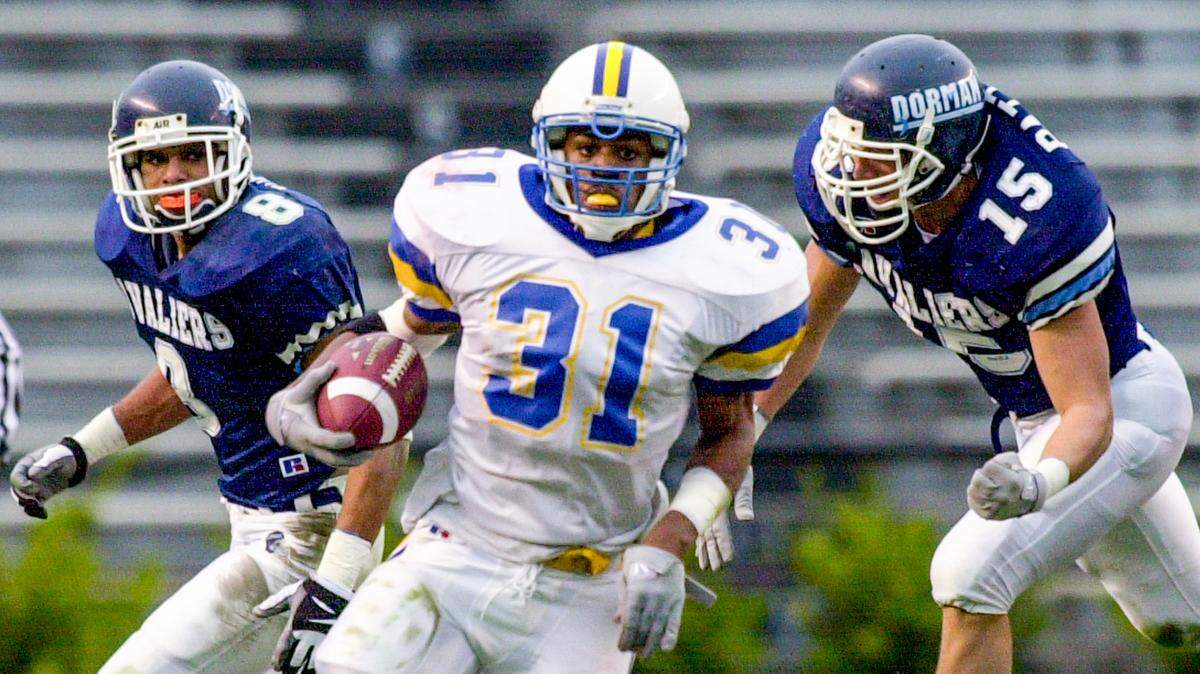
“Jon, it was the darndest thing I’ve ever seen,” George told his son. “He rushed for over 300 yards. He had about 10 or 11 carries. Had four or five touchdowns. And he never hit the ground. He either scored a touchdown or stepped out of bounds on his own accord.”
“He” was Demetris Summers, Lexington High’s once-in-a-lifetime star already well on his way to being one of the nation’s most sought-after recruits.
The story was nothing new to Jon Wheeler. At the time a freshman at Wofford, the younger Wheeler had played with Summers the year before in high school. He even credits the way Summers willed Lexington through the playoffs with giving him enough visibility to get his own scholarship.
It turns out that the elder Wheeler actually shortchanged Summers that night. His official statistics were even more gaudy: 10 carries, 315 yards and six touchdowns. That night, he tied Derek Watson’s state career touchdown record — midway through his junior season.
That performance sparked The State reporter Ron Aiken to write that, barring some massive decline in Summers’ senior season (which didn’t happen), Summers was not only going to go down as the best running back in South Carolina history but “can also claim to be the best running back to play high school football in the U.S. history.”
The day after that story was published, Summers turned 18.
Summers’ legend status as high school star still lingers
Brian Staley was driving from Aiken to Knoxville when he pulled over so his wife could take the wheel. A reporter has sent him a video to watch.
“I remember that play like yesterday,” he says with a chuckle.
It was from Summers’ sophomore season; a game against Aiken in which Summers rushed 14 times for 272 yards and three touchdowns. But the play that everyone still talks about wasn’t even a touchdown.
Summers takes a pitch and heads right before cutting back like a car swerving across the freeway. By the time he runs 10 yards, five defenders are on the ground.
Staley, at the time a highly-touted cornerback committed to Clemson, has an angle on Summers.
Said Staley: “I’m like, ‘He’s going out of bounds so I’ll just take him out.’”
To Summers, hitting holes was not predicated on knowing defensive coverages. It was about watching the flow of the linebackers, about glancing at a man and knowing where his next step was going to be. His superpower was innate.
And so he dips his shoulder to the left, faking like he’s stepping out of bounds. Staley, moving like a freight train, can’t adjust. He whiffs on the tackle, flying out of bounds before diving into the track. Summers runs on before being tackled.
“I’m getting chills just talking about it,” said Jon Wheeler. “It doesn’t seem like much, but when you see it on film, it’s like, ‘How in the hell did he do that?’ I’ve never seen anyone juke someone out from behind.”
Much of what Summers accomplished on a football field is still tough to fathom.
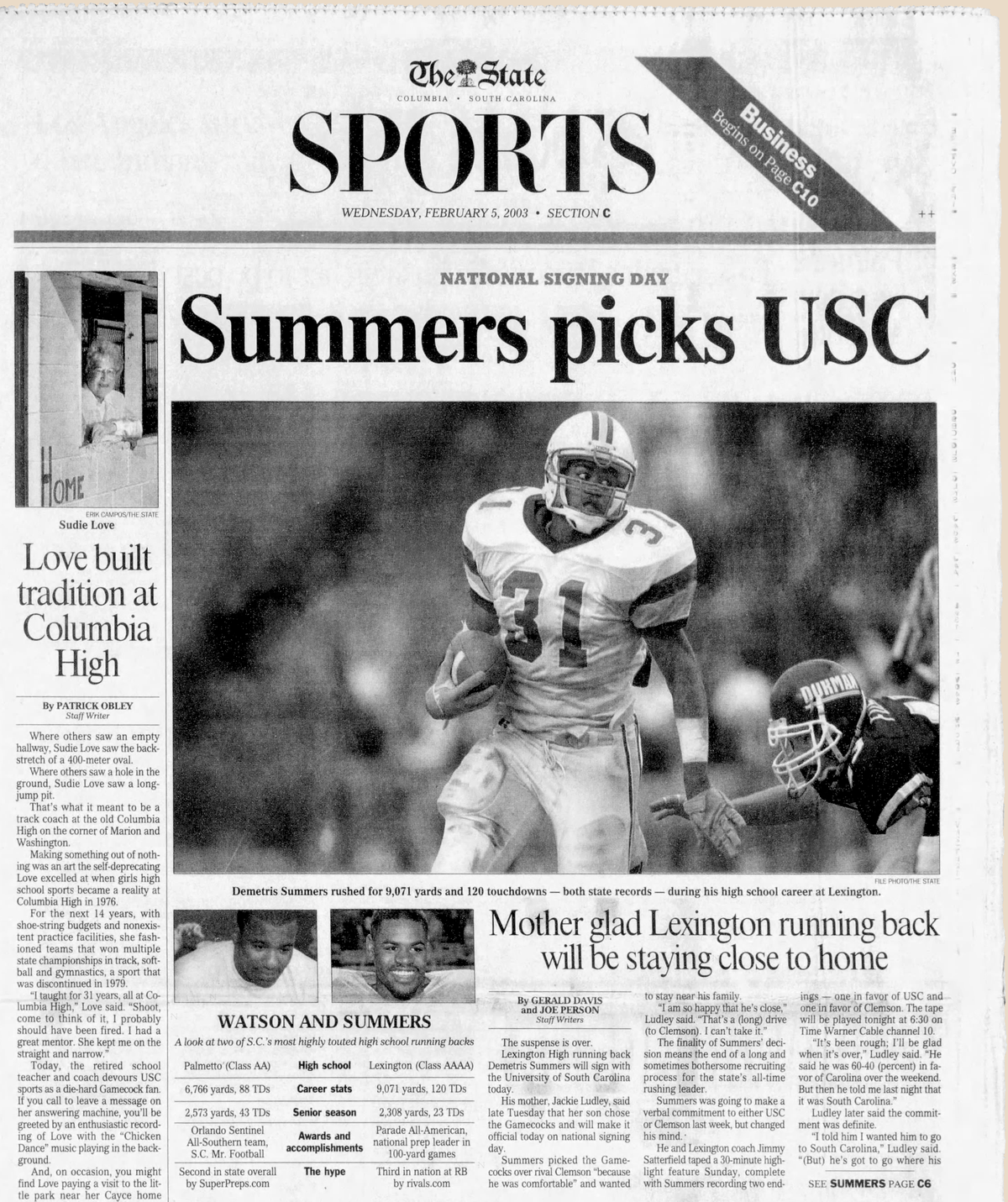
He left Lexington with 9,071 rushing yards and 120 touchdowns — both of which are still South Carolina state records. He had 46 100-yard games, which, at the time, was one above Emmitt Smith for the American high school record.
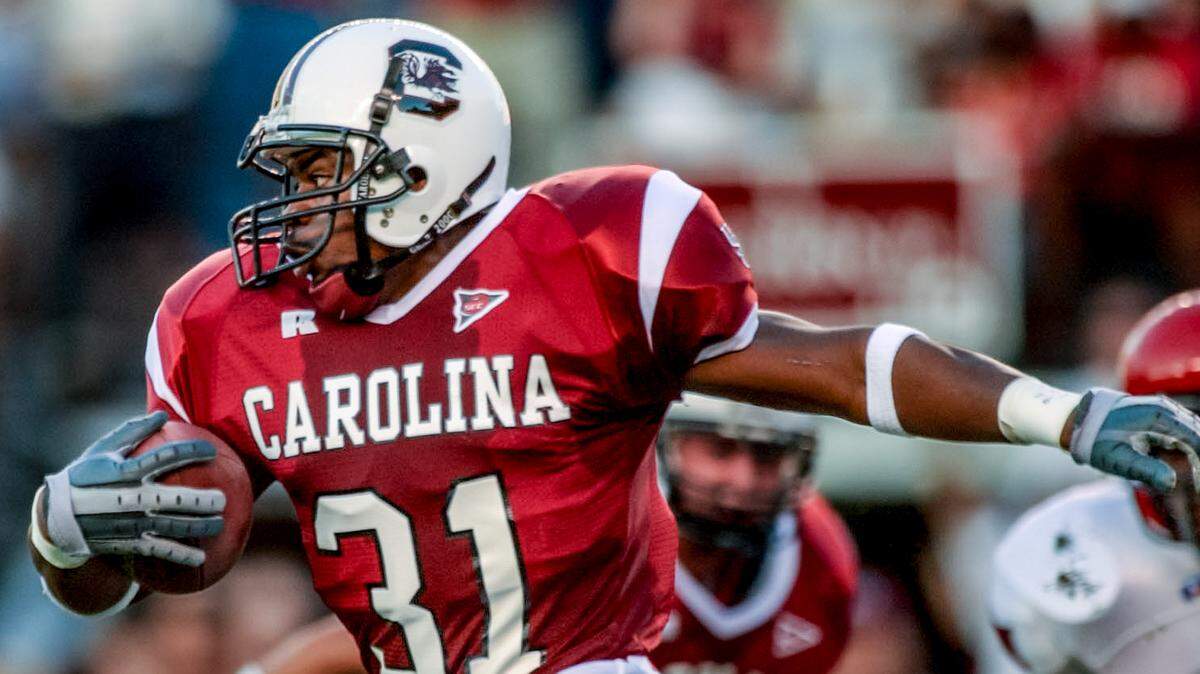
He was a five-star prospect. A Top-10 recruit in America. And depending on the recruiting rankings you looked at, he was either the No. 1 or No. 2 tailback in the Class of 2003. Some folks gave the nod to Summers. Others were partial to a kid from California named Reggie Bush.

He was everywhere and everything, except for one omission so egregious that it angers some people still today. A coach from Rock Hill, Jim Ringer, left Summers off the Shrine Bowl roster with an excuse few believed — that the greatest running back in South Carolina history couldn’t block.
“I knew we were gonna face criticism,” Ringer told The State this September. “He was a hell of a running back, but that’s all he did. Any play he wasn’t gonna run the ball, he just stood there and watched the play. … I think we were justified.”
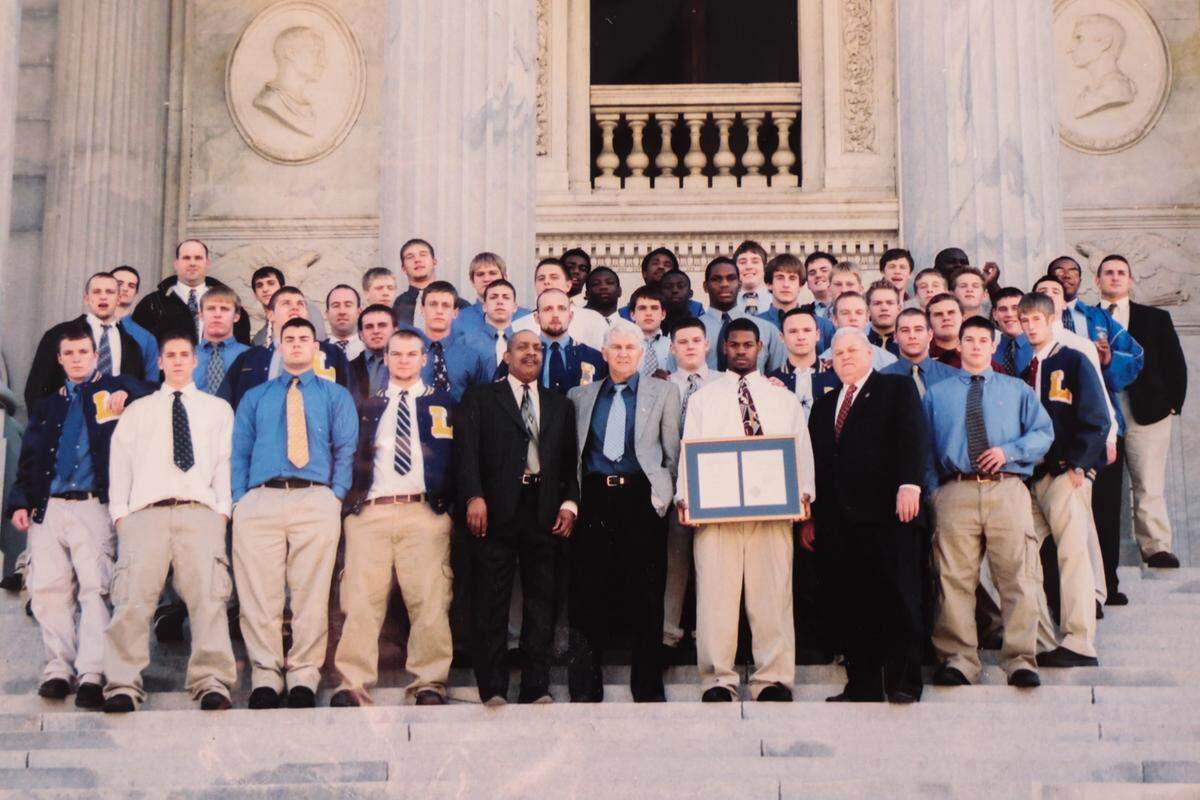
But locally, Summers was a full-blown celebrity. Consider: Lexington High School retired his No. 31 in 2002 — while he was still playing. S.C. Sen. Jake Knotts introduced a resolution in the State House to honor Summers. Just outside of Lexington’s football stadium, a large mural of Summers gleamed proudly.
You just can’t see it anymore. It was painted over years ago.
Colleges, including USC Gamecocks, roll out red carpet for Summers
There are so many scrapbooks on Jacqueline Summers’ coffee table, it’s not clear if Summers’ mother is starting a museum or has just dismantled one.
The total is 13 books, organized meticulously in chronological order, bulging with relics you can’t believe she kept. Ticket stubs. Student IDs. Old Lexington football game plans.

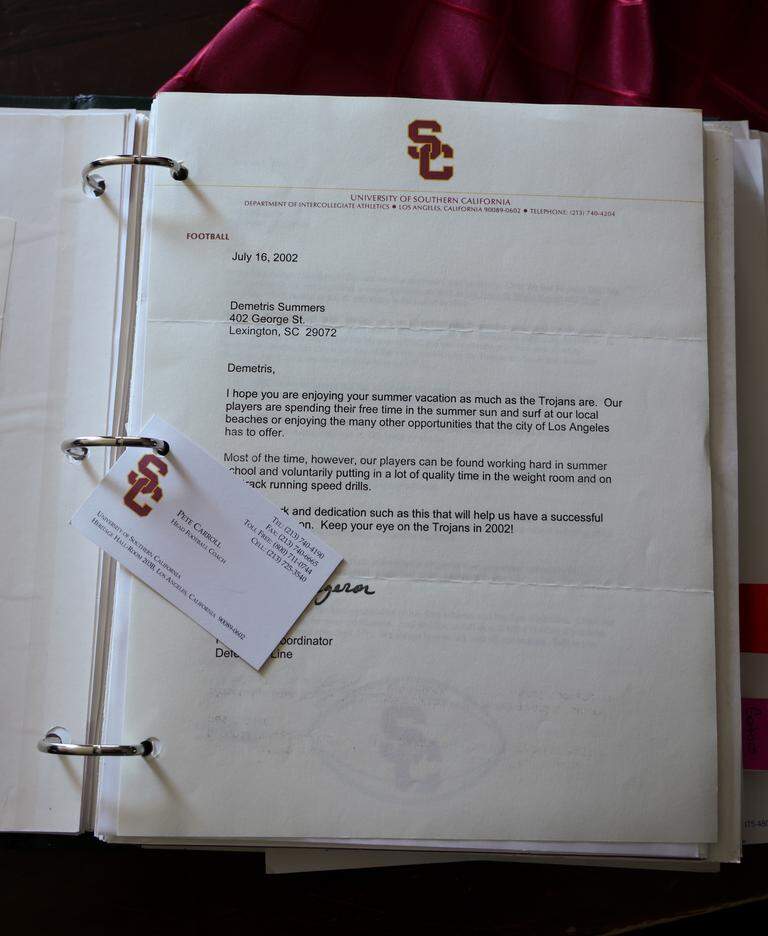
Four of the scrapbooks are dedicated solely to the few thousand bits of recruiting mail sent to the Summers’ household between 2000 and 2003.
The mailings are an eclectic mix of advice, encouragement and sales pitch. One letter from then-Southern Cal wide receivers coach Lane Kiffin noted that rules prevented him from calling recruits that particular month. His advice: If they call him and he doesn’t answer … just keep calling until he does. The University of Iowa sent a letter quoting former president Ronald Reagan.
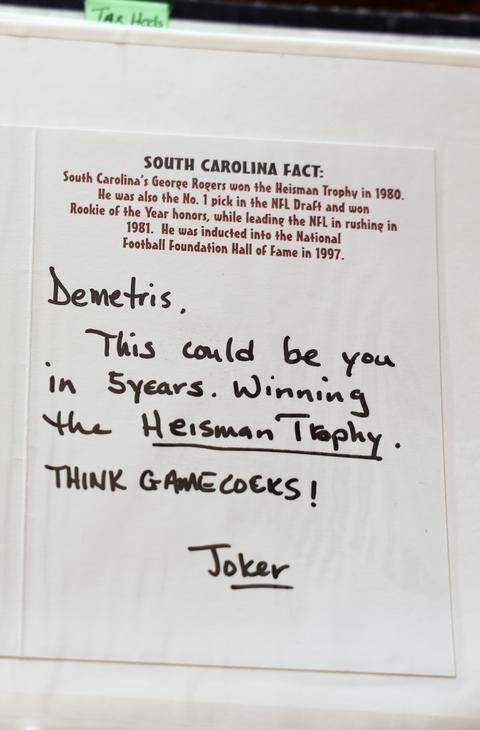
In one letter, Clemson coach Tommy Bowden recounts the previous week’s game where Memorial Stadium was sold out while another 20,000 fans were standing in the parking lot trying to get in. On a postcard that touted a “South Carolina Fact” that George Rogers won the 1980 Heisman Trophy, USC assistant Joker Phillips — who loved underlining random words — wrote to Summers:
Demetris, This could be you in 5 years. Winning the Heisman Trophy. Think Gamecocks! Joker
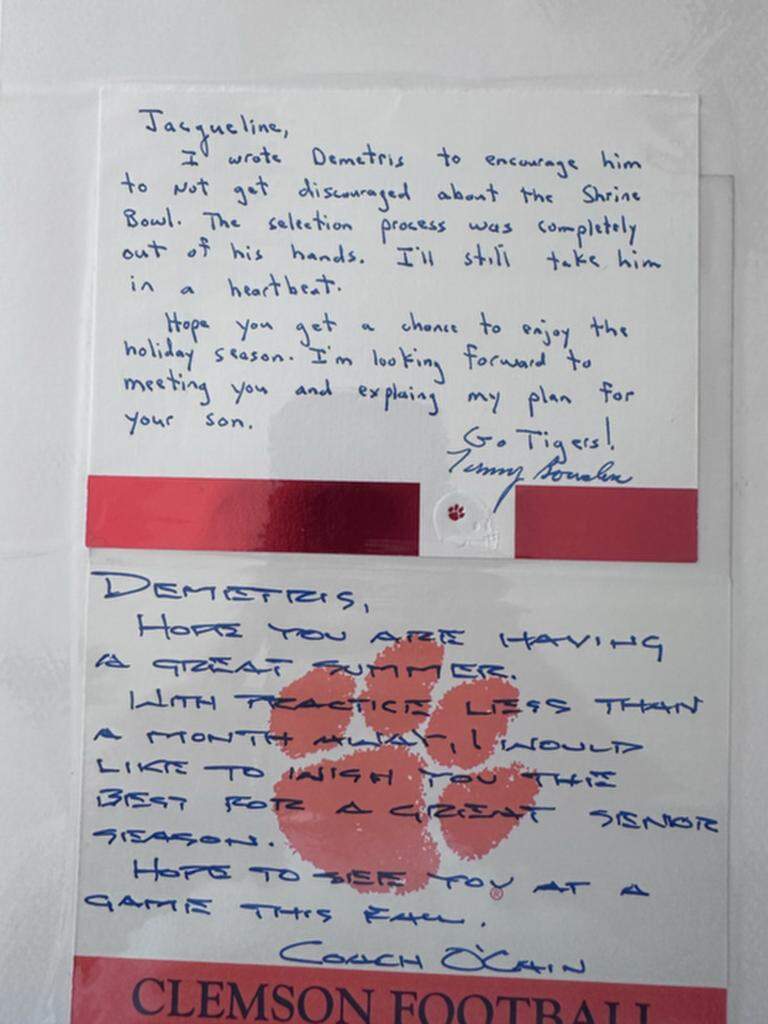
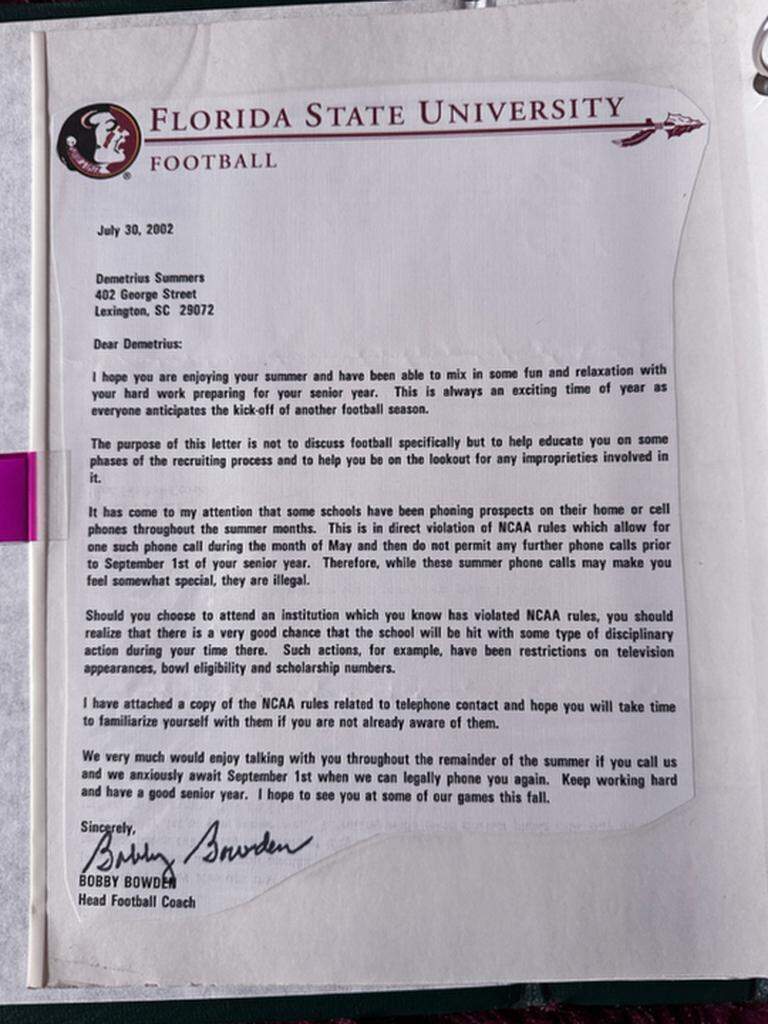
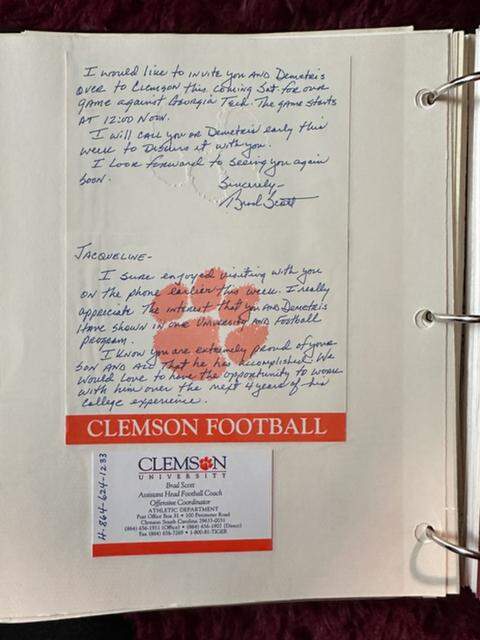
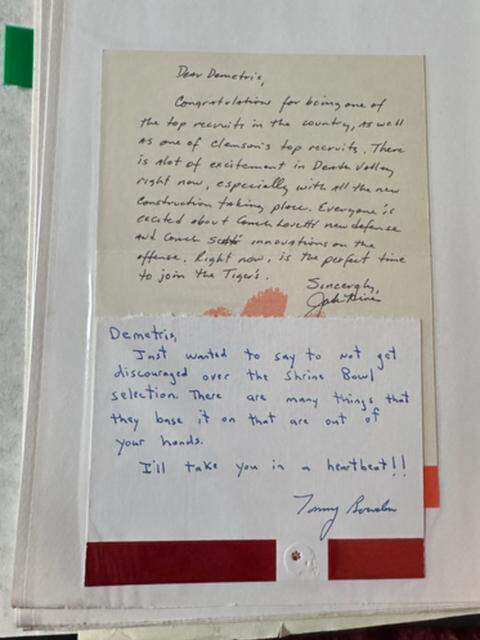
 " data-caption="" class="hide-from-app">
Summers’ mother went on a few of his recruiting trips, but often his sidekick was 15-year-old Brock Mills, whom Summers coached in rec league basketball. The pair toured the biggest football powerhouses of the Southeast together.
“It was crazy,” Mills said. “They laid out the red carpet for us. Whatever we wanted. ‘You want women?’ They give us women all weekend. You wanna party all weekend? We’ll party all weekend.’”
At home, the calls became so relentless that the only relief came when Summers’ grandmother would pull the phone cord from the wall. Other times, when Summers was sick of talking with college coaches, he’d answer the phone, hand it to his younger cousin and let the little man pretend he was Summers.
Clemson was the first to offer Summers during his sophomore year. But you would’ve never known that based on there interview he gave The State soon after, where he said three times that if Florida State offered him, he’d commit on the spot.

As signing day neared, he said he was leaning toward Florida because “I want to have a chance to win a national championship.” Not a week later he canceled a visit to Florida and said he was going to either Clemson or USC.
“People said he was going to do this, he was going to do that,” Satterfield told The State in January 2003. “He probably means that at the time he says it, then he’ll change his mind.”
South Carolina coach Lou Holtz made regular visits at Satterfield’s office to meet with Summers. He understood Summers could be swayed, or more precisely, would be swayed. The problem: Holtz rarely made rosy promises.
Running back Cory Boyd recalled that Holtz promised him “that the university and the fans would always love me (during) my playing days and after my playing days.”
“That meant a lot to me,” Boyd said.
Summers, however, didn’t need love. He needed the ball. He wanted to be the guy at USC that he was at Lexington. He wanted to be the next George Rogers.
So Holtz told Summers that if he came to South Carolina, the first carry of the 2003 season would go to No. 31.
A choice for South Carolina, staying home
Leading up to National Signing Day, the plan was for Summers to announce his decision on TV. It was the brainchild of Shaun Satterfield, who aired a show about Lexington football Wednesdays on Time Warner Cable in Columbia. But as Shaun prepped for Summers’ grand reveal, there was a hiccup.
“He couldn’t decide,” Shaun said.
Shaun devised a work-around. He was going to film alternate endings and have Summers — when he finally made up his mind — tell him the day of.
The night before signing day, Summers was still on the fence. His mother was not.
“She influenced me to go to Carolina,” Summers says now. “It was close to home. She said, ‘You’ll be able to see your daughter every day, and you won’t have to miss out on her life, her first steps, all that stuff.’”
Jacqueline Summers was dealing with health issues at the time. Diabetic ketoacidosis. Kidney stones. Travel was rough. After driving home from the official visit to Clemson, she was in so much pain that she begged her son to go to South Carolina.
Now she’s sitting in her living room wondering if she made a mistake.
“I think I (made) a bad judgment on that,” she said. “Because it was too close. So he could come home after the games on Saturdays. If he would’ve went to Clemson or Florida, he wouldn’t have made that trip every weekend.”
It was that proximity to home that had worried Satterfield the most.
“You sure?” Satterfield asked. “You sure?”
“Yeah,” Summers replied. “I’m gonna go to Carolina.”
“You sure?” Satterfield said once more. “I think you’re too close to home.”
“I’ll be all right,” he told his coach.
Rewatching the televised announcement, Summers still doesn’t sound sure. What he says lands more as a guess than a declaration.
“I think I’m going to play for the Gamecocks,” Summers says. “I think that’s going to be a great school for me.”
This story was originally published November 4, 2025 at 5:00 AM.