Prosecutor promises ‘justice’ in Jamal Sutherland SC jail death, seeks second opinion
READ MORE
Jamal Sutherland
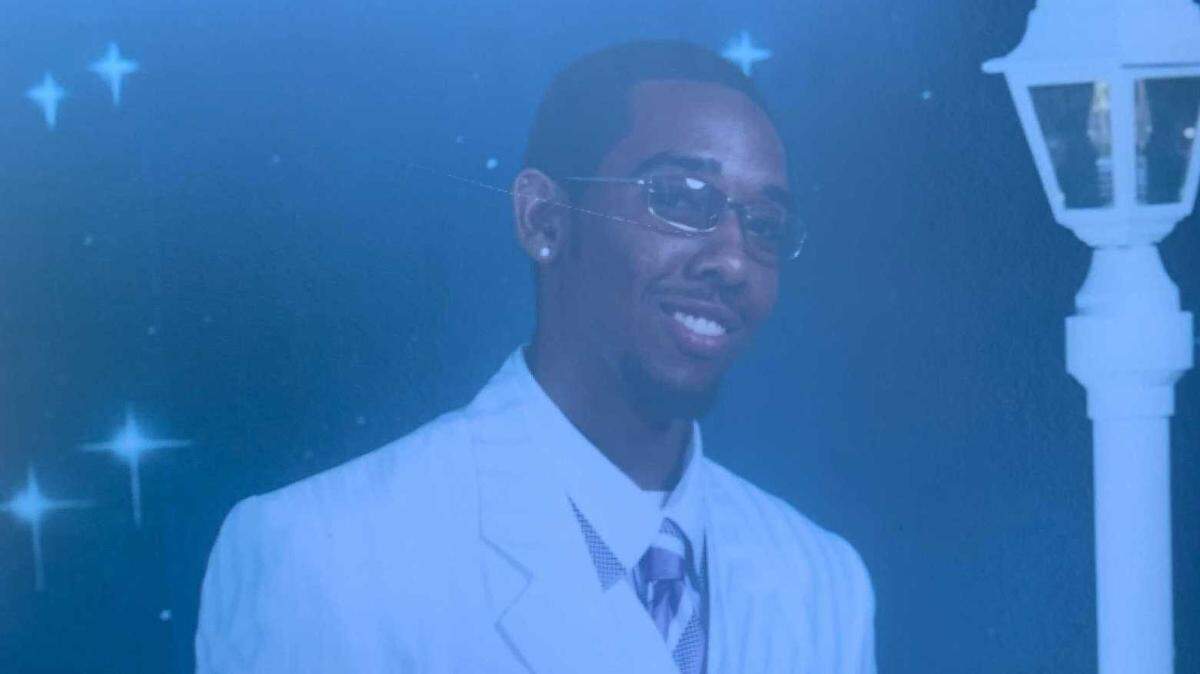
Jamal Sutherland, a Black man with a history of mental illness, died at the Charleston County Jail on Jan. 5. After graphic footage showing his death was released by the Charleston County Sheriff’s Office, many questions around the investigation remain.
Expand All
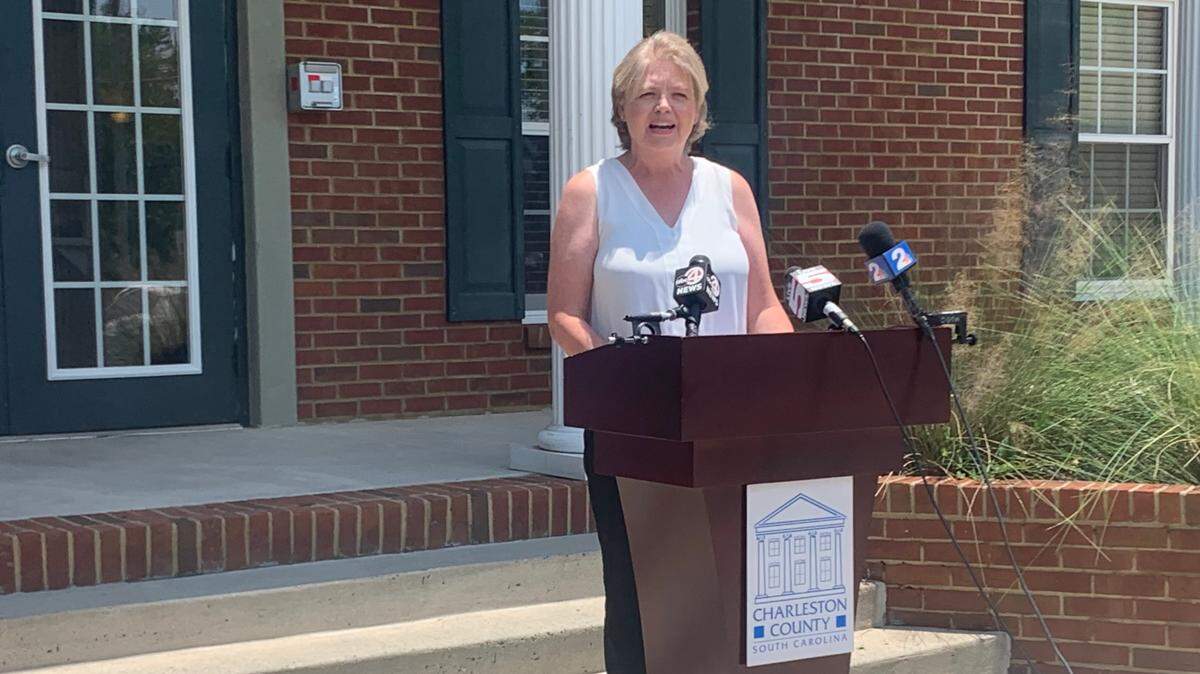
As she considers whether to bring criminal charges against two former deputies involved in the January death of a mentally ill inmate, 9th Circuit Solicitor Scarlett Wilson says she will be seeking a second opinion about how Jamal Sutherland died inside a Charleston County jail.
The prosecutor said in a statement Tuesday evening that she will also be seeking expert opinion and advice about use of force in a detention setting.
“All well-meaning people want justice in this case. I intend to bring justice to the Sutherland family, and to any suspects in this investigation,” Wilson said.
Pathologist Dr. J.C. Upshaw Downs originally determined that Sutherland’s cause of death was “undetermined,” and said the 31-year-old died “as a result of excited state with pharmacotherapeutic effect during subdual process.” The same patholgist also said his review of the extrication process did not reveal any “unusual or excessive interactions or areas of direct concern.”
Sutherland died on the morning of Jan. 5 after two Charleston County sheriff’s deputies forcibly removed him from his cell for a scheduled bond hearing. The deputies involved in the incident were detention deputy Brian Houle and detention Sgt. Lindsay Fickett.
On Monday evening, more than four months after Sutherland’s death, those officers were fired.
Wilson on Tuesday stressed that she continues to review the results of an investigation by the South Carolina Law Enforcement Division into Sutherland’s death. Wilson has not brought any criminal charges against the officers involved in Sutherland’s death at this time.
“If there were to be criminal charges and a trial, however, the trial would be in a court of law, not a court of public opinion or human emotion,” Wilson said.
Her comments come one day after a pair of peaceful protests were held outside her office in downtown Charleston. During both demonstrations, protesters demanded that she bring criminal charges against the officers involved in Sutherland’s death. Wilson acknowledged the protests in her statement, and said, “Your resolve is admirable, and your voices are heard!”
For a person to be held criminally responsible for another person’s death, Wilson said, the state must prove that unlawful conduct was the proximate, or direct, cause of death.
“SLED did not opine on the first issue and it is imperative that a well-qualified expert witness weigh-in,” she said.
Wilson said if the evidence shows there is a prosecutable case, she will pursue criminal charges.
If she cannot prove a criminal charge beyond a reasonable doubt, though, Wilson said “I will owe the Sutherland family and the community a thorough explanation of the obstacles.”
“Regardless of which conclusion I reach,” she continued, “I must perform due diligence and I am doing just that.”
Charleston County Sheriff Kristin Graziano on May 13 released graphic footage showing Sutherland’s death. The release of dozens of videos came after months of mounting public pressure calling for their release.
“The video in this case is disturbing. I have lived with its sights and sounds for months,” said Wilson, who was also the prosecutor in the 2015 police shooting death of Walter Scott. “In addition, the exposure of mental health care failures is maddening. For those working in the justice system, it is not shocking.”
Sutherland was booked into the Al Cannon Detention Center on Jan. 4 after an alleged fight at Palmetto Lowcountry Behavioral Health Center, a mental health facility where Sutherland was receiving care for schizophrenia and bipolar disorder. He was arrested by North Charleston Police.
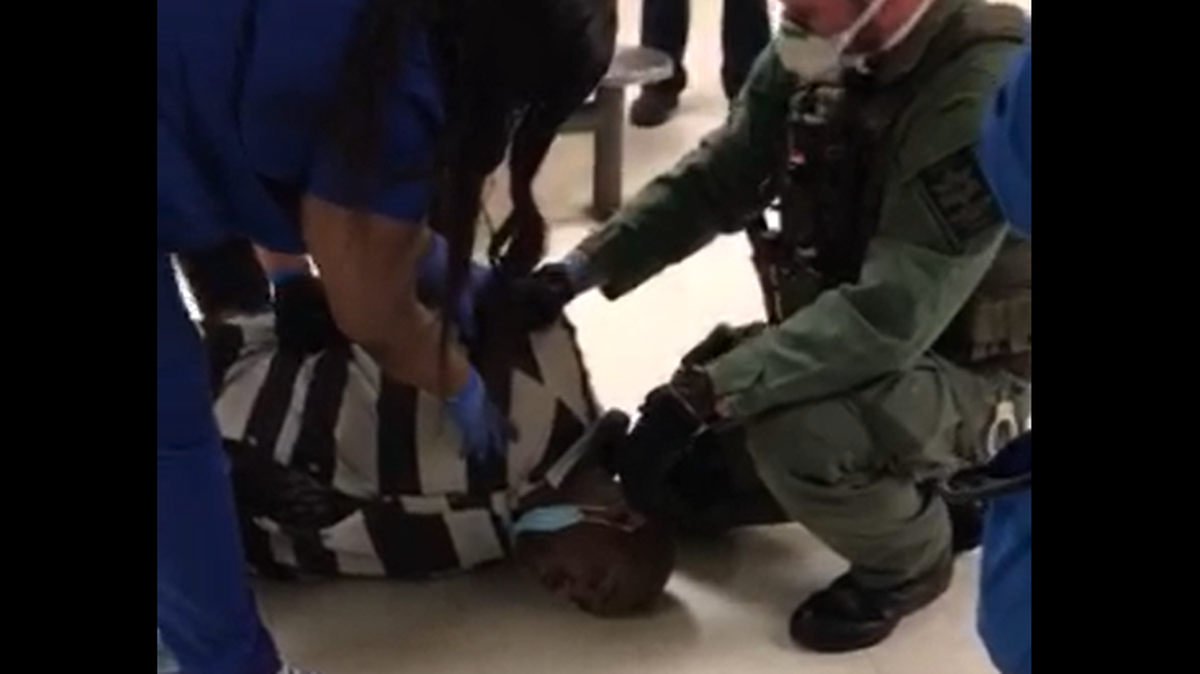
During Sutherland’s encounter with the two jail officers on Jan. 5, footage shows he was sprayed twice with a chemical irritant and shocked repeatedly with a stun gun. Sutherland wailed in pain as he lay face down on the floor, at one point screaming for 34 seconds straight.
As Sutherland lay on the floor with deputies on top of him, their knees pressed into his back, Sutherland at one point can be heard saying, “I can’t breathe.”
As medics tend to Sutherland, Houle can be heard telling medical staff members, “He got tased about probably six to eight times at least.”
“Oh my god,” a member of the medical staff responds.
“He kept fighting us through,” Houle says.
According to information provided by the sheriff’s office after the Jan. 5 death, Houle was employed with the agency since July 2016. Fickett, who could be seen kneeling on Sutherland’s back in video footage, has worked for the sheriff’s office since March 2011.
Both could be seen firing their Tasers at Sutherland in video footage released to the public last week.
Facing questions about their employment during a May 14 press conference, Graziano said the deputies had been placed on paid administrative leave for 30 days after Sutherland’s death. The deputies then returned to work in desk jobs where they had no contact with the jail population, Graziano said at the time.
In addition to SLED’s investigation, Graziano said the sheriff’s office is conducting its own internal investigation about what happened.
Graziano also said the jail had one mental health professional for 750 people. “And it’s just not enough,” she said.
This story was originally published May 18, 2021 at 6:08 PM.