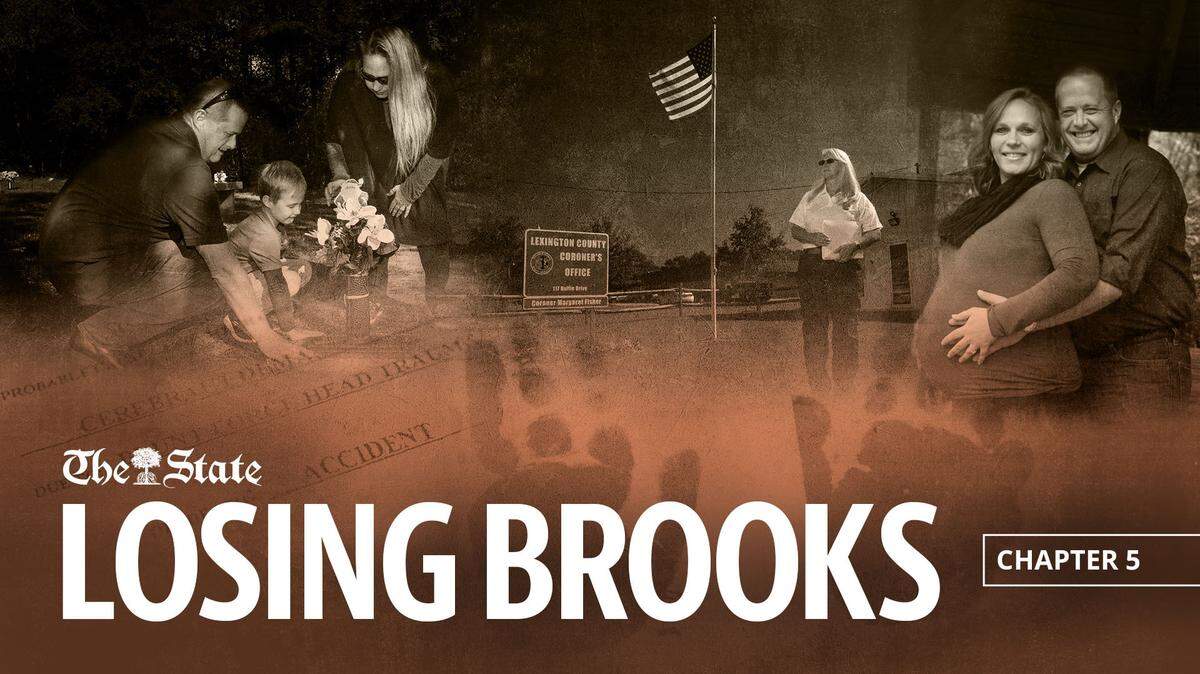
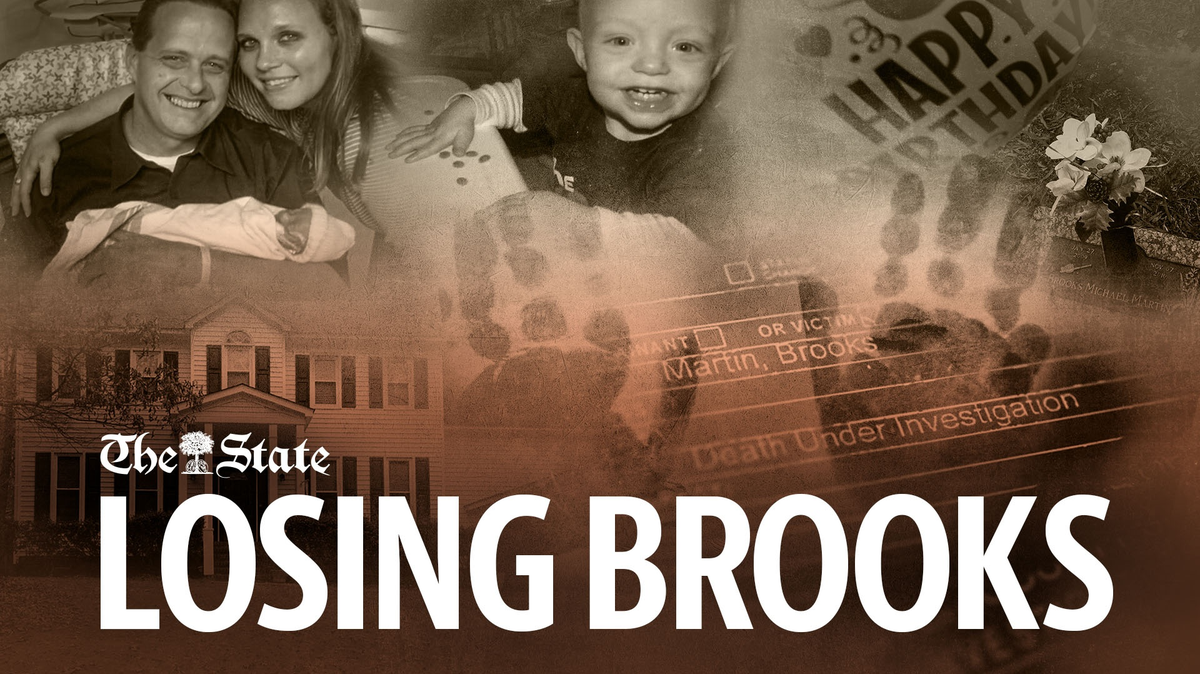
Would SC parents be left with closure or more questions after probe into son’s death?
READ MORE
Losing Brooks: Did an accident kill their baby boy 10 years ago? His parents believe it was homicide
In November 2010, Amy and Tim Martin lost their 21-month-old son after an incident at a home day care in Lexington County, South Carolina. The homeowner says that the baby fell down the stairs but a doctor told the Martins that the baby’s injuries were intentional. After two police investigations, Brooks’ parents are left with more questions than answers.
Expand All
Amy and Tim Martin didn’t think they would be able to have a child before she became pregnant with their son. Brooks was born prematurely but was meeting developmental milestones. In November 2010, at 21 months old, he died after an incident at a home day care in Irmo while under the watch of Michael Creech. Michael said Brooks fell down the stairs while a doctor noted in medical records that Brooks’ injuries may not have been accidental.
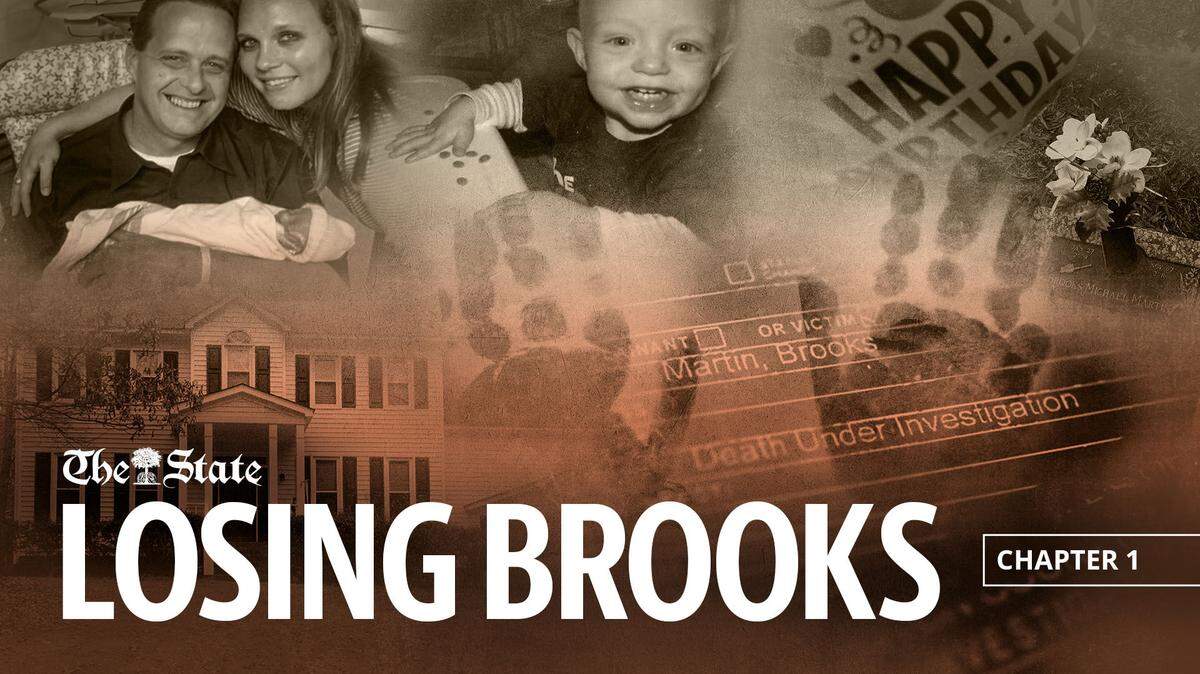
On Nov. 7, 2010, inside a pediatric intensive care room of Palmetto Health children’s hospital, a hospital worker pressed Brooks’ hands on a sheet of paper, leaving an impression of his palms. She did the same with his feet, imparting the last shadow of how big Brooks had grown in his short life. The worker put the paper into a “Memory Box” for Brooks’ parents, Tim and Amy Martin.
A nurse brought Tim and Amy to Brooks’ bedside. They had one request before hospital staff ended life support. They wanted to hold their son as he faded.
Nurses disconnected Brooks from the machines and needles that kept the child alive. A nurse laid their son where the laps of his parents met.
They held him.
“It felt like he just melted, like his whole life just left him,” Tim said.
Their son was dead.
When Tim and Amy returned home that day, they were left with the mementos of their child — his clothes, his toys, the memories of times together captured in photographs and a love that refused to perish.
But something else remained — questions about how Brooks died.
Lexington County Sheriff’s Department investigators had already begun looking for the answers.
‘DIFFERENT EXPLANATIONS’
The day Brooks was injured, Lexington County Detective Marty Longshore arrived at the hospital. Deputies told him that nurses “were getting different explanations as to what happened to Brooks,” according to a police report.
Michael Creech had told everyone from the paramedics to Brooks’ parents that the child had fallen down the stairs. But as doctors looked closer at Brooks’ head injury, questions surfaced about the fall explanation. Bleeding inside the child’s eyes could indicate abuse, a doctor told police.
As Brooks’ attending physician told a Lexington detective after police were called in, hospital staff “do not call if they feel that it is an accident.”
Longshore found the Martins and Judy Creech, Brooks’ caregiver, in the waiting area outside the pediatric intensive care unit. Where Michael was at this time is disputed, but Tim Martin claims Michael had left the hospital and gone home.
Police reports don’t clarify whether Michael left the hospital.
What Michael Creech did at his house after paramedics took Brooks, and when exactly Creech’s actions took place, brought up lasting questions about the investigation.
Longshore told Judy, “You either get him here or we’re going to go get him,” Tim recalled. Judy called Michael and he returned to the hospital, Tim said.
When Michael arrived, Longshore interviewed him, Tim, Amy and Judy separately.
Creech said he was in the bedroom when he heard a “thud,” like “something hit the stairs,” police reports said. He came out of the bedroom and “saw Brooks motionless at the bottom of the stairs.”
He ran down and picked Brooks up, carrying him back upstairs to get to a phone. He called his wife, who was at a doctor’s appointment for one of their daughters. Judy didn’t answer at first, but called him back moments later. She told her husband to call paramedics.
The Martins and Judy all told Longshore the same story they had heard from Michael, the only adult in the home when Brooks was injured, according to police records.
At about 7 p.m., Longshore asked Judy Creech if she’d consent to have her and Michael’s house searched. Investigators wanted to document the scene and confiscate any items that might be relevant to Brooks’ death. She agreed.
About 7:15 p.m., a deputy got to the Creeches’ house for the first time since Brooks was injured. Members of Lexington County’s Crime Scene Investigations unit photographed inside the home.
Behind the house, strewn across the backyard, a deputy found toys, high chairs and the playpen where Brooks watched cartoons for the last time. Someone removed the items from their original location in the house.
The deputies left the items there.
Brooks’ death two days later began a new phase of the investigation. The Lexington County Coroner’s Office and state police became involved, each with their own questions and methods at getting to the truth. The Lexington County Sheriff’s Department was now investigating a possible homicide by child abuse.
Sheriff’s department Detective Tricia Chandler had arrived at the hospital to speak with Dr. Robert Hubbird.
Brooks’ attending physician explained that brain scans showed dark spots which appeared to be blood or “old injuries” in areas of the child’s brain where blood shouldn’t be, according to police reports.
An eye examination found extensive bleeding inside Brooks’ eye, also known as retinal hemorrhaging.
The symptoms may point to abuse. These old injuries and eye bleeding couldn’t have come from minor accidents, Hubbird told her.
Brooks could have fallen down the stairs and sustained some of the injuries to his brain that led to his death but a fall down the stairs “was not the only factor,” Hubbird said.
Because of Brooks’ older brain wounds and the layers of damage in Brooks’ retinas, Hubbird believed the child’s injuries were non-accidental, he said.
The physician asked a key question, according to a police report: “Did the child fall down the stairs or was he thrown?”
The doctor suggested investigators consult a forensic medical doctor about Brooks’ injuries. He told Chandler that a radiologist should be asked for an opinion about the dark spots of old blood seen on Brooks’ brain scan.
That afternoon, a deputy coroner arrived at the hospital to transport Brooks’ body to a pathologist who would determine how he died. The deputy coroner entered the morgue and received a body bag that was smaller than the others, tagged with the number 13165 and “Martin, Brooks.”
By late Sunday afternoon, investigators obtained another search warrant to gather evidence from the Creeches’ home. Longshore and other investigators showed up at the house. They found the playpens and toys still in the backyard.
Some of the playpens had been chewed on by the Creeches’ dog.
They photographed and collected the pens along with a baby gate that was at the bottom of the house’s stairs.
Before the detectives left the house, Longshore asked Michael and Judy Creech to come back to the sheriff’s department headquarters to answer some more questions.
They wanted to call their lawyer first. After speaking to him, they told Longshore they wouldn’t go to police headquarters that day but would answer questions later in the week with their lawyer, according to a police document.
CONSISTENT
Family and friends of Tim and Amy’s gathered at their house the day after Brooks’ death. Tim never let his emotions overwhelm him in front of his wife or Briana, his daughter from a previous marriage, at the time of Brooks’ hospitalization and death and during the significant parts of the investigation.
He wanted to keep Amy from total despair.
Tim’s brother flew in from Texas. From the front steps of their home, Tim watched his brother pull up to the house and walk across the yard. When he met his brother in the grass, Tim collapsed.
“I let it all go,” Tim said.
He bawled in his brother’s arms.
Hundreds came to show their support for the Martins at a ceremony at Caughman-Harman Funeral Home in Irmo. Brooks rested in an open casket, his favorite beanie covering his wounds and makeup concealing the racoon-like bruising around his eyes.
Michael Creech stayed away from the casket, remaining at the back of the room, Tim said. At one point, Creech broke down sobbing and threw himself on the ground, the Martins remembered.
A friend of the Martins approached Creech and said he needed to pull himself together or leave, Tim remembered. Creech left.
The medical examiner who would normally lead autopsies, Dr. Janice Ross, an experienced forensic pathologist from all accounts, wasn’t in on the day the child’s body arrived at Newberry Pathology Associates.
So Dr. Kelly Rose, another examiner at Newberry Pathology — who was knowledgeable but didn’t have the same level of experience as Ross — conducted Brooks’ autopsy.
Lexington investigators told Rose what Michael Creech told them — that Brooks climbed out of a playpen, fell down the carpeted stairs and hit his head on the hardwood floor. They noted that his parents said Brooks was very mobile and had climbed out of his crib at home in the past.
The pathologist didn’t find evidence of old blood or old injuries in Brooks’ brain, as doctors at the children’s hospital had seen. The bleeding in his inner eyes, which Brooks’ doctors said were likely signs of abuse, was not noted in her report.
She wrote in her report that Brooks had a “history of fall” and that Tim and Amy were comfortable with the caregiver and that Michael Creech “was distraught and very upset.”
“All injuries consistent with fall,” Rose wrote in the autopsy report.
She ruled that Brooks’ death was an accident.
At the end of her report she wrote to investigators, “thank you for referring this case because unfortunately with most similar cases there is abuse. Good job.”
Lexington County Sheriff’s Department’s final interrogation of Michael Creech occurred two days later. Mike and Judy Creech arrived with their lawyer at the department’s headquarters.
Detective Longshore interviewed Judy and Michael Creech in separate rooms. Their lawyer sat in on the conversations.
Michael’s telling of events didn’t change, aside from informing Longshore that a baby gate had been at the bottom of the stairs.
During the interrogation, Longshore told Michael that the pathologist concluded that the death was an accident.
At this, Michael “began crying uncontrollably,” according to a police report. He was unable to form any words except to say that he saw Brooks at the bottom of the stairs, picked him up and called paramedics.
In Longshore’s last report on Brooks’ case, he wrote “due to the medical examiner’s finding that Brooks’ injuries were consistent with a fall and any injuries of abuse were not present and unfounded this case is administratively closed.”
The Martins found out about the pathologist’s ruling around the same time, as a sheriff’s department victims’ advocate sat in their living room.
Amy had slept with Brooks’ clothes, the scent and softness reminding her of her son being alive.
She said she felt like she was living in a pitch black room. All she could see was a pinpoint of light and the light seemed like it would never overtake the darkness.
The pathologist’s ruling made the light glow a little brighter. It returned Amy to her original hope: that nobody had hurt Brooks, and this was all a terrible accident.
But Tim was not convinced.
He couldn’t forget the words of Brooks’ physician when they spoke in the private office at the hospital. “Non-accidental trauma” and “intentional” were branded on his mind.
His confusion collided with his grief. Tim’s paternal instinct — to protect his son — rushed inside of him and screamed for action.
But how could he fight for his son after Brooks was buried? How could he free himself from the purgatory of anger and anxiety he was living in because of the contradictory findings about the death? How could the investigation into their son’s death already be over if questions still tormented him?
Tim didn’t know that for a seasoned agent with the South Carolina Law Enforcement Division, a new investigation was just beginning.
‘TELL HER I’M OKAY’
The first full sentence Brooks Martin ever spoke was to his father, a week after his death.
“It wasn’t an accident, daddy,” he told Tim Martin.
And then, in the dark of Tim’s mind, Brooks visited again. He stood by their bed, Brooks’ cherubic face hovering near Amy’s head. He touched the bed sheet with his small hand, then stroked his mother’s brown hair gently as she slept.
“Tell her I’m OK,” he said.
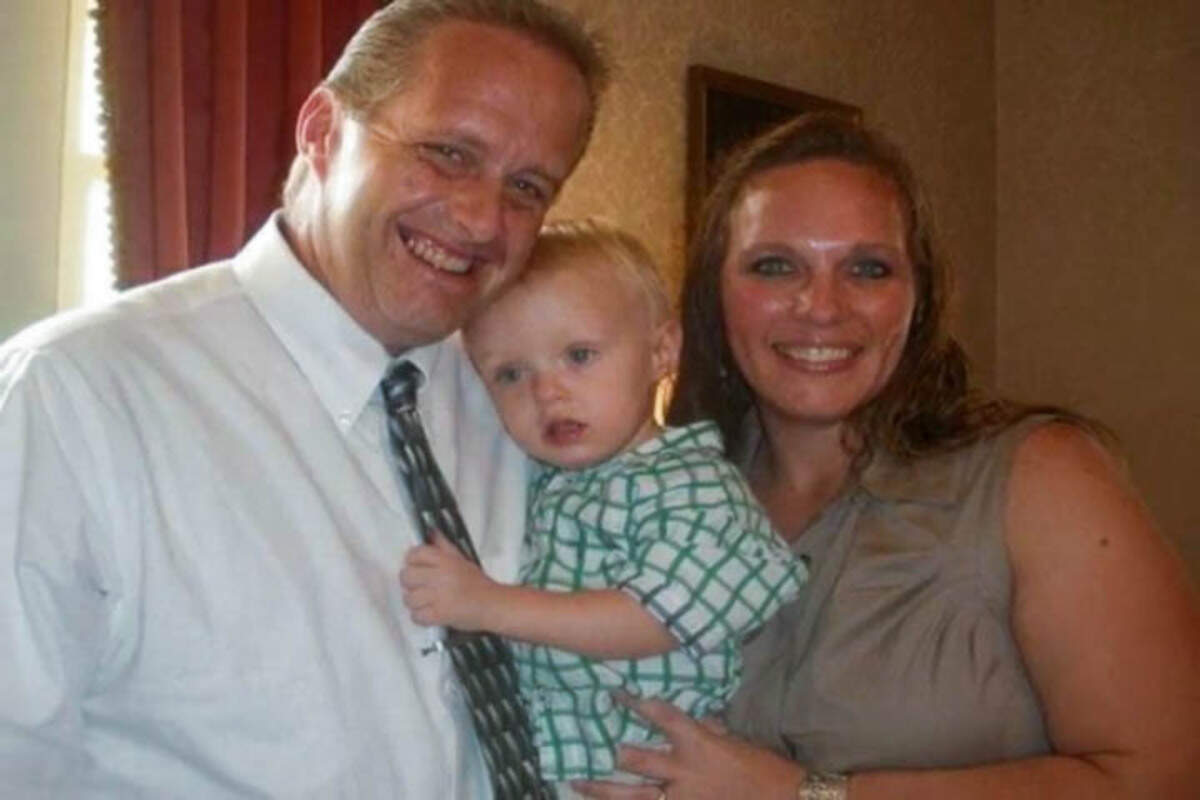
Tim would wake up with tears already pooling in his eyes. The chest-tightening realization that although Brooks looked so alive, he was gone.
The dreams made him weep, but they told Tim all he needed to hear to believe that his son was killed.
Click here for Chapter 3 of Losing Brooks.
This story was originally published October 22, 2020 at 5:00 AM.