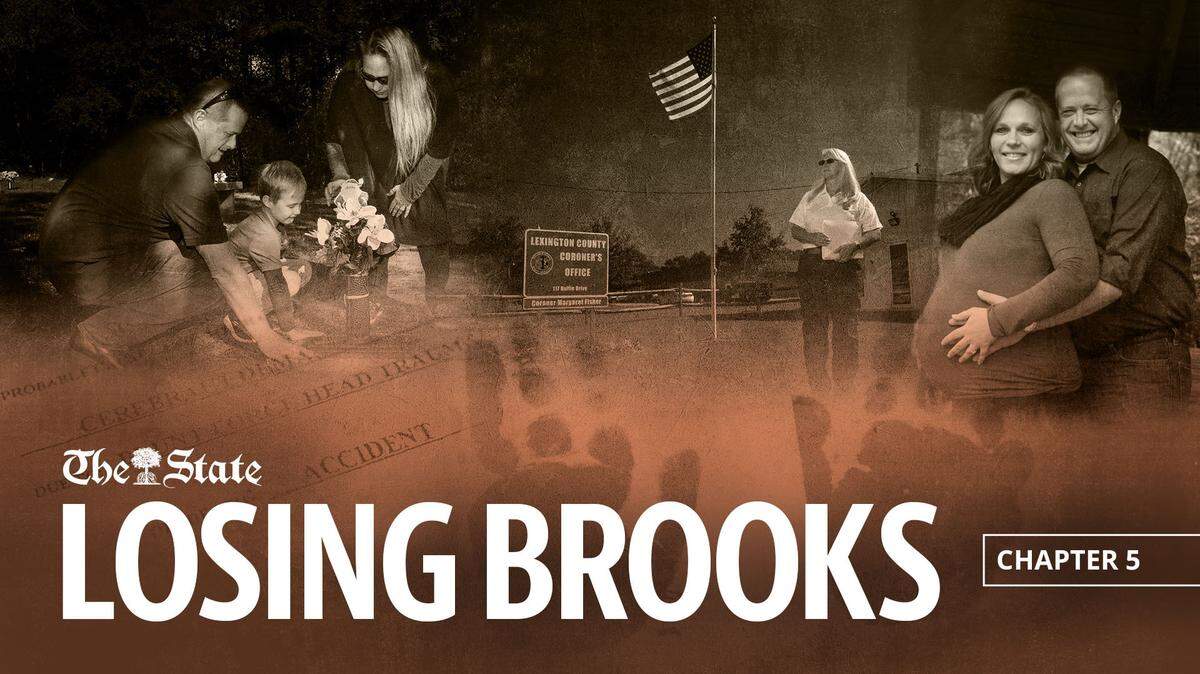
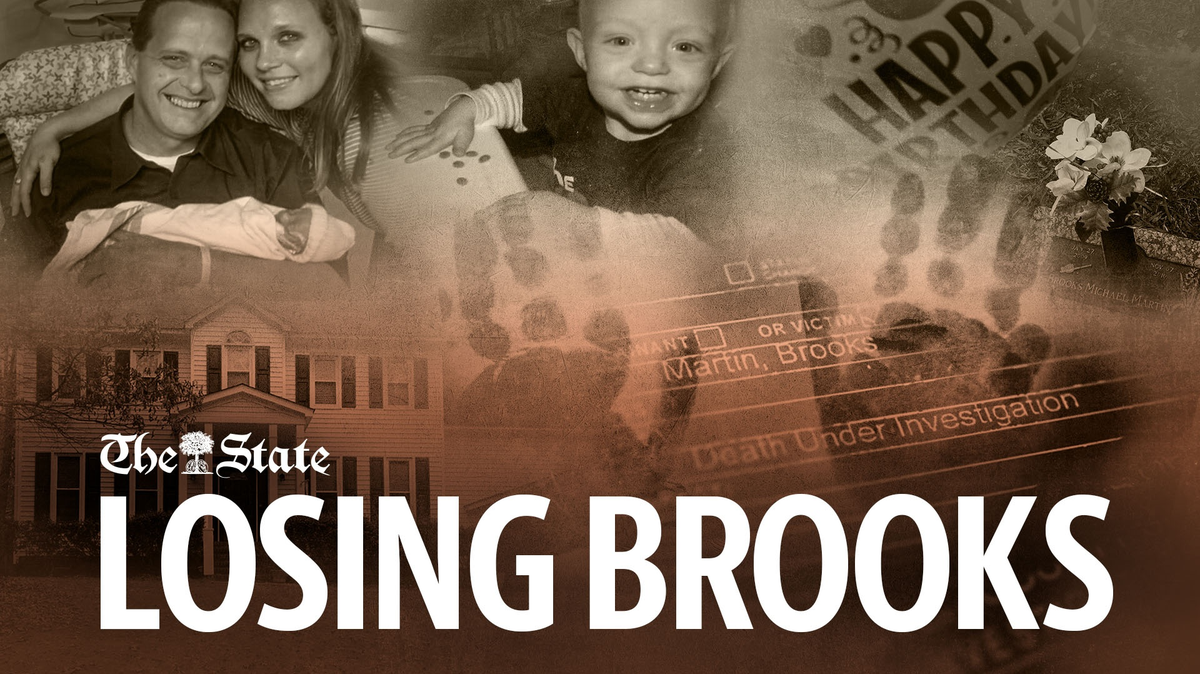
‘The system didn’t help them.’ Would SC child’s death be handled differently today?
READ MORE
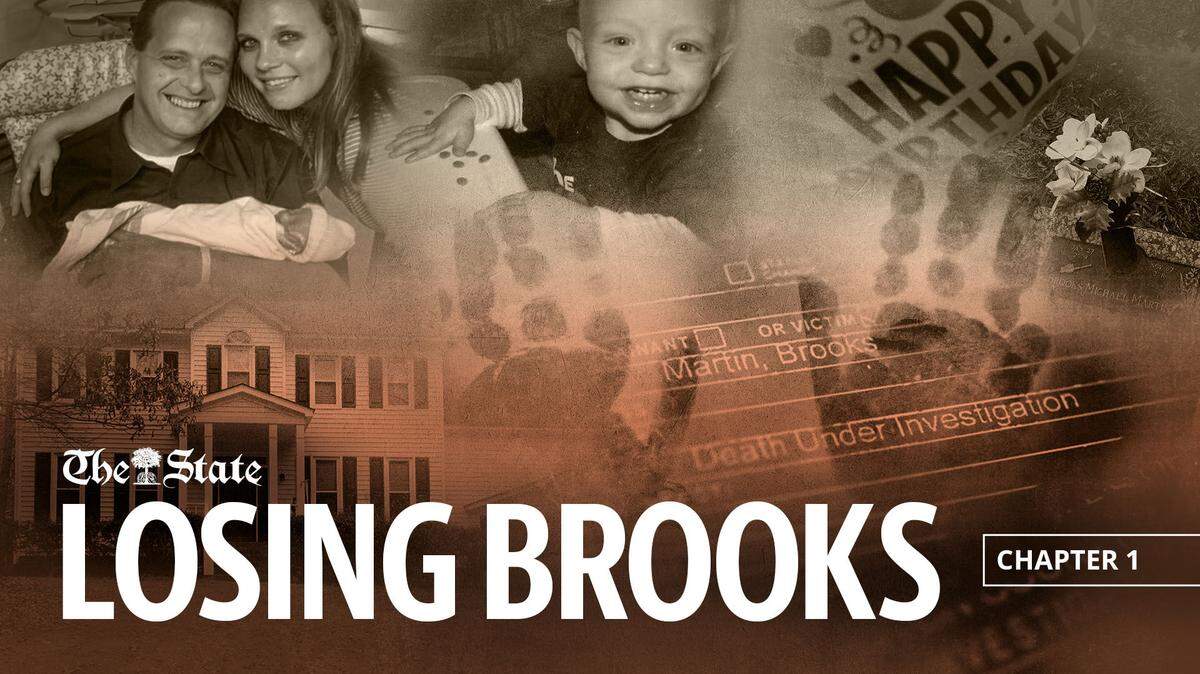
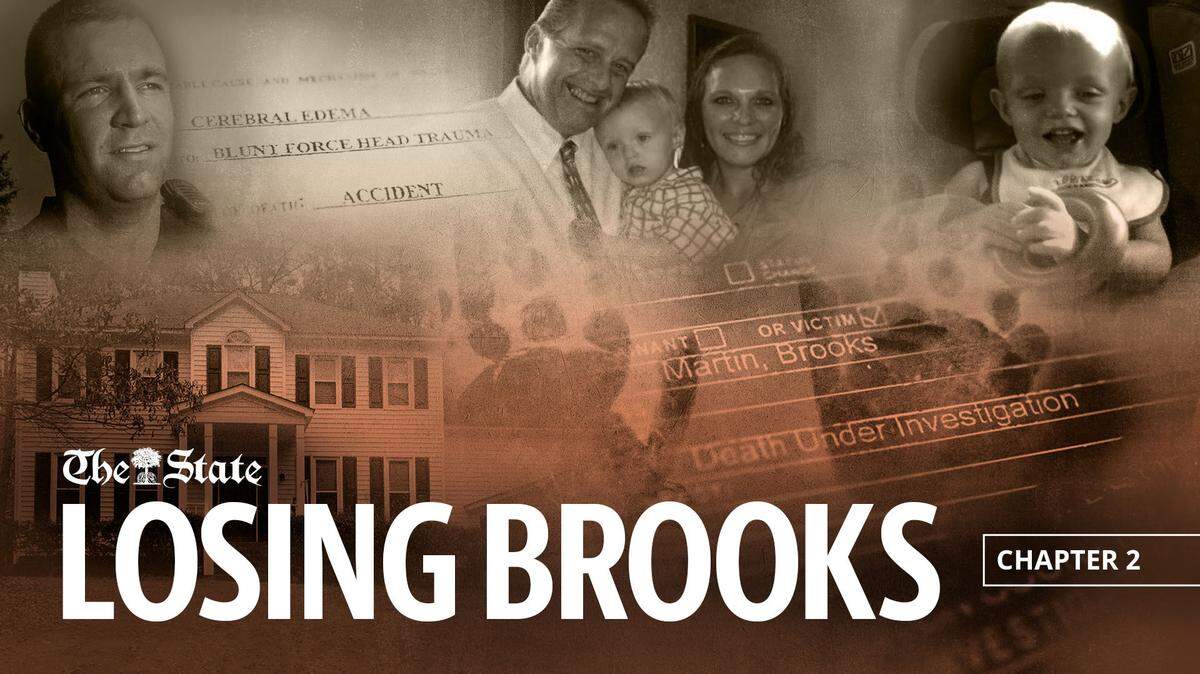
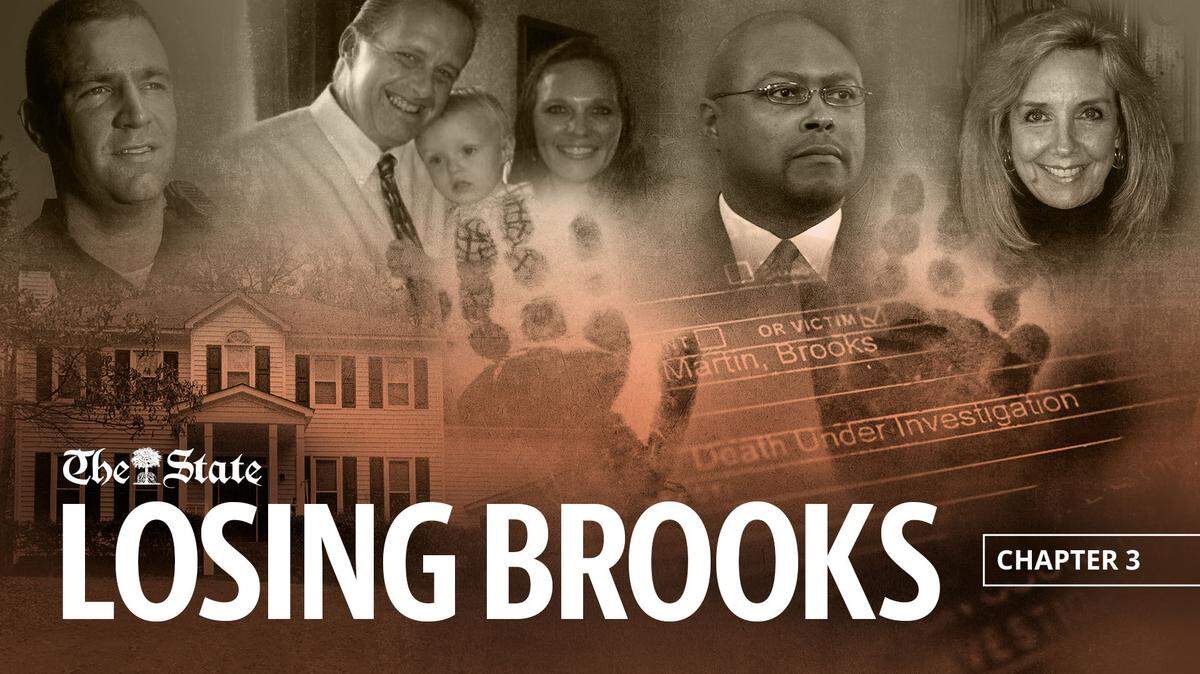
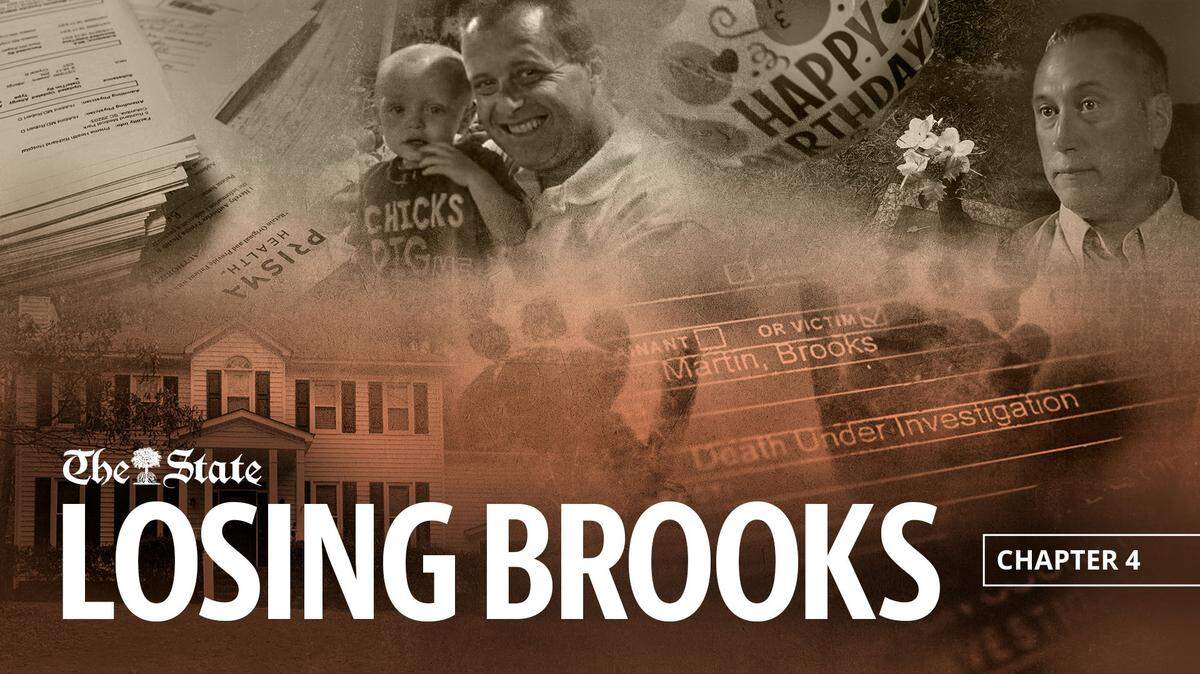
Losing Brooks: Did an accident kill their baby boy 10 years ago? His parents believe it was homicide
In November 2010, Amy and Tim Martin lost their 21-month-old son after an incident at a home day care in Lexington County, South Carolina. The homeowner says that the baby fell down the stairs but a doctor told the Martins that the baby’s injuries were intentional. After two police investigations, Brooks’ parents are left with more questions than answers.
Expand All
Alleged investigative missteps and conflicts derailed Amy and Tim Martin’s efforts for a criminal trial for the death of their 21-month-old son, Brooks. After more than a year of pushing and hoping for the trial, the Martins chose not to pursue it when prosecutors told them how hard it would be to win, given flaws in the case. Authorities dropped the homicide by child abuse charge against Michael Creech, the only adult with Brooks when he was hurt.
Tim Martin was frantic, driving his car from work at Colonial Life Arena to the hospital where his son’s heart would stop. That car was where Tim first heard God, as clear as if someone were in the passenger’s seat.
Tim saw a speeding ambulance driving in the same direction, and he knew Brooks was in it.
God told him Brooks would die.
The Martins have learned how to live their new lives. But what lingers is heavy.
Before Brooks died, Tim avoided going to church with Amy and his son. He didn’t feel the same connection to religion that Amy did.
Then he had that moment in the car, when he heard God.
“I said, if something that powerful can change my life, can give me that much strength to get through what I just went through, I need to give my life to it.”
They attend their church, The Harvest, every Sunday morning. That church helped guide them through the dead of night — Brooks’ death, a miscarriage, profound grief — with prayer, meals, support, friendship, faith. At that church, Amy and Tim try to hand the weight of their loss and grief and anger to God. That church also celebrated their joyful moments.
In the summer of 2013, Amy got the call from her doctor while at a rest stop in Rock Hill. She was on the way to a New Kids On The Block concert in Charlotte with friends. She was pregnant, the doctor said.
It was a boy.
“For me it was like a second chance to raise a boy,” Tim said.
They had Brady in December 2013. With Brady came revival and, with that, a softening of hearts.
“Whenever I got pregnant again, I didn’t want it to be because of grief. I didn’t want it to fill a void. I wanted it to be because we were ready. We were ready to be parents again. We were ready to love another child,” Amy said.
But they grapple with the idea of mercy.
For a while, Amy could not rid herself of her anger at Judy Creech for robbing her of any opportunity to save her son. Amy didn’t know he would be left alone with Michael the day Brooks was injured, she said.
But then one day in 2014, at a local baseball game, the Martins ran into Judy and realized they had forgiven her. Something rough fell away. They let her hold baby Brady.
“She did love my child and she did treat him like one of her own and I know she did love him,” Amy said. “And I know that she was distraught and how upset she was and how hurt she was over what happened. And I know she blamed herself a lot.”
Judy permanently closed her home day care immediately after Brooks was injured, according to state records. She went back to school and got a job caring for patients at a Midlands hospital’s heart unit.
“I think that is what she felt like God was leading her to do,” said Heather Rogers, a Creech family friend whose daughters stayed at the day care at the same time as Brooks. “I think that was her way of trying to heal and to follow God’s direction.”
The Creeches still live in the same house.
“I do think after a really hard, hard, hard time with their family, they have found happiness,” Rogers said.
Michael is a manager at a local restaurant. There is no trace of Brooks Martin on his criminal record. The State reached out to Judy and Michael Creech via phone, email and letters. They did not return the messages. August Swarat, Creech’s lawyer, declined to comment for this story and said the family would not comment.
But the Martins still run into emotional blockage when it comes to Michael. He is the last person Amy has in her life that she feels the need to forgive. When she sits in church, she listens to the sermons and asks the Lord if she is capable of so much forgiveness.
When a baby dies in a car crash, you know who the driver at fault was. You know what happened. Details surrounding Brooks’ death offer no clarity. It is what psychologists call an ambiguous loss — one that is made shapeless and more painful by its uncertainties.
“It’s hard to forgive somebody when you don’t know what to forgive,” she said.
In the eyes of the law, Michael Creech is completely innocent.
John O’Leary, a lawyer who represented Creech during his first bond hearing, said he didn’t believe a jury would have convicted Creech.
Creech “was totally innocent,” O’Leary said. “He should have never been charged.”
There was a civil settlement between the families in 2013.
A copy of the settlement shows that the Creeches settled with the Martins for “alleged negligent acts and/or omissions on or about November 5, 2010, which resulted in physical injuries to and the subsequent death of Brooks Martin.”
As the Martins transitioned into life after the lost battle for a criminal case, an unexpected change occurred.
Dr. Kelly Rose, who had first ruled Brooks’ death an accident, and her colleague Dr. Janice Ross examined Brooks’ autopsy again in June 2013.
“TO BE NOTED,” they added to their report. “Clinicians treating this victim after the head injury conclude that the injury was more severe than that which would occur from a fall as was reported.”
Rose and Ross changed the manner of death to homicide.
A year after the state dropped the charge against Michael Creech, the child’s death was officially listed as being caused by a person.
Rose did not return calls and messages from The State. Ross said she did not remember Brooks’ case. The Martins aren’t sure how or why the change came about.
Harry Harman, the Lexington County coroner who accepted the new ruling, died in 2014.
It’s possible that the case could be reopened.
The autopsy that reads “manner of death: homicide” still sits in a file at the Lexington County Coroner’s Office.
NO PRIVILEGE OF TODAY
On a clear day in January, Lexington County Coroner Margaret Fisher held Brooks’ file in front of her. She sat behind her desk covered in paper weights, notes and two cell phones.
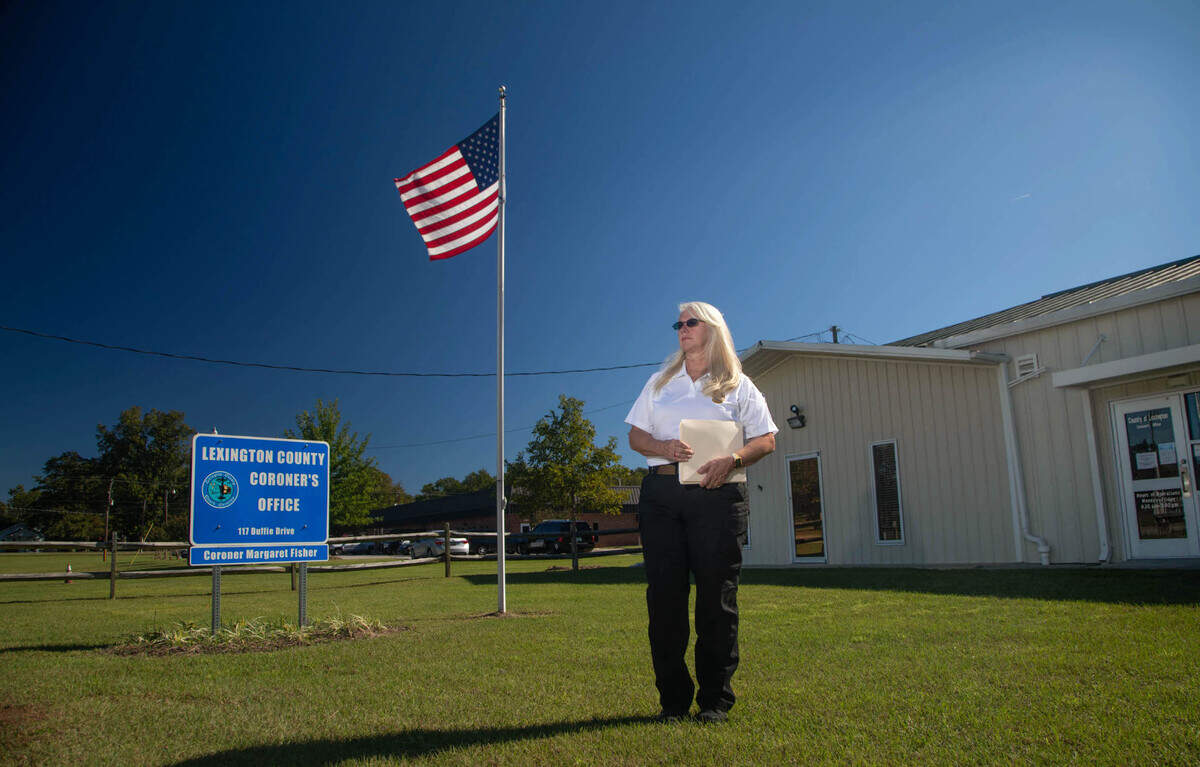
If Brooks’ death happened today, this would be a different story.
Fisher peered at a page from Brooks’ autopsy report and placed it back on her desk.
“I can definitely tell you this case would have been investigated differently,” she said.
When Fisher took the seat as Lexington County coroner in 2015, she realized there was no multidisciplinary plan on investigating children’s deaths differently than adult deaths. She decided to implement new techniques, like asking caretakers to recreate how they found the injured children.
“It was a rough start for the first year with (police) agencies because nobody really had a policy on how to investigate baby deaths,” she said. “It just kind of happened.”
In 2017, Fisher helped bring together the Child Death Investigation Task Force in Lexington County. The task force coordinated the investigative efforts of SLED, the coroner’s office, Lexington County police agencies and the Department of Social Services.
Part of the idea was to bring an end to territorial issues between SLED and police agencies. Those changes helped curb second-guessing and bickering about who got credit for arrests — issues that marred the investigations into Brooks’ death.
Now different agencies bring their findings to the table and come to a single conclusion about how a child died, unlike the conflicting results of inquests in Brooks’ case.
“There’s no egos now,” Fisher said.
A decade ago, Tim and Amy Martin didn’t have any of that.
They weren’t blessed with the privilege of now.
‘WHEN PEOPLE ASK’
Brooks’ death still haunts many who worked on the case.
“It’s not something you’ll ever forget,” said Debra Moore, the first prosecutor assigned to the case. “If you heard the 911 tape, you would never forget that either.”
Moore is convinced that justice was deferred. She still keeps in touch with the Martins, and she believes Brooks was killed.
Laura Hudson, the sought-after victim’s advocate with statewide name recognition, remembered small details about the case nearly a decade after the fact. She said she has met with the Martins several times through the years after first meeting them at a restaurant where she was having lunch with SLED Agent Patsy Lightle.
Because the case remained the same, she never had any new solutions to offer the Martins — all she had were condolences, she said.
Hudson walked through the case with the rest of the State Child Fatality Advisory Committee when it was reviewed and labeled “undetermined.”
“The system didn’t help them,” she said of the Martins.
Alissa Duke, Amy Martin’s best friend, is scarred by Brooks’ death. She doesn’t trust anyone with her children. She doesn’t trust law enforcement and the justice system to protect the most vulnerable.
“I’m not okay if he did something to hurt that child and he still gets to walk around freely,” she said of Creech.
Briana Broome, Brooks’ sister, has a child of her own, who was born almost a year to the day after Brooks died. As she packed to move from South Carolina to Virginia in 2019, the persistent questions about her brother’s death stung — the sense of urgency gnawed at her.
She wanted anything that could contain answers.
“There was some part of me that was like, I don’t feel comfortable leaving until we know more about Brooks,” she said. “Almost 10 years later, I still don’t know what to say when people ask.”
THE RIGHT TURN
On January 26, 2020, on the day before what would have been Brooks’ 11th birthday, it’s just Tim, Amy and Brady at Brooks’ graveside.
It’s chilly and overcast. The trees that line Temples-Halloran cemetery in Irmo are a dull gray-green. There are few bright spots here, but Brady’s smile and an emoji-covered balloon are two of them.
Brady picked out the Dollar Tree balloon and a pack of Oreo-flavored cupcakes to eat in celebration of his big brother. After they all sing “Happy Birthday,” Brady crouches, wrapping his arms around the metal vase of artificial flowers that tops Brooks’ grave. He hugs it.
“I love you!” Brady squeals, clapping and scrunching up his nose like he always does when he smiles big. Sometimes he hugs the balloon, Amy says. He wants something tangible. When he was younger, he thought the pictures around the house were all of him — Brooks had the same bright, blonde hair he does.
Today, for the first time, Brady asks his parents why Brooks went to Heaven.
“Jesus called him home,” Tim says, because how else do you explain it? Tim and Amy are honest with Brady, but they don’t want him to grow up vengeful or bitter.
Brooks and Boomer, the family dog, are buried together in a part of the cemetery that’s devoted to children and teachers. Boomer died the same weekend as Brooks did of an infection. Another part of the cemetery keeps the ashes of Tim’s parents, who died in the years since Brooks was buried.
At the grave, it’s still bizarre to Amy and Tim to think that Brooks would have turned 11 the following day.
“We should be celebrating our son’s birthday and instead we’re at a gravestone singing ‘Happy Birthday’ to the air,” Tim says.
“Your memories fade,” Amy said. “You start forgetting what they sound like.”
They see versions of Brooks in other children and wonder how accurate their projections are. Would Brooks toss a baseball in the front yard with a neighborhood boy his age? Would he even like sports? What school subjects would he excel at?
If he had survived, would that be any more satisfying?
“His injuries were so severe that he would never be the same child,” Amy said.
And there is the absurdity: The Martins know more about what led to the death of their family dog, Boomer, than about what killed Brooks. They are less than half a mile from the home where Brooks suffered his fatal injuries, from where Michael Creech rushed out into the driveway holding their son’s seizing body.
But with each question they ask to try to quell that unresolved loss, a corresponding wall appears: case closed, record sealed, evidence unavailable.
Briana, her wrists marked by tattoos commemorating Brooks, asked SLED for help. With Tim, they filed public records requests for the investigative file in 2014 and 2019.
But they can’t have it. A state law that makes certain child death records secret — or at least SLED’s reading of the law — shuts them down every time.
The file is the last piece in the story of their son’s death that the Martins want.
The trauma and heartbreak of Brooks’ death is instead funneled into nameless, faceless statistics on a page in an annual report, alongside all the other children who died under suspicious circumstances in South Carolina in 2010.
Tim visits his son’s grave every week. He walks in careful zigzags through the grass to avoid stepping on other graves.
Every time he leaves, he knows he needs to make a choice.
He can turn right and go back home. Or he can drive straight to the home of the man he thinks murdered his son.
Then Tim remembers that if he acts on his fury, that deep well of rage that sometimes spills out from between his flushed cheeks, it would break his family again.
“I’ve always said it’s like this, I can go left and make a mistake or I can go right and be with my family,” Tim said.
He can’t hurt his family.
They lost enough already.
So every time, Tim turns right and he goes home.
Click here for more in the Losing Brooks series.
This story was originally published October 22, 2020 at 5:00 AM.